DbcultAccessing Vault...
8.1/10
Senior Film Conservator
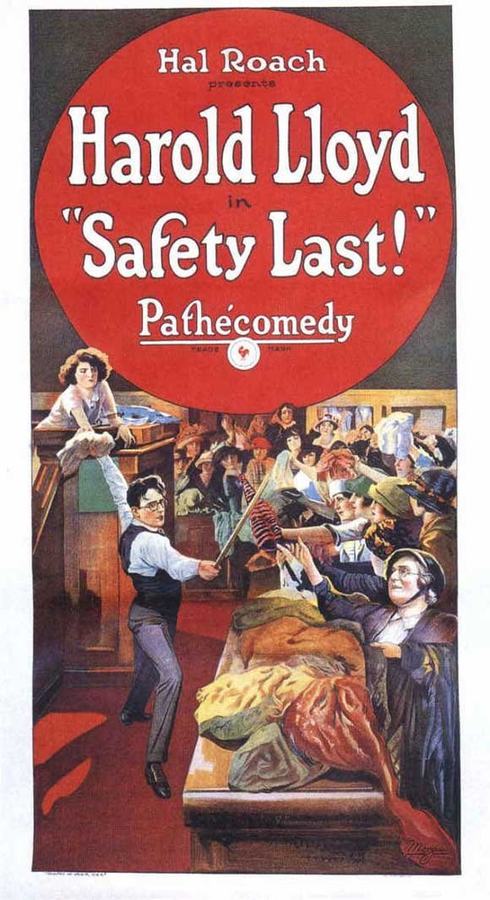
A definitive 8.1/10 rating for a film that redefined the boundaries of cult cinema. Safety Last! remains a cornerstone of transgressive art.
Harold Lloyd’s 1923 marvel, Safety Last!, endures as a cornerstone of silent‑era slapstick, marrying kinetic daring with an undercurrent of earnest aspiration. The film follows a nameless farm‑boy, portrayed by Lloyd, who abandons the pastoral lull of his hometown for the glittering promise of the city. The narrative premise—rural innocence confronting urban ambition—resonates with the post‑World War I zeitgeist, when countless Americans migrated to burgeoning metropolises seeking prosperity.
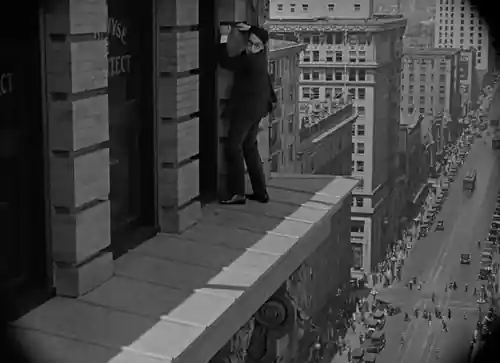
\nThe plot unfurls with a brisk economy: the protagonist secures a low‑level clerical position, only to be thrust into a series of escalating trials that test his resolve. His sweetheart, a figure of steadfast devotion, soon joins him, their union symbolizing the convergence of personal affection and professional ambition. Yet Lloyd’s enthusiasm proves a double‑edged sword; each triumph begets a more precarious stunt, culminating in the iconic clock‑tower climb that has become synonymous with cinematic audacity.

Beyond the surface‑level hilarity, the film interrogates the American Dream’s paradoxical nature. The protagonist’s ascent mirrors the era’s capitalist climb, while the looming danger of each stunt underscores the precariousness of success. This dialectic is subtly reinforced by the supporting cast—Richard Daniels as the bemused elder, Wally Howe as the skeptical coworker, and the ever‑present antagonist, Noah Young, whose physicality embodies the obstacles of industrial modernity.
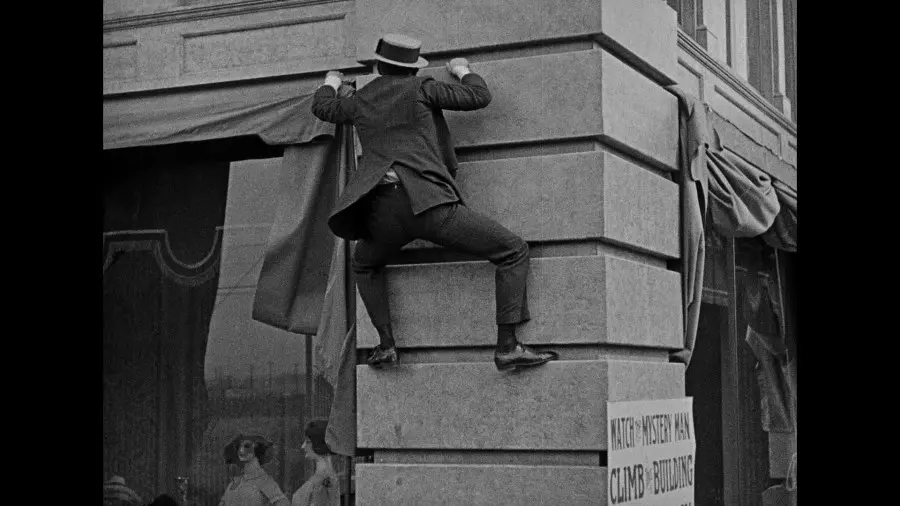
\nHal Roach’s production team engineered a series of set pieces that remain astonishingly inventive. The most celebrated sequence—Lloyd’s perilous ascent along the façade of a skyscraper—was achieved through a combination of full‑scale façade construction and strategic camera angles, creating the illusion of vertiginous height while ensuring actor safety. The use of sea blue (#0E7490) in the sky backdrop accentuates the vertigo, contrasting starkly with the dark orange (#C2410C) of the building’s ornamental cornices, a visual palette that heightens tension.
The film’s editing, overseen by H.M. Walker, employs rapid cross‑cuts that amplify the comedic rhythm without sacrificing narrative clarity. Each gag is meticulously timed, a testament to the silent era’s reliance on visual punctuation. The intertitles, penned by Walker and co‑writer Sam Taylor, balance wit with exposition, ensuring that the audience remains anchored amidst the visual frenzy.
\nLloyd’s performance is a masterclass in physical comedy tempered by an undercurrent of earnestness. Unlike Chaplin’s Tramp, whose melancholy often shadows his antics, Lloyd’s “Glasses Character” exudes optimism, his eyes perpetually fixed on the horizon of opportunity. This optimism fuels the narrative propulsion, rendering each stunt a manifestation of hope rather than mere spectacle.
Mildred Davis, playing the sweetheart, provides a grounding counterpoint; her presence is less a love‑interest trope and more an embodiment of the supportive partner who validates the protagonist’s ambitions. The chemistry between Lloyd and Davis is palpable, their interactions infused with a naturalistic charm that elevates the film beyond slapstick.
\nWhen juxtaposed with other Hal Roach productions such as The Homesteader (1922), one observes a thematic throughline: the rural‑to‑urban transition as a crucible for personal growth. Similarly, the kinetic energy of Eldorado (1935) mirrors Lloyd’s relentless forward motion, albeit within a different genre framework. These intertextual resonances underscore Roach’s predilection for stories that celebrate perseverance amid adversity.

The film’s most lauded technical achievement—the clock‑tower sequence—has inspired countless homages, from the animated antics of Looney Tunes to modern action set‑pieces in superhero cinema. The meticulous construction of the façade, combined with Lloyd’s willingness to perform his own stunts, set a new benchmark for actor‑directed risk.
\nMoreover, the use of color motifs within the black‑and‑white frame—though not literal in the original print—has been embraced by contemporary restorations that employ tinting to emphasize emotional beats. The dark orange highlights the industrial grit, the yellow underscores moments of triumph, and the sea blue evokes the expansive sky, collectively enriching the viewing experience.
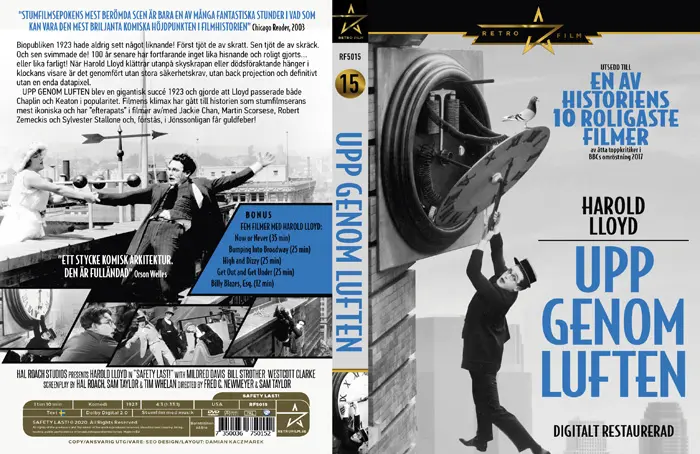
Over a century later, Safety Last! remains a staple in film curricula, its study essential for understanding the evolution of visual comedy. The film’s inclusion in the United States National Film Registry attests to its cultural, historical, and aesthetic significance. Modern audiences, accustomed to CGI‑laden spectacles, still find themselves breathless at Lloyd’s daring feats, a testament to the timeless allure of authentic physical performance.
\nThe narrative’s optimism resonates amid contemporary anxieties about economic mobility, making the film surprisingly relevant. Its portrayal of a protagonist who confronts towering obstacles—both literal and metaphorical—mirrors today’s gig‑economy challenges, reinforcing the universal relevance of its core message.
\nIn sum, Safety Last! transcends its comedic veneer to offer a nuanced meditation on ambition, love, and the perilous climb toward success. Through masterful direction, inventive set design, and Harold Lloyd’s indefatigable charisma, the film secures its place as an indelible artifact of cinematic history. Whether viewed as a historical document, a study in physical comedy, or simply as an exhilarating ride, it delivers a richly layered experience that rewards repeated viewings.
IMDb 6.1
1922
Community
Log in to comment.