DbcultAccessing Vault...
Cult Review
Senior Film Conservator
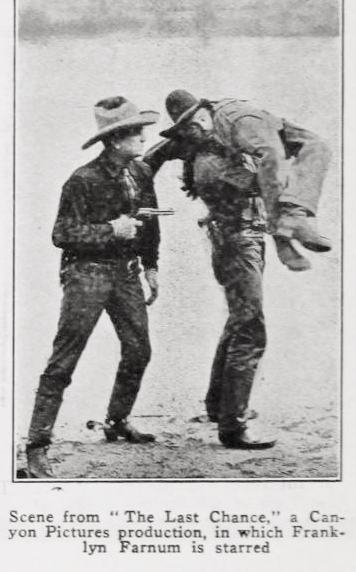
William E. Wing’s 1925 oater arrives like a tintype unearthed from a derelict ghost town: sepia, cracked, yet humming with frontier electricity that jolts the modern eye awake.
Shot on the parched flats outside Bakersfield when Kern County still passed for untamed wilderness, The Last Chance drapes its melodrama across a canvas of alkali dust and bruised sunsets. The intertitles—laconic, diamond-cut—hint that Wing studied both Victor Fleming’s bravado and the Japanese penchant for negative space, an intuition later mirrored in Ikeru Shikabane’s meditative stillness.
Gertrude Hall’s Vivian is no prairie daisy but a calculating comet, her pupils reflecting not the wide blue yonder but the distant glow of department-store windows. Watch the way she fingers a cheap locket while eyeing Braden’s pocket watch: desire articulated through micro-gesture, an acting grammar that predates Method by three decades. Contrast her with Vester Pegg’s Gregg—a bandit whose slithering grin seems carved from mesquite bark—whose menace is so palpable you half expect the celluloid to emit sulfur.
Director Wing and cinematographer David Mansfield (pulling double duty as tortured Rance) shoot day-for-night sequences by sandwiching mahogany filters beneath merciless midday sun, turning the landscape into a chiaroscuro fever dream. Notice the pivotal barroom dissolve: Rance’s shot glass multiplies into six overlapping specters, a visual premonition of the alcoholic abyss he’ll inhabit. The device predates the expressionist superimpositions of The Haunted Manor yet feels rooted in whiskey-soaked authenticity rather than European abstraction.
The moral architecture is equally layered. Black Sparr’s parenting philosophy—“A man’s only soft as the hide he’s stretched into”—would make even John Wayne flinch. Churchill Scott’s patriarch stalks each frame like a leather-skiff prophet, jaw clenched around a cheroot, eyes glinting with Old Testament absolutism. His belief that hardship is sacrament finds its counterpoint in Kate’s gospel of grace: a saloonkeeper’s daughter who mends Rance’s soul with equal parts coffee, scripture, and unabashed flirtation. Their eventual union feels less like narrative convenience and more like ideological synthesis—rugged individualism tempered by communal tenderness.
Silent cinema often ages into mime-show caricature; Hall, Mansfield, and Scott refuse such fossilization. Mansfield’s shoulders telegraph every gradation of heartbreak: when Vivian rides off in Braden’s Studebaker, his torso folds inward like a broken umbrella, yet pride stiffens his spine—a single, fluid oscillation between collapse and composure. The gesture ricochets through later Westerns, from Gary Cooper’s stoicism to Montgomery Clift’s coiled vulnerability.
Hall, meanwhile, weaponizes the close-up. In a medium notorious for proscenium-wide tableaux, Wing dolly-steps toward Vivian’s face until her pores resemble lunar craters. The actress resists melodrama; instead she blinks twice—tick, tick—like a cash register totaling her options. It’s an early cinematic example of what Laura Mulvey will later term “the female gaze commodifying itself,” a moment echoed in A Million Bid’s auction-block tension.
Contemporary newspapers ballyhooed the kidnapping sequence as “the most electrifying rescue since The Great K &A Train Robbery.” Hyperbole aside, Wing stages it as a diptych of suspense and ethical ambiguity. Gregg’s gang doesn’t merely snatch Kate; they demand Sparr’s prized stallion as ransom, forcing the rancher to weigh equine livelihood against human compassion. The ensuing canyon shootout—filmed in natural arroyos with handheld Bell & Howell cameras—anticipates the kinetic docu-realism of The Pursuing Vengeance yet retains the operatic flourish of horses rearing against blinding kliegs.
Franklyn Farnum’s film-cut editing deserves laurels. He cross-cuts between Kate bound in a squalid shack, Rance galloping across alkali flats, and Vivian fretting in Braden’s velvet parlor—three strata of imprisonment—until the timelines converge on a single percussion cap of gunfire. The montage is Eisensteinian before Eisenstein, a kinetic equation whose thesis (captivity) collides with antithesis (liberation) to yield synthesis (earned domesticity).
State censor boards—particularly Pennsylvania’s—trimmed twelve minutes, citing “excessive brutality and suggestive drinking vignettes.”
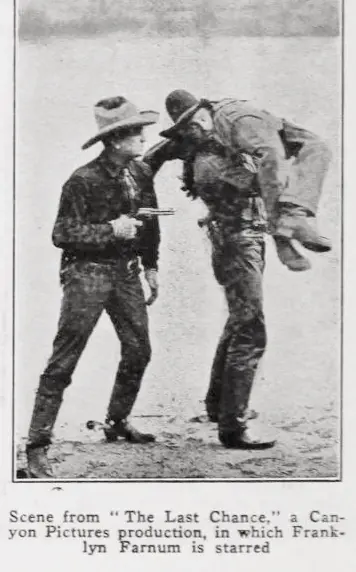
Those lost snippets allegedly featured Rance hallucinating Vivian’s silhouette inside every whiskey swirl, a visual motif worthy of Hitchcock’s Vertigo. Rumor persists that a nitrate dupe survives in a São Paulo archive, though restoration funds dried up faster than prairie creek beds. Until then, connoisseurs must content themselves with the 72-minute Library of Congress print, whose scratches flicker like campfire embers—blemishes that somehow deepen the existential desolation.
Written by William E. Wing, a scenarist who cut his teeth on Power’s urban melodramas, the screenplay grafts metropolitan class anxiety onto frontier iconography. Vivian’s rejection of agrarian drudgery mirrors post-war flappers fleeing domestic confines, while Braden’s promise of Parisian gowns prefigures consumerist seductions later dissected in The Invisible Divorce. Kate, conversely, embodies working-class resourcefulness: she stitches quilts from feed-sack cloth, barters eggs for bullets, and still quotes Whitman beneath star-drunk skies. Her marriage to Rance suggests a populist fantasy—landed gentry humbled, proletariat ennobled, both meeting on the communal square of sod-busting toil.
Yet Wing refuses binary moralism. Vivian’s final close-up— framed behind Braden’s mahogany balustrade—reveals tear-tracks cutting through rice-powder makeup, a tacit admission that luxury devoid of soil feels every bit as suffocating as soil devoid of luxury. The shot lingers four seconds longer than narrative necessity, allowing spectators to taste the ash of her disillusionment.
Original exhibitors accompanied The Last Chance with everything from pump-organ hymns to Appalachian fiddle sets. Modern revivals often commission scores that lean on Copland-esque open chords, yet the 2018 Pordenone Silent Film Festival unveiled a radical re-score: Japanese taiko drums overlaying Texan harmonica—a hybrid that underscores the film’s cultural syncretism. When those thunderous taikos crescendo during Rance’s rescue ride, the fusion feels less anachronistic than prophetic, prefiguring global Western variants from Kaieteur, the Perfect Cataract to spaghetti sagebrush operas.
Histories of the Western genre habitually vault from The Great Train Robbery (1903) to Stagecoach (1939) with nary a nod to the ferment of the ’20s. The Last Chance demands inclusion in that continuum, not as footnote but as fulcrum. Its psychological realism anticipates the neurotic gunslingers of The Black Sheep of the Family, while its socio-economic subtext prefigures the populist bile of One More American.
Moreover, Wing’s proto-feminist glimpses—Kate navigating patriarchal space with cunning rather than capitulation—pave the road for Marlene Dietrich’s dominion in Destry Rides Again. Even the kidnapping-rescue arc, oft-derided as damsel cliché, reconfigures the woman as moral linchpin whose survival catalyzes communal redemption rather than mere personal payoff.
Is The Last Chance flawless? Hardly. Its intertitles occasionally sag into dime-novel bombast, and the comic-relief stable boy belongs in a Harold Lloyd two-reeler, not this existential morality play. Yet these blemishes feel as organic as saddle sores after a three-day roundup—proof of humanity beneath the leather.
Overall, the picture gallops beyond nostalgia into the realm of rediscovery: a film that interrogates Manifest Destiny while delivering the thrill of drawn six-shooters; that questions whether manhood must be forged in cruelty, yet celebrates tenderness as frontier currency; that acknowledges the ranch’s dusty grind and the ballroom’s velvet cage as prisons of equal measure, before offering a third path rooted in mutual toil and starlit companionship.
In short, The Last Chance is the silent Western we didn’t know we were missing—until it rides out of the archival dusk, six-guns blazing, heart cracked wide open, demanding we reconcile our myths with our mirrors.
Verdict: 9/10 — Essential viewing for cineastes, genre buffs, and anyone who’s ever wondered if paradise is a place, a person, or merely the horizon we chase between them.
IMDb 5.7
1926
Community
Log in to comment.