DbcultAccessing Vault...
7.1/10
Senior Film Conservator
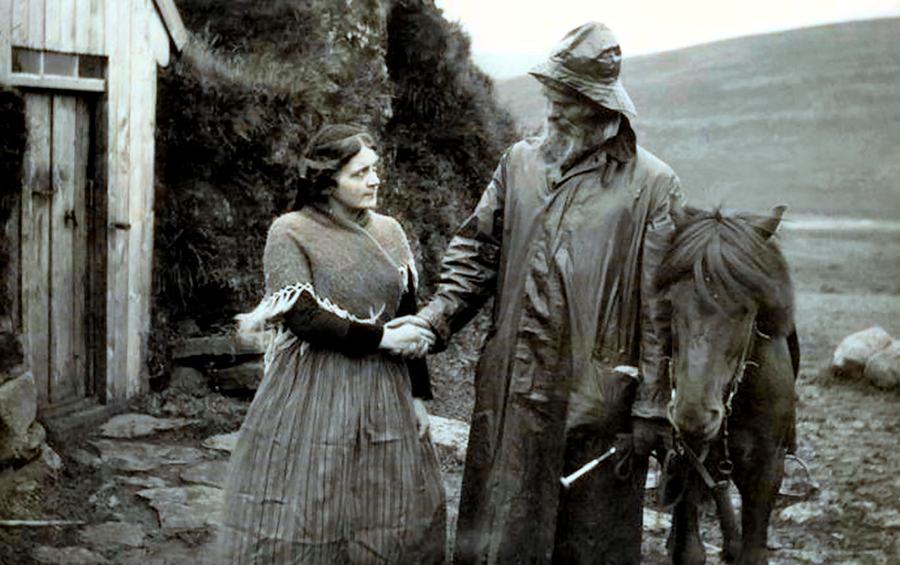
A definitive 7.1/10 rating for a film that redefined the boundaries of cult cinema. Sons of the Soil remains a cornerstone of transgressive art.
Stepping into the world of 'Sons of the Soil' is akin to breathing the crisp, bracing air of the Nordic landscape it so vividly portrays. This is not merely a film; it is an experience, a deep dive into the very sinews of human existence, intertwined with the unyielding earth and the relentless march of time. From its opening frames, one is immediately struck by the sheer authenticity, the palpable sense of a life lived, earned, and often lost, under the vast, indifferent sky. The narrative, crafted with a remarkable understanding of both human nature and the elemental forces at play, pulls you into the heart of a family whose destiny is irrevocably tethered to their ancestral land.
The film centers on the Bjarnason family, custodians of a remote farm that has sustained generations, yet now threatens to break the current one. At its core is Thorsen, portrayed with immense gravitas by Bertel Krause. Krause embodies the patriarch not just as a character, but as a force of nature himself – stoic, unyielding, his face etched with the hardships of a life spent battling the elements. His eyes, though often clouded with weariness, betray a fierce pride and an almost spiritual connection to the soil he tenders. He is the embodiment of tradition, a living monument to the 'sons of the soil' who came before him, and his portrayal is a masterclass in conveying profound emotion through understated gestures. His presence anchors the entire film, a silent, powerful testament to the weight of legacy.
Opposing Thorsen's steadfast traditionalism is his son, Erik, brought to life by Gunnar Sommerfeldt. Sommerfeldt captures the restless spirit of a younger generation, one that sees the world beyond the valley, one that yearns for modernization, for a life less beholden to the whims of nature. Erik’s internal conflict – his love for his family and his land clashing with his desire for progress and personal fulfillment – forms a compelling arc. He is not simply rebellious; he is visionary, burdened by the knowledge that clinging too tightly to the past might doom them all. The tension between Krause’s Thorsen and Sommerfeldt’s Erik is the dramatic engine of the film, a poignant exploration of the universal struggle between tradition and change.
But the heart of the story, perhaps, beats strongest in Astrid, portrayed by the luminous Gudrun Indriadottir. Indriadottir delivers a performance of breathtaking nuance, her Astrid a beacon of resilience and quiet strength amidst the patriarchal landscape. She is caught between the two dominant men in her life – her father’s expectations and her brother’s aspirations – but also finds herself drawn to Kael, the surveyor, played by Ove Kühl. Kühl’s Kael is an intriguing presence, an outsider who brings with him not just new ideas, but the very real possibility of a different future for Astrid. Their burgeoning connection is handled with delicate sensitivity, a tender counterpoint to the rugged drama unfolding around them. Indriadottir’s ability to convey profound emotion – hope, despair, unwavering loyalty, and burgeoning independence – often with just a glance or a subtle shift in posture, is truly remarkable. Her portrayal elevates Astrid beyond a mere love interest, establishing her as a pivotal figure in the family's unfolding destiny.
The supporting cast, too, contributes significantly to the film’s rich tapestry. Frederik Jacobsen, Elisabeth Jacobsen, and Ingeborg Spangsfeldt fill out the family and community with convincing depth, each character adding another layer to the intricate social fabric of this isolated world. Philip Bech, Karen Poulsen, Inge Sommerfeldt, Victor Neumann, and Gudmundur Thorsteinsson, though perhaps with less screen time, each contribute memorable moments, rounding out a community that feels lived-in and authentic. Their collective presence creates a powerful sense of community, where every face tells a story, every gesture carries weight. The ensemble work is a testament to the meticulous casting and direction, ensuring that even minor characters resonate with purpose.
The thematic richness of 'Sons of the Soil' is profound. It delves into the eternal struggle of humanity against nature, the inherent dignity of labor, and the spiritual bond between a people and their land. This isn't just about farming; it's about identity, about what it means to belong, to inherit a legacy that is both a blessing and a burden. The screenplay by Valdemar Andersen and Gunnar Gunnarsson is a masterful achievement, translating the sweeping epic of a novel (if one existed) into a visual narrative that speaks volumes without uttering a single word. Their understanding of character motivation, dramatic pacing, and the subtle interplay of human emotion against a grand backdrop is exceptional.
Visually, the film is stunning. The cinematography captures the raw, majestic beauty of the Nordic landscape – the towering mountains, the unforgiving fjords, the vast, often brooding skies. These aren't mere backdrops; they are active participants in the drama, reflecting the characters' internal states and imposing their will upon their lives. The stark contrast between the cozy, firelit interiors of the farmhouses and the expansive, often bleak exteriors underscores the precariousness of their existence. Every shot feels meticulously composed, evoking a sense of both grandeur and intimate struggle. The use of natural light, the way shadows play across faces, all contribute to an atmosphere that is at once realistic and deeply poetic.
In its exploration of moral quandaries and the heavy cost of choices, 'Sons of the Soil' finds echoes in other cinematic works that grapple with similar profound themes. One might draw a parallel to the stark, often brutal realities depicted in The Blinding Trail, where characters are forced to confront difficult truths about themselves and their circumstances. Both films share a commitment to portraying life's unvarnished complexities, eschewing simplistic resolutions for a more resonant, authentic emotional landscape. Similarly, the internal and external pressures faced by the Bjarnason family, particularly the patriarch Thorsen, recall the burdens of leadership and tradition seen in films like Nearly a King, where the weight of responsibility can be as crushing as any physical labor. The struggle for dignity and survival against overwhelming odds, a central tenet here, also resonates with the grim determination often depicted in narratives such as Human Clay, where characters are molded by their environment and their choices.
The film's exploration of fate and the consequences of moral failings also brings to mind the somber introspection found in The Reckoning or the societal pressures that lead to difficult decisions, much like in Das Laster. 'Sons of the Soil', however, distinguishes itself by embedding these universal struggles within a specific, deeply rooted cultural context, making the personal stakes feel incredibly high and profoundly universal at the same time. The way it portrays the land itself as a character, a silent observer and often a cruel master, gives it a unique texture, a grounded realism that few films achieve. The intricate family dynamics, the unspoken resentments and profound affections, are rendered with an intimacy that allows the audience to feel deeply invested in their fates.
Moreover, the film's narrative structure, though seemingly simple, is rich with allegorical depth. The changing seasons, the cycles of planting and harvest, birth and death, mirror the human drama unfolding on screen. The farm is not just a place; it is a microcosm of life itself, a stage where enduring human virtues and vices play out against an epic backdrop. The sense of inevitable change, of the old order giving way to the new, is handled with a poignant melancholy, never resorting to sentimentality but rather embracing the bittersweet truth of progress. It is a powerful meditation on what we gain and what we lose as societies evolve, as generations grapple with inherited burdens and forge new paths.
The conflict between the generations, specifically Thorsen's adherence to tradition and Erik's pull towards modernity, is a timeless one. It is not presented as a simple good-versus-evil dichotomy, but rather as two legitimate, albeit conflicting, perspectives, each with its own merits and drawbacks. Thorsen's wisdom is forged in years of hard-won experience, a deep understanding of the land's rhythms and demands. Erik's vision, while perhaps naive in its youthful optimism, offers a path to survival in a rapidly changing world. This nuanced portrayal of generational conflict makes the film resonate far beyond its specific setting, touching upon universal truths about family, progress, and the enduring human spirit. This complex layering of character motivations and societal pressures gives the film a depth that few can rival, similar in its intricate relationships and underlying tensions to the familial sagas explored in The Governor's Daughters, though 'Sons of the Soil' anchors its drama more firmly in the tangible struggles of the land.
Ultimately, 'Sons of the Soil' is a powerful, evocative piece of cinema that lingers long after the final frame. It is a testament to the enduring strength of the human spirit, a lyrical ode to the land that shapes us, and a profound meditation on the ties that bind families across generations. The performances are uniformly excellent, the direction assured, and the storytelling deeply resonant. It stands as a timeless classic, a stark, beautiful portrait of a world that, though perhaps distant in time, speaks to the very core of our shared human experience. It reminds us that some struggles are universal, some bonds unbreakable, and some legacies, like the soil itself, endure beyond all else. This film isn't just watched; it's felt, its emotional currents running deep beneath the surface, much like the hidden rivers that nourish the very fields it celebrates. A truly unforgettable cinematic achievement.

IMDb —
1916
Community
Log in to comment.