DbcultAccessing Vault...
Cult Review
Senior Film Conservator

Sahara Blues, the latest cinematic endeavor to emerge from the storied annals of Hollywood, is a film of mesmerizing beauty and profound emotional resonance. Marjorie Marcel, in the lead role of a captivating chanteuse, imbues her character with a sense of vulnerability and determination, navigating the unforgiving desert landscapes of North Africa with a fierce abandon that is at once captivating and heartbreaking.
As she traverses this liminal terrain, Marcel's character becomes embroiled in a complex web of relationships, each one more fraught with tension and desire than the last. Joe Bonner, as her paramour, brings a sense of brooding intensity to the role, his eyes burning with a fierce passion that is matched only by his capacity for deceit and manipulation.
One of the most striking aspects of Sahara Blues is its use of color, a palette that veers from the deep oranges and yellows of the desert sunset to the cool blues and greens of the oasis landscapes. This chromatic spectrum serves to underscore the film's themes of love, loss, and self-discovery, imbuing each frame with a sense of visual beauty that is at once captivating and haunting.
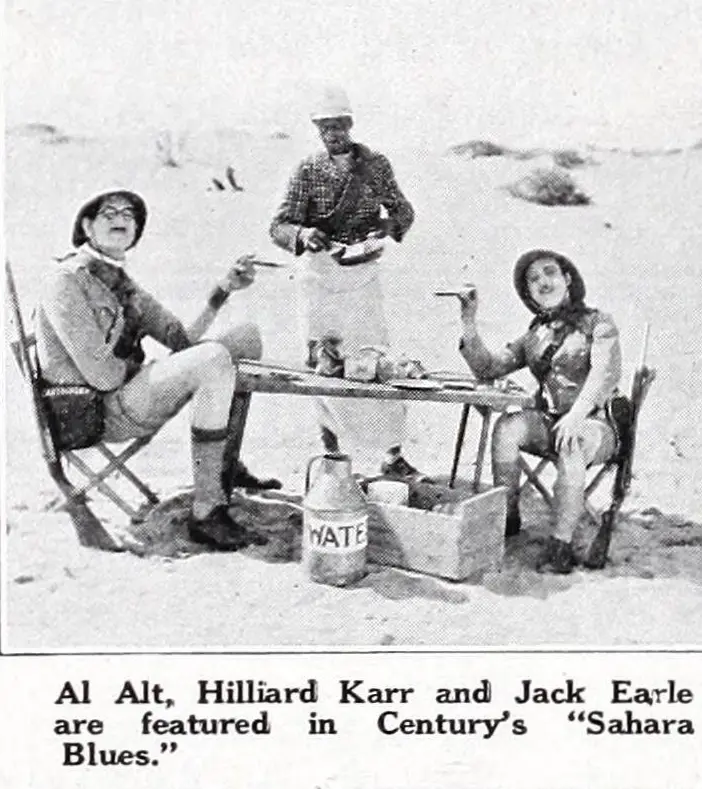
The supporting cast, which includes Betty Young and Hilliard Karr, adds depth and nuance to the narrative, their performances imbued with a sense of subtlety and restraint that serves to heighten the overall sense of tension and drama. Noel M. Smith's screenplay, meanwhile, is a masterclass in understated elegance, weaving a complex narrative that is at once engaging and thought-provoking.
In many ways, Sahara Blues recalls the works of auteurs like Jean Renoir and Federico Fellini, filmmakers known for their poetic and visually stunning explorations of the human condition. Like The Life of Reilly, another classic film of its era, Sahara Blues is a movie that defies easy categorization, instead occupying a liminal space that is at once timeless and utterly of its time.
One of the most intriguing aspects of Sahara Blues is its use of setting, a vast and unforgiving landscape that serves to underscore the film's themes of isolation and disconnection. The desert, with its endless dunes and blistering heat, is a character in its own right, a symbol of the unknowable and the uncontrollable.

As Marcel's character navigates this unforgiving terrain, she becomes embroiled in a series of encounters that serve to heighten her sense of vulnerability and disconnection. Her relationships with the men in her life, including Bonner's character, are complex and multifaceted, marked by a sense of passion and desire that is at once all-consuming and ultimately doomed.
In this sense, Sahara Blues recalls Love and Doughnuts, another film that explores the complexities of human relationships and the search for identity in a seemingly indifferent world. Like Sahara Blues, Love and Doughnuts is a movie that defies easy categorization, instead occupying a liminal space that is at once poetic and profoundly moving.
One of the most striking aspects of Sahara Blues is its use of music, a haunting score that serves to underscore the film's themes of love and loss. Marcel's character, a chanteuse of some renown, brings a sense of passion and intensity to her performances, her voice soaring and dipping in a manner that is at once captivating and heartbreaking.

In many ways, Sahara Blues is a film about the power of music to transcend time and circumstance, to evoke emotions and memories that might otherwise remain dormant. Like The Butterfly Man, another film that explores the complexities of human relationships through the lens of music, Sahara Blues is a movie that will leave you humming its tunes for days on end.
As the credits roll on this magnificent film, one cannot help but feel a sense of awe and wonder at the sheer scope and ambition of Sahara Blues. It is a movie that will leave you changed, in some fundamental way, a movie that will haunt you long after the lights have come up and the curtain has fallen.
In conclusion, Sahara Blues is a cinematic masterpiece, a film of profound emotional resonance and visual beauty. Like Het geheim van het slot arco, another film that explores the complexities of human relationships through the lens of drama, Sahara Blues is a movie that will leave you breathless and bewitched, a movie that will stay with you long after the credits have rolled.
If you're a fan of classic cinema, or simply looking for a film that will challenge and inspire you, then Sahara Blues is an absolute must-see. With its stunning landscapes, captivating performances, and haunting score, this film is a true masterpiece of the cinematic arts.
So why wait? Seek out Sahara Blues today, and experience the magic of cinema in all its glory.

IMDb 7.6
1918
Community
Log in to comment.