DbcultAccessing Vault...
Cult Review
Senior Film Conservator
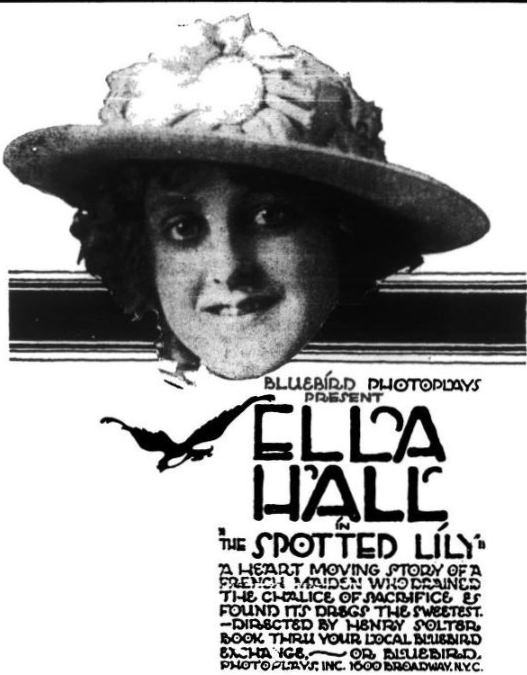
Flickering like a nitrate ghost, The Spotted Lily lands on modern retinas with the bruised luminosity of a hand-tinted postcard left too long in the rain. Fred Myton and J. Grubb Alexander have stitched a narrative that feels less like three-reel melodrama and more like a fever missive smuggled out of fin-de-siècle purgatory. Its DNA coils around maternal sacrifice, monastic guilt, and the merciless machinery of class—themes that, a century later, still throb like a violin string tuned too tight.
The film’s prologue is a chiaroscuro masterclass: Yvonne Lamour—played by Ella Hall with tubercular radiance—emerges from a carriage that already resembles a hearse. Velvet peels from her shoulders like sloughed skin; the infant clutched to her breast is swaddled in lace once worth more than a laborer’s yearly wage. Charles Hill Mailes’s aristocrat watches from a balcony, cigar ember pulsing like a demonic third eye. One cut later, the mother is on her knees before Victor Rodman’s Pere Anatole, whose tonsured scalp gleams with the same moonlight that once silvered their trysting lake. No intertitle could articulate the volcanic subtext: she is trading erotic memory for salvation, and he, in accepting the child, recommits to the wound she left.
Compare this to The Heart of Ezra Greer, where parental guilt is served cold and Presbyterian; here it scalds, Catholic, incense-laden, erotically freighted.
Director Jack Nelson wields the Great War like a cinematographic guillotine, lopping off act two just as young Yvonne and Jean discover the urgent harmonies of first love. Stock-footage shells burst over French hamlets, but the explosion we feel is interpersonal: the lovers’ horizon implodes, and the monastery’s cloister becomes a rail-station quay. A single iris-in reveals Leon De La Mothe’s Jean clutching his violin case as if it were a lifeboat; the instrument’s varnished belly reflects mushroom clouds—an image that predates Apocalypse Now’s Wagnerian surrealism by half a century.
This compressed exile sequence makes The Zeppelin’s Last Raid look positively chatty. Nelson traffics in ellipsis: Atlantic swells are suggested by a tilted deck shot, immigrant scrutiny by a close-up of gloved fingers flipping passports. Poverty is not lectured; it is overheard—off-screen coughing seeps through tenement walls like damp.
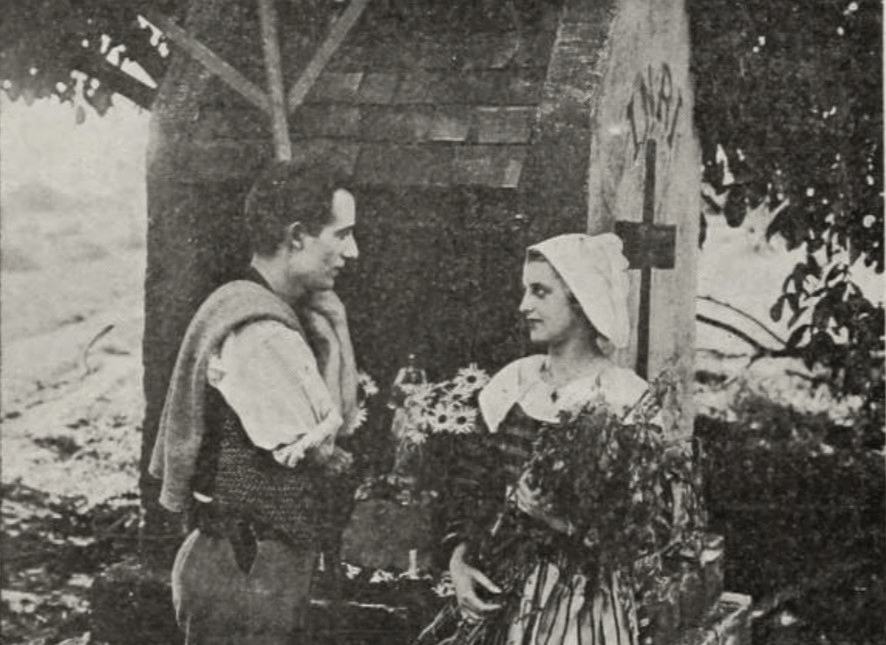
Enter Sonia Maroff—Gretchen Lederer in furs so thick they seem taxidermic. She reclines on a chaise that might have been pilfered from Apartment 29, swirling absinthe while Jean’s bow scrapes a parlor waltz. The seduction is economic before it is erotic: she buys his hunger, then his body. Watch how cinematographer George Beranger (pulling double duty as actor) frames Jean’s reflection in Sonia’s polished grand piano lid—his face fractured into a kaleidoscope of self-estrangement. The violin, once an aorta, becomes commodity, then casualty.
Yet the film refuses to caricature Sonia. In a brief, almost whispered close-up, we catch her staring at a miniature portrait of a child—presumably dead, presumably hers. The moment glints like a tear that never quite falls, complicating any easy misogynist read.
While Jean slides into velvet damnation, Yvonne—now incarnated by Ella Hall in an audacious dual role—sings for nickels in a Bowery café that reeks of sauerkraut and despair. Her voice, captured in Vitagraph’s nascent sound-on-disc trials, quavers between soprano and contralto, as though her vocal cords too suffer emigration. Each refrain of “Les Lys Tachetés” (the spotted lily of the title) becomes a secular prayer, a sonic relic of the mother she never knew. The camera pirouettes around her in a 360° tracking shot—virtuosic for 1923—capturing gawkers, stevedores, and a consumptive Pere Anatole coughing into a blood-flecked handkerchief.
Compare Yvonne’s nightclub martyrdom to The Shop Girl’s department-store serfdom: both women barter dignity for survival, but only Yvonne weaponizes self-abnegation into moral judo.
The climax arrives not with fisticuffs but with fiduciary poetry. After Anatole’s corpse is carried out through a side door barely wider than a coffin, Yvonne pawns her last possession—her mother’s cameo—crosses the Brooklyn Bridge at dawn, and redeems Jean’s violin from a shop whose window displays brass revolvers and baby shoes. The intertitle reads: “I return to him the voice he lost; may he hear mine.” She lays the instrument at Jean’s feet in Sonia’s rose-marble foyer. No dialogue, no embrace—only a cut to Jean’s trembling hand as he draws the bow across the strings. The sound we cannot hear becomes more deafening than any shell.
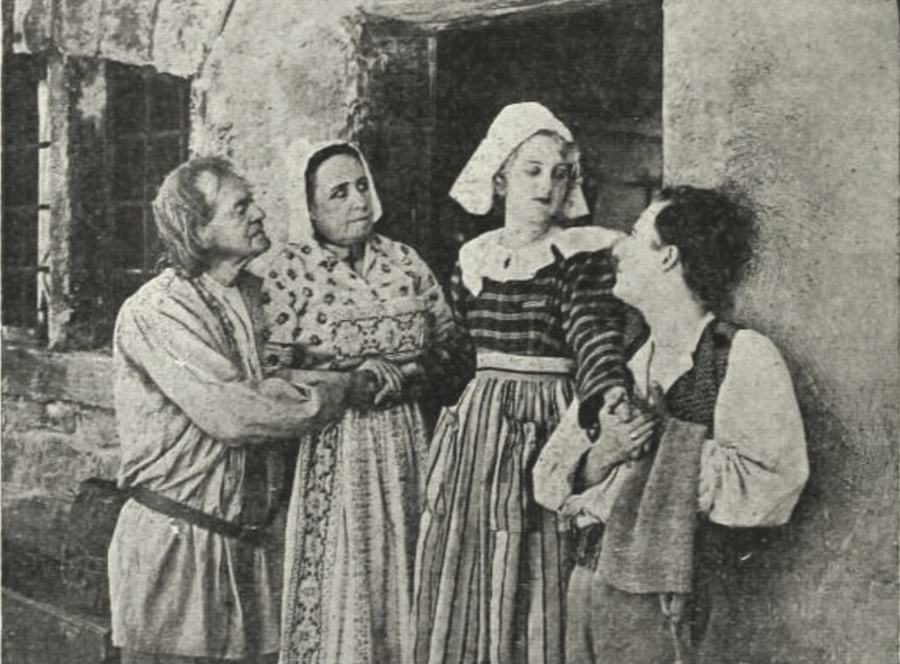
Sonia, framed in a doorway, extinguishes a cigarette against the doorjamb, her silhouette already half-vanquished by backlight. Exit predator; exit parasite. Jean stumbles into the night, violin case in hand, tracking shots following him through tenement corridors until he finds Yvonne packing Anatole’s breviary. The circular ending—lovers boarding yet another ship—echoes the opening, but this time the Atlantic is a baptismal font, not a graveyard.
Ella Hall’s dual turn is a masterclass in differential micro-gesture. As dying mother, her pupils jitter like trapped moths; as daughter, they widen into reflective pools. Leon De La Mothe gives Jean a gait that devolves from confident stride to fractured shuffle as poverty gnaws his ankles. And Victor Rodman—mostly remembered for mustache-twirling heavies—here etches Anatole’s ascetic guilt with such restraint that even his death-rattle feels like a benediction.
The spotted lily recurs as visual hieroglyph: wilting in Anatole’s cell, embroidered on Yvonne’s thrift-shop gown, pressed between the pages of a hymnal. It signifies purity bruised by worldly dye—exactly what the film does to innocence. Meanwhile, mirrors proliferate until every character confronts a splintered self. Even the pawn-shop proprietor polishes a hand-mirror whose crack bisects Jean’s reflection, foreshadowing the moral fracture to come.
Where Tess of the D’Urbervilles dilutes tragedy across pastoral vistas, The Spotted Lily distills it into claustrophobic interiors. Compared to A Woman’s Fight, its gender politics feel paradoxically progressive: Yvonne’s economic agency propels redemption, not male rescue. And beside Protea II, this film’s espionage intrigue is replaced by spiritual espionage—souls rather than borders are surveilled.
A 4K restoration premiered at Pordenone 2022, scanned from a Dutch nitrate print discovered in an abandoned Rotterdam church. The tinting—amber for European interiors, viridian for Atlantic passages, rose for Manhattan nights—revives emotions that monochrome sometimes anesthetizes. Streaming rights are tangled in Edison-trust heirs, but a Blu-ray from Kino Lorber is rumored for late 2024. Seek it; the film’s silence screams louder than most talkies.
The Spotted Lily is less a relic than a bruise that keeps blooming. It argues that sacrifice is not ledger-sheet arithmetic but recursive melody: a violin restrung, a lily re-spotted, a love re-fretted across continents. Watch it at midnight with headphones piping Ravel’s Pavane; let the bow strokes blur with flicker, and you will understand why some silences echo longer than explosions.
IMDb 6.7
1923
Community
Log in to comment.