DbcultAccessing Vault...
Cult Review
Senior Film Conservator
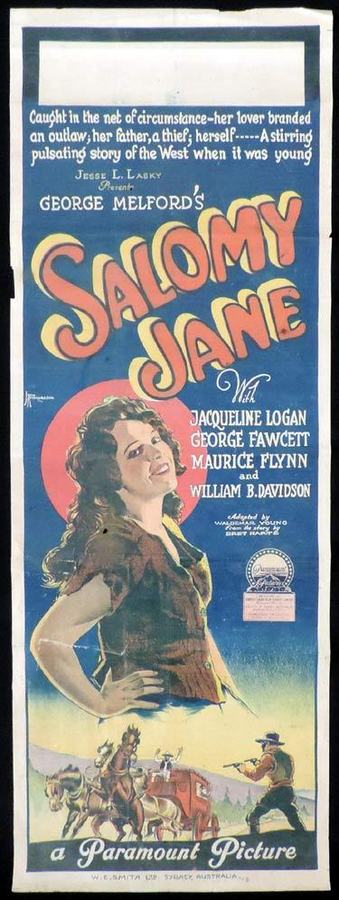
Ah, the silent era! A time when storytelling relied solely on the power of visual grandeur, expressive performances, and the evocative strains of a live orchestra. Among the myriad cinematic offerings of the 1920s, the Western genre carved out a particularly potent niche, capturing the rugged individualism and dramatic sweep of America's frontier mythos. And within this landscape, a film like Salomy Jane from 1923 emerges as a fascinating artifact, a vibrant adaptation of Bret Harte's enduring tale, brimming with the raw emotions and stark moralities characteristic of its setting and period. It's more than just a historical curiosity; it's a testament to the compelling narrative power that defined early cinema.
The narrative thrust of Salomy Jane plunges us headfirst into the tumultuous world of Northern California during the legendary Gold Rush. This was a land where law was often a distant whisper, and justice was frequently meted out by the swift, if sometimes misguided, hand of vigilante mobs. Our story begins with just such a scene: a mysterious drifter, known only as 'The Stranger,' stands accused of a daring stagecoach robbery, his fate seemingly sealed by a noose and the grim faces of an angry crowd. It's a classic Western setup, immediately establishing high stakes and moral ambiguity. But then, a pivotal moment of unexpected human connection shifts the entire trajectory. Salomy Jane Clay, a woman embodying the spirited independence of the frontier, steps forward. In a gesture both audacious and deeply empathetic, she kisses the condemned man goodbye. This isn't merely a romantic overture; it's a calculated act of defiance, a moment of strategic compassion that provides The Stranger with the crucial opportunity to make a daring escape. Her act, seemingly small, ripples outwards, setting in motion a chain of events that will entangle her, her family, and the enigmatic Stranger in a web of love, loyalty, and murder.
The plot thickens with the brutal killing of Larabee, an old and bitter enemy of Salomy's father, Madison Clay. Naturally, suspicion falls once more upon The Stranger, whose recent escape and shadowy past make him an easy target. However, the film introduces a poignant twist of paternal devotion: Madison Clay, convinced that his beloved daughter Salomy is the true culprit, heroically takes the blame for Larabee's death. This self-sacrificial act underscores the deep bonds of family that often formed the bedrock of frontier communities, even amidst their inherent lawlessness. The ensuing legal drama, where both father and the accused Stranger face potential conviction, builds considerable tension, reminiscent of courtroom dramas that would become staples in later decades. The eventual unmasking of the real killer brings a satisfying resolution, clearing both Madison and The Stranger, and ultimately allowing Salomy to embrace a future with the man whose life she impulsively saved, a union forged in the crucible of peril and profound human connection.
The success of any silent film hinges enormously on the expressiveness of its cast, and Salomy Jane is fortunate to boast a lineup capable of conveying deep emotion without uttering a single word. Jacqueline Logan, in the titular role, is nothing short of captivating. Her Salomy Jane is not merely a damsel in distress; she is a woman of formidable will and independent spirit, a true product of her rugged environment. Logan imbues Salomy with a compelling blend of vulnerability and defiance, her eyes and gestures communicating volumes about her inner turmoil and burgeoning feelings for The Stranger. Her performance elevates Salomy beyond a mere plot device, making her the undeniable heart of the story. One can easily draw parallels to other strong female characters of the era, perhaps even the rebellious spirit of a character like Carmen, famously portrayed by Theda Bara in Carmen (1915), though Salomy's motivations are rooted in a more earnest sense of justice and love rather than pure femme fatale allure.
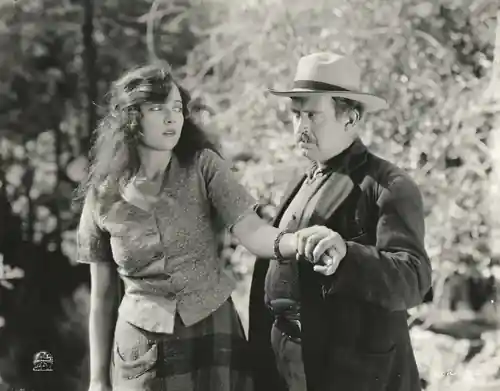
Maurice 'Lefty' Flynn, as The Stranger, delivers a performance that perfectly balances mystery with a quiet intensity. His character is initially defined by circumstance – the accused outlaw – but Flynn gradually peels back layers, revealing a man of honor beneath the rough exterior. He doesn't need dialogue to convey his gratitude, his growing affection for Salomy, or his internal struggle for redemption. His physical presence, often a crucial element for silent film actors, is commanding yet nuanced. Supporting performances further enrich the narrative tapestry. George Fawcett as Madison Clay, Salomy's father, is particularly memorable for his portrayal of fierce paternal love. His willingness to sacrifice himself for his daughter's perceived transgression speaks volumes about his character and the era's ideals of family honor. Louise Dresser, as Maw Clay, provides a grounding presence, embodying the resilient spirit of frontier women. Even the secondary characters, such as Billy Quirk and James Neill, contribute to the film's authentic atmosphere, each face telling a story of life in the untamed West.
In an age before synchronized sound, the visual language of cinema was paramount. Directors and cinematographers were true artists, painting stories with light, shadow, and movement. While specific directorial credits aren't highlighted in the provided information, the collaborative efforts of the filmmaking team behind Salomy Jane clearly understood this principle. The film effectively utilizes its Northern California Gold Rush setting, transforming the rugged landscapes into more than just a backdrop; they become an active participant in the drama. The vastness of the wilderness, the dusty trails, and the makeshift settlements all contribute to the sense of isolation and the precariousness of life on the frontier. The staging of action sequences, such as the initial stagecoach robbery and the vigilante pursuit, would have been crucial, relying on dynamic camera angles and rapid cutting (for the time) to convey excitement and peril. The visual tension created in these moments, without the aid of sound effects, is a testament to the skill involved. One might compare this meticulous attention to visual detail and atmospheric construction to the grand spectacles of films like Das Phantom der Oper (1925), where the elaborate sets and dramatic lighting were essential to building a world, albeit a very different one. Here, the 'set' is the raw, untamed American West.
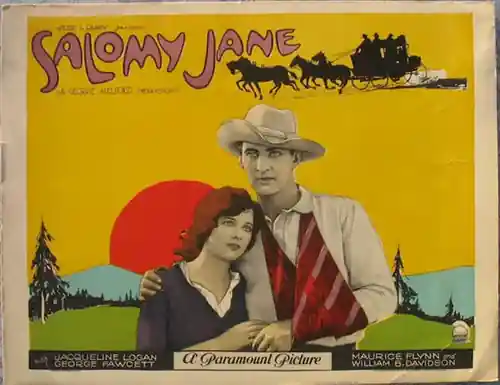
The film's visual storytelling also extends to its portrayal of character emotion. Close-ups, though perhaps not as frequent as in later eras, would have been used strategically to highlight the nuanced expressions of Logan and Flynn. The dramatic lighting, contrasting stark light and deep shadow, could have been employed to underscore moral dilemmas or moments of intense emotional conflict. This deliberate crafting of visual mood is what allowed silent films to transcend the limitations of their medium, engaging audiences on a deeply visceral level. The visual style of Salomy Jane, while perhaps less overtly experimental than some European films of the period, perfectly serves its narrative, creating an immersive experience that transports the viewer to a bygone era.
The foundation of Salomy Jane's narrative strength lies in its source material: the works of Bret Harte. Harte, a seminal figure in American literature, was renowned for his vivid portrayals of the California Gold Rush and its colorful characters. His stories often explored themes of rough justice, unexpected heroism, and the clash between civility and the wilderness, all infused with a distinctly American flavor. The screenplay, credited to Waldemar Young and Paul Armstrong, had the formidable task of translating Harte's rich prose and characterizations into a visual medium. This adaptation is generally successful, capturing the essence of Harte's world. The quick wit, the dramatic turns of fate, and the underlying sense of a community grappling with nascent laws and untamed passions are all present. The film manages to distill the complex moralities and romantic entanglements that Harte so deftly wove into his narratives, making them accessible to a broader audience through the universal language of silent film.
Adapting literature to the screen is always a delicate balance, particularly when dealing with a writer as distinctive as Harte. The challenge lies not just in replicating plot points, but in capturing the author's tone and thematic depth. Salomy Jane largely succeeds here, particularly in its depiction of Salomy herself, who embodies the spirited independence and moral clarity often found in Harte's female characters. The film’s ability to convey the moral ambiguities of the frontier, where heroes can be outlaws and justice can be arbitrary, speaks to a faithful interpretation of Harte’s vision. This careful adaptation ensures that even without Harte's descriptive language, the audience grasps the nuanced world he created.
While we analyze Salomy Jane today as a purely visual experience, it's crucial to remember that audiences in 1923 encountered it quite differently. The 'silent' film was rarely truly silent. Instead, it was accompanied by live music – often a solo pianist, an organist, or even a full orchestra in grander picture palaces. This live accompaniment was not merely background noise; it was an integral part of the narrative, designed to heighten emotion, build suspense, and guide the audience's understanding of the story. Imagine the dramatic swells of music as The Stranger makes his escape, or the mournful melodies accompanying Madison Clay's self-sacrifice. This symbiotic relationship between image and live sound created an immersive experience far removed from today's pre-recorded soundtracks. The score would have been carefully crafted, often using cues and leitmotifs to denote characters, moods, or impending danger, much like a classical opera. This 'silent symphony' was as much a part of the film's artistry as its cinematography and performances, transforming a series of moving images into a profoundly emotional journey. Without this context, our modern viewing is only a partial experience of what audiences originally felt.
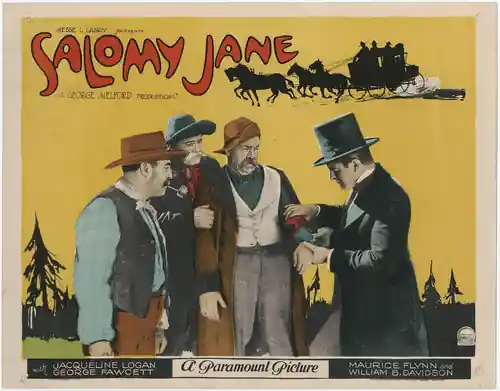
Salomy Jane (1923) holds a significant, if sometimes overlooked, place in the annals of silent cinema. It represents a period when the Western genre was truly coming into its own, moving beyond simple morality plays to embrace more complex characterizations and dramatic arcs. The film's enduring appeal lies in its timeless themes: the struggle between law and lawlessness, the power of love and sacrifice, and the raw, untamed spirit of the American frontier. While it might not be as widely discussed as genre titans like The Unknown (1927) for its psychological depth or Das Phantom der Oper (1925) for its gothic spectacle, Salomy Jane offers a compelling and well-crafted example of popular entertainment from its era. It showcases the talents of its performers, particularly Jacqueline Logan, and demonstrates the effectiveness of adapting classic American literature to the screen.
For modern viewers, watching Salomy Jane is akin to opening a window into a bygone era of filmmaking. It allows us to appreciate the artistry and ingenuity required to tell stories without dialogue, relying instead on visual cues, expressive acting, and the audience's imagination. It reminds us of the foundational elements of cinematic storytelling that continue to influence films today. The film’s ability to generate suspense, foster empathy, and deliver a satisfying resolution without uttering a single word is a testament to the power of pure cinema. It is a valuable piece of cinematic history, deserving of recognition for its contribution to the silent Western genre and its faithful capture of Bret Harte's enduring vision of the American West. The clarity of its narrative, the strength of its performances, and its evocative portrayal of a tumultuous period in American history ensure its continued relevance for those interested in the roots of cinematic storytelling. Its existence reminds us that compelling drama, universal emotions, and intricate plots have always been at the heart of the moving picture, regardless of the technological limitations of the time.
IMDb 6.8
1931
Community
Log in to comment.