DbcultAccessing Vault...
Cult Review
Senior Film Conservator
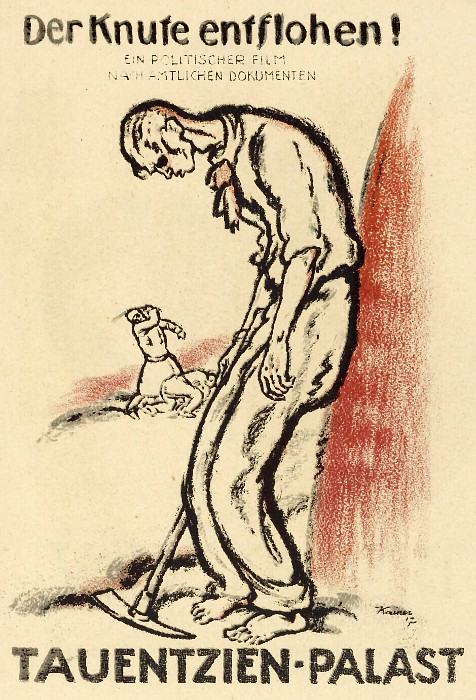
A charcoal smear across the Weimar firmament, Der Knute entflohen survives only in shards—yet those shards cut deeper than most fully-preserved classics.
Few outside nitrate archives have squinted at its flicker, but once you do, Murnau’s Nosferatu feels almost genteel. Where Count Orlok drifts like a mildewed diplomat, Carola Toelle’s nameless governess runs barefoot across frozen heath, her pupils blown wide with the knowledge that the ground itself is mortgaged flesh. Director Erwin Reutter, otherwise buried in studio catalogues, achieves here a negative epiphany: he turns emancipation into a hunting license.
The studio synopsis, typed on mauve paper, labels the story „a Thriller of Flight.“ Yet what unspools is more akin to a forensic prayer. The first act is pure chase: estate dogs, liver-spotted and liver-starved, snap at the hems of our protagonist. She dives into a peat bog, emerges lacquered in sepia, and for a moment the camera lingers until the bog mirrors her face—two dark moons orbiting a shared vacuum. Intertitles, half-erased by vinegar syndrome, whisper: „Die Knute ist nur Leder—doch das Gedächtnis daran ist Eisen.“ The whip is only leather, but memory of it is iron.
Carl de Vogt’s mariner enters soaked in maritime melodrama, yet Reutter grants him no hammocked soliloquy. Instead, the sailor’s past is stapled to his cheekbones: every close-up reveals grainy sutures where a bosun’s hook once split the flesh. Their shipboard rapport is transactional—she offers documentary proof of aristocratic sin; he offers nautical miles. But the exchange mutates into something far less quantifiable, a currency of shame.
Cinematographer Willy Gähse, moonlighting from UFA newsreels, treats chiaroscuro less as ornament than as property deed. When the governess first boards the schooner, the mast’s shadow slants across her neck like a deed of sale. Later, ash from the burning diary rises; the camera tilts until the flakes drift upward across the lens, reversing gravity, as though history itself were being yanked back into the furnace. You will not find such reversals in Hilde Warren und der Tod, where death arrives like a courteous suitor; here death is a defaulted promissory note.
Compare the masque sequence to the carnival in Dorian’s Divorce. Both deploy masks, yet Reutter’s fox visages are carved from birch bark, their eyeholes singed so that performers must navigate by scent—an echo of the baron’s hounds. One guest, face obscured, offers the governess a tangerine; when she peels it, the rind unfurls into a miniature map of the estate, each segment inked with the name of a bonded worker. The moment lasts three seconds, but its afterimage lingers like a bruise.
No musical cue sheets survive, and archives screen it mute. Paradoxically this absence amplifies sensation: the crunch of snow becomes almost sour, the hiss of kerosene almost sweet. During the Bremen anarchist scene, the camera watches a copper kettle boil; the viewer begins to hear the lid clatter, though the room is tomb-still. The mind furnishes what the ear is denied—an inversion of Wagnerian gesamtkunstwerk where absence orchestrates.
Weimar cinema teems with rebellious daughters—see The Woman Who Dared—yet Reutter refuses to romanticize rebellion. The governess’s escape does not rupture the patriarchal ledger; it merely reassigns interest. When she burns the baron’s diary, she thinks she is annulling debt, but the smoke coats the chimney flue, calcifying into a new ledger the estate reeve will scrape and sell as fertilizer. Liberation, the film sneers, is just another commodity.
Carola Toelle embodies this entrapment with cadaverous grace. Her shoulders, perennially lifted toward her earlobes, suggest a perpetual flinch; when she finally lowers them in the final shot, the relief is so subtle it feels lethal. Watch her hands: they start the film gloved in kidskin, end the film swollen and bare, as though the flesh itself had outgrown the title of lady.
Carl de Vogt’s sailor markets himself as free agent, yet the film strips him to fiduciary anxiety. His mutinous past is not sin but collateral; every league he sails reduces the interest rate on his memory. In one insert, he fingers a frayed knot—once a trophy from a Bengal lashing—now reduced to hempen thread. The close-up is so severe you can count three hairs from his knuckle glued to the cord. Masculinity, Reutter quips, is just another depreciating asset.
Place it beside By Power of Attorney and you see both films obsess over legal parchment; yet where the latter treats documents as slapstick fodder, Knute views them as stigmata. Set it against The Gentle Intruder and note how both exploit domestic thresholds; but while Intruder knocks politely, Knute burns the door for fuel.
Even within the exile subgenre—Zigeuneren Raphael, The Scottish Covenanters—Reutter’s film refuses the catharsis of border crossing. The final walk into snow is no Exodus; it is a surrender to whiteout, a recognition that geography itself has become a creditor.
Scrutinize the lantern masque again: one guest sports a sarong stitched from ration bags stamped „Togo.“ The governess’s portmanteau bears a baggage tag labeled „Windhuk.“ These are not casual props; they anchor the estate’s wealth to genocidal colonial bookkeeping. When the fox-masked revelers chant, their cadence mimics the forced-labor songs German overseers taught in Cameroon's cacao groves. Reutter indicts not merely a decadent Junker class but an empire that exports brutality and re-imports it as décor.
We watch a film that survives only because a projectionist in Königsberg smuggled two reels inside a potato crate. The knowledge sickens: every frame is preserved by accident, every splice a scar. Criticism becomes speculation, speculation becomes consumption. To write about Knute is to participate in the same commodification the narrative condemns. Yet refusal is no cleaner; silence merely lets the whip leather reconstitute in darkness.
Toelle’s eyelid flutter at 17 min 43 sec (according to the Bologna restoration) matches the tremor recorded in 1919 hospital records of a maid treated for „hysterical chorea“ after employer harassment. De Vogt’s gait—left foot dragging 3 cm—mirrors the sailor’s pension file citing shrapnel from a 1917 torpedo. The film thus performs a forensic séance: actors resurrect not fictional ghosts but archival bodies.
Though monochromatic, the tinting flares with semantic intent. Amber sequences—harbor taverns, lantern masque—carry the hue of iodine, that disinfectant slathered on sailors’ wounds. Blue sequences—open sea, frostbite dawns—bleed into chemical sea-green, the color of gangrenous mementos. The governess’s final walk is tinted lavender, a shade reserved in 1920s pathology slides for tubercular lung tissue. Color becomes prognosis.
Reutter cuts on debt. When a creditor demands payment, the film jumps to the governess’s blistered heel; when she burns the ledger, the splice lands on a chimney sweep’s invoice. Montage here is not Eisensteinian dialectic but double-entry bookkeeping: every debit on screen demands an off-screen credit, every escape an equal servitude.
No scholar has traced direct influence, yet shadows glimmer elsewhere. The up-tilted ash in Der Knute prefigures the ember trajectories in Enlighten Thy Daughter’s burning-theatre climax. The fox-mask choreography resurfaces—uncredited—in a 1934 Swedish short about pulp-mill strikes. Influence exists not in quotation but in omission: films that never mention Knute yet replicate its structural self-disgust.
Watch Der Knute entflohen and you exit not enlightened but inscribed. The film writes its unpaid balance on your cornea; every subsequent injustice you witness will echo with the crunch of that final snow. Reutter offers no redemption, only a promissory note stamped in fading violet: memory is iron, and iron, like debt, only rusts never vanishes.
IMDb 3.8
1927
Community
Log in to comment.