DbcultAccessing Vault...
Cult Review
Senior Film Conservator
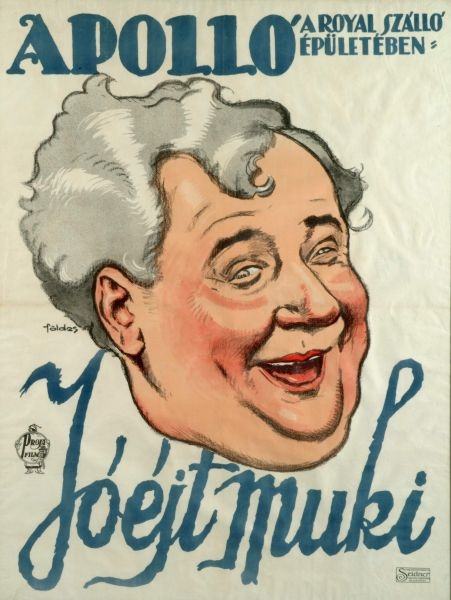
The history of cinema is often told through the lens of Hollywood or the Parisian avant-garde, yet the silent era's true vitality frequently resided in the peripheral hubs of innovation, such as the Transylvanian city of Kolozsvár. Here, under the stewardship of Jenő Janovics, a unique cinematic vernacular was forged. Jó éjt, Muki! stands as a testament to this fertile period, offering a glimpse into a world where the theatricality of the stage began its slow, beautiful transmutation into the language of the moving image. This film is not merely a relic; it is a vibrant, breathing specimen of farcical engineering that predates the more widely recognized slapstick revolutions of the West.
Jenő Janovics was more than a director; he was a cultural polymath who recognized that the nascent medium of film required both the discipline of the theater and the uninhibited gaze of the camera. In Jó éjt, Muki!, Janovics employs a visual strategy that balances the proscenium-arch rigidity of early cinema with an emerging understanding of spatial depth. While one might look toward the heavy moral weight of Maria Magdalena to understand Janovics' dramatic range, this comedy reveals his ability to manipulate pacing and timing with surgical precision. The film functions as a rhythmic exercise, where the movement of actors like Gyula Nagy and Lili Poór creates a visual music that transcends the absence of synchronized sound.
The collaboration with screenwriters Max Neal, Max Ferner, and Sándor Incze ensures a narrative structure that is remarkably robust. Unlike many contemporary shorts that relied on single-gag premises, this work builds a cumulative tension. It shares a certain structural DNA with the domestic dramas of the era, such as The Master of the House, though it trades that film's somber social critique for a more exuberant, yet equally sharp, dissection of household hierarchies. The 'Muki' of the title becomes a vessel for the audience's own frustrations with social convention, a bumbling everyman navigating a world of rigid expectations.
The cast of Jó éjt, Muki! reads like a 'who's who' of the Hungarian theatrical elite. Lili Poór, a titan of the stage, brings a level of gestural nuance to the screen that was rare for 1915. Her performance is not the broad, histrionic gesticulation often associated with silent film, but rather a series of micro-expressions that convey a profound understanding of her character's predicament. In contrast to the often stylized performances in In the Hour of Temptation, Poór and Nagy find a middle ground between the stage and the lens, creating a sense of intimacy that pulls the viewer through the screen.
Gyula Nagy’s portrayal of the central figure is a masterclass in physical comedy. He possesses a kinetic energy that seems to threaten the very boundaries of the frame. The supporting cast, including Marcsa Simon and Alajos Mészáros, provide a necessary friction, ensuring that the farce never devolves into chaos. Each character represents a specific social archetype—the overbearing matriarch, the suspicious neighbor, the bewildered servant—yet Janovics allows them enough screen time to transcend these tropes. This ensemble approach is reminiscent of the complex character webs found in The House of a Thousand Candles, though the stakes here are purely comedic rather than suspenseful.
Technically, Jó éjt, Muki! reflects the constraints and the creative workarounds of the era. The cinematography, while largely static by modern standards, utilizes the interior sets of the Kolozsvár studio to create a sense of claustrophobia that heightens the comedic tension. The lighting, primarily naturalistic, occasionally dips into the dramatic, hinting at the stylistic flourishes that would later define European Expressionism. When comparing the visual density of this film to something like De lefvande dödas klubb, one notices a distinct difference in texture; Janovics favors a brightness that mirrors the levity of the script, yet he is not afraid of the shadows that lurk in the corners of the bourgeois parlor.
The editing, attributed to the collective efforts of the production team, is surprisingly modern. The cuts between rooms and the timing of the intertitles facilitate a brisk pace that keeps the audience engaged. It lacks the sprawling ambition of The Life of Richard Wagner, but it makes up for it with a concentrated focus on the mechanics of the joke. Every shot is calculated to maximize the impact of the next revelation, showing an early mastery of the 'pay-off' structure that would become the hallmark of cinematic comedy.
To understand the significance of Jó éjt, Muki!, one must place it within the global context of 1915. While Hollywood was beginning to consolidate its power with spectacles like All for the Movies, Janovics was proving that European regional cinema could produce works of equal technical merit and superior intellectual wit. The film’s handling of identity and social masquerade can be compared to the thematic undercurrents of Simon, the Jester, where the protagonist must navigate a world of artifice. However, Janovics keeps his feet firmly planted in the soil of Transylvanian reality, even when the situations become absurd.
The film also stands in stark contrast to the more adventurous, genre-bending works of the period like The Social Buccaneer or the mystery of Doctor Nicholson and the Blue Diamond. While those films sought to expand the horizons of what cinema could depict—from high seas to criminal underworlds—Jó éjt, Muki! finds its universe within the four walls of a home. This domestic focus allows for a deeper exploration of character, a trait it shares with The Betrothed, though with a much lighter heart. It is a film that celebrates the smallness of life, making the stakes feel monumental through the sheer force of its comedic conviction.
The tragedy of early Hungarian cinema is the loss of so many of its physical artifacts. To watch Jó éjt, Muki! today is to engage with a ghost, yet it is a ghost that still knows how to tell a joke. The film captures a moment in time before the cataclysm of the First World War fully reshaped the map of Europe and the soul of its art. The presence of actors like Kálmán Rózsahegyi and Ferenc Vendrey reminds us of the deep well of talent that Janovics had at his disposal—talent that had been honed in the theaters of Budapest and Vienna but found a unique home in the nascent film industry of Kolozsvár.
In the broader tapestry of 1915 releases, from the Americana of The Yankee Girl to the pastoral dramas of June Friday, Janovics’ work stands out for its urbanity. It is a cosmopolitan film, born of a culture that was at once fiercely local and broadly European. It lacks the militaristic undertones of Bullets and Brown Eyes or the heavy-handed moralizing of Fathers of Men. Instead, it offers a respite—a chance to laugh at the absurdity of the human condition during a time when the world was beginning to feel very dark indeed.
Ultimately, Jó éjt, Muki! is a triumph of spirit and craft. It demonstrates that even within the confines of a simple farce, there is room for cinematic artistry and social observation. The film remains an essential piece of the puzzle for anyone seeking to understand the evolution of silent comedy and the vital role that the Kolozsvár studio played in the development of European cinema. As Muki finally finds his way to rest, the audience is left with a profound appreciation for the ephemeral beauty of the silent screen—a beauty that Jenő Janovics and his cast captured so effortlessly in this delightful, enduring work.
A cornerstone of early 20th-century entertainment, preserved in the amber of nitrate and the collective memory of film historians.
IMDb —
1926
Community
Log in to comment.