DbcultAccessing Vault...
5.4/10
Senior Film Conservator
A definitive 5.4/10 rating for a film that redefined the boundaries of cult cinema. Samoedskii malchik remains a cornerstone of transgressive art.
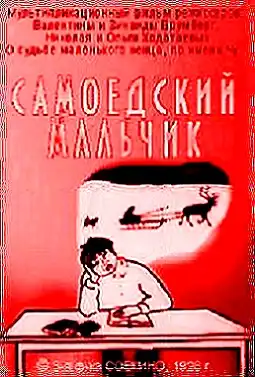
"Samoedskii malchik" – or "The Nenets Boy" – it’s one of those films you dig up if you're really into old animation or, honestly, just curious about Soviet-era shorts. If you love a snappy modern cartoon, this probably isn't for you.
But if you can appreciate a piece of history, especially one trying to teach something, it's absolutely worth a watch. You’ll either find its earnestness charming or a bit much. No in-between, I think.
This film, from the early days of Soviet animation, tells the story of a young Nenets man. He leaves his people’s traditional life to go all the way to Moscow. There he gets educated, then returns to his community up north. 🗺️
The animation itself is pretty fascinating. It's by the Brumberg sisters and Nikolay Khodataev, pioneers really.
You see these bold, stark lines and very expressive, almost caricatured characters. The Nenets people are drawn with a certain folk art flair, you know?
Then the Moscow scenes feel different, much more industrial and busy. The contrast is really something.
When the boy first leaves, his world is all vast snowy plains and reindeer herds. You get a sense of the scale, even with simple drawings.
The journey to Moscow is quick, just a few dissolves. Suddenly he's in this bustling, noisy city. It must've felt so overwhelming for him.
His education part is interesting. They don't linger on textbooks.
It’s more about him absorbing everything around him. You see him in a factory, learning about machines. Or studying maps, understanding the wider world. He’s taking it all in, eyes wide.
Then he comes back. And this is where the message gets quite clear.
He arrives with modern tools – a compass, some scientific instruments, maybe even some new farming ideas. His people, initially, are a little bewildered.
They look at him, then at his fancy new things. There’s a scene where he’s showing them how to do something with a new tool, and it’s very deliberate. You can almost feel the movie trying to convince you this moment matters.
There's this one moment, I remember, where he's explaining something to an older man. The older man just nods slowly. It’s a quiet moment, but you understand the weight of it.
The old ways meeting the new. It's not always smooth, but the film paints it as a positive and necessary step.
Honestly, the ending feels a little rushed. He's back, he's educated, and now everyone's just... on board?
It streamlines the whole cultural shift a bit too much. But for a short film from that era, you can forgive that. It's doing what it set out to do.
It’s less a deep character study and more a visual essay on a specific ideological point. The idea of progress, bringing light to the 'backward' regions.
It’s very much a product of its time. And that's exactly why it's worth seeing.
Not just for the animation history, but for the peek into that mindset. It’s got this earnest quality you don't often find today.
The short doesn’t try to be flashy. It just tells its story directly.
And for what it is, a piece of early animation pushing a very particular message, it holds up as a curious watch. Not a masterpiece, but a neat historical artifact. ✨
IMDb 5.3
1934
Community
Log in to comment.