DbcultAccessing Vault...
Cult Review
Senior Film Conservator
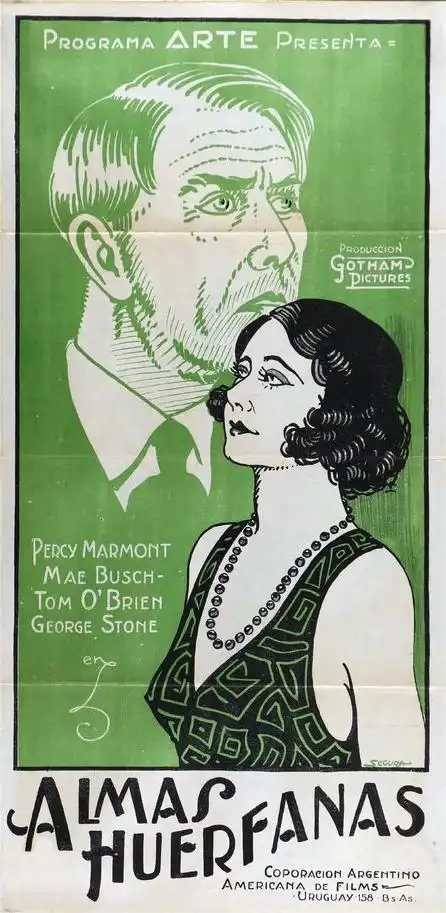
If you aren’t the kind of person who can sit through seventy minutes of grainy, black-and-white silence punctuated by the occasional loud title card, you should probably just keep scrolling. San Francisco Nights is strictly for the people who actually like the texture of 1920s film stock—the way the shadows look like spilled ink and the way everyone’s skin looks slightly like porcelain under those harsh studio lights. It’s a mood piece more than a gripping thriller. If you want a tight plot, go watch something else. If you want to see what the Barbary Coast looked like through the lens of a 1928 camera crew with a serious fog machine obsession, this is your movie.
The first thing that hits you is the atmosphere. It’s thick. There’s a scene early on in a waterfront dive where the smoke and the sea mist seem to blend into this one grey soup. It’s great. It feels claustrophobic in a way that actually works for a story about a guy trying to escape his own life. Tom O'Brien plays the lead, and he has one of those quintessentially 1920s faces—heavy jaw, deep-set eyes, and a way of wearing a flat cap that makes him look like he’s perpetually about to punch someone or burst into tears. He spends a lot of time just staring at things.
There’s this one moment where O'Brien’s character is sitting in a small room, and the light from the window is cutting a very specific rectangle across his chest. He’s just sitting there, smoking. It goes on for a long time. In a modern movie, they’d cut away after three seconds, but here, the camera just hangs on him. You start noticing weird things, like the way the wallpaper is peeling in the corner or how stiff his collar looks. It’s not 'profound,' it’s just... there. It makes the world feel lived-in, unlike some of the more polished stuff from the same year, like The Perfect Flapper, which feels much more like a staged performance.
Mae Busch shows up, and honestly, she’s the best part of the movie. She has this 'I’ve seen everything and I’m bored by most of it' energy that cuts through the melodrama. There’s a scene where she’s talking to Hobart Cavanaugh—who is doing a lot of 'acting' with his eyebrows—and she just looks exhausted. Not actress-exhausted, but real-person-at-the-end-of-a-shift exhausted. She leans against a doorframe at one point and you can almost feel the wood grain. It’s a small, physical choice that makes her character feel ten times more real than the actual script allows for.
The pacing is where things get a little shaky. About halfway through, there’s a sequence involving a lot of walking back and forth between different rooms that could have been trimmed by ten minutes. You see a character leave a house, walk down the street, enter another building, climb the stairs... we get it. He’s going somewhere. It feels like they were trying to pad the runtime or maybe they just really liked the set they built for the hallway. It’s not as kinetic as something like Riddle Gawne, which at least keeps the movement purposeful.
Also, the title cards are a bit much. Some of them are trying way too hard to be poetic about 'the shadows of the night' and 'the beating heart of the city.' It clashes with the gritty, dirty look of the actual footage. I’d rather just watch the actors' faces than read a paragraph of flowery prose every four minutes. There’s a specific shot of George E. Stone looking shifty in an alleyway that tells you more about the danger of the neighborhood than any of the writing does.
One weird detail: the background extras in the bar scenes are strangely frantic. While the main characters are having this slow, heavy conversation in the foreground, there’s a guy in the back who is aggressively drinking from a mug and another woman who keeps adjusting her shawl every five seconds. It’s distracting once you notice it. It’s like the director told them to 'look busy' and they took it as a personal challenge to be the busiest people in San Francisco.
The ending feels a bit abrupt, which is common for these late silents. Everything ramps up into a confrontation that’s over before it really starts. There’s a struggle, a gun appears, and then suddenly we’re in the resolution. It lacks the punch of The Devil's Garden, which handled its darker turns with a bit more weight. Here, it’s like the movie realized it was running out of film and decided to wrap things up so everyone could go home.
Is it a masterpiece? No. It’s a B-movie from a time when B-movies still had a lot of soul. It’s worth it for the lighting alone, and for Mae Busch’s face when she’s disappointed in someone. It’s a quiet, foggy little relic that doesn’t demand much but gives you a very specific feeling of 3:00 AM loneliness. Sometimes that’s enough.
IMDb 5.9
1931
Community
Log in to comment.