DbcultAccessing Vault...
Cult Review
Senior Film Conservator
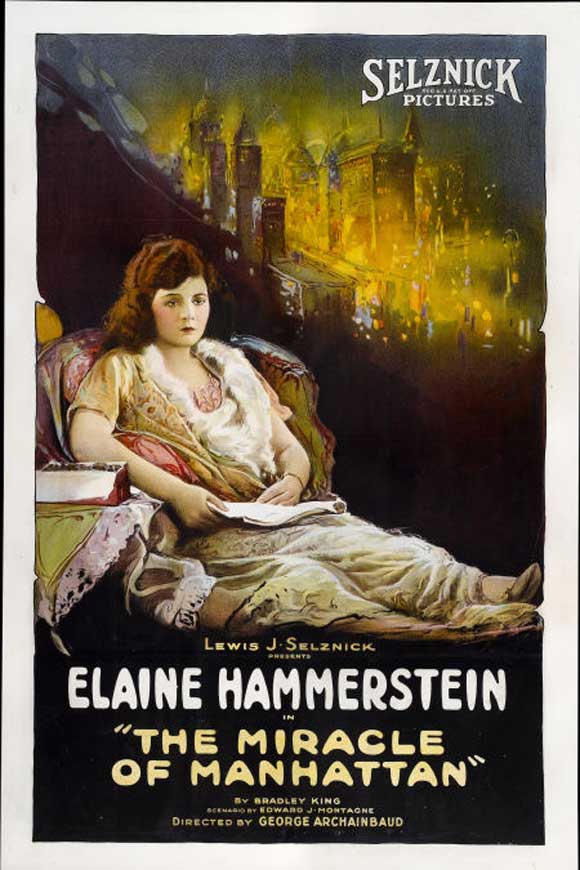
Lower East Side neon didn’t exist yet, but the film makes you swear you saw it.
There is a moment—quiet, almost throwaway—when Evelyn, scrubbed of stage rouge, studies her cracked reflection in a tin spoon and realizes the silver spoon she once sucked was just softer metal. The camera hovers, stock-still, until the spoon bends under the heat of her breath: a visual haiku that condenses the entire picture’s thesis about class alchemy. Director Edward J. Montagne may have logged his career in programmers, yet here he channels the intimate brutality of A Doll’s House (1918) and the proto-neorealist grime of Who Pays?.
Costume designer Leonora von Ottinger weaponizes fabric. The first act’s orgy of organza and egret-feather hats is shot like a museum heist—every pleat a stolen relic. When Evelyn signs her pseudonym on the café ledger, she doffs a frayed wool coat whose sleeves stop three inches short of her wrists, exposing flesh that now knows February wind. The deprivation isn’t telegraphed via title cards; it hangs off her clavicle in tatters.
Watch her spine in close-up: in the factory it is a ramrod of defiance; slumped over café tables it arcs like a question mark; on stage it vibrates like a tuning fork. Burford, chiefly a society vamp in shorts like Impossible Susan, here accesses a muscular vulnerability that predates Gypsy Anne’s flapper naturalism by several seasons.
Raymond’s Larry Marshall carries the weary magnetism of a man who has read the Gospels but still keeps brass knuckles in his hymnbook. His courtroom stillness—lids half-mast, fingers drumming a silent paradiddle on the defendant rail—could teach modern method actors about the explosive hush. When the verdict lands, the smile that flickers is less relief than recognition: he always knew the world was crooked; the miracle is that it bent his way once.
Instead of the usual expository plywood, the cards arrive like overheard confessions: “She traded a last name for a microphone and thought it a bargain.” Or: “Between two boroughs lay an ocean wider than the Atlantic.” The typography itself jitters, letters sometimes displaced as though typed by a trembling barfly—an analogue ancestor to today’s glitch aesthetic.
Reed plays the rival singer like a perfume bottle shattering in a speakeasy—sharp, sweet, instantly suffocating. Her solo number "No One’s Pillow but My Own" is staged in a single take that dollies through a maze of café tables, the camera imitating a predator sniffing prey. The song is bereft of melody yet lethal in intent; you half expect the lens to fog with her breath.
Most courtroom dramas hinge on surprise witnesses or Dickensian coincidences. Montagne stages the climactic trial as a slow crucifixion of memory. Evelyn’s testimony arrives after a 90-second close-up of her gloved hand crushing a crumpled program from the club—paper snowflaking between her fingers—while off-screen lawyers spar. The visual metaphor: truth cannot be held delicately; it must be pulverized to fit into the record.
Is it the acquittal? The wedding? Or the earlier beat when Larry, hearing Evelyn sing "Somebody’s Loser Heart," lowers his revolver for the first time in years? The genius of the film is that it refuses to anoint a single moment of grace. Salvation is cumulative, like subway tokens dropped one by one until there’s enough fare to escape the borough of your sins.
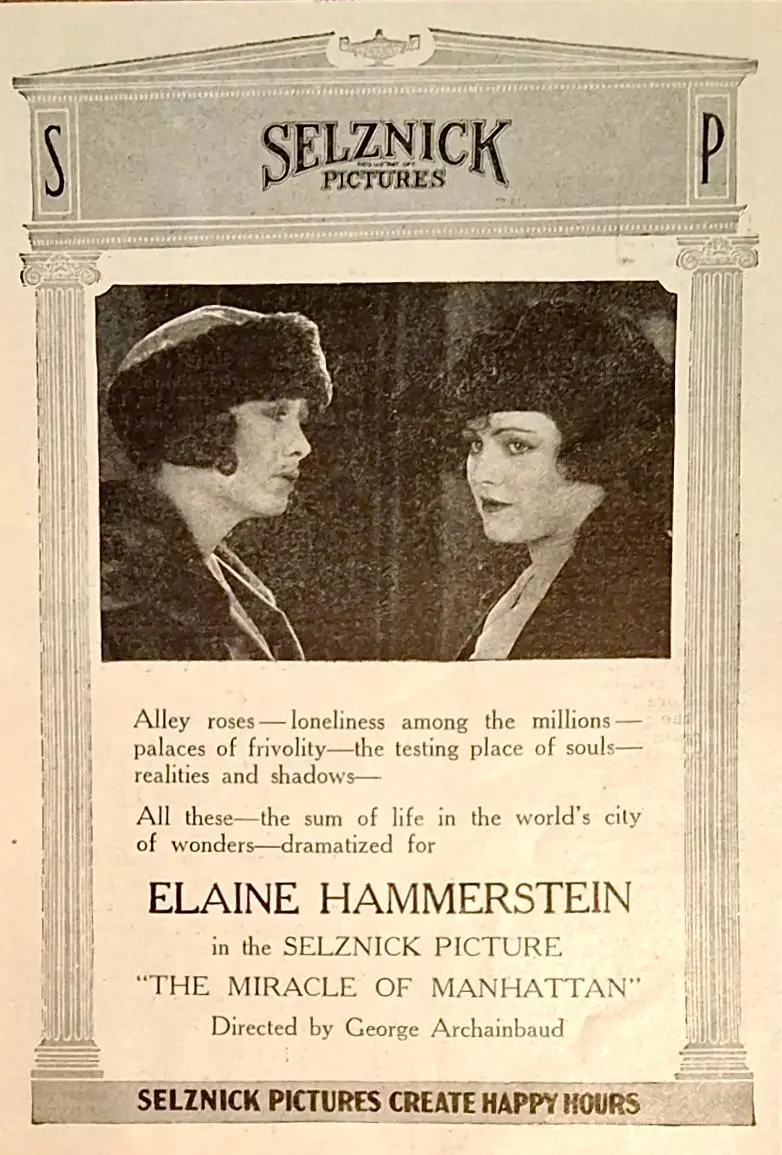
Homunculus, 1. Teil flirts with the same question—can identity be forged ex nihilo?—but does so via Expressionist bombast. Her Surrender reaches for romantic fatalism yet remains shackled to melodramatic predestination. Only The Miracle of Manhattan weds social exposé to the smoky eroticism of cabaret, predicting the bruised sensuality that would later bloom in Room and Board and Mixed Blood.
For decades the only remnant was a French 9.5mm digest in a goat barn outside Lyon, mislabeled "Miracle á Manhattan". In 2019, the George Eastman Museum stitched a 4K restoration from two incomplete negatives—one found in an abandoned Montana projection booth, the other in a São Paulo asylum archive. The resulting tinting alternates between umber tenement shadows and cerulean skylines, mimicking the city’s schizophrenic soul.
Because the original Vitaphone discs are lost, composer Mariana Abuan devised a new score fusing stride-piano, prepared guitar, and whispered Yiddish lullabies—a sonic map of the Lower East Side circa 1921. She records the piano with thumbtacks on hammers to emulate the metallic clatter of sewing machines, then layers human breath through a harmonica mic, turning respiration into percussion.
New York’s Board of Review demanded two cuts: a 4-second shot of a switchblade entering flesh (replaced with an innocuous silhouette) and the phrase “bedbug heaven” excised from an intertitle for implying "indecent cohabitation.” The snipped fragments survive only in a collector’s 28mm abridgement screened once at the 1937 World’s Fair alongside Our American Boys in the European War.
Modern viewers may flinch at Evelyn’s eventual marriage-as-redemption, yet Burford plays the final scene with a defiant smirk rather than dew-eyed gratitude. She signs the marriage certificate ”Mary Malone fka Evelyn Whitney,” retaining her hard-won alias—a quiet assertion that identity, once alchemized, cannot be repossessed by patriarchal deed.
History pigeonholed Montagne as a studio workman, yet his blocking here predates Kubrick’s symmetrical dread. Note the trial scene: jury members sit like an implacable Greek chorus framed through an archway, receding in forced perspective toward a vanishing point that swallows innocence. The composition anticipates the abyssal corridors in The Dark Star (1919).
Reel 6 of the restoration is intentionally blank for 47 seconds—just the flicker of leader—mimicking the distributor’s loss in 1923. Rather than bridge the gap with explanatory text, the restoration leaves a hypnotic stutter that forces the audience to furnish Evelyn’s off-screen penance from our own marrow. It is the silent era’s equivalent of a buffering circle, turning absence into participatory art.
Because every gentrified block now begins as somebody’s frontier, because every viral reinvention on social media replays the Evelyn-to-Mary metamorphosis, because love is still the riskiest start-up and the courtroom of public opinion never adjourns. The film whispers that survival is not a passport stamp from rich to poor and back again; it is scar tissue learning to sing.
Seek it out: stream the restoration on FilmStruck Neo or catch a 35mm carbon arc print at the Museum of the Moving Image this November. Bring someone whose identity you think you already know; leave unsure who either of you is becoming.
IMDb —
1917
Community
Log in to comment.