DbcultAccessing Vault...
6.2/10
Senior Film Conservator
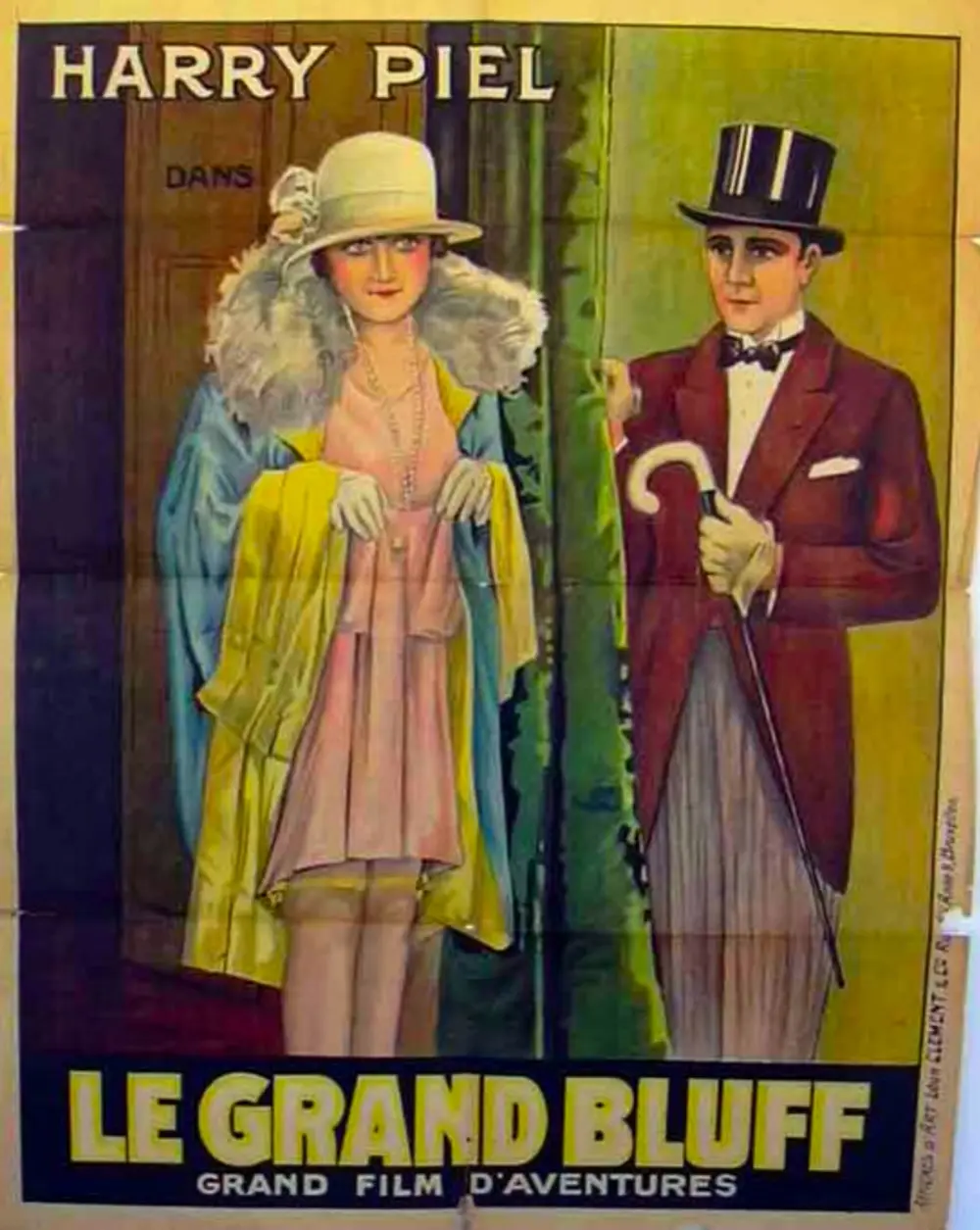
A definitive 6.2/10 rating for a film that redefined the boundaries of cult cinema. Sein größter Bluff remains a cornerstone of transgressive art.
Is 'Sein größter Bluff' worth watching today? Short answer: yes, but with significant caveats. This 1927 German silent film offers a fascinating glimpse into a bygone era of cinematic spectacle and features a surprisingly modern comedic sensibility, making it a compelling, if niche, viewing experience for the right audience.
This film is unequivocally for silent film aficionados, early cinema historians, and those with a particular interest in the foundational careers of stars like Marlene Dietrich. It is definitively NOT for viewers seeking contemporary pacing, complex psychological depth, or a simple, easily accessible narrative without context.
At its core, 'Sein größter Bluff' (His Greatest Bluff) is an elaborate caper wrapped in a comedic shell, all filtered through the unique lens of silent German cinema. The narrative centers on Harry Peel, portrayed by the film's director, Harry Piel himself, as a bon vivant who thrives on daring exploits. His latest challenge? A wager that propels him into orchestrating a series of increasingly intricate, often outlandish, hoaxes. These aren't simple pranks; they are grand theatrical productions designed to fool, entertain, and ultimately prove his superior wit.
However, Piel’s carefully choreographed world of make-believe takes an unforeseen turn. His penchant for staging dramatic illusions leads to a catastrophic case of mistaken identity, where he is erroneously branded as a dangerous criminal. Suddenly, the stakes are real. The film expertly transitions from lighthearted trickery to genuine peril, forcing Peel to navigate a world where his own creations have turned against him, and the line between his greatest bluff and his greatest danger blurs into non-existence.
Harry Piel, a multifaceted talent, not only stars but also directs 'Sein größter Bluff,' imbuing the film with his signature blend of action, comedy, and often audacious stunts. Piel was known as Germany's 'film director of dangers,' and this film showcases exactly why. He orchestrates sequences that, for 1927, are remarkably dynamic, favoring rapid cuts and physical comedy that would feel at home in a Buster Keaton or Harold Lloyd picture.
One particularly memorable sequence involves a frantic chase across rooftops and through bustling city streets, where Piel’s character narrowly evades capture through a combination of agility and sheer luck. This isn't just movement; it's a meticulously choreographed ballet of near-misses and daring leaps, captured with a kinetic energy that belies the film's age. Piel's direction shines brightest in these moments, proving his understanding of visual storytelling beyond mere exposition.
The screenplay, penned by Herbert Nossen and Henrik Galeen, provides a robust framework for Piel's directorial flourishes. Galeen, renowned for his work on expressionistic masterpieces like The Street of Seven Stars and 'Der Golem,' brings a structural intelligence to the narrative, even if the film leans more towards entertainment than profound thematic exploration. The plot's progression, from playful deception to desperate evasion, is logical, if a little predictable by modern standards, but it’s the execution that elevates it.
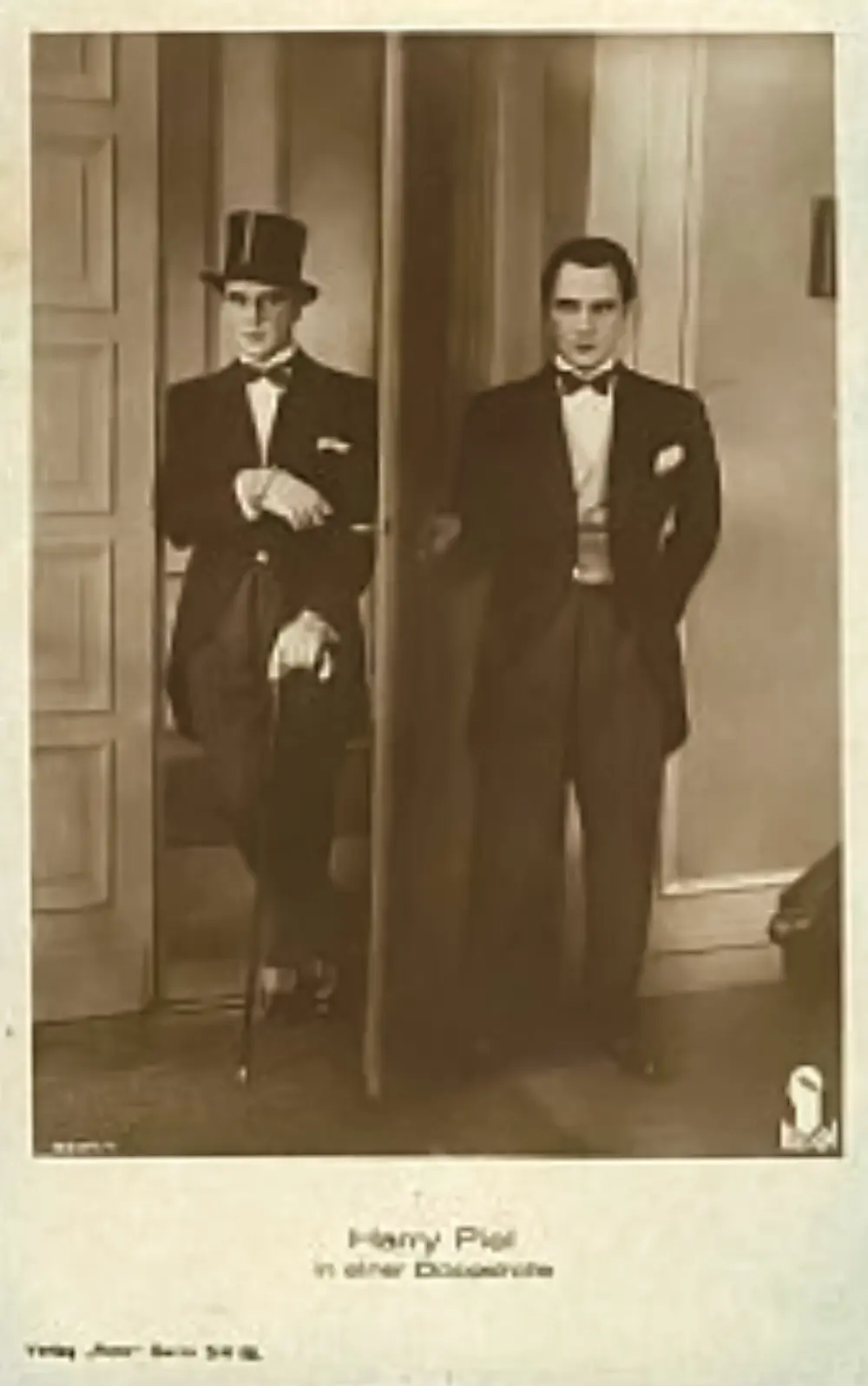
Their writing ensures that the mistaken identity plot, while a common trope, feels fresh through its commitment to increasingly absurd situations. The writers don't shy away from painting Peel into corners that seem impossible to escape, building genuine suspense amidst the comedic chaos. It’s a testament to their craft that the audience remains invested in Peel’s predicament, even when his troubles are largely self-inflicted.
The cast of 'Sein größter Bluff' is a fascinating ensemble, anchored by Harry Piel's charismatic, if occasionally over-the-top, central performance. Piel, as the eponymous bluffer, carries the film with an infectious energy. His physical comedy is precise, his expressions are clear, and he embodies the roguish charm necessary for the audience to root for a character who, by all accounts, brings most of his troubles upon himself. He’s a silent film star in the classic mold, relying on exaggerated gestures and expressive eyes to convey a full spectrum of emotion.
Lotte Lorring, as the romantic interest, provides a grounded presence amidst Piel's antics. Her performance is subtle, conveying concern and affection without resorting to histrionics. She serves as a crucial emotional anchor, her reactions often mirroring the audience's growing apprehension as Peel’s situation deteriorates. Her chemistry with Piel, though understated, is palpable, adding a layer of warmth to the otherwise frenetic narrative.
However, the most intriguing casting element for contemporary viewers is undoubtedly the early appearance of Marlene Dietrich. Before her iconic transformation into a Hollywood legend, Dietrich is present in a supporting role. While her screen time is limited, her unique allure and nascent star power are already evident. Even in these early frames, one can discern the magnetic presence that would soon captivate global audiences. It's a fleeting but significant moment for film historians, a chance to witness the genesis of a star before she fully blossomed into the persona of Paris or 'The Blue Angel.' Her brief scenes, though not central to the plot, hint at the powerful, enigmatic screen persona she would soon perfect.
The supporting cast, including Boris Michailow and Kurt Gerron, contribute to the film's vibrant atmosphere. Michailow, often playing the heavy or the bewildered authority figure, adds a necessary foil to Piel’s antics, while Gerron, a versatile actor who would later direct, brings a certain gravitas to his smaller role. Their contributions ensure that the world Piel inhabits feels populated and reactive, rather than merely a backdrop for his solo performance.
The cinematography in 'Sein größter Bluff' is typical of its era but executed with a keen eye for clarity and dynamism. The camera work, while not overtly expressionistic like some of its German contemporaries, effectively captures the action and emotion. Close-ups are used judiciously to highlight character reactions, particularly during moments of high tension or comedic revelation. The use of natural light and well-composed interior shots creates a believable, if slightly theatrical, world.
The pacing is surprisingly brisk for a silent film. Piel, as director, understood the importance of momentum, especially in a narrative driven by chases and escalating complications. The film moves swiftly, rarely lingering too long on any single scene, which helps maintain audience engagement. This rapid pace is particularly effective during the action sequences, where the quick succession of shots amplifies the sense of urgency and excitement.
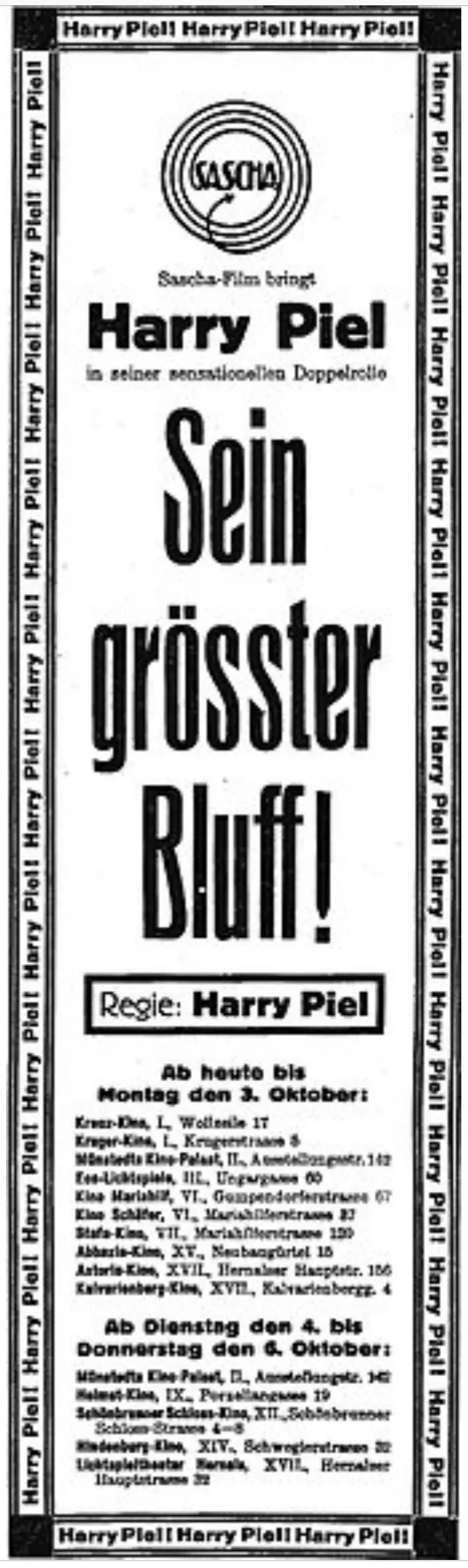
The tone is a delightful blend of lighthearted comedy and genuine suspense. It manages to be amusing without being overtly silly, and thrilling without becoming overly dark. This balance is a testament to Piel's control over the narrative. He never allows the comedic elements to undermine the stakes, nor does he let the danger overshadow the film’s fundamental lightness. It’s a tricky tightrope walk, but one the film navigates with commendable grace.
This film works because: It delivers an entertaining blend of action and comedy, showcases Harry Piel's unique directorial and acting style, and offers a rare glimpse of Marlene Dietrich in her formative years.
This film fails because: Its narrative, while engaging, lacks the thematic depth or artistic innovation of its more celebrated silent German contemporaries, and its pacing might still feel slow to modern audiences.
You should watch it if: You are a devoted silent film enthusiast, a student of early German cinema, or curious to see the nascent talent of a legendary star before her superstardom.
For those willing to engage with the conventions of silent cinema, 'Sein größter Bluff' is a rewarding experience. It’s not a profound cinematic statement, nor does it aim to be. Instead, it’s a robust piece of popular entertainment from its era, executed with skill and a clear understanding of its audience. The film’s charm lies in its earnestness and its commitment to delivering a good time.
It works. But it’s flawed. The plot, while fun, doesn't offer many surprises beyond the initial setup of mistaken identity, and some of the comedic beats haven't aged perfectly. However, the sheer energy of Piel and the historical significance of Dietrich's presence easily outweigh these minor shortcomings for the target demographic.
I firmly believe that films like 'Sein größter Bluff' are crucial for understanding the evolution of cinema beyond the oft-cited masterpieces. They represent the commercial backbone, the popular fare that shaped audience expectations and provided a proving ground for future legends. To dismiss them is to miss a vital piece of the cinematic puzzle.
'Sein größter Bluff' is a delightful, if not groundbreaking, piece of German silent cinema. It stands as a testament to the popular filmmaking of its era, showcasing a director-star at the height of his particular craft and offering a valuable early look at one of cinema's most enduring icons. It’s a film that asks for a degree of historical appreciation but rewards that effort with genuine entertainment.
While it won't redefine your understanding of film, it will certainly entertain you, provided you approach it with an open mind and a fondness for the unique charm of the silent era. For those specific audiences, Harry Piel’s greatest bluff is a trick worth seeing. It’s a valuable addition to the silent film canon, not for its artistic revolution, but for its sheer, unadulterated fun and its intriguing historical footnotes. Go watch it, but know what you’re getting into.
IMDb 7.8
1936
Community
Log in to comment.