DbcultAccessing Vault...
Cult Review
Senior Film Conservator
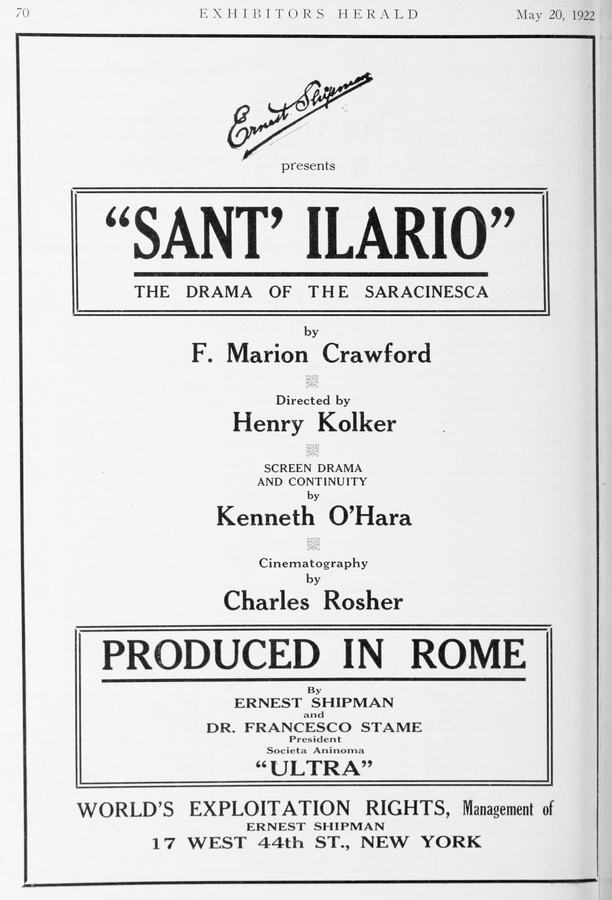
Ah, the silent era. A time often romanticized, sometimes misunderstood, but always a fertile ground for cinematic exploration that, even today, can resonate with a surprising intensity. Among the myriad of films from this nascent period of the seventh art, Sant'Ilario emerges not merely as a historical curiosity but as a compelling, albeit deeply melancholic, examination of faith, desire, and the relentless societal pressures that shape human destiny. Based, as it is, on Francis Marion Crawford's sprawling Roman novels, this picture attempts, with varying degrees of success, to distill the dense psychological and spiritual turmoil of its source material into a visual poem, a task that even contemporary cinema often struggles to achieve.
From its opening frames, Sant'Ilario plunges us headfirst into the cloistered, yet paradoxically public, world of late 19th-century Roman aristocracy. The very air seems thick with tradition, expectation, and the unspoken weight of centuries of Catholic dogma. Our protagonist, Giovanni Saracinesca, portrayed with a brooding intensity by Renato Mariani, is a figure of profound internal conflict. Mariani imbues Giovanni with a palpable sense of spiritual earnestness, a man seemingly destined for a life of devout contemplation, perhaps even the priesthood, were it not for the fiery crucible of earthly passion. His devotion to Sant'Ilario, the patron saint, is not merely a religious adherence but a deeply ingrained aspect of his identity, a shield against the perceived corruptions of the world. Yet, this shield proves tragically permeable.
The catalyst for Giovanni’s spiritual unraveling arrives in the form of Donna Tullia, a character brought to vivid, almost incandescent life by Edy Darclea. Darclea’s performance is a masterclass in silent film acting, conveying a tempestuous inner world through subtle gestures and piercing gazes. Tullia is not merely a femme fatale; she is a woman trapped, her vibrant spirit constrained by a marriage to the elderly, politically influential, and morally ambiguous Prince Montevarchi. Bonaventura Ibáñez, in his portrayal of the Prince, crafts a figure of quiet menace and entrenched power, a man whose very presence seems to suffocate the joy from those around him. The illicit connection between Giovanni and Tullia is therefore not just a breach of religious and social decorum but a desperate cry for freedom, a rebellion against a world that demands conformity above all else. The film excels in portraying the suffocating nature of their secret, the stolen glances, the whispered conversations, the constant dread of exposure. It evokes a similar sense of doomed romance and societal entrapment seen in films like Greater Than Love, though Sant'Ilario leans more heavily into the spiritual and moral ramifications.
Ida Carloni Talli, as Giovanni's formidable mother, delivers a performance that anchors the film’s moral compass. Her character embodies the rigidity and unyielding piety of the Roman aristocracy, yet Talli injects moments of profound maternal anguish. Her attempts to guide Giovanni, to warn him away from the precipice, are fraught with a desperate love that transcends mere social obligation. She is a fascinating counterpoint to Tullia’s passionate impulsiveness, representing the old guard, the unbreakable traditions that Giovanni is so carelessly, yet compellingly, defying. The scenes between Talli and Mariani are particularly potent, filled with unspoken tension and the clashing of duty versus desire. One can almost feel the weight of her disappointment, the silent pleas for her son to uphold the family name, to honor his spiritual calling.
Visually, Sant'Ilario is a feast for the eyes, a testament to the Italian cinematic prowess of the era. The decision to film on location in Rome lends an unparalleled authenticity to the proceedings. The ancient streets, the majestic basilicas, the opulent interiors of aristocratic palazzi – all become more than mere backdrops; they are active participants in the drama. The grandeur of the Eternal City serves to amplify both the spiritual aspirations and the earthly temptations that plague Giovanni. The cinematography, while occasionally constrained by the technical limitations of the time, often achieves moments of striking beauty and evocative atmosphere. The use of shadow and light, particularly in the clandestine meetings between Giovanni and Tullia, effectively heightens the sense of secrecy and danger. One can almost feel the cool stone of the catacombs or the oppressive heat of the Roman sun bearing down on the characters.
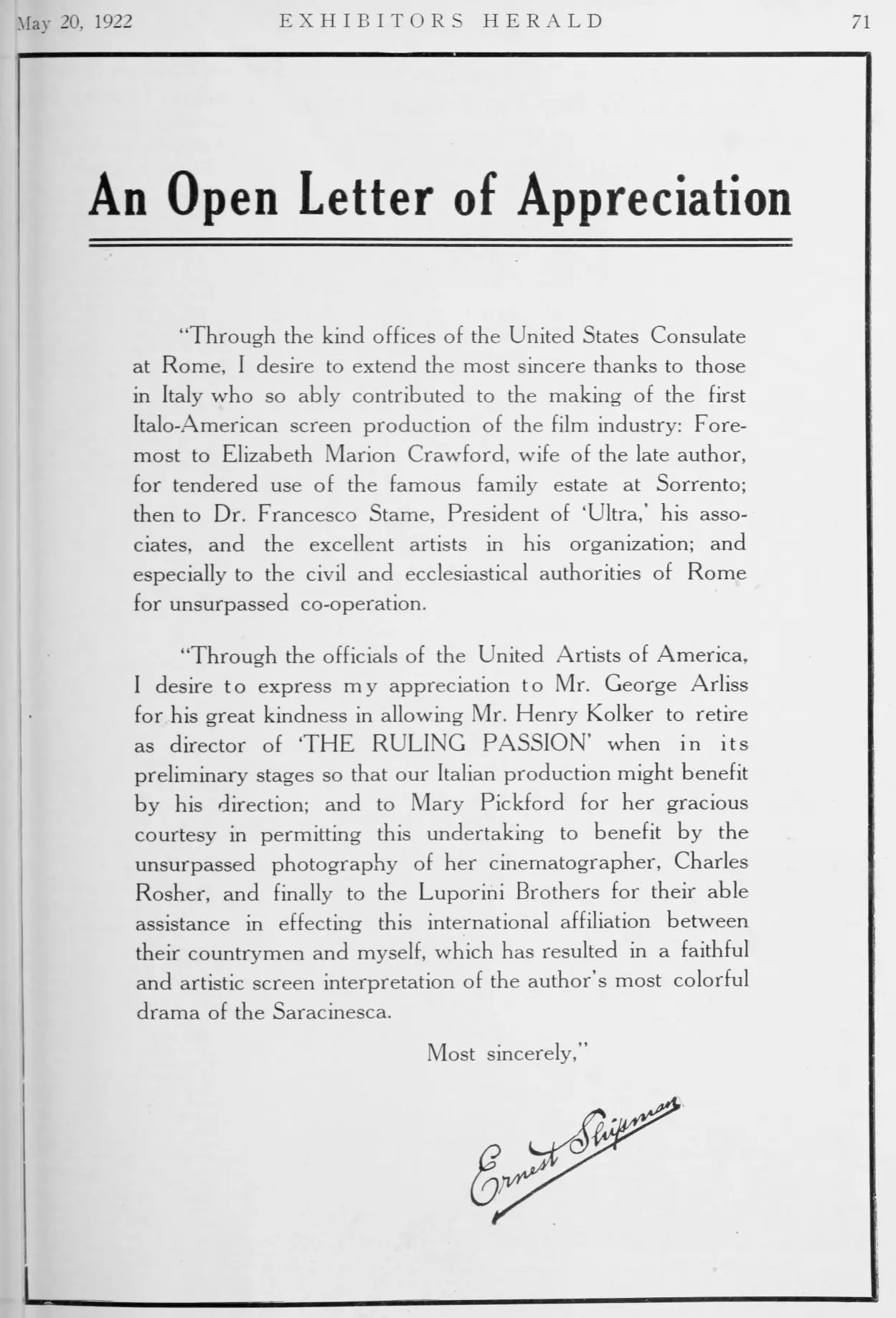
The narrative, adapted by Kenneth O'Hara from Crawford's work, navigates a complex web of intrigue and emotional turmoil. While the sprawling nature of the source material means certain nuances are undoubtedly lost in translation to the screen, the core themes remain powerfully intact. The film delves deeply into the concepts of sin, repentance, and the elusive nature of redemption. Giovanni’s struggle is not merely against external forces but against his own conscience, his perceived betrayal of his spiritual ideals. The moral quandaries presented are not easily resolved, leaving the audience to ponder the true cost of passion and the weight of societal judgment. In this regard, it offers a more nuanced, less overtly moralistic perspective than some contemporary American productions like The Printer's Devil or Homespun Folks, which often presented clearer delineations between good and evil.
Beyond the central trio, the supporting cast contributes significantly to the film’s rich tapestry. Ignazio Lupi, Rodolfo Badaloni, and Ettore Berti, among others, fill out the world of Roman society with convincing gravitas, embodying the watchful eyes and whispered judgments that constantly threaten to expose the lovers. Their collective presence creates an almost claustrophobic atmosphere, reinforcing the idea that in this world, there is no true escape from scrutiny. Margaret Blak, Carlo Flamma, Sandro Salvini, and Elena Lunda also make their marks, each performance adding another thread to the intricate narrative, whether as confidantes, rivals, or agents of fate. The ensemble work here is particularly commendable, as silent film acting often relies on broad strokes, but in Sant'Ilario, there's a collective effort to convey a layered, complex social ecosystem.
The film’s exploration of faith is particularly poignant. Giovanni’s internal battle between his spiritual calling and his earthly desires is a central pillar of the narrative. The very name of the film, Sant'Ilario, underscores this religious dimension. It’s a constant reminder of the spiritual ideal that Giovanni strives for, and the perceived fall from grace that his affair with Tullia represents. This deeply Catholic sensibility, so intrinsic to Italian culture, permeates every frame, offering insights into the moral framework of the time. Unlike the lighter, more escapist fare like Flirting with Fate or Hip Hip Hypnotism, Sant'Ilario demands a thoughtful engagement with its weighty themes, pushing the viewer to confront difficult questions about morality and personal sacrifice.
While Sant'Ilario may not possess the widespread recognition of some of its more famous silent contemporaries, its enduring power lies in its unflinching portrayal of human frailty and the timeless struggle between the sacred and the profane. The film’s climax, a heart-wrenching confrontation with conscience and consequence, leaves an indelible mark. It refrains from offering easy answers, instead opting for a resolution that is both tragic and profoundly human. The final scenes resonate with a quiet despair, a testament to the sacrifices made and the dreams shattered in the pursuit of an impossible love. It’s a narrative arc that feels more akin to a grand opera than a simple melodrama, elevating the personal tragedy to a universal examination of redemption's elusive nature.
In an era where cinema was still finding its voice, Sant'Ilario stands as a significant artistic achievement, showcasing the ambition and storytelling prowess of early Italian filmmakers. It’s a film that asks profound questions about duty, passion, and the very nature of sin and forgiveness. It invites us to consider the pressures faced by individuals navigating rigid social structures, a theme that, despite the passage of a century, remains remarkably relevant. For those interested in the evolution of cinematic storytelling, or simply in a deeply affecting human drama, Sant'Ilario offers a rich, rewarding experience, a window into a bygone era that still speaks volumes about the enduring complexities of the human heart. Its nuanced characterizations and atmospheric setting offer a depth that many contemporary films still strive for. It's a reminder that true cinematic artistry transcends the limitations of technology, finding its strength in compelling narrative and resonant human emotion, much like a timeless piece of literature or a classic painting. It stands apart from more straightforward adventure tales such as The Last Rebel or lighthearted comedies like Lodge Night, forging its own path into the dramatic and psychological landscape of human experience. The film’s power lies not in grand spectacle, but in the intimate torment of its characters, making it a compelling piece of cinematic history well worth revisiting.
IMDb 7.1
1923
Community
Log in to comment.