DbcultAccessing Vault...
Cult Review
Senior Film Conservator
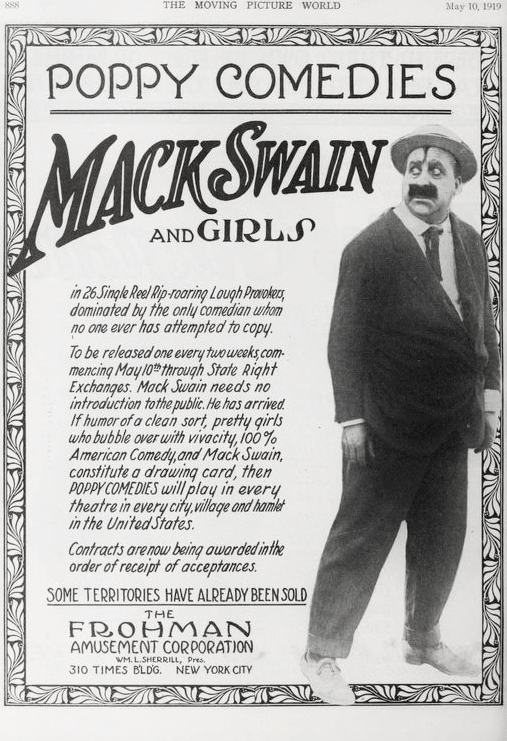
The genesis of cinematic comedy is often unfairly reduced to a few titan names, yet the archival rediscovery of works like Daddy Ambrose reminds us that the silent era was a lush ecosystem of varied comedic archetypes. Mack Swain, a performer whose physical presence was as substantial as his comedic timing, brought to the screen a specific brand of 'heavy' humor that served as a precursor to the more nuanced character studies we see in later decades. This film, featuring the enigmatic Lottie Cruz, stands as a testament to the period's reliance on pure visual storytelling—a medium where a twitch of a mustache or the tilt of a hat carried the narrative weight of a thousand words.
To understand the impact of Daddy Ambrose, one must first dismantle the architecture of Mack Swain’s performance. Swain was not merely a large man in a suit; he was a master of the 'slow burn.' Unlike the frenetic energy found in A Spy for a Day, where the comedy is derived from external pressures, Swain’s Ambrose creates his own atmospheric pressure. His movements are deliberate, almost geological in their pace, which makes the eventual eruption into slapstick all the more jarring and effective. In this specific outing, the 'Daddy' moniker adds a layer of domestic responsibility that contrasts sharply with the character’s inherent clumsiness.
Lottie Cruz, often overlooked in the broader canon of silent actresses, provides a performance here that is remarkably modern. While many of her contemporaries were forced into roles of the damsel or the shrew, Cruz interacts with Swain with a sense of agency. She is the pivot point around which the chaos rotates. When we compare her role here to the more traditional heroine tropes seen in Nell of the Circus, we see a distinct shift toward a more collaborative form of comedy. The chemistry between Swain and Cruz isn't just about the jokes; it’s about the spatial relationship between two bodies that represent entirely different social energies.
The pacing of Daddy Ambrose is a marvel of early film editing. In an age where long takes were still the norm, the director (whose touch mirrors the best of the Keystone era) utilizes rhythmic cutting to emphasize the impact of the physical gags. There is a sequence involving a dinner table—a staple of the genre—that rivals the sophisticated blocking found in A Regiment of Two. Every plate passed and every chair pulled out is choreographed with the precision of a Swiss watch. The humor arises not from the objects themselves, but from the subversion of the audience's expectation of how those objects should behave.
Consider the use of depth in the frame. While films like The Girl from His Town often utilized flat, stage-like compositions, Daddy Ambrose experiments with foreground and background action. We see Ambrose struggling with a staircase in the background while Cruz’s character attempts to maintain social decorum in the foreground. This dual-layered narrative approach allows for a richer comedic experience, rewarding the viewer who looks beyond the central action. It is a sophisticated technique that elevates the film from mere 'pie-in-the-face' humor to a genuine piece of cinematic art.
Beneath the surface of the tumbling and the pratfalls lies a surprisingly sharp critique of early 20th-century masculinity. Ambrose is a man perpetually out of his depth, a patriarch whose 'kingdom' is a series of traps designed to expose his inadequacy. This theme of the failing father figure is a recurring motif in silent cinema, often providing a safe space for audiences to laugh at the rigid structures of the time. Unlike the high-stakes drama of The Woman's Law or the moral weight of The Crucible, Daddy Ambrose uses humor to dismantle the same societal pillars.
The film also touches upon the anxiety of the 'new woman' and the changing domestic sphere. Cruz’s character represents a burgeoning independence that Ambrose simply cannot compute. Every time he attempts to assert his 'Daddy' status, the world—quite literally—falls apart around him. This subtext makes the film a fascinating companion piece to Your Girl and Mine: A Woman Suffrage Play, albeit through a much more lighthearted lens. Where the latter advocates for change through rhetoric, the former illustrates the necessity of change through the sheer absurdity of the status quo.
Technically, the film is a masterclass in the use of natural light and set design. The interior of the Ambrose household is cluttered and claustrophobic, mirroring the protagonist's mental state. The use of props is particularly inspired; a simple umbrella or a loose floorboard becomes a character in its own right. This anthropomorphism of the inanimate is a hallmark of the best silent comedies, creating a world that feels alive and slightly malicious. It’s a stark contrast to the more ethereal, atmospheric settings found in The Haunted Manor.
Furthermore, the cinematography captures the nuances of Swain’s facial expressions with surprising clarity. Despite the limitations of the orthochromatic film stock used at the time, the range of emotion Swain conveys—from smug self-satisfaction to utter despair—is palpable. His eyes, often rimmed with dark makeup to emphasize his bewilderment, serve as the emotional core of the film. We see a similar level of expressive intensity in The Enemy Within, though utilized there for psychological suspense rather than comedic relief.
In the grand tapestry of film history, Daddy Ambrose is more than a footnote. It represents the peak of the 'Ambrose' character's evolution before Swain would eventually find even greater fame alongside Charlie Chaplin in films like *The Gold Rush*. To watch this film today is to witness a craftsman at work, honing the tropes and techniques that would define comedy for a century. It lacks the cynicism of modern humor, replacing it with a genuine, almost naive joy in the possibilities of the moving image.
When we look at other contemporary works like Fools for Luck or The Rescuing Angel, we see a variety of approaches to the comedy of manners. However, Daddy Ambrose remains unique for its commitment to the 'grotesque'—the idea that the human body is inherently funny in its failure to perfectly navigate the world. It is a philosophy that resonates through the ages, from the silent shorts of the 1910s to the physical comedies of the present day.
The film’s conclusion, a frantic chase that spills out into the streets, is a perfect encapsulation of the 'Keystone' style. It is a liberation from the domestic interior, a final explosion of energy that leaves the audience breathless. It reminds us that while the social order may be restored by the time the 'The End' card appears, the chaos that preceded it was the true reality. Much like the moral dilemmas in The Church and the Woman, or the perilous stakes in Thrown to the Lions, the resolution is secondary to the journey.
Ultimately, Daddy Ambrose is a vibrant, living artifact. It captures a moment in time when cinema was still discovering its own power to make us laugh, to make us think, and to make us recognize our own clumsiness in the faces of others. For any serious student of film, or even the casual viewer looking for a window into the past, this film is an essential experience. It isn't just about the laughs; it's about the enduring humanity of the 'Ambrose' archetype—a man who keeps trying, no matter how many times the world knocks him down. It is a sentiment as relevant now as it was when the first reels of this film were spun in darkened theaters over a century ago, alongside other forgotten classics like When Arizona Won or the whimsical The Primrose Ring.
IMDb 5.6
1930
Community
Log in to comment.