DbcultAccessing Vault...
6.7/10
Senior Film Conservator
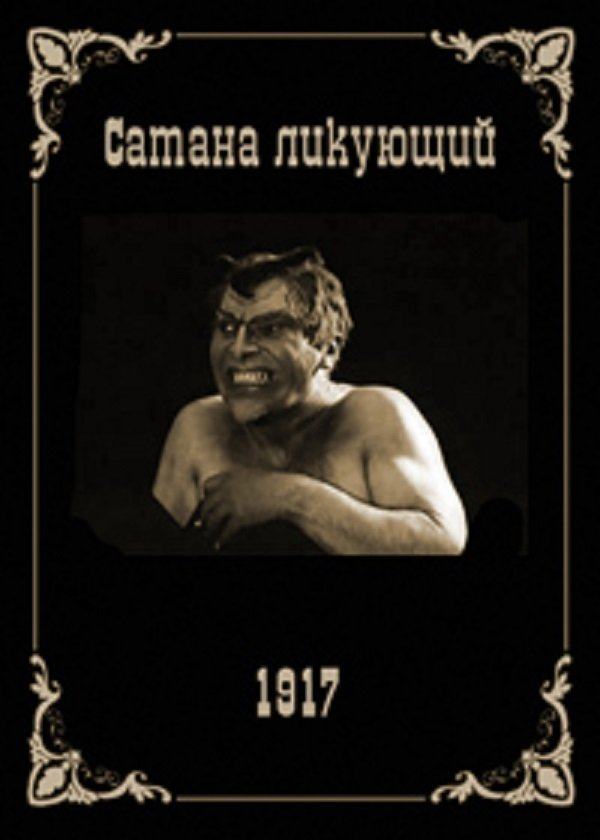
A definitive 6.7/10 rating for a film that redefined the boundaries of cult cinema. Satana likuyushchiy remains a cornerstone of transgressive art.
In the annals of silent cinema, where grand gestures and stark symbolism often spoke louder than words, a film like Satana likuyushchiy (1917) emerges not merely as a historical artifact, but as a potent, enduring exploration of the human condition. This Russian masterpiece, directed with an unflinching gaze and propelled by the extraordinary performance of Ivan Mozzhukhin, plunges into the terrifying chasm between fervent faith and profound moral collapse. It is a cinematic experience that transcends its era, offering a timeless meditation on the insidious nature of temptation and the fragility of even the most seemingly resolute spirit. To dismiss it as simply a period piece would be to overlook its profound psychological insights and its masterful deployment of allegorical storytelling, a hallmark of early narrative filmmaking.
The film introduces us to Pastor Talnox, portrayed with a mesmerizing intensity by Ivan Mozzhukhin, a man whose public persona is one of unyielding piety and fiery moral rectitude. He preaches with a captivating fervor, his sermons a thunderous indictment of sin and a clarion call to resist the devil's machinations. Yet, beneath this veneer of spiritual strength, a subtle rot begins to fester. It is a testament to the film's nuanced writing by Olga Blazhevich that Talnox's fall is not sudden but a gradual, almost imperceptible erosion of his moral foundations. The brilliance lies in how the film portrays the devil, not as a grotesque, horned entity, but as a more insidious, psychological force—a manifestation of Talnox's own weaknesses and suppressed desires. This approach elevates the narrative beyond simple good-versus-evil melodrama, transforming it into a profound character study of a soul in crisis.
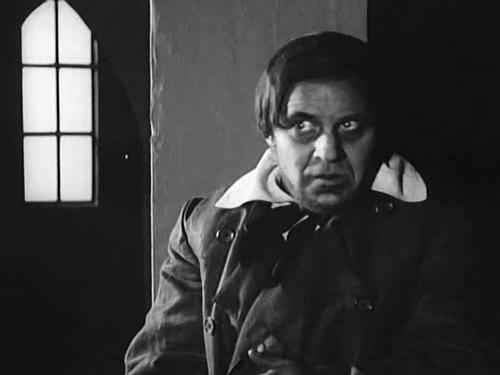
Ivan Mozzhukhin's performance as Pastor Talnox is nothing short of breathtaking. In an era where actors relied solely on physical expression and facial nuance to convey emotion, Mozzhukhin delivers a masterclass in silent anguish. His eyes, at first alight with righteous zeal, gradually cloud with doubt, fear, and eventually, a chilling despair. Every twitch of his facial muscles, every subtle shift in his posture, communicates the internal torment that rages within Talnox. We witness his initial resistance, the desperate attempts to cling to his faith, and the agonizing surrender to the temptations whispered by the unseen entity. It's a portrayal of such raw vulnerability and psychological depth that it stands comparison with the finest performances of any era. Mozzhukhin doesn't just act; he embodies the very essence of a man grappling with his conscience, making his spiritual fall feel tragically inevitable and deeply personal. The sheer power of his presence commands the screen, drawing the viewer into Talnox's internal hell with an almost uncomfortable intimacy.
The supporting cast, while perhaps overshadowed by Mozzhukhin's towering performance, contributes significantly to the film's atmospheric tension. Vera Orlova, Aleksandr Chabrov, Polycarpe Pavloff, Nathalie Lissenko, and Georgiy Nekrasov provide the human backdrop against which Talnox's personal drama unfolds. Their reactions, their expressions of faith, concern, or eventual disillusionment, serve to highlight the pastor's escalating isolation. Lissenko, in particular, often conveys a quiet strength or a poignant distress that subtly amplifies the tragedy unfolding around Talnox. The interplay between these characters, though often wordless, speaks volumes about the societal and personal stakes involved in Talnox's descent. The film masterfully uses these peripheral figures to reflect the impact of Talnox's actions, demonstrating how one man's spiritual corruption can cast a long, dark shadow over his entire community.
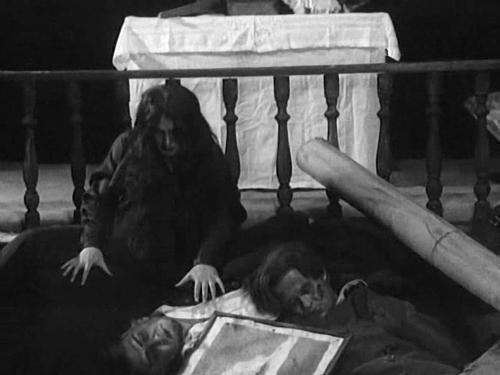
The most compelling aspect of Satana likuyushchiy is its portrayal of Satan. Rather than a theatrical villain, Satan appears as a subtle, manipulative force, a whisper in the dark corners of Talnox's mind. The film brilliantly externalizes this internal struggle, showing Satan as a physical presence only to emphasize the pastor's psychological torment. This approach predates many later psychological thrillers, offering a sophisticated understanding of temptation as an internal battle rather than an external assault. The devil here is not about overt evil but about exploiting vulnerabilities, nurturing doubts, and gently nudging a soul towards its own undoing. This makes the film's depiction of spiritual fall all the more chilling, as it suggests that the greatest threats often come from within, exacerbated by a cunning, almost invisible adversary.
Olga Blazhevich's screenplay, with its focus on moral decay and the corruption of a spiritual leader, aligns it with other contemporary dramas that explored the darker aspects of human nature. One might draw parallels to films like Corruption, which similarly delves into the erosion of ethics, or even the more allegorical elements found in early horror and suspense films that played on internal fears. The film's strength lies in its ability to take a seemingly straightforward religious allegory and infuse it with psychological realism, making the pastor's struggle feel acutely human and relatable despite the supernatural antagonist. The thematic weight of hypocrisy, the public face versus the private struggle, resonates profoundly, inviting viewers to reflect on their own moral compasses.
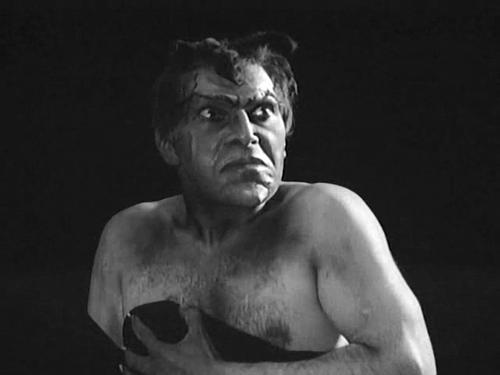
Visually, Satana likuyushchiy employs the nascent cinematic techniques of its time with remarkable effectiveness. The use of dramatic lighting, particularly shadows that creep and engulf Talnox as his moral compass falters, is masterfully executed. Close-ups on Mozzhukhin's face amplify his internal agony, creating an intimate connection with his deteriorating state. The film's pacing, deliberate and suspenseful, builds tension inexorably, pulling the audience deeper into the pastor's unfolding tragedy. The setting, often stark and austere, further emphasizes the spiritual barrenness that gradually consumes Talnox. This visual storytelling, unburdened by dialogue, relies entirely on the power of imagery and performance to convey its complex themes, a testament to the artistry of silent era filmmakers.
Comparing it to other films of its period, one can see Satana likuyushchiy's unique place. While films like Hell's Hinges might depict a more overt struggle between good and evil in a rugged, external landscape, Satana likuyushchiy brings the battle squarely into the internal, psychological realm. It shares a certain thematic gravity with dramas exploring personal downfall, such as one might find in a character study akin to the internal struggles in Hedda Gabler, albeit through a distinctly different lens of spiritual allegory. The film's ability to create a palpable sense of dread and moral decay without relying on explicit horror tropes is particularly commendable. It's a testament to the filmmakers' understanding of human nature and their skill in translating abstract concepts like temptation and sin into compelling visual narrative.
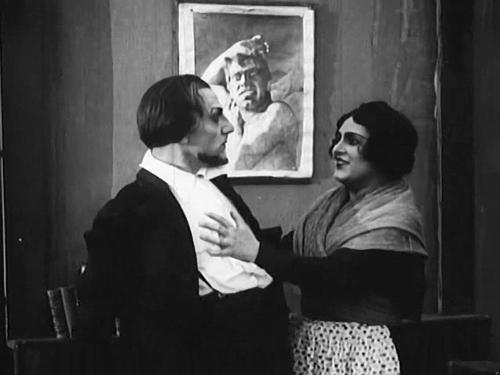
What makes Satana likuyushchiy resonate even today, over a century after its release, is its timeless exploration of moral frailty. The film posits that no one, regardless of their piety or public standing, is immune to the lure of temptation. It challenges the viewer to look inward, to confront the potential for darkness within themselves. The narrative doesn't offer easy answers or simplistic moralizing; instead, it presents a stark, unflinching portrayal of a man's spiritual undoing, leaving the audience to grapple with the profound implications of his fall. The story's power lies in its universality; the struggle between one's ideals and one's base desires is a conflict inherent to the human experience, transcending cultural and temporal boundaries.
The film's impact is further amplified by its unflinching depiction of consequence. Talnox's spiritual fall is not without tangible repercussions, both for himself and for those around him. The theft he commits, spurred by the devil's influence, becomes a physical manifestation of his internal corruption, a damning piece of evidence that shatters his carefully constructed facade. This tangible aspect of his descent grounds the allegorical narrative in a harsh reality, making the abstract concept of sin feel concrete and devastating. It reminds us that spiritual transgressions often lead to very real-world ramifications, eroding trust and destroying reputations. The narrative's careful construction ensures that every step of Talnox's journey, from fervent preacher to fallen man, feels earned and tragically believable.
In an era when cinema was still finding its voice, Satana likuyushchiy stands as a remarkable achievement in dramatic storytelling. Its ability to convey complex psychological states and profound moral themes without the aid of spoken dialogue speaks volumes about the artistry of its creators. The film's enduring power lies not just in its historical significance, but in its timeless message about the ever-present struggle against one's own demons. It's a chilling reminder that the greatest battles are often fought within the confines of our own minds, and that even the most devout can succumb to the whispers of temptation. The film's exploration of hypocrisy, the gulf between outward appearance and inner reality, remains as relevant today as it was a century ago.
For enthusiasts of classic cinema and those interested in the psychological depth of early films, Satana likuyushchiy is an indispensable watch. It’s a compelling example of how silent film, far from being primitive, was capable of profound subtlety and emotional resonance. The film's legacy is secure as a powerful and thought-provoking piece that continues to challenge and disturb, proving that the most terrifying demons are often those we invite into our own hearts. Its narrative echoes the cautionary tales found across centuries of literature and folklore, solidifying its place as a quintessential representation of human struggle against internal and external corrupting forces. The meticulous direction and the unforgettable central performance ensure that this film, despite its age, retains an astonishing capacity to provoke contemplation and stir the soul, cementing its status as a timeless piece of cinematic art.
The film serves as a poignant reminder that the battle for one's soul is a constant, arduous endeavor, and that vigilance against one's own weaknesses is paramount. It’s a cautionary tale, delivered with an intensity that only the silent screen could truly capture, where every gesture, every shadow, and every flicker of an eye carries immense narrative weight. The enduring relevance of Satana likuyushchiy lies in its universal depiction of human fallibility, making it a masterpiece that transcends its historical context to speak to the core of the human spirit. It is a film that lingers long after the credits roll, its unsettling questions about faith, morality, and temptation echoing in the viewer's mind, a true testament to the power of early cinematic narrative.

IMDb —
1921
Community
Log in to comment.