DbcultAccessing Vault...
6.5/10
Senior Film Conservator
A definitive 6.5/10 rating for a film that redefined the boundaries of cult cinema. Scamps and Scandals remains a cornerstone of transgressive art.
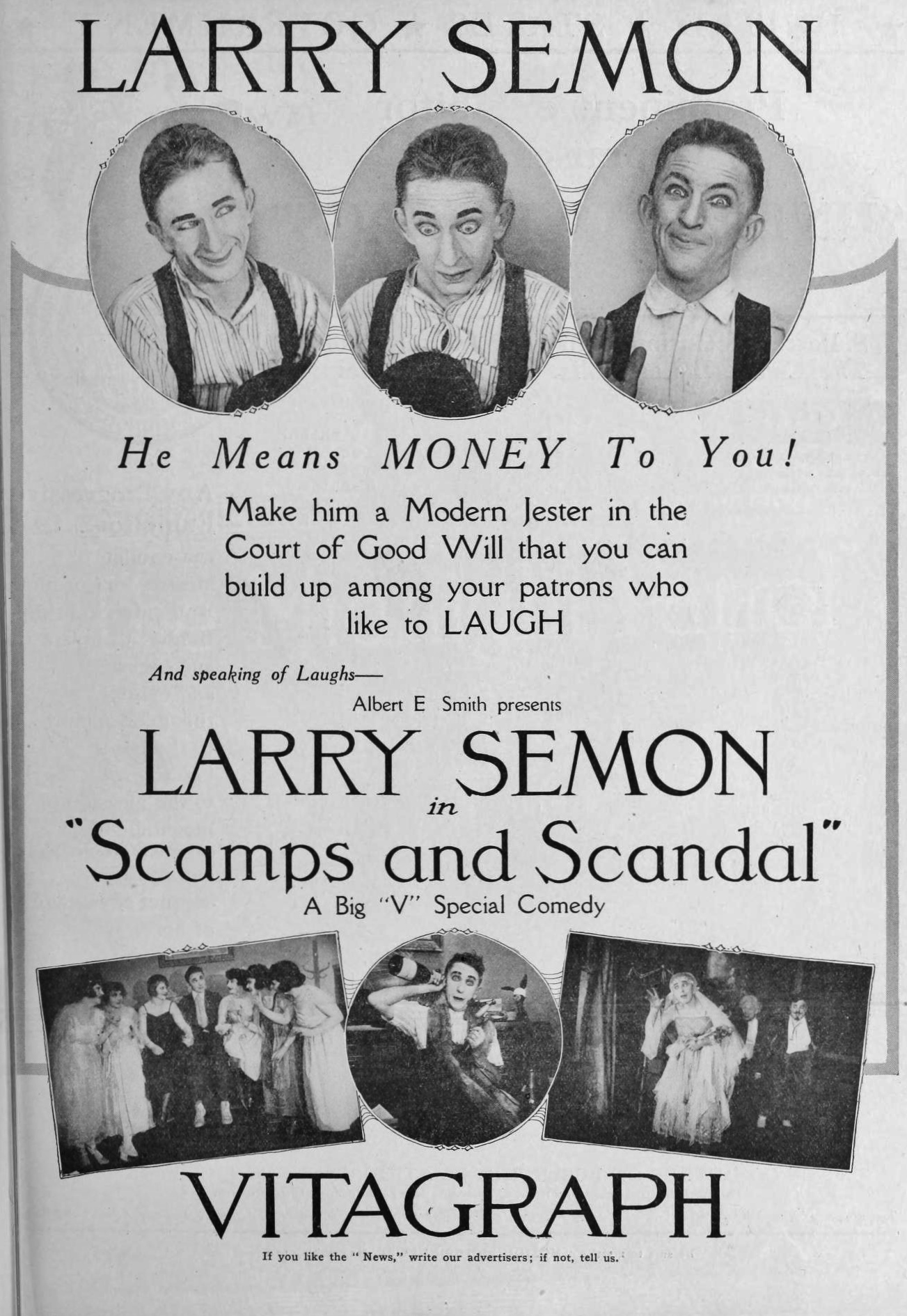
Stepping back into the raucous, inventive world of silent film often feels like unearthing a forgotten treasure map, each frame a clue to a bygone era of pure, unadulterated cinematic joy. Larry Semon’s Scamps and Scandals is precisely such a discovery—a whirlwind of physical comedy, audacious stunts, and narrative simplicity that belies its meticulously orchestrated chaos. Released at a time when cinema was still finding its voice, or rather, perfecting its visual language, Semon stood as a towering, if often overlooked, figure alongside the likes of Chaplin and Keaton, carving out his own niche with a brand of slapstick that was distinctly more destructive, more elaborate, and arguably, more insane.
The film, a quintessential Semon vehicle, plunges us headfirst into the plight of Larry, a character perpetually on the precipice of disaster, whose heart beats solely for his sweetheart. This beloved, however, finds herself ensnared in the classic melodramatic predicament: an unwanted betrothal to a wealthy but aesthetically challenged suitor. It’s a narrative hook as old as storytelling itself, yet in Semon’s hands, it transforms into a trampoline for an escalating series of absurdities. The premise, while straightforward, serves as a mere launchpad for the intricate Rube Goldberg machine of gags and physical comedy that Semon, both as star and director, so masterfully constructs.
Larry Semon, the creative force behind Scamps and Scandals, was a true auteur of his time, writing, directing, and starring in most of his productions. His comedic signature was unmistakable: a relentless barrage of increasingly elaborate and often dangerous stunts, a penchant for explosions, collapses, and high-speed chases, all executed with a wide-eyed, almost innocent determination. Unlike Chaplin’s pathos or Keaton’s stoicism, Semon’s humor often stemmed from a more overt, almost aggressive engagement with his environment, frequently resulting in his own spectacular destruction. He was a man who embraced the chaos, inviting it into every scene, orchestrating it with a meticulousness that belied the apparent spontaneity.
In Scamps and Scandals, this becomes immediately apparent. Larry isn't just trying to save his girl; he's battling an entire universe seemingly conspired against him. The film opens with a relatively simple romantic dilemma, but it isn't long before the stakes are raised, not just emotionally, but physically. Every attempt Larry makes to liberate his sweetheart is met with escalating resistance, not necessarily from human antagonists alone, but from the very fabric of reality itself, which in a Semon film, is always flimsy and prone to spectacular disintegration. This is where Semon truly shines, transforming mundane obstacles into opportunities for grand, almost operatic, slapstick.
While Semon’s magnetic, rubber-faced presence dominates the screen, the film’s success is also indebted to its capable supporting cast. Vera Steadman, as the beleaguered sweetheart, conveys the necessary blend of vulnerability and resolve, providing the emotional anchor for Larry’s frenetic escapades. Her wide-eyed expressions of fear and hope are crucial in grounding the more outlandish comedic sequences. Frank Alexander, often typecast as the heavy or the pompous rival, delivers a wonderfully odious performance as the wealthy, unattractive suitor. His very presence ignites Larry’s protective instincts and fuels the narrative’s comedic engine. Alexander’s ability to embody a character worthy of Larry’s comedic torment is vital; he’s not just a plot device, but a tangible impediment, whose discomfort becomes a source of genuine amusement.
The other players, William Hauber, Charles Amador, and Lucille Carlisle, weave themselves into the tapestry of chaos with remarkable precision. Hauber and Amador, often Semon regulars, were masters of reacting to the absurd, their exasperated expressions and well-timed pratfalls serving as perfect foils to Semon’s central whirlwind. Lucille Carlisle, another frequent collaborator, adds her own flavor to the proceedings, often as a secondary romantic interest or a comedic obstacle in her own right. The chemistry among this troupe, honed over multiple collaborations, is palpable, allowing for seamless transitions between individual gags and larger, more complex comedic set pieces. Their collective ability to maintain character amidst the utter pandemonium is a testament to the disciplined artistry required for silent comedy, where every gesture, every facial contortion, speaks volumes.
The true genius of Scamps and Scandals, and indeed much of Semon’s oeuvre, lies in its commitment to escalating physical comedy. The narrative, while providing motivation, quickly gives way to a series of increasingly elaborate and dangerous stunts. Semon was renowned for his willingness to put himself in harm’s way for a laugh, and this film is no exception. We witness meticulously choreographed collapses, improbable escapes, and a dizzying array of slapstick that often borders on the surreal. The film’s pacing is relentless, a rapid-fire succession of gags that leaves little room for contemplation, only laughter.
The climax of the film, a high-speed chase involving a car and a bed, is an iconic moment that perfectly encapsulates Semon’s unique comedic vision. This isn't just a simple chase; it's a testament to his inventive, almost surreal approach to slapstick. The image of a bed, with occupants perhaps still in it, being dragged at breakneck speed by a car through city streets or winding country roads is inherently ludicrous, yet Semon executes it with such conviction that the audience can’t help but be swept along in the absurdity. The technical challenges of staging such a sequence in the early days of cinema must have been immense, involving careful stunt coordination, ingenious rigging, and a fearless cast. It speaks to a different era of filmmaking, one where practical effects reigned supreme and the thrill of seeing something genuinely dangerous unfold on screen was a major draw. This kind of spectacular, property-damaging humor can also be seen in other silent film contemporaries, where the sheer spectacle was often as important as the gag itself, though Semon always pushed the boundaries further than most.
While Larry Semon may not enjoy the same household recognition as Chaplin or Keaton today, his contributions to silent comedy are undeniable. His films, including Scamps and Scandals, represent a distinct and vital branch of the genre, characterized by their manic energy, elaborate stunts, and a relentless pursuit of the laugh through sheer, unadulterated chaos. Semon’s influence can be seen in later generations of physical comedians and even in animated cartoons, where the laws of physics are routinely defied for comedic effect. His films were often more expensive to produce due to the sheer scale of destruction and stunt work involved, a factor that ultimately contributed to his financial woes later in his career.
Comparing Scamps and Scandals to other films of its era highlights its distinctiveness. While films like Dollars and the Woman or May Blossom focused on dramatic narratives or societal critiques, Semon's work was pure escapism, a joyous, if sometimes perilous, romp through the possibilities of visual humor. Even within the realm of silent comedy, his style stood out. Where Buster Keaton's genius lay in his unflappable demeanor amidst incredible feats, or Harold Lloyd's in his everyman charm mixed with dizzying heights, Semon embraced a more volatile, almost destructive form of humor. His protagonists were often more bewildered and prone to outright panic, creating a different kind of comedic empathy. His work, like Tramps and Traitors, often featured elaborate chase sequences and a penchant for vehicles to become central players in the comedic mayhem, a trait that is certainly on full display here.
The film’s conclusion, that indelible image of the car and the bed, is more than just a punchline; it’s a metaphor for the entire film. It’s the culmination of desperation, ingenuity, and a complete disregard for conventional logic in the pursuit of love. It's a moment that sticks with you, a testament to the power of visual storytelling and the boundless imagination of its creator. In an age where special effects are often indistinguishable from reality, there’s a raw, tangible charm to Semon’s practical stunts, where the danger felt real and the laughter was earned through genuine effort and inventiveness.
Why does a film like Scamps and Scandals still resonate today? Beyond its historical significance, it’s the sheer joy and invention on display. The film is a masterclass in non-verbal communication, using exaggerated expressions, precise physical comedy, and dynamic staging to convey narrative and emotion. It transports the viewer to a time when cinema was a spectacle, an event, and a source of communal wonder. There's an innocence to its chaos, a playful spirit that makes even the most destructive gags feel lighthearted and fun. It's a reminder that laughter is a universal language, transcending the decades and the absence of spoken dialogue.
While some might find the relentless pace or the sheer volume of pratfalls overwhelming, those who appreciate the artistry of physical comedy will find much to admire. Semon’s commitment to his craft, his willingness to push boundaries, and his unique comedic voice shine through every frame. It’s a film that demands to be seen, not just as a historical artifact, but as a vibrant, living piece of entertainment. It reminds us that sometimes, the simplest stories, when told with boundless imagination and fearless execution, can yield the most memorable and uproarious results.
In a cinematic landscape often dominated by dialogue and complex narratives, Scamps and Scandals offers a refreshing return to the fundamentals of visual storytelling. It’s a testament to the power of a well-timed fall, a perfectly executed chase, and the universal appeal of a hero’s desperate, often clumsy, pursuit of love. Larry Semon, the writer, director, and star, crafted a film that is both a product of its time and timeless in its comedic brilliance, ensuring his place as a significant, if idiosyncratic, figure in the pantheon of silent film greats. It's a romp, a riot, and a magnificent piece of cinematic history well worth revisiting.
IMDb 7.4
1928
Community
Log in to comment.