DbcultAccessing Vault...
Cult Review
Senior Film Conservator
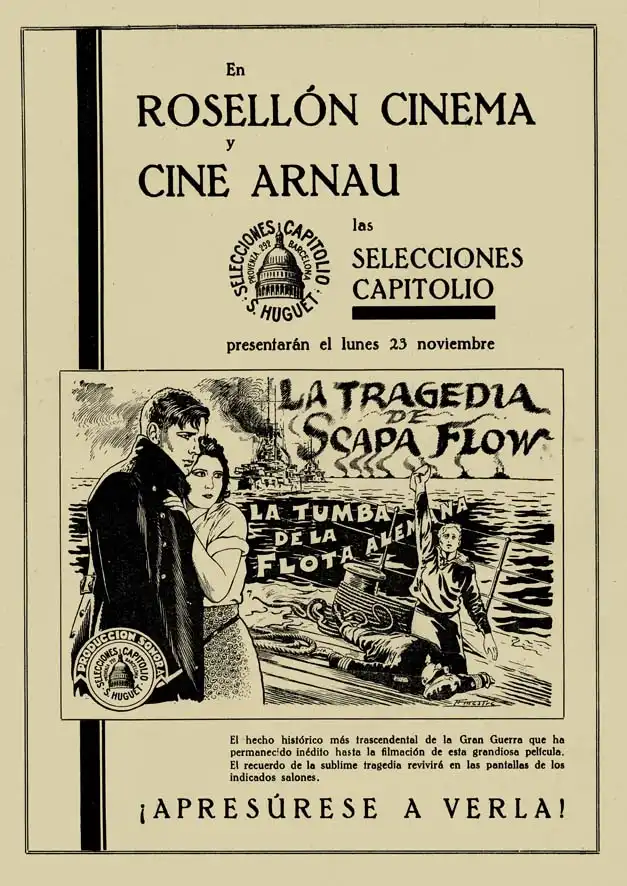
Alright, so Scapa Flow (1930) isn't exactly Saturday night popcorn fare. If you're into early German cinema, naval history, or just curious about how films tackled big, recent events back then, give it a shot. Otherwise, if you need quick pacing or modern visuals, you might find yourself checking your watch. It's definitely a slow burn. 🔥
The film throws you right into the aftermath of World War I, focusing on the German High Seas Fleet. These guys are interned at Scapa Flow, a real place in Scotland, and the tension is just… *there*. It's about this impossible decision: surrender your ships or sink them yourself. You can feel the weight of it all.
Carl Balhaus plays one of the officers, and his face just carries so much of the movie's mood. He's not exactly expressive in a modern way, but there's this deep weariness in his eyes. It makes you really feel for his character, even if the acting style is a bit stiff for today's tastes. It's a different kind of acting, you know?
What really stuck with me was the atmosphere. It's often dark, almost claustrophobic, especially on the ships. You don't get a lot of sweeping vistas. Instead, you're mostly stuck in these tight quarters with the sailors. It feels pretty authentic, like they really tried to put you *there*.
There's this one scene where a bunch of sailors are just sitting around, looking utterly defeated. No one says much. The silence stretches, and you just kinda stew in it with them. It goes on maybe a little too long, but it hammers home the point better than any speech could. 🚢
The sound, for an early talkie, is interesting. It's not always perfect, sometimes a bit muffled. But then you get these moments of quiet, broken by a creaking ship or a distant order, and it's quite effective. It pulls you in, despite the technical limitations of 1930.
Some of the secondary characters, like the British officers, are a bit one-note. They're mostly there to represent the 'other side' without much depth. But that's pretty common for films of this era, especially when dealing with recent history. It's not a flaw, exactly, just how things were.
You can tell the film really wants to honor the sailors' difficult choice. It's not glorified or sensationalized. It's just presented as this heavy, inevitable act. The desperation, the pride, the sheer *finality* of it. It's a lot to take in.
Pacing-wise, it's definitely a product of its time. Things move deliberately. Sometimes you wish they'd just get to it, but then you realize the slowness is part of the experience. It lets the grim reality sink in. No quick cuts here, folks. 🐢
I found myself wondering about the actual historical figures. Did they really act like this? How much was dramatic license versus a true retelling? The film doesn't give you all the answers, it just presents *a* version of events.
The ending, as you'd expect, is pretty impactful. You know what's coming, but seeing it play out, even in this older style, still hits you. It's less about explosions and more about the *idea* of what's happening. The sheer scale of that decision. It's quite something.
So, Scapa Flow is not a film to watch lightly. It asks for your patience, and in return, it gives you a rather stark, human look at a historical moment. It's a piece of history itself, really. A film from 1930 about a 1919 event. Pretty neat.
IMDb 7.4
1923
Community
Log in to comment.