DbcultAccessing Vault...
Cult Review
Senior Film Conservator
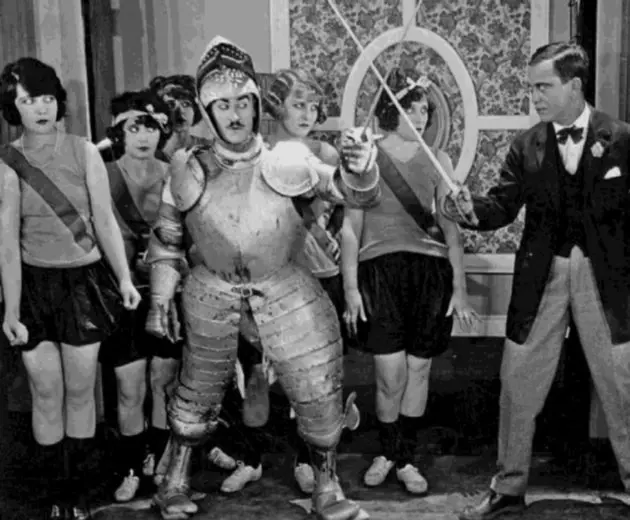
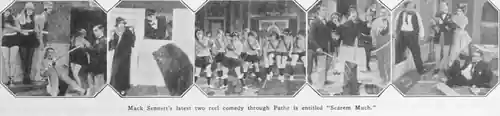
The year 1924 represented a peculiar zenith for the silent comedy short, a period where the primitive slapstick of the previous decade began to fuse with a more sophisticated, albeit still perilous, sense of mechanical choreography. Scarem Much, a production that carries the unmistakable DNA of the Mack Sennett fun-factory, stands as a quintessential artifact of this transition. It is a film that weaponizes the mundane—the step-ladder, the automobile, the overprotective father—and transmutes them into a fever dream of kinetic energy. While often overshadowed by the feature-length epics of the era, this short captures a raw, unadulterated spirit of 'thrill-comedy' that remains viscerally impactful nearly a century later.
"The silent screen did not merely record action; it curated a unique brand of physical impossible-ism that challenged the very laws of Newtonian physics for the sake of a gag."
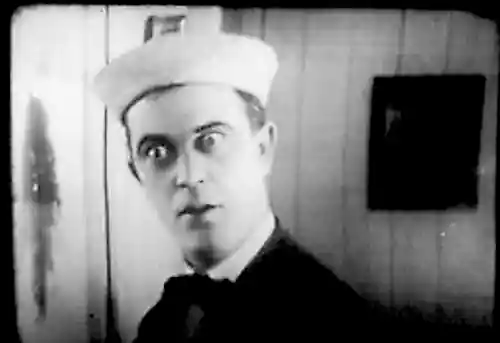
The narrative architecture of Scarem Much is deceptively simple, echoing the thematic beats found in contemporaries like The High Horse or the energetic pacing of The Spitfire. We are introduced to a heroine (the radiant Madeline Hurlock) who is the focal point of a social whirlwind. Her father, portrayed with the requisite bluster and seismic frustration common to the genre, acts as the ultimate gatekeeper. This trope of the 'unsuitable suitor' was the bread and butter of 1920s comedy, yet here it is elevated by the presence of Harry Langdon. Langdon, with his unique 'baby-man' persona, provides a fascinating contrast to the typical slapstick hero. His movements are not the assertive strides of a Keaton or the balletic grace of a Chaplin, but rather a series of hesitant, almost accidental triumphs that defy logic.
The film’s escalating tension finds its outlet in the rivalry between our persistent protagonist and the academy’s physical education instructor. In a stroke of brilliant satirical writing by John A. Waldron, the 'expert' in boxing and swimming—the supposed alpha male of the girl's academy—is systematically dismantled. This subversion of the 'jock' archetype is a recurring joy in Sennett’s work. Whether in the water or the ring, the instructor’s technical proficiency is no match for the protagonist’s sheer, desperate persistence. It suggests a populist philosophy: that the amateur, driven by love (or perhaps just obsession), will always outmaneuver the professional who relies solely on form.
If there is one reason Scarem Much survives in the annals of cinephile memory, it is the automobile stunt. The logistics of the sequence are staggering: a step-ladder is erected on the roof of a fast-moving car. Our hero must navigate this precarious verticality while the vehicle hurtles through the landscape. This isn't just a gag; it's a testament to the era's lack of safety regulations and its abundance of creative courage. The camera, often mounted on a parallel vehicle, captures the genuine wobble of the ladder, the wind whipping through the actors' hair, and the palpable sense of danger. It mirrors the high-stakes verticality seen in Up or Down?, yet adds the complicating factor of horizontal velocity.
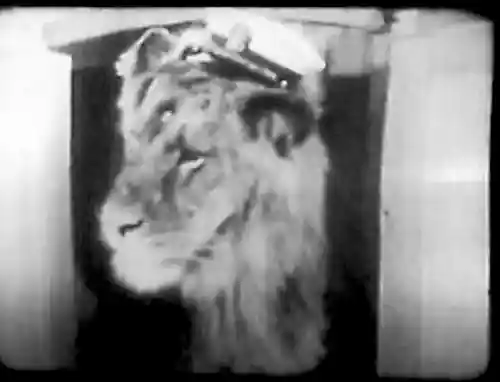
The ensemble cast is a 'who's who' of silent comedy royalty. Madeline Hurlock, one of the most sophisticated of the Sennett Bathing Beauties, brings a level of poise that grounds the surrounding lunacy. Kalla Pasha and Leo Sulky provide the necessary gravitas and grit to the supporting roles, while the inclusion of Numa the Lion adds that touch of surreal danger that was a hallmark of the studio. Even small roles filled by the likes of Andy Clyde and Thelma Hill contribute to a sense of a fully realized, albeit chaotic, world. The sheer density of talent in a single short film is reflective of an industry at its most prolific and experimental.
Visually, the film utilizes the California sunshine to its fullest advantage. The outdoor sequences are crisp, highlighting the dusty roads and the stark geometry of the 1920s automobiles. There is a certain honesty in the cinematography that modern CGI-heavy films lack; when you see a man swaying fifteen feet above a moving car, you are seeing a man swaying fifteen feet above a moving car. This authenticity creates a unique form of audience engagement—a mixture of laughter and genuine anxiety. It’s a similar tension to that found in The Eleventh Hour, where the clock is not just a narrative device but a physical threat.
Comparing Scarem Much to international works of the same period, such as the Swedish Kärlek och hypnotism or the Spanish La gitana blanca, one notices a distinct American obsession with speed and machinery. While European cinema of the time was often exploring expressionism or pastoral romance, the American short was obsessed with the 'machine age.' The car is not just a mode of transport; it is a stage, a weapon, and a character in its own right. The protagonist’s ability to master the machine is what ultimately grants him the father’s respect—or at least his stunned acquiescence.
The boxing instructor's subplot serves as a vital rhythmic counterpoint to the car chase. These scenes are tighter, more claustrophobic, focusing on the rhythmic exchange of blows and the splashing of water. It showcases the versatility of the director and the editing team, moving from the wide-open expanses of the road to the confined spaces of the academy. This duality ensures the film never feels monotonous, a common pitfall in lesser shorts like The Reed Case. Instead, Scarem Much maintains a breathless pace that leaves the viewer as exhausted as the characters.
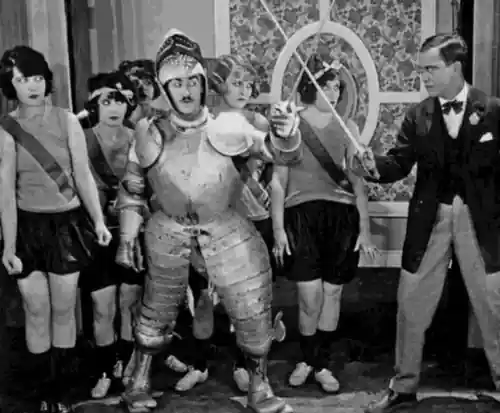
Historical Context Note: The mid-20s saw the emergence of the 'thrill-comedy' genre, pioneered by Harold Lloyd but adopted with gusto by the Sennett crew. Scarem Much is a prime example of how secondary players like Langdon were being groomed for stardom through increasingly complex physical set-pieces.
The emotional core of the film, if slapstick can be said to have one, is the sheer resilience of the human spirit—or perhaps just the sheer resilience of the human skull. The protagonist's willingness to endure physical punishment for the sake of a romantic connection is a theme that resonates through films like The Heart of Youth and Marooned Hearts. However, Scarem Much strips away the melodrama, leaving only the raw, comedic struggle. It is less about the 'soul' and more about the 'stunt,' yet in that stunt, there is a profound truth about the lengths to which we go to prove ourselves.
In terms of technical achievement, the film's editing is remarkably modern. The cuts between the father’s reactions, the heroine’s distress, and the suitor’s precarious balancing act are timed for maximum comedic impact. There is no wasted frame. Every shot serves the escalation. This level of craftsmanship is what separates a classic Sennett short from the forgotten dross of the era. It possesses a clarity of vision that makes it accessible even to those who typically find silent film 'slow.' Indeed, there is nothing slow about a man on a ladder on a speeding car.
As the film hurtles toward its conclusion, the resolution feels earned not through dialogue—obviously—but through the sheer exhaustion of all parties involved. The father’s eventual blessing is less a change of heart and more a surrender to the inevitable force of nature that is the persistent suitor. It is a finale that satisfies the audience's desire for a 'happy ending' while maintaining the film's cynical edge regarding the absurdity of social hierarchies. It lacks the religious gravitas of The White Sister, but it offers something arguably more therapeutic: the catharsis of a well-executed pratfall.
Ultimately, Scarem Much is a masterclass in silent era efficiency. It takes a simple premise and stretches it to the breaking point, using every tool in the cinematic shed—from animal actors to automotive engineering. It stands as a testament to the era of the 'brave comedian,' those performers who risked life and limb for a two-reeler. For fans of Harry Langdon, it is an essential piece of the puzzle, showing the early flickers of the genius that would later define his greatest works. It is a film that demands to be seen, not as a dusty museum piece, but as a living, breathing, and screamingly funny piece of action cinema.
Whether compared to the grit of Die Jagd nach dem Tode or the romanticism of Byl první máj, Scarem Much holds its own by refusing to be anything other than a spectacle. It is a reminder that before there were superheroes and green screens, there were ladders and very fast cars. And sometimes, that is more than enough.
IMDb 5
1919
Community
Log in to comment.