DbcultAccessing Vault...
7.5/10
Senior Film Conservator
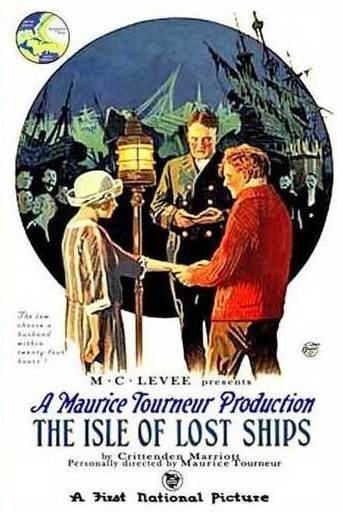
A definitive 7.5/10 rating for a film that redefined the boundaries of cult cinema. The Isle of Lost Ships remains a cornerstone of transgressive art.
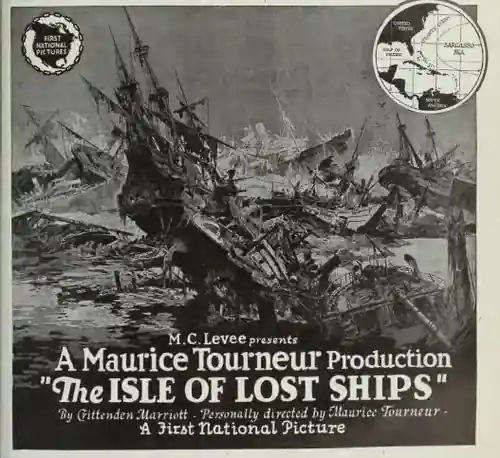
In the annals of early cinema, few films dare to juxtapose the brutality of nature with the futility of human pretension as relentlessly as *The Isle of Lost Ships*. This 1920s relic, now resurrected by archivists of the silent film revival, is a masterclass in existential dread wrapped in the garb of a seafaring melodrama. The film’s opening sequence—a storm-lashed cargo steamer, its passengers oblivious to their impending doom—sets the tone for a narrative that is as much about the collapse of industrial order as it is about survival.
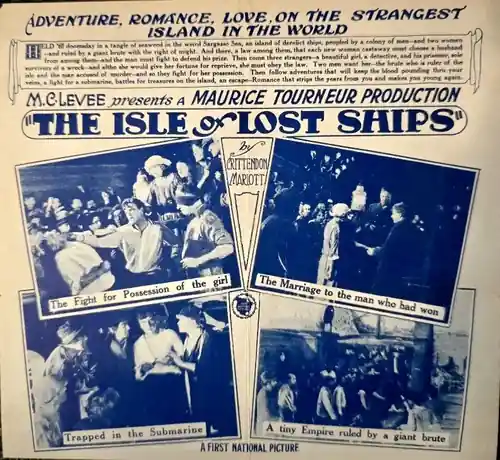
Crittenden Marriott and Charles Maigne’s screenplay is a labyrinth of moral quandaries. The captain, played with volcanic intensity by Milton Sills, embodies the rigid hierarchies of the Edwardian era. His authoritarian grip on the ship’s passengers—industrial magnates, artists, and opportunists—mirrors the class structures of the time. When the vessel is dashed against an uncharted reef, the survivors find themselves adrift in a purgatory where status holds no weight. The 24-hour ultimatum for Aggie Herring’s character to choose a mate becomes a perverse microcosm of societal chaos. It is here that the film transcends its adventure trappings, delving into a psychological excavation of choice under duress.
Aggie Herring’s performance is a revelation. Her character, a woman of quiet resilience, is forced to navigate a social Darwinism that strips away the veneer of civilization. The film’s most haunting moments arise not from the shipwreck itself but from the survivors’ descent into primal behavior. The ensemble cast, including the enigmatic Dorothy Giraci and the brooding Frank Campeau, provides a gallery of human frailty. Each survivor becomes a symbol—a capitalist (Herschel Mayall) reduced to scavenging, an artist (Bert Woodruff) who paints feverishly while the group starves.
Visually, the film is a study in chiaroscuro. The director employs stark contrasts between the survivors’ makeshift camp and the looming, shadowy island. The editing, though rudimentary by modern standards, is purposeful—jump cuts between the captain’s escalating rages and the protagonist’s silent deliberations create a dissonance that amplifies the tension. The score, a haunting string arrangement, underscores the film’s melancholic undertones. One scene, in which the group’s fire flickers out during a downpour, is rendered with such desolation that it evokes the existential despair of *The Silent Mystery*.
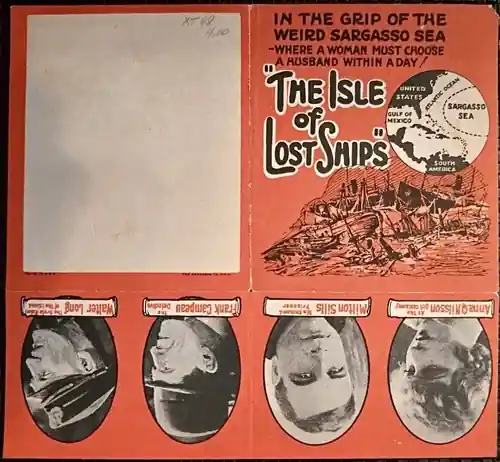
The 24-hour mating game at the film’s climax is its most audacious stroke. The scene unfolds in a single, unbroken shot as Aggie’s character walks among the survivors, each man’s desperation laid bare. The captain, in a moment of tragic irony, offers himself as a candidate, his authority now reduced to a hollow gesture. The choice, when it comes, is not made for love or logic but survival—a decision that underscores the film’s central thesis: in extremis, humanity is defined by what it discards as much as what it clings to.
Comparisons to contemporaries like *The First Men in the Moon* are inevitable, but *The Isle of Lost Ships* distinguishes itself through its focus on interpersonal dynamics rather than speculative fiction. Unlike the lunar adventures of that film, the island here is a character in its own right—a malevolent force that tests the survivors’ mettle. The film also shares thematic DNA with *Anton the Terrible*, particularly in its exploration of power dynamics, but where that film leans into horror, *The Isle of Lost Ships* is a tragedy of quieter, more insidious proportions.
The film’s historical context is crucial. Released in the aftermath of World War I, it reflects a society grappling with the collapse of old orders. The survivors’ plight mirrors that of a generation left adrift, their moral compasses shattered. The inclusion of Walter Long’s character, a pacifist who refuses to engage in the group’s violence, adds a layer of political commentary that feels surprisingly prescient for its time. His eventual fate—a quiet, unnoticed death—is a metaphor for the erasure of idealism in the face of pragmatism.
Technically, the film is a marvel of its era. The shipwreck sequence, shot with a handheld camera for immediacy, is a standout. The use of natural sound (limited though it is) enhances the authenticity of the storm. The production design, from the decaying cargo ship to the makeshift shelters, is meticulous. Even the title card, with its stark typography, reinforces the film’s austere aesthetic. Yet it is the film’s narrative ambition that lingers longest. Marriott and Maigne refuse to offer catharsis; the survivors’ fate is left ambiguous, a deliberate refusal to romanticize survival.
For modern viewers, *The Isle of Lost Ships* is a window into a bygone era of cinema that valued philosophical inquiry as much as spectacle. It is a film that dares to ask uncomfortable questions about human nature and societal collapse. While its pacing may feel glacial by today’s standards, this is part of its charm—a deliberate, almost meditative unfolding of events. The final shot, of the island’s silhouette against a blood-red sunset, lingers in the mind like a warning: civilization is a fragile construct, easily undone by necessity.
In conclusion, *The Isle of Lost Ships* is more than a relic of early cinema; it is a philosophical treatise on survival and morality. Its exploration of choice under extreme pressure, its critique of class hierarchies, and its unflinching portrayal of human depravity make it a compelling watch for cinephiles and casual viewers alike. For those seeking a deeper dive, comparisons with *Joan of the Woods* or *Life Savers* reveal how this film’s themes resonate across genres. But to reduce it to mere comparison is to miss its singular genius—a narrative that is as much about the fall of civilization as the fall of an individual.

IMDb 5.5
1930
Community
Log in to comment.