DbcultAccessing Vault...
5/10
Senior Film Conservator
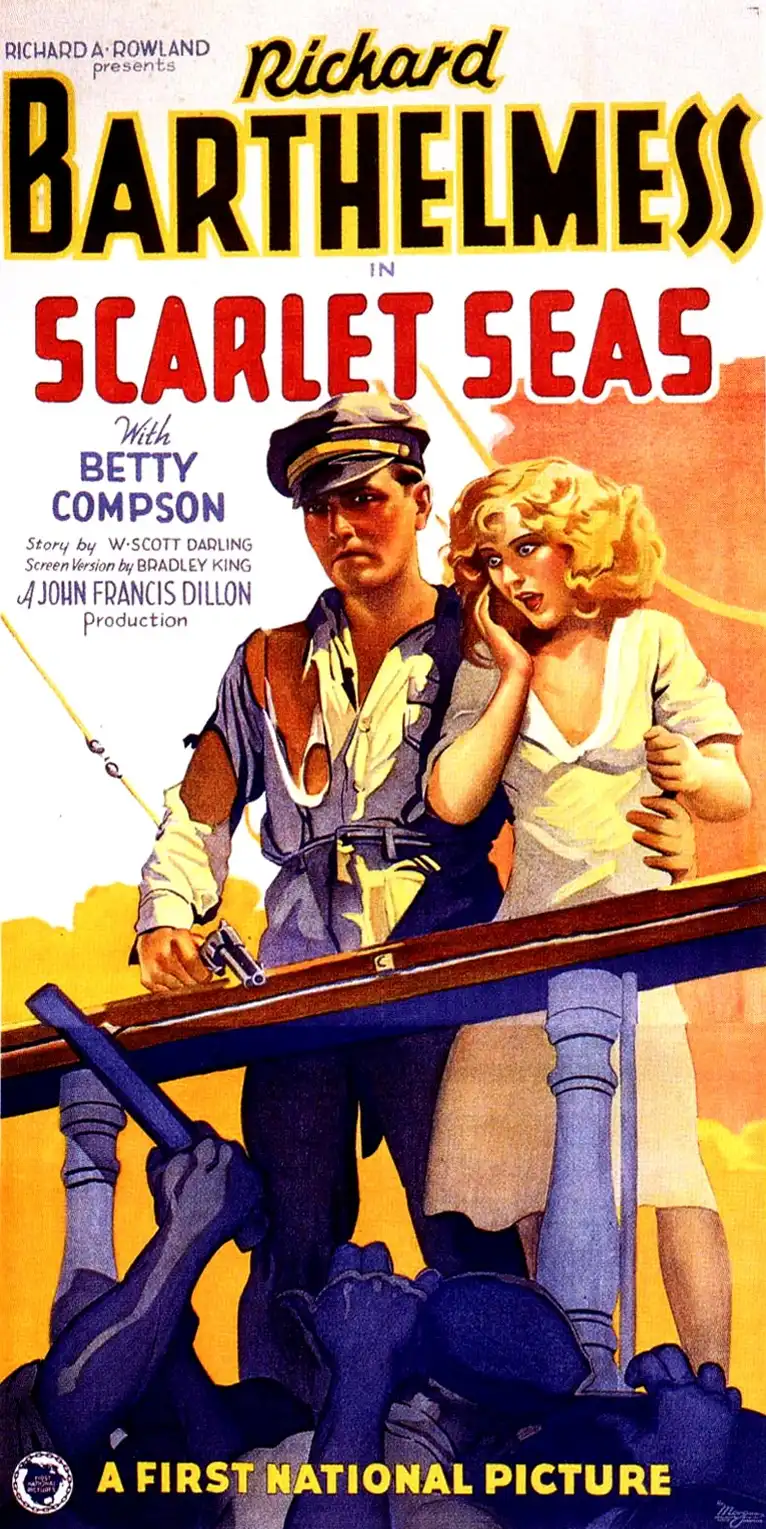
A definitive 5/10 rating for a film that redefined the boundaries of cult cinema. Scarlet Seas remains a cornerstone of transgressive art.
If you are looking for the polished, high-society melodrama that defined much of the late 1920s, Scarlet Seas will likely frustrate you. However, if you have an appetite for salt-stained grit, practical maritime sets, and a story that treats its 'fallen woman' protagonist with more empathy than judgment, this film is absolutely worth your time. It is a film for those who appreciate the physical language of silent cinema—the way a character’s stance on a tilting deck tells you more than three pages of dialogue ever could.
It is not a 'pretty' movie. It starts in the smoky, claustrophobic dens of Shanghai and moves into the terrifying isolation of a lifeboat. While it follows some predictable adventure beats, the chemistry between Richard Barthelmess and Betty Compson gives it a grounded, human core that keeps it from feeling like a generic serial. Modern viewers might find the middle-act pacing a bit deliberate, but the payoff during the mutiny sequence is genuinely tense.
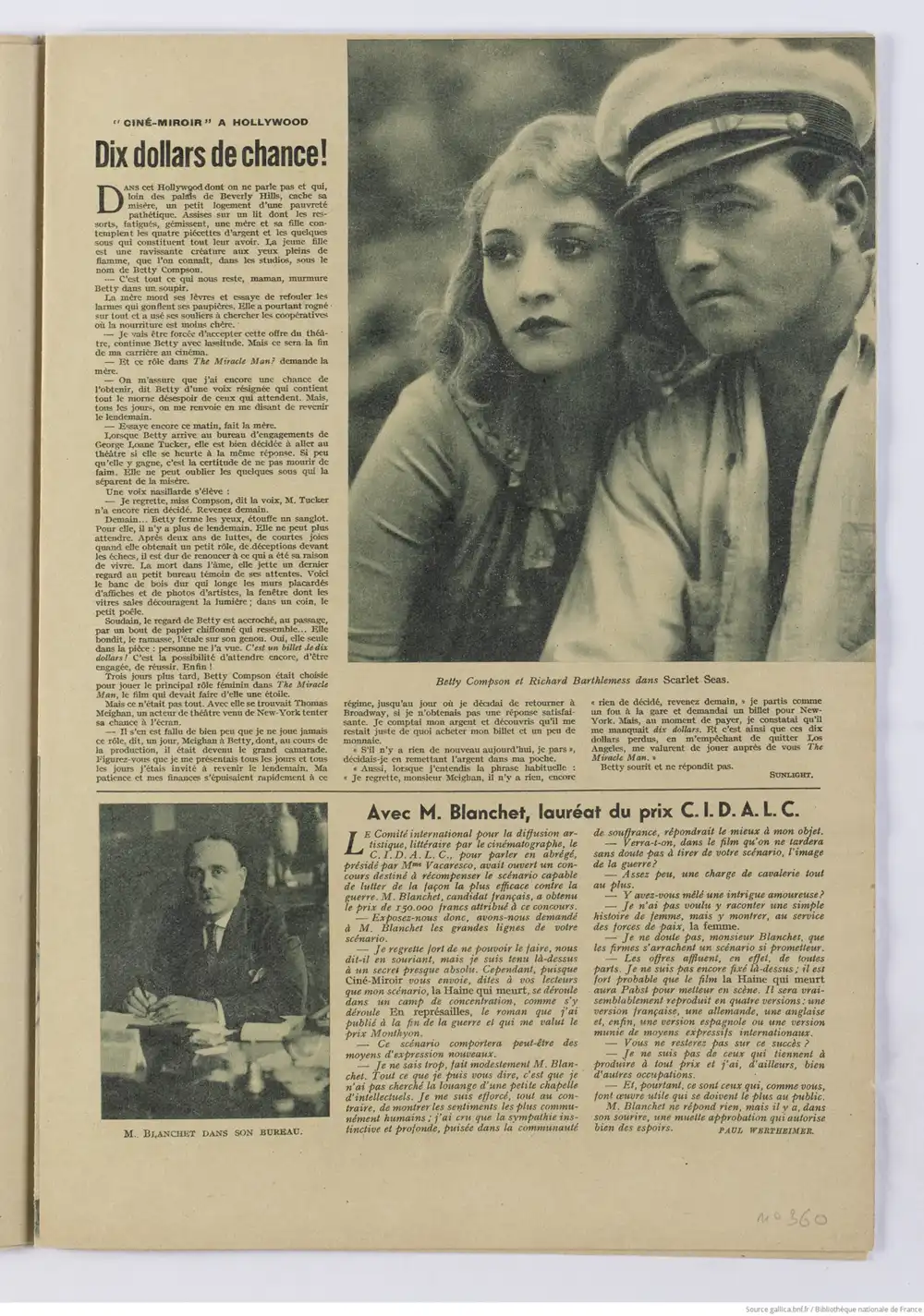
Richard Barthelmess plays Captain Donald McClean with a specific kind of 1920s masculinity that feels surprisingly modern. He isn't prone to the wild gesticulating or eye-rolling that plagued many of his contemporaries. Instead, he uses his physical presence—often framed against the rigging or the horizon—to convey a man who is more comfortable with the sea than with people. There’s a moment early on in the Shanghai sequence where he simply leans against a doorframe, watching the chaos of the bar, and you immediately understand his character's detachment.
Betty Compson, playing Rose, has the harder job. The script establishes her as a woman of 'ill repute' being run out of town, a common trope of the era. What makes her performance stand out is the lack of theatrical self-pity. When she gets onto McClean’s ship, she doesn't suddenly become a dainty damsel; she looks exhausted and wary. There is a specific shot of her on the deck where she’s trying to fix her hair against the wind, and the look on her face is one of pure survivalist calculation rather than romantic longing. It’s a subtle touch that makes the later developments feel earned rather than forced.

The film’s opening act is a masterclass in set design and lighting. The Shanghai docks are filled with deep shadows and crowded frames, creating a sense of entrapment that justifies McClean’s desire to head back to the open water. The cinematography by Sol Polito captures the transition from the murky, soot-covered city to the blinding, overexposed glare of the ocean with a sharp tonal shift.
One detail that only someone watching closely would catch is the way the camera handles the movement of the ship. In many films of this era, the 'ocean' is clearly a static set with some water tossed at the windows. Here, the deck feels unstable. During the scenes leading up to the shipwreck, the camera seems to pitch slightly with the actors, creating a genuine sense of vertigo. It’s not the vomit-inducing 'shaky cam' of the 21st century, but a rhythmic, swaying motion that sells the environment.

The transition from the rescue of Rose to the sinking of the ship happens with a suddenness that might catch some viewers off guard. The film doesn't waste time on a long, drawn-out disaster; the ship goes down with a brutal efficiency. The miniature work used for the sinking is respectable for 1928, though the real tension comes from the lifeboat scenes.
This is where the film slows down significantly. For about fifteen minutes, we are stuck in the boat with McClean and Rose. While this allows for some character development that mirrors the psychological weight seen in films like The Riddle: Woman, it does test the viewer’s patience. The dialogue titles become a bit more frequent here, and the 'mirage' of rescue is teased a few too many times. However, the payoff is worth the wait when the second ship finally appears on the horizon.

The final act of Scarlet Seas turns into a claustrophobic thriller. Being rescued by a ship of mutineers is a fantastic narrative pivot. Knute Erickson and Jack Curtis bring a visceral, threatening energy to the mutinous crew. Unlike the initial scenes on McClean’s ship, which felt orderly and professional, the second ship is a mess of shadows and unwashed faces.
The fight for control of the vessel is choreographed with a surprising amount of violence. There is a moment where a character is thrown against a bulkhead that looks genuinely painful. The editing rhythm speeds up here, abandoning the slow, rhythmic swaying of the lifeboat for quick cuts and low-angle shots that make the mutineers look looming and monstrous. It’s in these moments that you see the early seeds of the action-adventure genre that would dominate the 1930s.
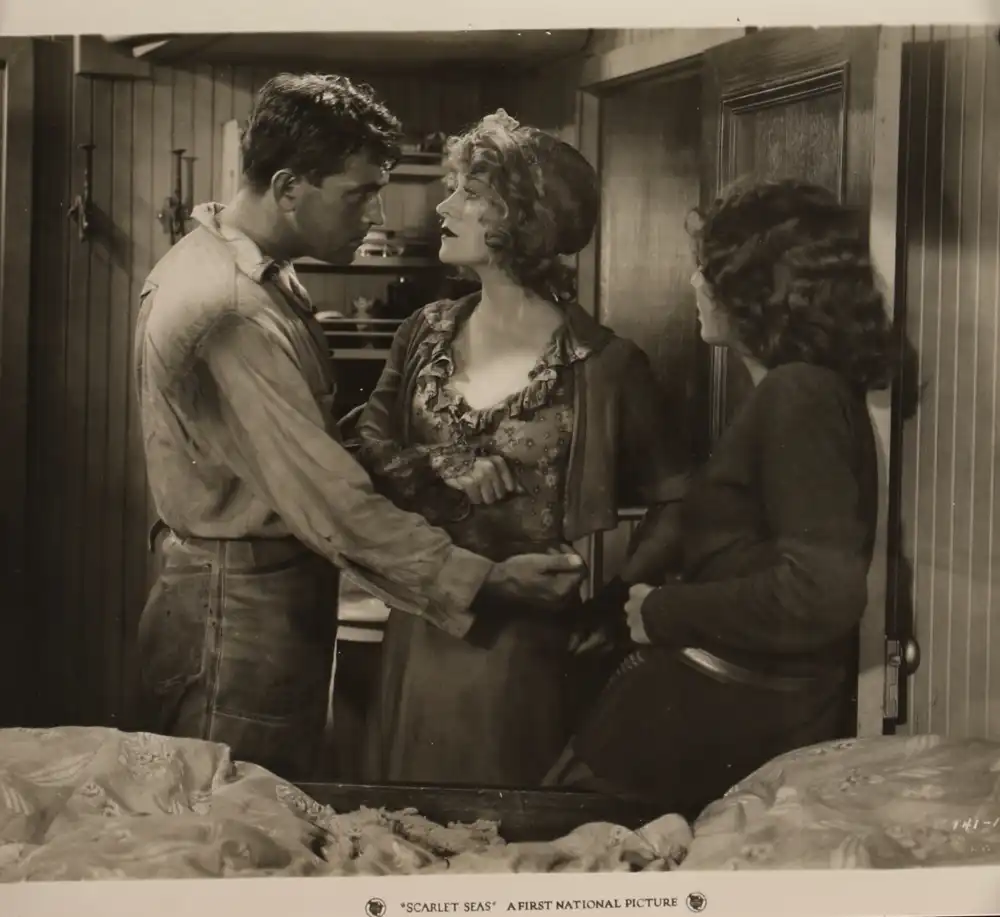
Not everything in Scarlet Seas has aged perfectly. There is a subplot involving a very young Loretta Young as Margaret that feels somewhat tacked on, likely to add another layer of 'innocence' to contrast with Compson’s Rose. Her scenes often feel like they belong in a different, softer movie. Additionally, the final resolution happens a bit too neatly. After the harrowing ordeal of the mutiny, the film rushes toward a 'happily ever after' that feels slightly unearned given the trauma the characters just endured.
There is also an awkward edit during the transition from the lifeboat to the mutineer ship where the lighting continuity breaks. One shot looks like mid-day sun, and the very next, as they are being pulled up the ladder, looks like a heavily filtered 'day-for-night' shot. It’s a small technical hiccup, but it briefly breaks the immersion of an otherwise visually consistent film.
Scarlet Seas is a standout example of late-silent storytelling that prioritizes atmosphere and physical stakes over moralizing. It avoids the trap of making its characters too saintly or its villains too cartoonish (with the exception of a few sneering mutineers). If you can forgive the slightly sluggish middle act, you’ll find a film that offers a surprisingly raw look at survival. It’s a testament to the era’s ability to tell a large-scale adventure story with minimal fluff and maximum visual impact. It remains a essential watch for anyone tracking the evolution of the maritime thriller.

IMDb —
1917
Community
Log in to comment.