DbcultAccessing Vault...
Cult Review
Senior Film Conservator
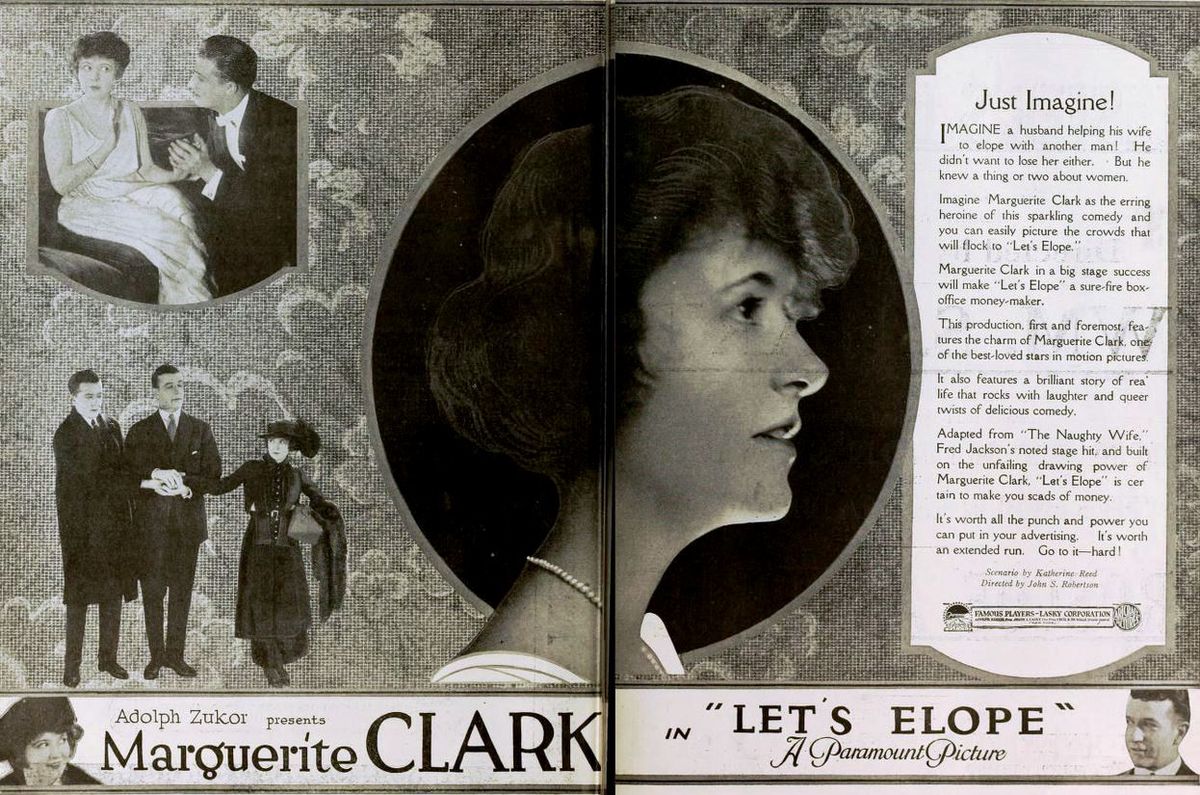
In an era brimming with cinematic experimentation and the burgeoning language of the silver screen, 1919 offered a delightful confection in the form of 'Let's Elope'. Penned by the insightful duo of Katherine S. Reed and Frederick J. Jackson, this silent film gem orchestrates a ballet of misunderstandings, jealousies, and ultimately, reconciliation, all set against the backdrop of marital complacency and the tantalizing allure of illicit romance. It’s a testament to the timeless appeal of the romantic comedy, proving that the human heart, in its convoluted dance of desire and neglect, remains a fertile ground for both drama and uproarious laughter, even without the spoken word.
The premise, at first glance, appears deceptively simple: Hilary Farrington, portrayed with a nuanced blend of academic absorption and underlying affection by Frank Mills, finds himself utterly engrossed in his writing. This intellectual preoccupation, while admirable in its own right, casts a long shadow over his marriage to Eloise, brought to vibrant, yearning life by Marguerite Clark. Eloise, starved of attention and companionship, drifts into the orbit of Darrell McKnight (Gaston Glass), a man equally prone to neglecting his own fiancée, Nora Gail (Blanche Standing). This quartet forms the intricate core of a narrative that, far from being a mere morality play, delves into the complexities of desire, loyalty, and the surprising resilience of love when pushed to the brink.
What truly elevates 'Let's Elope' beyond a simplistic plot is its masterful use of silent film techniques to convey profound emotional states and intricate comedic timing. The actors, particularly Clark as Eloise, rely on exaggerated yet expressive facial gestures and body language to communicate a spectrum of feelings—from the initial pangs of loneliness and burgeoning flirtation to the fiery darts of jealousy and ultimate relief. Mills' Hilary, initially oblivious, undergoes a transformation that is subtly yet effectively conveyed, moving from a detached writer to a man acutely aware of his wife's emotional landscape and willing to fight for their union, albeit through unconventional means. This kind of visual storytelling, where every movement and glance carries narrative weight, is a hallmark of the era, and 'Let's Elope' stands as a fine example of its efficacy.
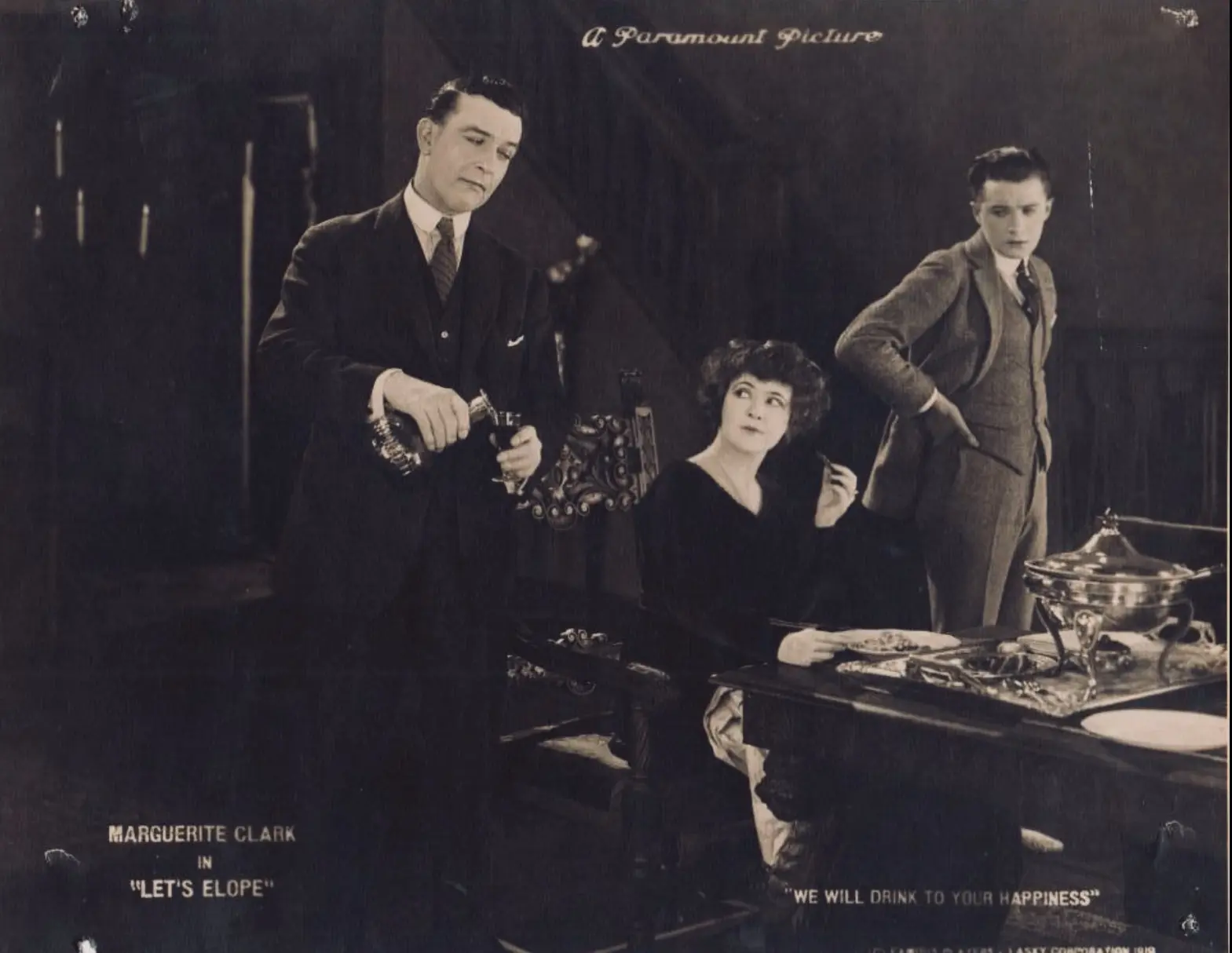
The screenplay, a clever construction by Reed and Jackson, builds suspense and humor through a series of escalating deceptions and misunderstandings. The moment Eloise's promise to Darrell hinges on Hilary's failure to invite her to his bungalow is a classic setup for the comedic chaos that follows. It's a delicate dance of near-misses and opportune interventions, reminiscent of the intricate plotting found in other films of the period that explored marital discord, such as the more dramatic The Closed Road, though 'Let's Elope' decidedly leans into farce rather than tragedy. The film's strength lies in its ability to take a potentially scandalous situation and turn it into a whimsical journey of self-discovery and relational repair.
Blanche Standing's portrayal of Nora Gail is particularly noteworthy. Far from being a mere scorned fiancée, Nora emerges as a woman of agency and intelligence, refusing to be a passive victim. Her decision to team up with Hilary is not born of vindictiveness but a pragmatic desire to prevent a scandal and, perhaps, to reclaim her own errant fiancé. This alliance forms the engine of the film's most inventive comedic sequences. Nora's arrival at the Farrington house, just as Eloise is preparing to elope and Hilary returns for a forgotten item, is a masterstroke of timing. Her subsequent role in the bungalow scheme, feigning a breakdown and igniting the very jealousy she aims to exploit, showcases a delightful cunning. It’s a refreshing departure from the damsel-in-distress trope, aligning her more with the resourceful heroines seen in films like The Girl Angle, where female characters often drive the narrative through their wit and determination.
The core of the elaborate deception—forcing Eloise and Darrell to the bungalow under the pretense of a 'honeymoon,' complete with Hilary brandishing a gun—is where the film truly embraces its farcical heart. It's a moment of delightful absurdity, transforming a potentially grim confrontation into a playful, albeit high-stakes, game. The subsequent 'out of gas' charade, trapping all parties, further compounds the comedic tension, forcing the characters to interact in increasingly awkward and revealing ways. The confined setting of the bungalow becomes a crucible for their emotions, a stage where their true feelings are brought to the surface through forced proximity and cleverly crafted scenarios.
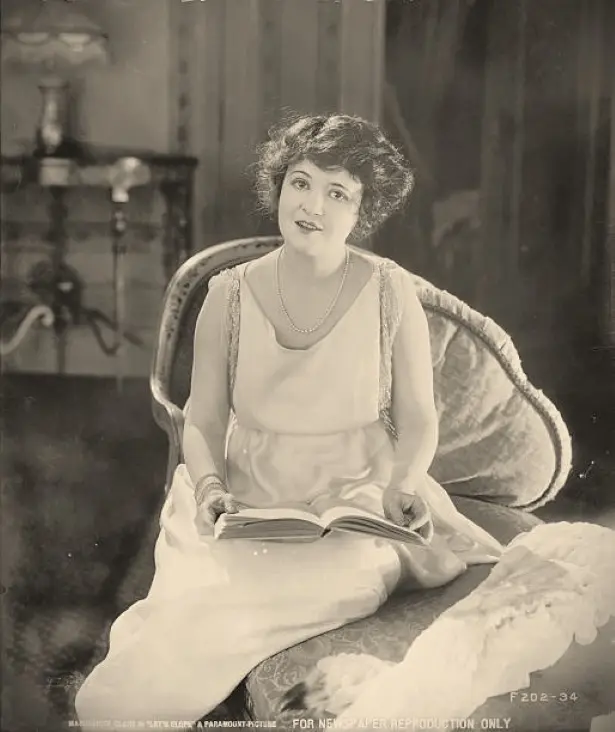
The arrival of Nora at the bungalow, playing the role of the 'lost and broken-down traveler,' is the critical turning point. It's here that the tables turn dramatically. Darrell's suspicion that Hilary and Nora are engaged in their own elopement, and Eloise's subsequent eruption of jealousy, are expertly played. Clark, as Eloise, conveys a palpable shift from detached indifference to burning possessiveness, a testament to her expressive performance. This sudden surge of emotion is precisely what Hilary and Nora had hoped for, demonstrating the effectiveness of their unconventional therapy. The film cleverly uses the very threat of infidelity to rekindle a dormant flame, a psychological maneuver that feels surprisingly modern in its understanding of human nature.
The night at the bungalow, with its series of 'misadventures,' culminates in Eloise's desperate call to her uncle, a Bishop, pleading for his intervention. The introduction of the Bishop (A.H. Busby) adds another layer of delightful absurdity, bringing the solemnity of the church into the midst of romantic chaos. This juxtaposition of the sacred and the profane, of moral authority and amorous entanglement, is a classic comedic device, elevating the farce to new heights. It's a testament to the writers' ability to keep the narrative momentum going, introducing new elements that continually complicate and enrich the plot, much like the escalating predicaments in a film like Tillie's Tomato Surprise, though with a decidedly more sophisticated romantic undertone.
The ensemble cast delivers performances that are well-suited to the demands of silent cinema. Marguerite Clark, as Eloise, is undeniably the star, her expressive eyes and animated gestures carrying much of the film's emotional weight and comedic timing. Her journey from neglected wife to jealous lover to ultimately, a woman rediscovering her affection for her husband, is compelling. Frank Mills, as Hilary, provides a grounding presence, his transformation from obliviousness to strategic mastermind being both convincing and endearing. Blanche Standing's Nora is a revelation, a strong and intelligent female character who drives much of the plot's machinations. Gaston Glass, as Darrell, embodies the charming cad with just enough vulnerability to make his eventual reconciliation with Nora believable. Even supporting players like Helen Greene and George Stevens, though perhaps with less screen time, contribute to the overall atmosphere of lively chaos.
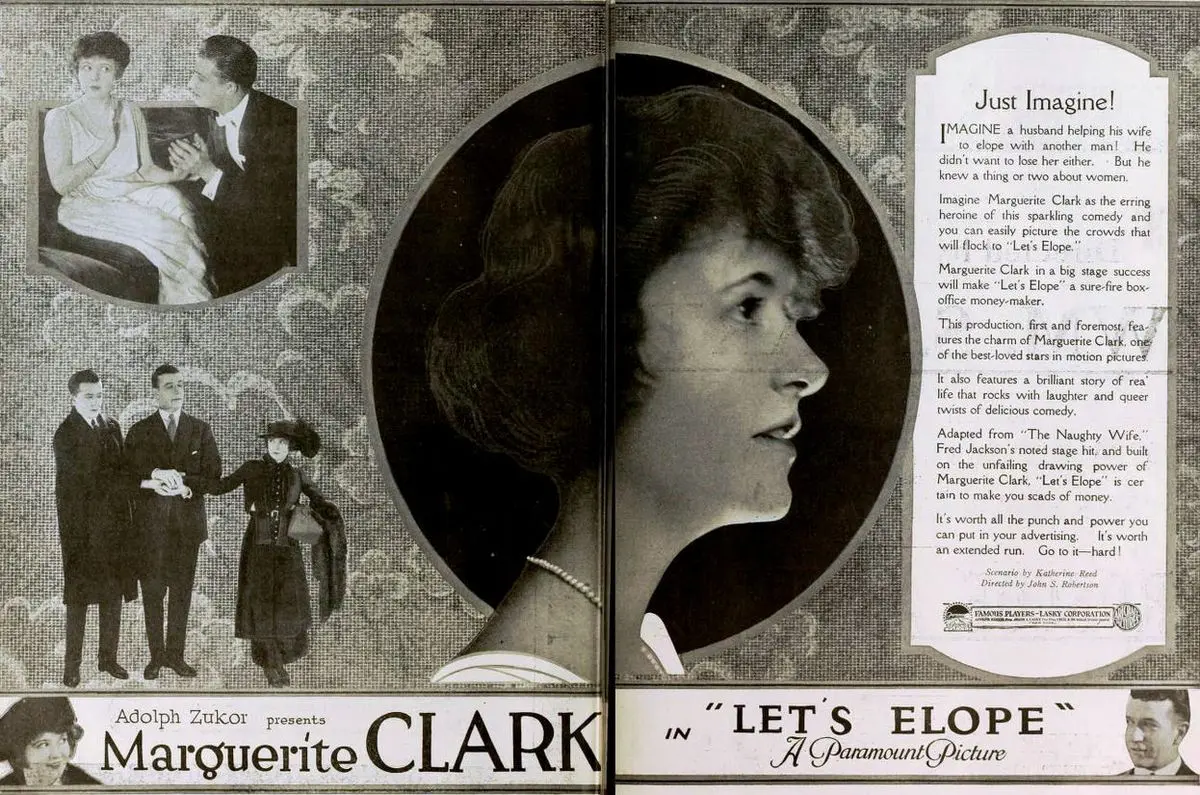
The pacing of 'Let's Elope' is brisk, a crucial element for silent comedies, which rely on visual gags and rapid-fire plot developments to maintain audience engagement. There's little wasted motion, and each scene serves to advance the intricate plot, whether through subtle character interaction or overt comedic action. The film understands the rhythm of silent storytelling, using intertitles judiciously to clarify plot points without bogging down the visual flow. This efficiency in storytelling is a testament to the skill of the filmmakers, allowing the audience to be fully immersed in the unfolding farce.
Beyond the immediate comedic relief, 'Let's Elope' subtly explores themes that resonate even today. It delves into the sometimes-unseen erosion of intimacy within a marriage, the danger of taking a partner for granted, and the lengths to which individuals will go, both for love and for pride. Hilary's initial neglect is a cautionary tale, while his subsequent, elaborate plan to win back Eloise's affection speaks to a deeper understanding of the effort required to maintain a relationship. Eloise's journey from lonely spouse to jealous participant in a farcical scheme mirrors a common human desire for validation and attention.
The film also touches upon societal expectations regarding marriage and elopement in the early 20th century. While elopement was often viewed as scandalous, 'Let's Elope' playfully subverts this by turning the threat of elopement into a catalyst for marital rejuvenation. The presence of the Bishop, a figure of moral authority, further underscores the societal stakes, making the final, impromptu wedding of Nora and Darrell, and the 'second honeymoon' of Eloise and Hilary, all the more satisfying as a resolution to the preceding chaos. It's a narrative that, despite its lighthearted approach, offers a commentary on the endurance and adaptability of romantic bonds.
The resolution of the plot, with Nora and Darrell finding their way back to each other through the shared absurdity, and Eloise and Hilary rekindling their own romance, is immensely satisfying. The final image of Eloise and Hilary settling in for their 'second honeymoon' after dispatching the newlywed couple is a charming capstone to a perfectly executed romantic farce. It’s a happy ending earned through clever deception and genuine emotional reawakening, rather than mere contrivance.
In an era when film was still discovering its voice, 'Let's Elope' stands out as a wonderfully crafted example of silent romantic comedy. Its witty script, engaging performances from Frank Mills, Marguerite Clark, Blanche Standing, and Gaston Glass, and its timeless themes of love, neglect, and redemption make it a delightful watch. It reminds us that sometimes, the most convoluted paths lead to the clearest understanding, and that a little bit of playful mischief can be just the tonic a flagging marriage needs. For those interested in the evolution of romantic comedies or the artistry of silent cinema, 'Let's Elope' is an essential, thoroughly enjoyable viewing experience, easily holding its own against other period pieces like Mrs. Wiggs of the Cabbage Patch, but offering a lighter, more farcical perspective on human relationships. Its enduring appeal lies not just in its humor, but in its perceptive portrayal of the intricate dance between two people rediscovering what they nearly lost.
IMDb —
1936
Community
Log in to comment.