DbcultAccessing Vault...
Cult Review
Senior Film Conservator
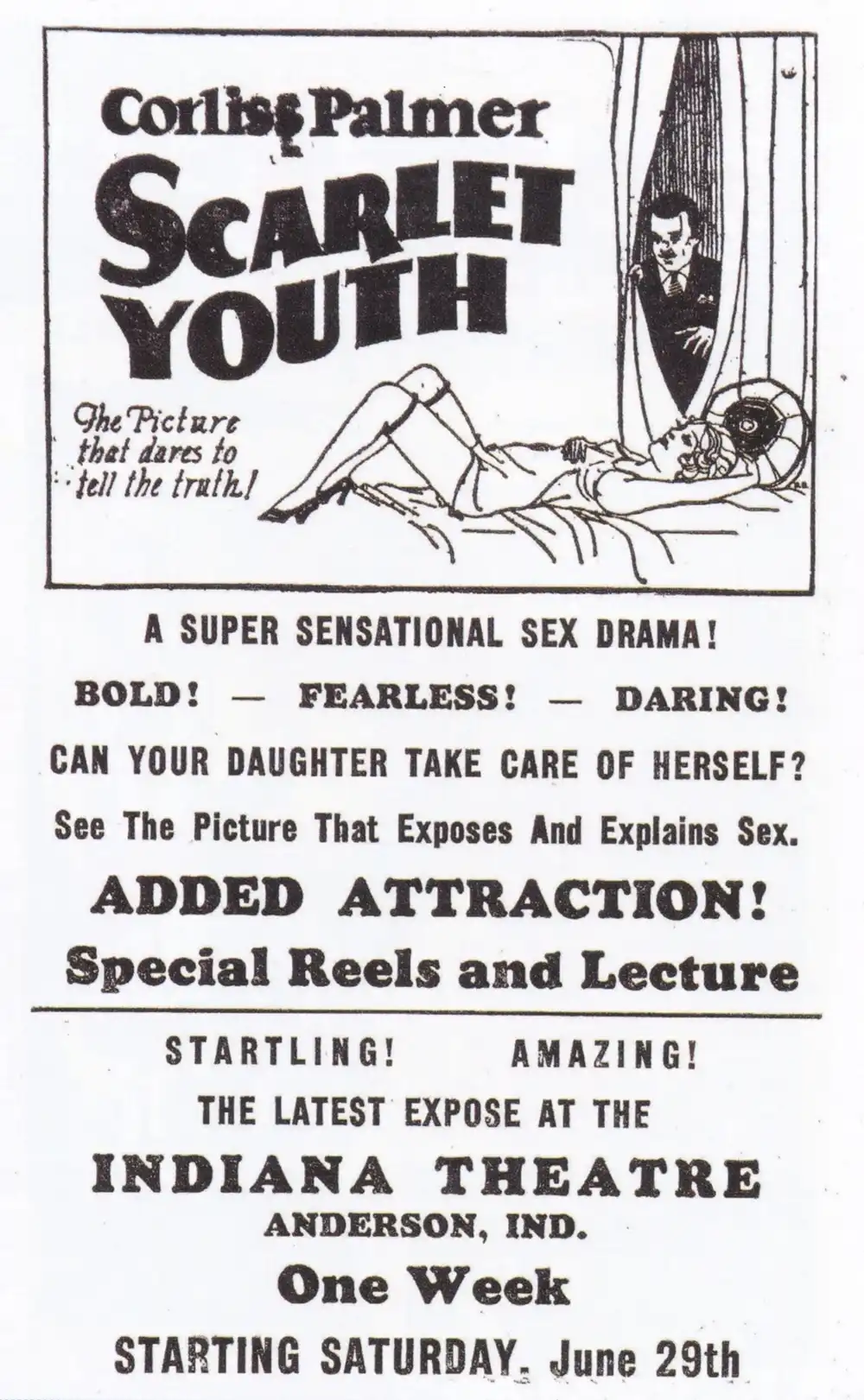
Look, Scarlet Youth is not for everyone. If you're looking for slick storytelling or even particularly coherent character arcs, you're going to have a rough time. But if you appreciate the oddities of early cinema, the kind of earnest melodrama that occasionally stumbles into something genuinely fascinating, then yes, it's worth a watch. Especially for those interested in seeing actors like Ruth Robinson and Connie Lamont in their early, often unpolished, work. Anyone expecting a tight narrative or modern pacing will probably be pretty annoyed.
The film starts off with a surprisingly brisk pace, introducing Mary (Ruth Robinson) and her two suitors, Jack (David Findlay) and Robert (Corliss Palmer), quickly enough. There’s a scene early on where Mary is working in the local mill, and the way the camera cuts between her determined face and the whirring machinery actually creates a decent sense of her industriousness. It’s a simple visual, but it works, setting up her character without needing a ton of heavy-handed exposition.
However, that initial momentum doesn't quite hold. There's a sequence where Jack declares his love for Mary, and her reaction shot just… lingers. Ruth Robinson gives him this look that's supposed to be conflicted, I think, but it just comes across as slightly bewildered. It goes on for a good ten seconds too long, and you can almost feel the film trying to convince you this moment is more profound than it actually feels. You start to wonder if she forgot her line or if the director just loved that particular angle.
Connie Lamont, as Mary's flighty friend Lily, is a highlight whenever she's on screen. Her energy is infectious, and she brings a much-needed levity to some of the heavier scenes. There's a party scene where she's dancing, completely uninhibited, and the camera just lets her go. It’s a genuine moment of joy in a film that otherwise takes itself very seriously. Her costumes, too, always feel a little more vibrant than everyone else's, which really helps her stand out in the background of some of the more staid gatherings. It reminded me a bit of the playful spirit in The Perfect Flapper, though that film had a clearer comedic intent.
Then there's the whole subplot with Alphonse Martell's character, Mr. Henderson, the stern but secretly benevolent mill owner. His dialogue often feels lifted from a completely different era, even for a film of this vintage. He’ll deliver lines about duty and honor with such gravitas, even when he’s just talking about the price of grain. It’s not necessarily bad acting, but it creates a strange tonal wobble. You’re watching Mary struggle with her heart, and suddenly you’re in a moralizing lecture.
One of the more frustrating aspects is the central misunderstanding between Mary and Jack. It's the kind of plot contrivance that could be resolved with one honest conversation, but the film stretches it out for what feels like an eternity. There’s a scene where Jack sees Mary with Robert, and rather than just asking her what’s going on, he immediately jumps to conclusions and storms off. The subsequent shots of him brooding by the river, throwing rocks into the water, go on for an agonizing amount of time. The silence starts to feel awkward rather than emotional, and you just want someone to say something, anything.
David Findlay, as Jack, is earnest, but sometimes his expressions are just a little too broad. He’s either beaming with pure joy or scowling with utter despair. There’s not a lot of nuance in between, which makes it hard to fully invest in his struggles. His best moments are actually the quieter ones, like when he’s just looking at Mary from afar, before the plot demands he do something dramatic.
The crowd scenes, especially in the town square, have this oddly empty feeling. Like half the extras wandered off for lunch and never came back. Or maybe they just didn't have enough people. It makes the 'bustling town' feel a bit hollow, which is a shame because some of the establishing shots of the town itself are quite charming. You get a real sense of place, but then the people in it feel like an afterthought.
There is one genuinely effective moment, though. After a particularly dramatic turn of events, Mary finds herself alone, walking down a dusty road as the sun sets. The shot is simple, just her figure against the horizon, but it captures a real sense of isolation and vulnerability. No dramatic music, no heavy dialogue, just the visual. It's a rare instance where the film trusts the image to convey the emotion, and it really lands. It makes you think about similar moments of quiet despair in films like Dull Care, which often achieved more with less.
The ending, without giving too much away, tries to tie everything up in a neat bow, but it feels a little unearned after all the meandering. The final reconciliation feels rushed, like the filmmakers suddenly realized they were running out of reel. One reaction shot from Freeman Wood, who plays the town busybody, as he witnesses the resolution, lingers so long it almost becomes funny. He just stands there, jaw slightly agape, for what felt like an eternity. It's a strange note to end on, almost an accidental moment of comedy.
Scarlet Youth is definitely a product of its time, with all the charms and frustrations that implies. It’s got moments of genuine heart and visual appeal, particularly in its quieter scenes and the performances of its supporting cast like Connie Lamont and Mary Foy, who makes the most of her brief appearances as the gossipy Mrs. Higgins. But it also suffers from inconsistent pacing, some awkward acting choices, and a tendency to over-dramatize its plot points. It’s not a film I’d recommend to everyone, but if you have a soft spot for early melodrama and can appreciate its imperfections, there are certainly things to chew on.
IMDb 6.4
1932
Community
Log in to comment.