DbcultAccessing Vault...
6.6/10
Senior Film Conservator
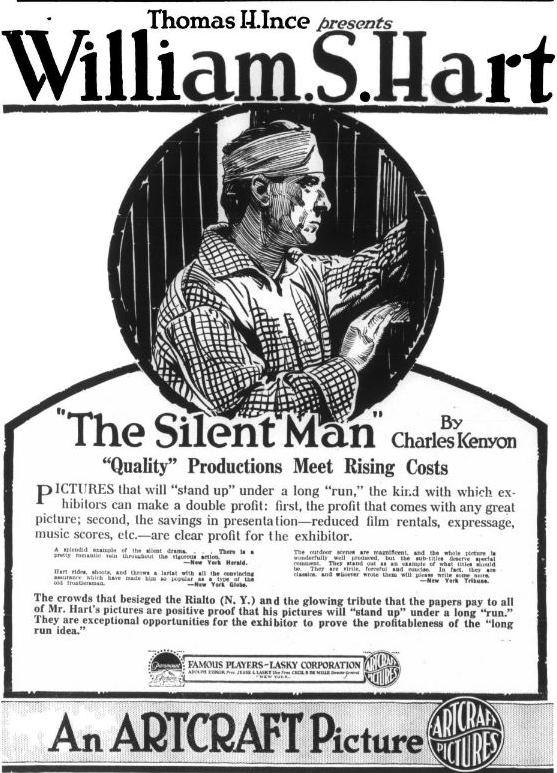
A definitive 6.6/10 rating for a film that redefined the boundaries of cult cinema. The Silent Man remains a cornerstone of transgressive art.
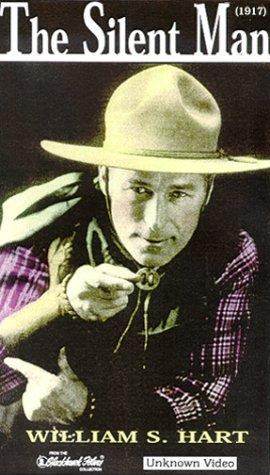
William S. Hart’s angular silhouette—half-gargoyle, half-saint—cuts across The Silent Man like a paper-cut on nitrate, and the wound never quite scabs. The film pretends to be another ore-blast western, yet every frame mutters a subversive catechism: possession is sacrilege, silence is scripture, and revenge is the only frontier gospel that refuses translation.
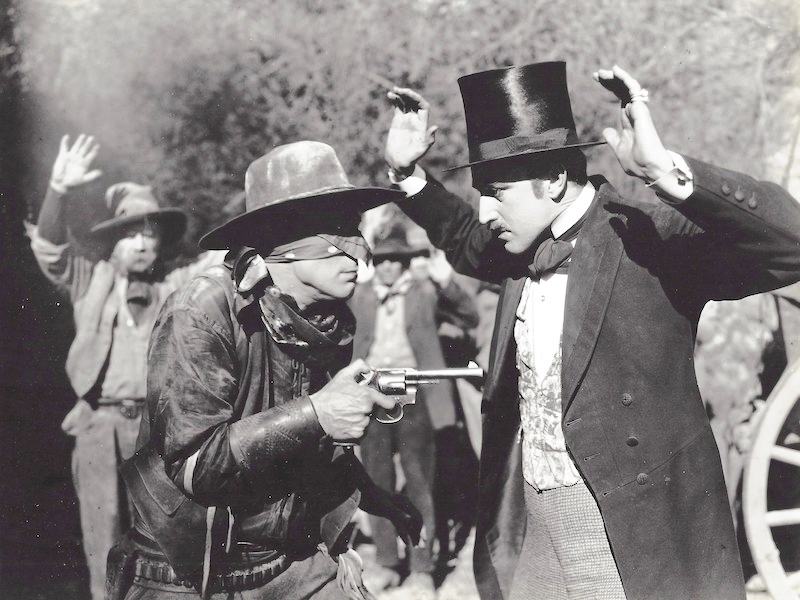
Charles Kenyon’s screenplay, lean as jerky yet pungent as kerosene, strips the plot to a skeletal parable. Hart’s nameless prospector—call him Prospero of the badlands—discovers a seam of gold so pure it glows butter-yellow inside the monochrome 1917 palette. Within minutes the town’s troika of parasites swindle him via a crooked poker hand and a kangaroo court. The camera, perched at knee-height, watches the gold sack disappear into a safe whose lock clicks like a guillotine. That percussive snap is the film’s true line of dialogue; everything else is wind, hoofbeats, and the creak of Hart’s leather when he clenches his fists.
Director Hart, ever the stoic mythographer, refuses to grant his hero the usual spaghetti-western swagger. Instead he crafts a mute pilgrim whose eyes perform soliloquies. Notice the scene where he stands outside the jailhouse at twilight: the camera holds in iris close-up on his face, chiaroscuro lightning from a lantern flickers across cheekbones sharp enough to slice emulsion, and the absence of dialogue becomes a roaring vacuum. You can almost hear nitrate crackling like a campfire.
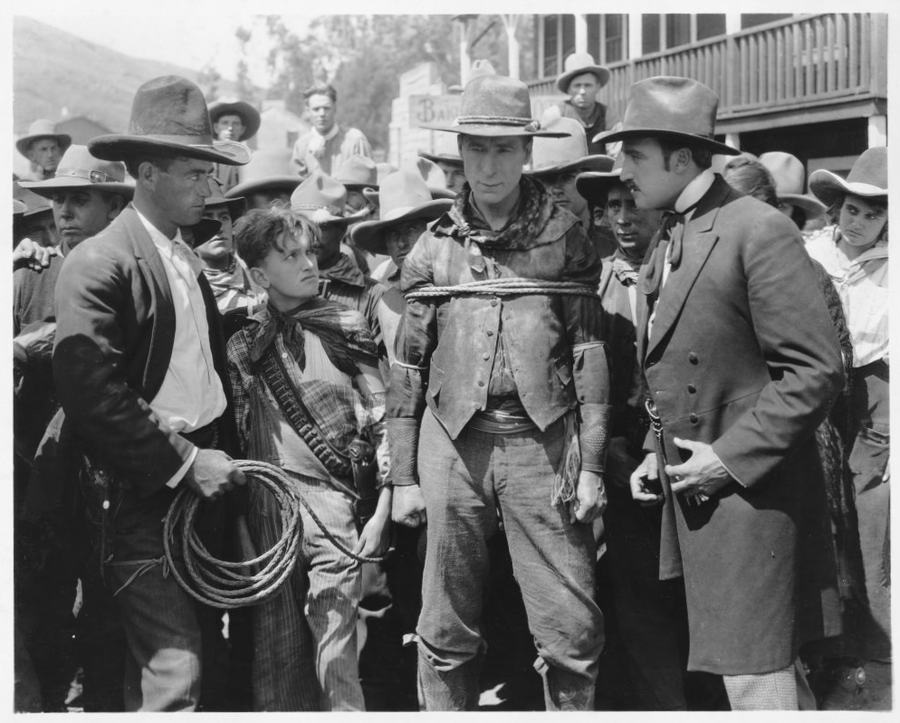
George Nichols’s sheriff, all pork-fat jowls and tobacco spittle, embodies institutional rot. His badge is a copper lie pinned over a heart pickled in brine. Every time he chuckles—soundless, of course—the intertitle card merely reads “HAR! HAR!” but the repetition drills into your skull like a burr. Meanwhile Robert McKim’s saloon baron, decked in a brocade waistcoat the color of dried blood, slinks between poker tables as though distributing communion wafers of sin. The two villains form a binary star of corruption, sucking every civic virtue into their gravitational maw.
What elevates The Silent Man above contemporaries like The Despoiler or Gold and the Woman is its refusal to anthropologize violence. Hart doesn’t linger on bullet wounds for prurience; he stages carnage as sacrament. When the hero rigs a tripwire to send a crate of dynamite cartwheeling toward the sheriff’s office, the blast is shown only via its aftermath: a skyward plume of paperwork—warrants, deeds, IOUs—snowing back to earth like guilty confetti. The town, suddenly paper-pregnant, must wade through its own bureaucratic sins.
Cinematographer Joseph H. August lenses the Mojave as if it were a biblical etching. Daylight scours faces to bone-white masks; night scenes brim with silver nitrate gloom that feels viscous enough to bottle. In one insert, a tarantula tiptoes across Hart’s boot toe. The actor stays motionless, letting the arachnid complete its odyssey, an eight-legged metaphor for retribution arriving in patient increments. Viewers conditioned by CGI critters will gasp at the tactile peril.
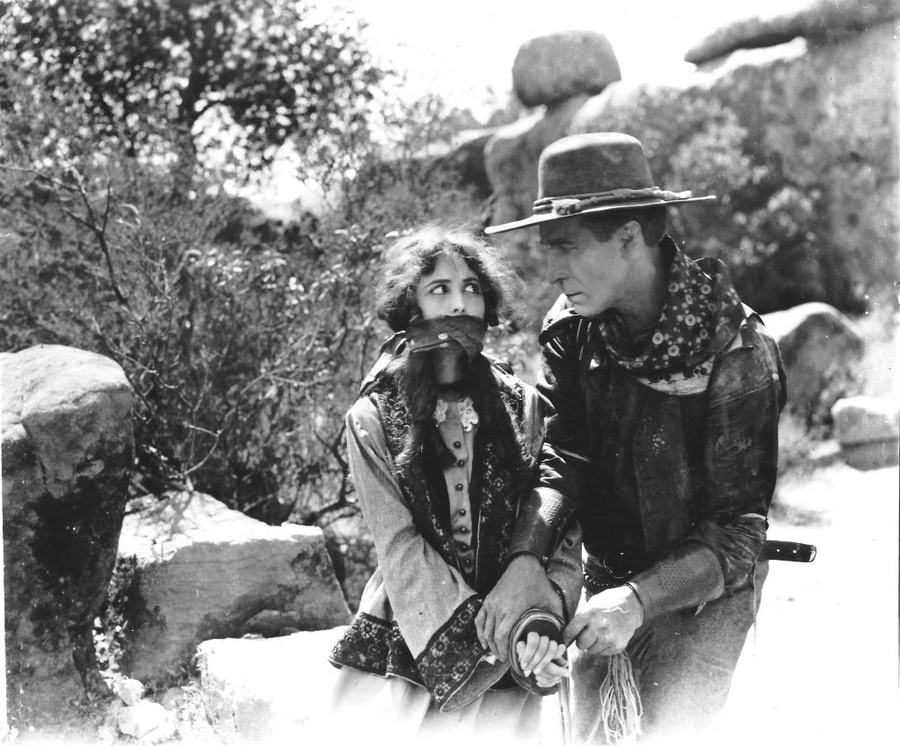
Vola Vale’s barroom songstress, ostensibly the “love interest,” sidesteps that cliché with feral pragmatism. She bargains her body for information, then claws her own cheek to fake a smallpox scar and deter assault. The gesture, shot in unflinching close-up, outstrips any feminist manifesto for sheer survivalist audacity. Compare her to the angelic do-gooders in The Child of Destiny and you realize Hart’s west is gender-agnostic; brutality is the only franchise open to all.
The film’s midpoint pivot occurs inside a church whose rafters are missing half their shingles. Moonlight drips through like liquid mercury onto pews warped by flash floods. Here the hero confronts the preacher (J.P. Lockney), a consumptive who coughs blood onto his Bible yet insists that “the meek shall inherit.” Hart responds by sliding a single gold coin across the altar—soundless rebuttal. The coin spins, hums, and finally topples, echoing a moral verdict more eloquent than any sermon. From this moment onward, the protagonist’s campaign shifts from reclamation to purification; he will not only retrieve his gold, he will cauterize the town’s moral gangrene.
Composer (for recent restoration) Philip Carli supplies a muted chamber ensemble—pizzicato cellos mimicking distant thunder, celesta twinkling like fraudulent virtue—yet the true score remains the cadence of breathing. During the climactic gunfight, Carli withholds all strings, letting theater speakers fill with audience gasps. The absence of music becomes a negative space shaped like vengeance.
Hart’s editing rhythms flirt with Soviet-style montage without doctrinal mimicry. Intercutting between the hero loading a Winchester and a schoolmarm nailing wanted posters to a fence, the film juxtaposes two forms of inscription: bullets and ink, both destined to rewrite the town’s ledger. A third strand—children chalking hopscotch squares—adds lethal whimsy; squares become coffin shapes in visual rhyme.
Some cinephiles compare the final showdown to the church siege in Skottet, yet Hart’s approach is more haiku than opera. The hero, astride his black stallion, rides the town’s length in a single take. Dust clouds billow behind like contrails, and each cross street disgorges a challenger. Hart dispatches them with economic marksmanship—one shot, one slump—while the camera stays fixed at a perpendicular angle, transforming Main Street into a diorama of justice. When the last gunman drops, the camera tilts skyward where buzzards circle, punctuation marks in a sentence too stark for grammar.
The epilogue, often excised in repertory prints, deserves resurrection. Months after the shootout, the town sports a new sign: “Population: Decent.” The Silent Man, now astride a buckboard laden with supplies, pauses at the outskirts. A child offers him a sunflower; he tucks it behind his ear, tips his hat, and departs—still wordless. The iris closes, not on a kiss or a corpse, but on the flower’s yellow head quivering in wind, a living intertitle that reads: “Some silences echo longer than gunfire.”
Restoration-wise, the 4K photochemical rescue by Lobster Films reveals details invisible even in 1917 previews: the texture of Hart’s rawhide gloves, the glint of fool’s gold embedded in the sheriff’s watch chain, the tear-track that Vale wipes away with a crooked pinky. HDR tinting alternates between amber for daylight interiors and cobalt moonlight, a palette that makes each frame resemble a daguerreotype soaked in whiskey. The original English intertitles, long replaced by Swedish reissues, have been reconstructed from a 1923 Ohio censorship card, reviving colloquial gems like “He’s slicker than a buttered banjo.”
Viewers hunting for political allegory will note the film’s crypto-anarchist streak. The safe, that iron womb hoarding stolen gold, is blasted open not by the hero but by the townspeople once they realize their collective cowardice empowered tyrants. The redistribution is messy—women scrabble for nuggets, a crippled miner hurls dust into the air like confetti—yet the chaos feels more democratic than any ballot scene in The Way of the World.
Academics enamored of Laura Mulvey’s scopophilia thesis will revel in Hart’s gendered gaze inversion. The camera lingers on male bodies in distress—Nichols’s corporeal trembling, McKim’s feline crouch—while Vale surveys them with appraising coldness. The power asymmetry flips: woman as spectator, man as spectacle, silence as safe-word.
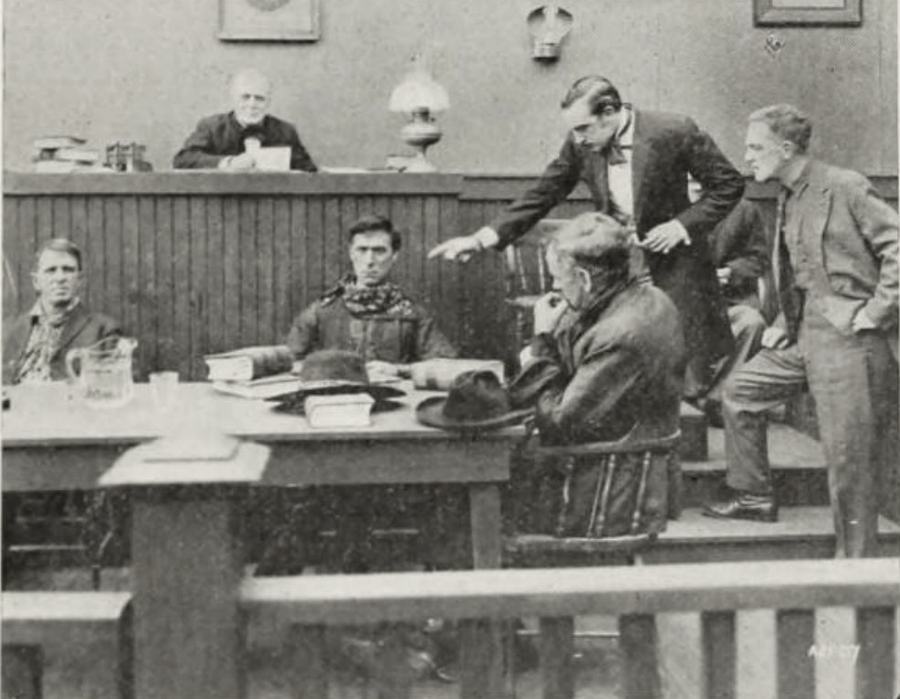
Yet pigeonholing The Silent Man into theoretical straitjackets misses its primal pulse. The film is a campfire tale told by ghosts who forgot to die. It chafes against the sentimentality that hobbles The Right to Be Happy and the pieties that corset Life and Passion of Christ. Hart offers neither crucifixion nor resurrection, only the crucible—an endless loop of desire and dispossession where silence is both wound and weapon.
For modern audiences weaned on Tarantino loquacity, the film’s muteness may feel avant-garde. Imagine John Wick stripped of Continental Hotel chitchat, or There Will Be Blood minus milkshake metaphors. What remains is cinematic ur-text: eyes, gesture, landscape, and the moral arithmetic of bullets.
Streaming on Criterion Channel with a Cohen Media 2-disc Blu-ray forthcoming, the movie deserves midnight viewing. Crank volume to hear projector purr, let the sea-blue tint of desert dusk seep into your retinas, and when the final iris shuts, sit in the hush that follows. You’ll discover the film’s true sound: your own heart trying to renegotiate the difference between justice and vengeance, a negotiation that—like Hart’s hero—will never quite find words.

IMDb —
1932
Community
Log in to comment.