DbcultAccessing Vault...
Cult Review
Senior Film Conservator
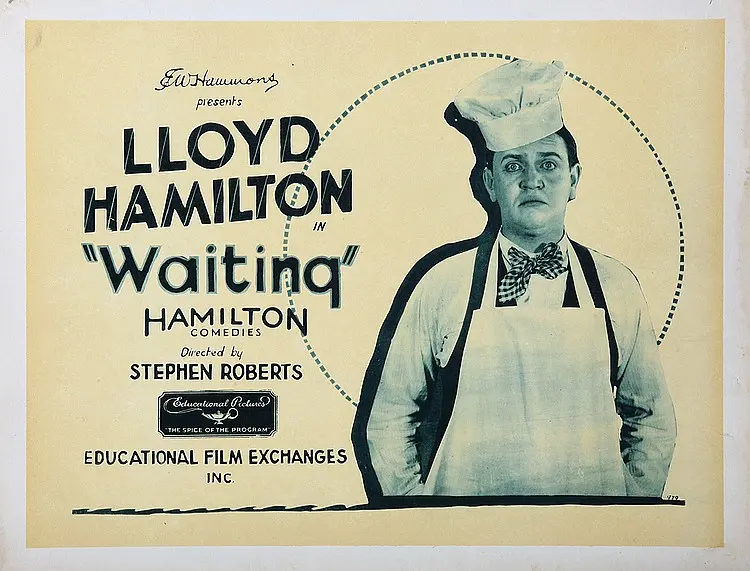
Is Lloyd Hamilton's 1922 silent short, Waiting, worth watching today? Short answer: yes, but with the understanding that its charm lies in its brevity and the specific comedic stylings of its lead, not in a sprawling narrative.
This film is for enthusiasts of early 20th-century slapstick, those who appreciate the physical comedy pioneers, and anyone seeking a quick, lighthearted escape into a bygone era of cinema. It is NOT for viewers expecting complex character arcs, sophisticated plot twists, or modern comedic pacing.
This film works because: It perfectly showcases Lloyd Hamilton’s understated yet effective physical comedy and his ability to convey a gamut of emotions without a single spoken word. The core premise of social humiliation and eventual triumph is universally relatable.
This film fails because: Its narrative is undeniably thin, serving primarily as a framework for gags rather than a compelling story in its own right, and the resolution feels somewhat unearned, even for a short.
You should watch it if: You have an interest in silent film history, enjoy character-driven physical comedy, or simply need a brief, amusing distraction that doesn't demand much emotional investment.
In the bustling, often unforgiving landscape of 1920s urban life, we meet Lloyd (Lloyd Hamilton), a man whose prospects have dwindled to nothingness. Destitution looms, and with it, the quiet desperation that only unemployment can bring. His salvation, such as it is, arrives in the form of a lowly dishwasher position at an upscale restaurant, a place teeming with the very affluence he lacks.
Yet, the capricious hand of fate, or perhaps simply a staff shortage, elevates him from the scullery to the dining room floor. Lloyd, now a waiter, finds himself navigating a world of starched linen, clinking silverware, and demanding patrons. His new role is a precarious tightrope walk between maintaining decorum and succumbing to the inherent chaos of the service industry.
The true test of his newfound station arrives with the entrance of his rival, a smug figure (Jack Lloyd) accompanied by a charming young woman (Ruth Hiatt) — presumably Lloyd’s own former romantic interest. The ensuing confrontation, a public display of one-upmanship and simmering resentment, culminates in a delightfully messy act of culinary defiance.
Lloyd, pushed to his breaking point, transforms humiliation into a weapon, liberally dousing his adversary with a cascade of edibles. The scene is a cathartic explosion of slapstick, a grand gesture of rebellion against his circumstances. In the aftermath, he makes a bold, triumphant exit, not alone, but with the girl, leaving behind a bewildered rival and a thoroughly disrupted dining experience.
Lloyd Hamilton, though perhaps not as widely celebrated as a Keaton or Chaplin today, possessed a unique brand of silent comedy that shines brightly in Waiting. His performance here is a masterclass in understated physical humor, a stark contrast to the often exaggerated antics of his contemporaries.
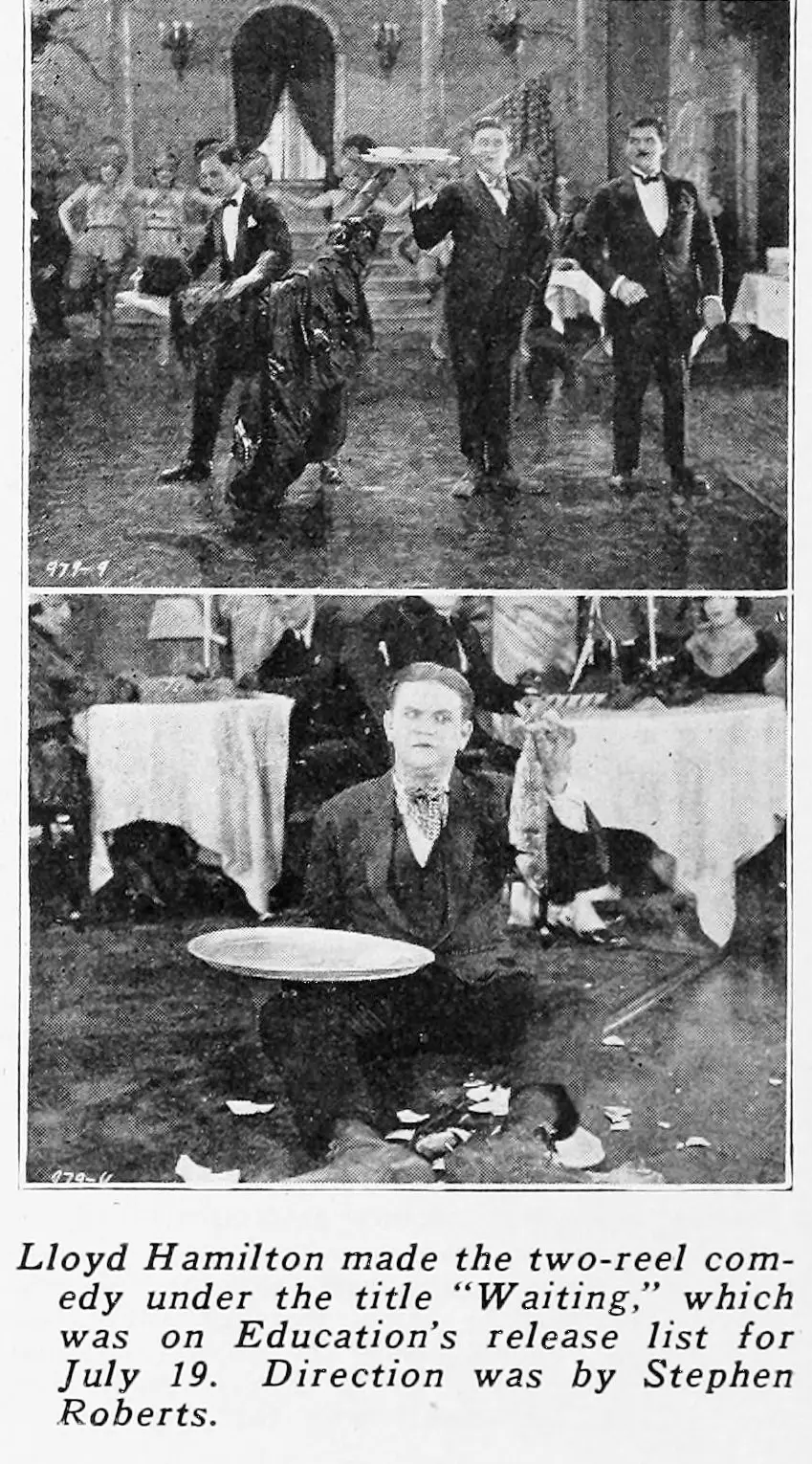
Hamilton excels at portraying the everyday man caught in extraordinary, embarrassing circumstances. From his initial despair as a jobless wanderer to his clumsy attempts at being a dignified waiter, his expressions are a nuanced symphony of hope, anxiety, and simmering resentment.
Consider the subtle slump of his shoulders when he first takes on the dishwasher role, a silent acknowledgment of his fallen status. This is not broad farce yet, but the quiet comedy of resignation. Then, watch his eyes dart nervously as he attempts to balance trays as a waiter, each step a potential disaster. It’s these small, human moments that anchor the film.
The film’s peak, naturally, is the confrontation with his rival. Hamilton’s face, initially a mask of forced politeness, slowly contorts into a mixture of indignity and mischievous resolve. The gradual escalation from polite service to deliberate food-flinging is expertly paced, showcasing his ability to build comedic tension through facial expressions alone. He makes you feel his humiliation, making his eventual triumph all the more satisfying.
His physical comedy isn't about grand acrobatics, but rather the awkwardness of a man out of his element, amplified by circumstance. It’s a style that feels remarkably modern in its relatability, even a century later. He is the original 'cringe comedy' star, before the term even existed.
Fred Hibbard's direction in Waiting is effective in its simplicity, serving as a clean canvas for Hamilton's performance. For a silent short of its era, the cinematography, while not groundbreaking, is functional and clear. The camera is largely static, allowing the action to unfold within the frame, rather than relying on complex movements.
The strength of the direction lies in its utilization of the restaurant setting. The cramped kitchen, the bustling dining room, the elegant tables – each provides opportunities for visual gags and reinforces the class divide central to the narrative. The contrast between the grimy kitchen and the pristine dining area is a simple yet effective visual metaphor for Lloyd's journey.
Pacing is key in short comedies, and Hibbard maintains a brisk tempo. The narrative moves quickly from Lloyd's unemployment to his new job, and then swiftly to the climactic confrontation. There’s no wasted motion. Each scene pushes the story forward or sets up a gag, a hallmark of well-executed silent shorts.
One particularly effective directorial choice is the way Hibbard frames the rival’s arrival. The camera lingers on Lloyd’s shocked reaction, allowing the audience to fully grasp the weight of this unfortunate coincidence. It’s a moment of dramatic pause before the comedic storm. The subsequent food fight, while chaotic, is choreographed just enough to be legible and impactful, avoiding mere visual noise.
While not as visually inventive as a contemporary like Buster Keaton's Day Dreams, the film's visual storytelling is perfectly adequate for its comedic ambitions. It understands that the humor comes from the situation and the performer, not from elaborate camera tricks.
The tone of Waiting is predominantly lighthearted and comedic, yet it carries an underlying current of social commentary. It’s a story about the indignities of poverty and the rigid class structures of the time, all wrapped in a thin veneer of slapstick.
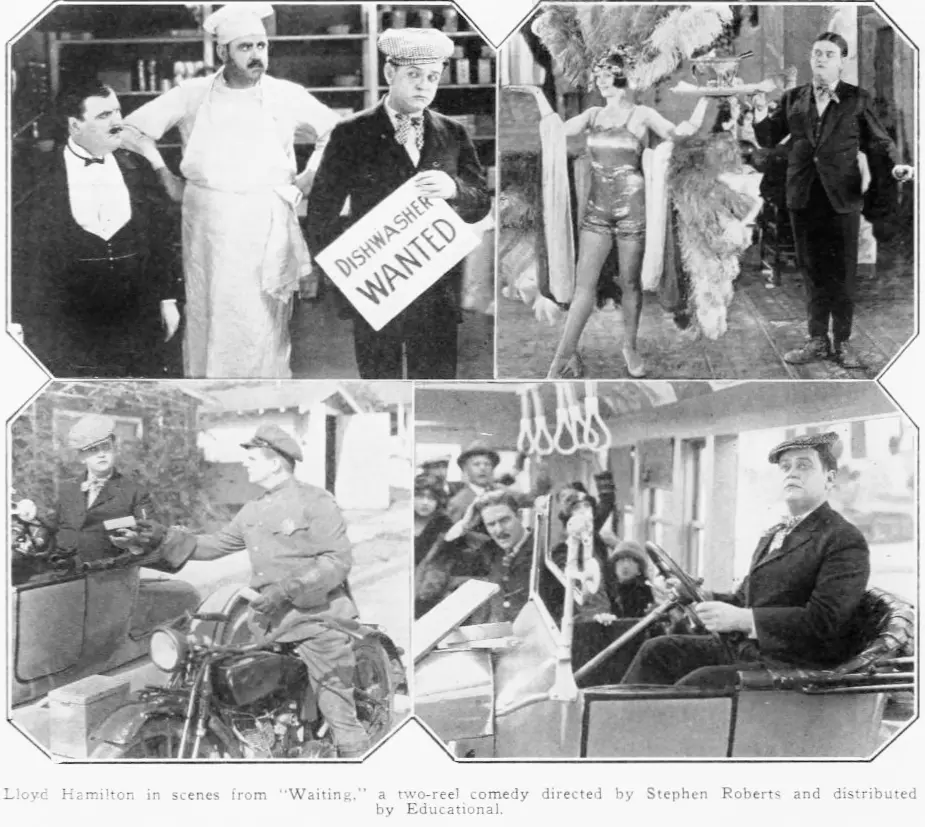
Lloyd's journey from a jobless man to a dishwasher, and then to a waiter, highlights the precariousness of social standing. His humiliation at the hands of his rival isn't just personal; it's a symbolic affront to his struggle for dignity. The film, in its own simple way, champions the underdog.
The humor, while broad at times, often stems from relatable situations: the awkwardness of a new job, the sting of seeing an ex with a new partner, and the universal desire for revenge against a petty adversary. The final act of splattering food is a visceral, almost primal, release of pent-up frustration that resonates even today.
My surprising observation is how the film, despite its age, still manages to evoke a sense of genuine satisfaction at Lloyd's audacious ending. It's a testament to the timeless appeal of seeing the 'little guy' win, even if his victory is impulsive and somewhat chaotic. The film doesn't preach; it simply delivers a moment of pure, unadulterated cinematic schadenfreude.
However, one could argue that the film's resolution, with Lloyd simply walking off with the girl, is a tad too convenient. Does he truly 'win' her, or is it merely a symbolic gesture of defiance? For a silent short, such questions are perhaps secondary to the immediate comedic impact. The humor lands. The story is thin. But it’s effective.
Absolutely, Waiting is worth a watch for specific audiences. If you're a devotee of silent cinema, particularly the era's physical comedies, this short offers a delightful glimpse into the talents of Lloyd Hamilton.
It's also an excellent primer for anyone curious about the foundational elements of slapstick humor. The gags are straightforward, the character motivations clear, and the runtime is perfectly digestible for a quick historical immersion.
However, manage your expectations. This is a short, a vignette rather than an epic. It serves its purpose as a vehicle for Hamilton's charm and a few good laughs, but it won't leave you pondering deep philosophical questions or complex narrative structures.
Think of it as a cinematic snack. It’s light, satisfying for what it is, and doesn't overstay its welcome. For a quick dose of early 20th-century entertainment, it works.
Waiting is a charming, if slight, entry into the annals of silent film comedy. Its true value lies not in its narrative complexity or groundbreaking cinematography, but in the delightful performance of Lloyd Hamilton. He is the engine that drives this comedic short, transforming a simple premise into an engaging, if brief, experience.
While it won't redefine your understanding of cinema, it offers a valuable and enjoyable peek into the comedic sensibilities of nearly a century ago. It’s a reminder that good physical comedy, anchored by a charismatic performer, transcends time and language.
For those willing to embrace its era and its modest ambitions, Waiting delivers exactly what it promises: a few laughs, a touch of relatable human struggle, and a satisfying, if chaotic, moment of triumph. It’s not a masterpiece, but it’s a perfectly pleasant way to spend a few minutes appreciating a forgotten comedic talent.
IMDb 5.7
1937
Community
Log in to comment.