DbcultAccessing Vault...
Cult Review
Senior Film Conservator

There are films that merely tell a story, and then there are those that carve a narrative directly into the viewer's soul, leaving an impression as profound and lasting as the very 'scars' its title so eloquently suggests. Walter S. McColl's 'Scars of Love' is unequivocally the latter. This cinematic triumph, a testament to raw emotional vulnerability and intricate psychological depth, transcends its initial premise to become an enduring meditation on memory, regret, and the inescapable weight of past affections. As both the film's principal writer and its central performer, McColl imbues the project with an almost autobiographical intensity, crafting a world where the internal landscape of his protagonist, Elias Thorne, is as vivid and tumultuous as any external conflict.
From its opening frames, 'Scars of Love' establishes a somber, reflective tone, inviting us into the meticulously ordered, yet profoundly isolated, existence of Elias Thorne. His life, a carefully constructed fortress against emotional intrusion, is a direct consequence of a love affair that, years prior, left him irrevocably broken. McColl, in his portrayal of Elias, delivers a performance of breathtaking nuance. His eyes, often downcast or distant, betray a constant internal monologue, a perpetual replaying of moments that have shaped, and perhaps twisted, his perception of reality. It's a masterclass in understated grief, a quiet storm brewing beneath a veneer of composed indifference. This isn't the histrionic despair often seen in melodrama; instead, it's the quiet, persistent ache of a wound that refuses to heal, a subtle tremor in the hand, a fleeting shadow across the face.
McColl's genius lies not only in his evocative performance but equally in his profound script. The screenplay for 'Scars of Love' is a delicate, intricate web, avoiding simplistic exposition in favor of gradual revelation. Flashbacks are not mere plot devices but fragmented memories, imbued with the unreliable haze of nostalgia and pain, mirroring Elias's own struggle to reconcile his past. The dialogue, sparse but potent, carries the weight of unspoken history, each word carefully chosen to peel back another layer of Elias's guarded psyche. It's a narrative style that demands patience but rewards it with an unparalleled emotional payoff. The film understands that true drama often unfolds in the quiet spaces between words, in the pregnant pauses, and in the lingering glances.
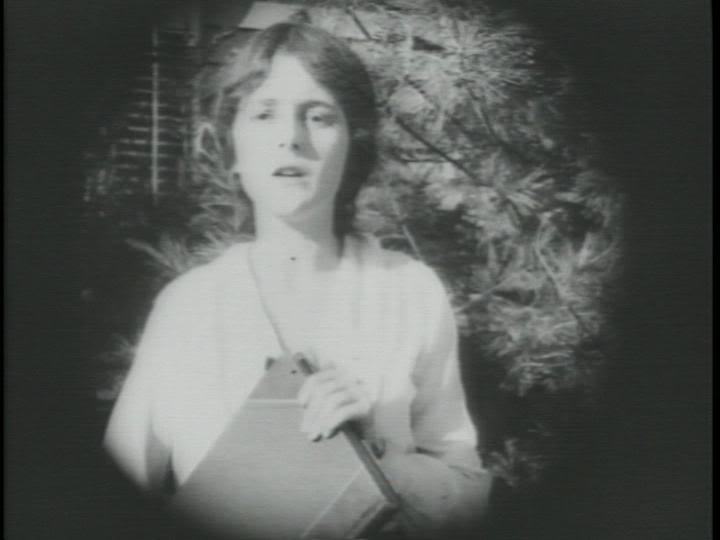
The arrival of Eleanor Vance, portrayed with exquisite sensitivity by Mary McVern, acts as the catalyst for Elias's long-dormant emotional turmoil. McVern’s character is not merely a love interest; she is a spectral echo, a living embodiment of the past, or perhaps a beacon guiding Elias towards an unforeseen future. Her presence is a challenge to his carefully constructed isolation, forcing him to confront the phantom limb pain of a love he believed long dead. McVern navigates this complex role with remarkable grace, portraying Eleanor with a blend of vulnerability, strength, and an almost ethereal quality that makes her both alluring and unsettling. Her chemistry with McColl is palpable, a delicate dance between attraction and apprehension, hope and fear. It's a relationship built on fragile foundations, constantly threatened by the specters of what came before.
Beyond the performances, the film’s aesthetic contributes immensely to its pervasive mood. The cinematography, with its deliberate use of shadow and light, often mirrors Elias's internal state. Dimly lit interiors and stark, almost brutalist landscapes emphasize his isolation, while occasional bursts of natural light, particularly in scenes with Eleanor, hint at the possibility of warmth and reconnection. The visual language is as articulate as the script, subtly guiding the audience through Elias's emotional labyrinth. The use of close-ups on hands, faces, and significant objects speaks volumes, amplifying the unspoken emotions that permeate every scene. It's a film that understands the power of visual storytelling, where a single shot can convey an entire chapter of a character's internal struggle.
Comparing 'Scars of Love' to other cinematic works reveals its unique position within the pantheon of character-driven dramas. While it shares the introspective intensity of The Beautiful Lie in its exploration of deceptive realities and internal turmoil, 'Scars of Love' delves deeper into the enduring psychological impact of personal tragedy rather than overt deceit. One might also draw parallels to the poignant romanticism of Sonho de Valsa, yet McColl's film possesses a grittier, more melancholic edge, a stark refusal to romanticize the pain of memory. Unlike the more straightforward dramatic arcs of films like The Heart of Maryland, which often rely on grand gestures and overt declarations, 'Scars of Love' finds its power in the quiet desperation, the subtle shifts in expression, and the unspoken truths that haunt its characters.
The central thematic thrust of 'Scars of Love' is undoubtedly the burden of memory. Elias is trapped in a cyclical re-enactment of his past, unable to extricate himself from the emotional quicksand of what was. The film interrogates whether true healing is ever possible when the 'scars' are not merely physical but etched onto the very fabric of one's identity. Can a new love truly mend what an old one has broken, or does it merely serve to highlight the depth of the existing wounds? This is where the film finds its most profound philosophical footing, prompting viewers to consider their own relationships with their pasts.
The concept of 'transgression,' as explored in films like Transgression, finds a subtle echo here, not in overt moral failings, but in the transgression against one's own emotional well-being, the refusal to move forward. Elias's greatest battle is with himself, with the ghost of a love lost and the guilt, real or imagined, that accompanies it. The film doesn't offer easy answers, nor does it present a neatly packaged resolution. Instead, it offers a deeply human portrayal of the struggle, the slow, agonizing process of confronting one's demons. It suggests that while some scars may never fully fade, their presence can, paradoxically, become a testament to survival, a map of resilience.
In an era where many films sought escapism or overt entertainment, 'Scars of Love' dared to delve into the uncomfortable truths of human emotion. Its impact lies in its raw honesty and its refusal to shy away from the complexities of love's aftermath. It's a film that resonates because it speaks to a universal experience: the way past relationships continue to shape us, sometimes for better, often for worse. Like The Fatal Night, which explores a pivotal, life-altering event, 'Scars of Love' focuses on a singular, transformative emotional trauma, but extends its reach to show the prolonged consequences rather than just the immediate shock.
The film's exploration of identity, particularly how one's sense of self is intertwined with their romantic history, is remarkably prescient. Elias Thorne's journey, while deeply personal, touches upon broader philosophical questions about agency, fate, and the possibility of true redemption. It's a narrative that echoes the internal quests found in stories like Johanna Enlists, but instead of a physical journey, it's a profound odyssey of the spirit. The emotional landscape is vast and often treacherous, but McColl’s direction ensures that the audience remains anchored, deeply invested in Elias’s arduous path.
Ultimately, 'Scars of Love' stands as a powerful testament to the enduring power of cinema to explore the most intricate facets of the human condition. Walter S. McColl, in his dual role, delivers a work that is both intensely personal and universally resonant. Mary McVern's performance provides the necessary counterpoint, a blend of hope and challenge that propels the narrative forward. The film doesn't shy away from pain, but it also subtly suggests the resilience of the human spirit, the faint glimmer of light that can penetrate even the deepest shadows. It's a film that lingers long after the credits roll, its emotional echoes reverberating, prompting introspection and a deeper appreciation for the complex, often contradictory, nature of love and loss. It reminds us that while love can leave indelible marks, those very scars can, in time, become a testament to the depth of our capacity to feel, to heal, and ultimately, to endure.
In its quiet intensity, 'Scars of Love' offers a profound counterpoint to more overtly dramatic narratives. It's less about the external world and more about the internal universe of a man grappling with his past. Unlike the broad strokes of a film like The $5,000,000 Counterfeiting Plot, which focuses on external machinations, 'Scars of Love' finds its intrigue in the subtle machinations of the human heart and mind. It invites viewers to look inward, to reflect on their own 'scars of love,' and perhaps, to find a measure of solace in the shared experience of healing.
It’s a masterwork that deserves its place among the classics, not for its spectacle, but for its unflinching honesty and its ability to touch the raw nerve of human experience. A truly unforgettable cinematic journey.

IMDb 4.8
1920
Community
Log in to comment.