DbcultAccessing Vault...
Cult Review
Senior Film Conservator
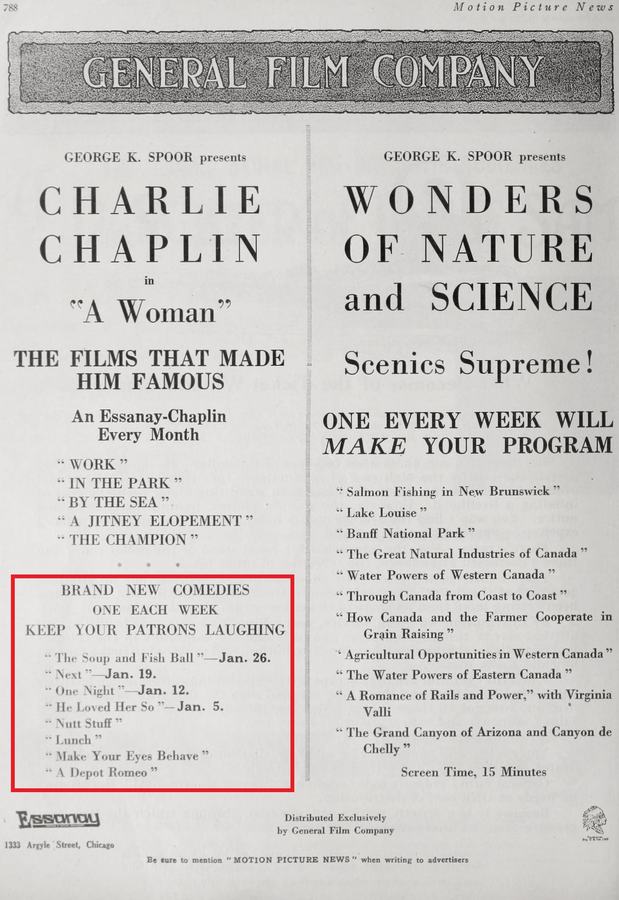
The year 1913 was a threshold for the moving image, a period where the 'cinema of attractions' began to yield to more structured, albeit primitive, narrative frameworks. Arthur Hotaling’s The Soup and the Fish Ball exists as a fascinating, if decidedly average, specimen of this transition. At its core, the film is a study of social anxiety masquerading as a slapstick romp. The plot, involving two Irish characters whose evening wear is purloined on the eve of a grand ball, taps into the pervasive immigrant desire for upward mobility. By stripping these men of their 'dress suits,' Hotaling effectively strips them of their assumed dignity, forcing them back into the chaotic, unrefined world of the 'rough house.'
Unlike the more nuanced social commentary found in The Market of Vain Desire, this production doesn't bother with the complexities of moral decay. Instead, it leans heavily into the physical language of the era. The paranoia that arises between the two friends—each suspecting the other of the theft—is a trope that would later be refined in films like Stop Thief!. However, here it remains a blunt instrument used to propel the characters toward an inevitable, furniture-smashing climax. The humor is derived not from wit, but from the degradation of the body and the destruction of the domestic space.
To understand the 'average offering' that is The Soup and the Fish Ball, one must appreciate the 'knockabout' tradition from which it emerged. This was a style born of Vaudeville, where the physical resilience of the performer was the primary attraction. In this film, the 'rough house' sequence at the ball is not merely a plot point; it is the raison d'être of the entire production. The camera, largely static, acts as a proscenium arch, capturing the flailing limbs and tumbling bodies with a detached, observational eye. It lacks the rhythmic editing of Jeffries-Sharkey Contest, which brought a different kind of visceral pugilism to the screen, yet it possesses a raw, unpolished energy.
The title itself, referencing 'soup' and 'fish balls,' evokes the imagery of cheap boarding house fare—the antithesis of the high-society banquet. This juxtaposition is key to the film's comedic friction. The characters are caught between their reality (the fish ball) and their aspiration (the ball). When their suits are stolen, the veneer of civilization vanishes. We see a similar exploration of identity and deception in A Continental Girl, though that film operates with a significantly higher degree of aesthetic polish. Hotaling’s work is more blue-collar, more immediate, and arguably more honest in its depiction of base human suspicion.
When placed alongside contemporary works like Qristine or the ephemeral charm of Just for Tonight, The Soup and the Fish Ball feels somewhat antiquated even for its time. It relies on a level of mistrust that mirrors the domestic discord seen in A Suspicious Wife, yet it eschews the psychological depth that could have elevated the farce. The film is content to remain in the shallow end of the narrative pool, focusing on the externalization of conflict. The theft is never truly investigated; it is merely a catalyst for the 'rough house.' This lack of resolution is a hallmark of the 'average offering'—a film that provides the expected beats of its genre without challenging the audience's expectations.
Furthermore, the portrayal of the Irish characters avoids the more dramatic weight seen in The Payment or the supernatural intrigue of She. Instead, it occupies a space similar to The Evil Eye, where a single plot device drives the entire momentum of the piece. The 'evil eye' in this case is the mutual gaze of the two friends, each seeing a thief in the other's face. It is a cynical view of friendship, suggesting that even the closest bonds are susceptible to the loss of material status.
Arthur Hotaling’s direction is functional, prioritizing the clarity of the physical gags over any innovative use of the frame. In an era where The Trouble Buster was beginning to explore more dynamic action sequences, The Soup and the Fish Ball remains rooted in the theatrical. The ball itself is presented with a stiff formality that makes the ensuing chaos all the more jarring. However, the chaos lacks the poetic framing found in The Children in the House, where the environment feels like a living participant in the drama. Here, the set is merely a backdrop for the 'rough house'—a playground for the actors to exert their physicality.
The performance of Hotaling himself, and the ensemble, is dictated by the broad strokes of the silent era. Every gesture is magnified; every look of suspicion is an exaggerated grimace. While it lacks the delicate characterization of Dimples, there is a certain charm in its commitment to the absurd. The film doesn't ask the viewer to care about the characters' loss; it asks them to laugh at the indignity of it. This is the essence of the knockabout: the transformation of misfortune into a spectacle of resilience.
In the grand tapestry of early cinema, films like Money Madness or Her Own Way often overshadow these minor comedies. Yet, The Soup and the Fish Ball provides a necessary counterpoint to the more 'serious' works of 1913. It reminds us that for the early moviegoer, the cinema was often a place of simple, rowdy catharsis. The 'average' nature of the film is perhaps its most honest attribute; it represents the standard fare that filled the nickelodeons, the bread-and-butter of an industry still finding its feet.
The brilliance of the film, if it can be said to have any, lies in its pacing. It moves with a relentless, almost desperate speed toward its violent conclusion. There is no time for reflection, only for reaction. This breathless quality would become a hallmark of American comedy, eventually evolving into the sophisticated slapstick of the 1920s. But in 1913, in the hands of Arthur Hotaling, it was a 'rough house'—pure, unadulterated, and delightfully crude. It is a cinematic fish ball: cheap, filling, and distinctly of its time, providing a stark contrast to the 'soup' of refined drama that would eventually come to dominate the medium.

IMDb 6.3
1932
Community
Log in to comment.