DbcultAccessing Vault...
Cult Review
Senior Film Conservator
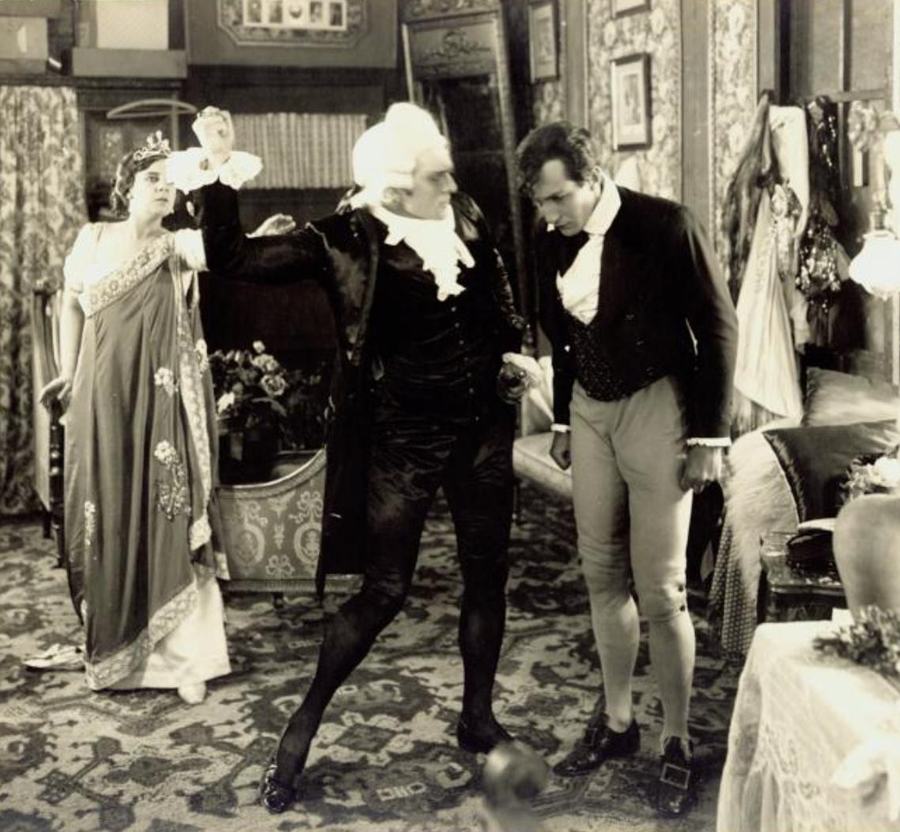
In the annals of early cinema, few genres captured the human condition with such raw, unadulterated passion as the theatrical melodrama. And among these, Danish silent films often distinguished themselves with a particular psychological depth and a penchant for exploring the shadowed corners of human ambition and desire. Such is the case with Scenens Børn, a compelling cinematic artifact that transports its audience into the hallowed, yet often treacherous, world of the opera house. More than just a simple narrative, this film, penned by Fritz Magnussen and Bertel Krause, unfurls a complex tapestry of artistic aspiration, personal rivalry, and the insidious 'dark cloud' that threatens to engulf all who dare to dream beneath the proscenium arch.
At the heart of Scenens Børn lies a spectacular theatrical event: the staging of Giacomo Puccini's immortal opera, 'Tosca.' This is no ordinary production; it is the magnum opus of Axel Steiner, a celebrated actor whose very name carries the weight of theatrical legend. Steiner, a figure of immense gravitas and artistic vision, has chosen his protégé, the luminous Magda Irving, for the coveted title role. Magda, a talent on the precipice of stardom, embodies the tragic Floria Tosca with a burgeoning intensity that promises to captivate audiences. Her voice, though unheard in the silent medium, is conveyed through every nuanced gesture, every expressive glance, hinting at a power that could move mountains or, indeed, shatter hearts.
However, the film deftly establishes that this grand artistic endeavor is not merely an exercise in creative triumph. From its very inception, an ominous pall hangs over the opera house. This 'dark cloud' is a multifaceted entity, an atmospheric dread that permeates the gilded corridors and dusty wings. It is, perhaps, the insidious whisper of professional jealousy, as other ambitious performers, their own aspirations thwarted, cast envious glances at Magda's meteoric rise. It could be the suffocating pressure of financial instability, a common plight for many theatrical institutions, threatening to bring down the entire enterprise. More profoundly, this shadow might be rooted in a hidden past, a secret held by Steiner or Magda herself, slowly but surely surfacing to disrupt their carefully constructed lives. The very choice of 'Tosca' as the opera within the film is a stroke of narrative genius; its themes of betrayal, unrequited love, political intrigue, and ultimate tragedy serve as a chilling premonition for the real-life drama unfolding backstage. The lines between the fictional narrative of the opera and the very real human struggles of its performers begin to blur, creating a potent sense of impending doom that keeps the audience riveted.
In the realm of silent cinema, the burden of conveying complex emotions and intricate plot points falls squarely upon the shoulders of its performers. Their faces become canvases, their bodies instruments of expression. In Scenens Børn, the ensemble cast rises to this challenge with remarkable aplomb, each contributing to the film's rich emotional tapestry. Axel Boesen, as the legendary Axel Steiner, delivers a portrayal of immense gravitas. He embodies the seasoned artist, a man whose life is inextricably woven with the theatre, with a quiet authority that belies a potential inner turmoil. His gestures, perhaps a subtle clench of the jaw or a weary sigh, communicate a profound sense of responsibility and perhaps, an underlying fear for his protégé's fate or his own legacy. Boesen's Steiner is not merely an actor; he is a force of nature, yet one susceptible to the very human frailties that plague his colleagues.
Ebba Thomsen, in the pivotal role of Magda Irving, is nothing short of captivating. As the rising star, she must convey not only burgeoning talent and ambition but also vulnerability, fear, and the intoxicating allure of the stage. Thomsen's expressive eyes and delicate yet resolute movements paint a vivid picture of a young woman caught between her artistic dreams and the dark currents swirling around her. Her performance is a masterclass in silent film acting, allowing the audience to feel Magda's triumphs and tribulations without a single spoken word. Her portrayal is particularly poignant as she navigates the complex relationship with Steiner, a blend of mentor, father figure, and perhaps even a subtle romantic tension that remains unspoken, yet palpable.
Olaf Fønss, a prominent figure in Danish cinema, likely brings a compelling presence to the narrative. Given his filmography, one might imagine him as a dashing, perhaps morally ambiguous rival for Magda's affections, or a cunning manipulator seeking to undermine Steiner's production. His ability to project both charm and menace would undoubtedly add layers of intrigue to the 'dark cloud' motif. The supporting cast, including Hugo Bruun, Robert Schmidt, Alfi Zangenberg, Cajus Bruun, Herman Florentz, Stella Lind, and Philip Bech, would each contribute crucial threads to this intricate web. One can envision Bruun and Schmidt as jealous colleagues, their simmering resentment manifesting in subtle sabotage or whispered rumors. Zangenberg might play a concerned confidante or a duplicitous insider. Florentz and Bech could embody the stoic, perhaps helpless, administrators of the opera house, caught between artistic integrity and the harsh realities of their institution. Each actor, through the precise art of pantomime and facial expression, helps to build a believable, high-stakes world where personal and professional destinies intertwine with volatile consequences.
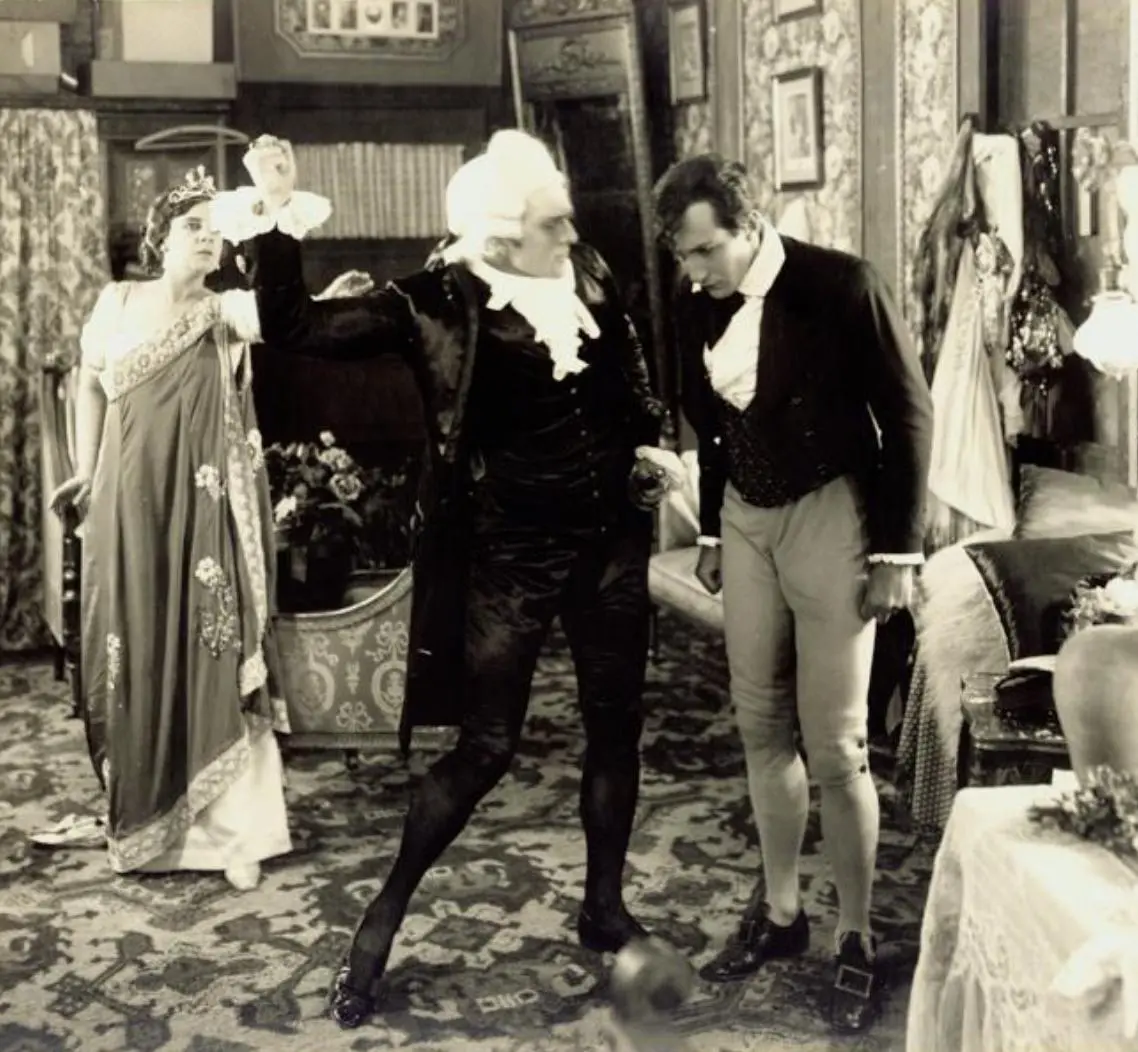
The success of Scenens Børn is undoubtedly a testament to the collaborative genius of its director, Fritz Magnussen, and writers, Fritz Magnussen and Bertel Krause. In an era where cinematic language was still evolving, Magnussen demonstrates a keen understanding of visual storytelling, employing mise-en-scène to its fullest potential. The framing of shots, the movement of the camera (or lack thereof), and the strategic use of close-ups would have been crucial in conveying the film's intense emotional states and dramatic revelations. One can imagine Magnussen masterfully contrasting the opulent grandeur of the opera stage, bathed in artificial light, with the shadowy, claustrophobic intimacy of backstage dressing rooms and corridors, thereby visually reinforcing the film's central conflict between public facade and private turmoil.
Bertel Krause's screenplay, co-written with Magnussen, proves that a compelling narrative does not require spoken dialogue. The choice of 'Tosca' itself is a brilliant narrative device, allowing the film to leverage the opera's inherent drama and tragedy as a meta-narrative for the characters' own struggles. The intertitles, the textual inserts that guide the audience through plot points and character thoughts, would have been meticulously crafted to convey nuanced emotions and accelerate the dramatic tension. Unlike the more boisterous comedic romps of the era, such as Ambrose's Vacation, or even the often straightforward action of adventure serials, Scenens Børn delves into a psychological realism that demands a sophisticated understanding of human motivation. The writers skillfully weave together threads of artistic ambition, personal loyalty, deceit, and passion, creating a narrative that feels both grand in its operatic scope and intimately human in its portrayal of individual struggles. The pacing, crucial for silent films, would have been expertly managed to build suspense, allowing moments of quiet introspection to punctuate bursts of dramatic confrontation.
The visual aesthetic of Scenens Børn is as integral to its storytelling as the performances themselves. The cinematography, a vital tool in silent cinema, would have been employed to craft a palpable atmosphere of both glamour and dread. Imagine sweeping shots of the opera house interior, capturing its architectural majesty and the anticipation of the audience, contrasted with stark, intimate close-ups that reveal the raw emotions etched on the actors' faces. The use of light and shadow would be paramount, with dramatic chiaroscuro effects highlighting moments of tension, secrecy, or despair. A solitary figure bathed in a single shaft of light backstage could convey profound loneliness or a moment of fateful decision. Conversely, the dazzling stage lights would symbolize the public's perception, a stark contrast to the hidden machinations occurring in the gloom of the wings.
The art direction and set design would also play a crucial role in establishing the film's tone. The opulent, yet slightly decaying, grandeur of an old opera house provides a rich visual metaphor for the characters' aspirations and the fragility of their dreams. The contrast between the lavish costumes and sets of the 'Tosca' production and the potentially more mundane, even grimy, reality of the backstage areas further emphasizes the film's thematic exploration of illusion versus reality. This attention to visual detail, a hallmark of quality silent filmmaking, elevates Scenens Børn beyond a mere plot recital into a truly immersive dramatic experience. While distinct from the stark, often starkly beautiful landscapes of something like Des Goldes Fluch (if it focuses on natural elements), Scenens Børn creates its own powerful, enclosed world, rich with symbolic architecture and carefully orchestrated visual cues.
Scenens Børn, like many of its contemporaries, serves as a powerful reminder of the sophisticated storytelling capabilities of early cinema. It demonstrates that without the aid of synchronized sound, filmmakers could still craft narratives of profound emotional depth and psychological complexity. The film's exploration of themes – ambition, jealousy, betrayal, the corrosive nature of secrets, and the often-harsh realities behind artistic glamour – remains timeless and universally relatable. These are not merely historical curiosities but reflections of enduring human struggles. The 'dark cloud' it so evocatively portrays is not unique to a specific era but is a universal shadow that can fall upon any endeavor, particularly those fueled by intense passion and high stakes.
In the broader context of Danish silent cinema, Scenens Børn stands as a testament to the country's contributions to the art form. It showcases a particular flair for psychological drama and a willingness to delve into the more somber aspects of human nature, a characteristic that often set European silent films apart. While perhaps not as widely known today as some of its more sensationally themed counterparts, its quiet intensity and masterful performances ensure its place as a significant work. For cinephiles and historians alike, rediscovering Scenens Børn offers a unique opportunity to witness a pivotal moment in cinematic history, a period when the silent screen spoke volumes through gesture, expression, and the sheer power of visual narrative. It reminds us that long before the advent of sound, cinema was already a potent force, capable of stirring the soul and illuminating the intricate drama of the human heart.
IMDb 6.1
1926
Community
Log in to comment.