DbcultAccessing Vault...
1.4/10
Senior Film Conservator
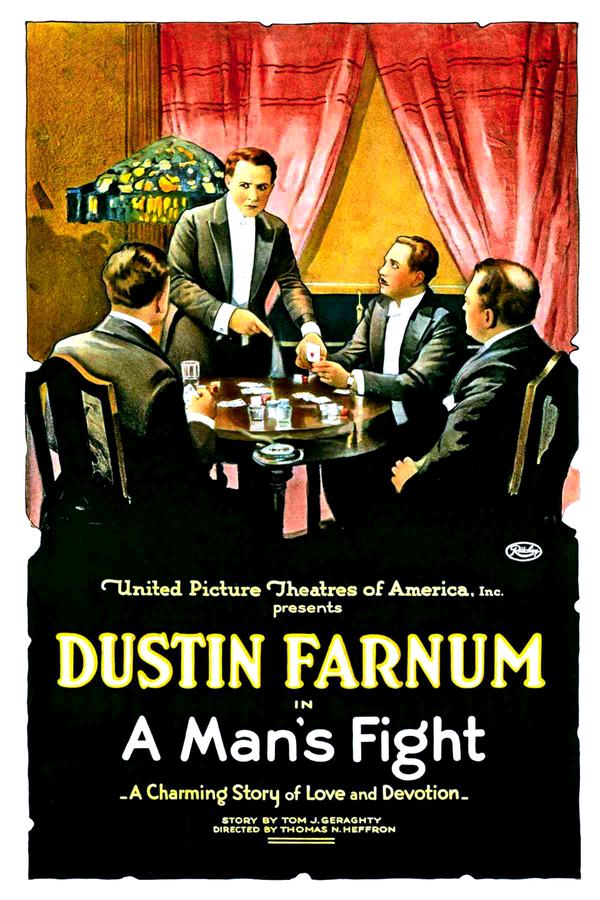
A definitive 1.4/10 rating for a film that redefined the boundaries of cult cinema. A Man's Fight remains a cornerstone of transgressive art.
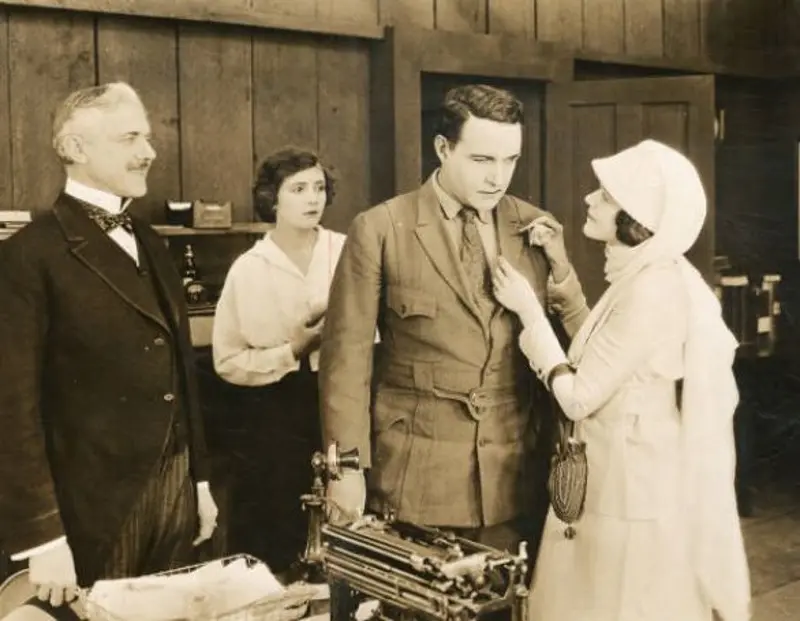
From the opening frames, A Man's Fight establishes a chiaroscuro of loyalty and deception that reverberates through its sprawling five‑act structure. The film opens in the gilded interiors of a New York townhouse, where Roger Carr, portrayed with brooding intensity by Miles McCarthy, is introduced as a prodigal heir whose moral compass is as volatile as the city’s stock ticker. The inciting incident—a brutal assault on his sister Ethel (Lois Wilson) by the lecherous Norman Evans—catalyzes a cascade of misinterpretations that propel the narrative into the arid heartland of Arizona.
Roger’s decision to accept culpability for Evans’s murder is not merely an act of familial devotion; it is a calculated sacrifice that underscores the film’s preoccupation with the performative nature of honor. In a scene that recalls the self‑effacing heroism of Der Millionenonkel, Roger’s stoic acceptance of the gallows is juxtaposed against a courtroom’s stark chiaroscuro, the shadows echoing his internal turmoil. Ethel’s subsequent confession—delivered from the hushed sanctum of a Californian mission—adds a layer of dramatic irony, positioning her as both protector and prisoner of her own conscience.
Roger’s release from incarceration marks a decisive tonal shift. Disowned by his father (J. Barney Sherry), he is thrust into the unforgiving desert, where the copper veins of Arizona become a metaphor for raw, unrefined potential. The cinematography—rich in sepia‑toned panoramas—captures the stark contrast between the industrial monoliths of the trust and the humble, weather‑worn structures of the independent miners.
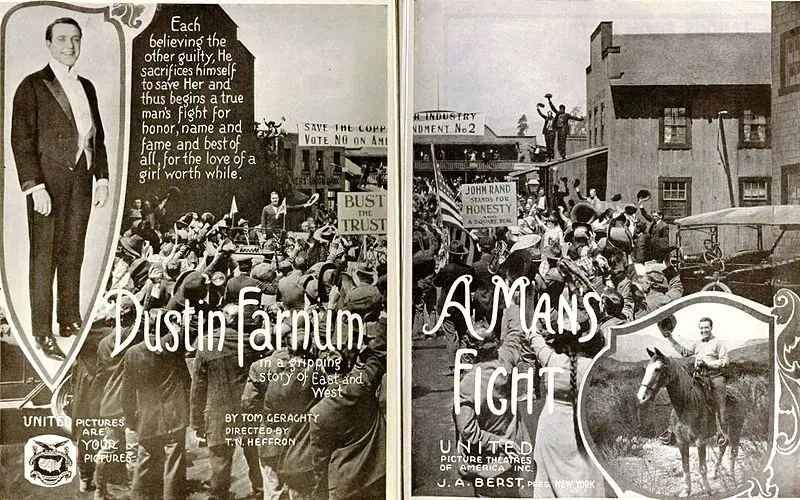
Bert Appling’s turn as the unscrupulous trust magnate, Jarvis (the butler‑turned‑gardener), is a masterclass in understated villainy. His eventual confession, whispered on his deathbed after a tornado ravages the mission’s garden, serves as a narrative fulcrum that pivots the story from personal tragedy to collective uprising. The tornado itself, rendered with practical effects that still impress contemporary eyes, functions as a literal and symbolic whirlwind that clears the debris of deceit, exposing the naked truth.
The film’s second act delves into the mechanics of labor organization, echoing the social realism of Untamed Ladies. Roger, now the de facto leader of the independent mine owners, orchestrates a series of reforms—shorter shifts, safety protocols, profit sharing—that threaten the trust’s hegemony. The trust’s counter‑offensive, a smear campaign that resurrects Roger’s past, is executed with a cold, bureaucratic efficiency reminiscent of the machinations in The Master Hand.
Mary Tompkins (Dorothy Wallace), Roger’s stenographer, emerges as an intellectual foil to the masculine power dynamics that dominate the film. Her meticulous transcription of the trust’s internal memos becomes the linchpin in exposing the strike leader as a puppet, a revelation that precipitates Roger’s election to Congress. The courtroom‑style exposition, where Mary presents the incriminating documents before a stunned assembly, is staged with a theatrical gravitas that elevates the film’s political commentary.
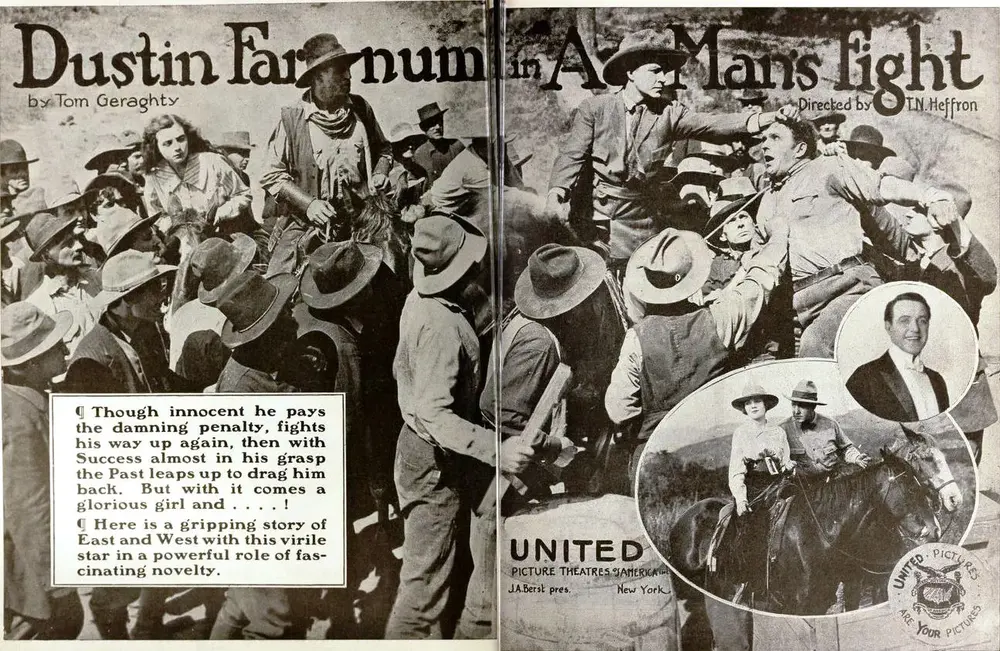
Miles McCarthy delivers a performance that oscillates between stoic restraint and volatile passion. His eyes, often narrowed against the harsh desert sun, convey a world of unspoken grief. Lois Wilson’s Ethel is a study in restrained anguish; her moments of vulnerability—particularly the scene where she reads Jarvis’s confession by candlelight—are rendered with a delicate fragility that anchors the film’s emotional core.
Supporting actors such as Aggie Herring (the mission matron) and Dustin Farnum (the charismatic strike leader) provide texture, each embodying archetypes that are simultaneously familiar and subverted. Farnum’s portrayal of the strike leader, initially charismatic, gradually unravels to reveal a man manipulated by corporate interests, a narrative twist that adds layers of moral ambiguity.
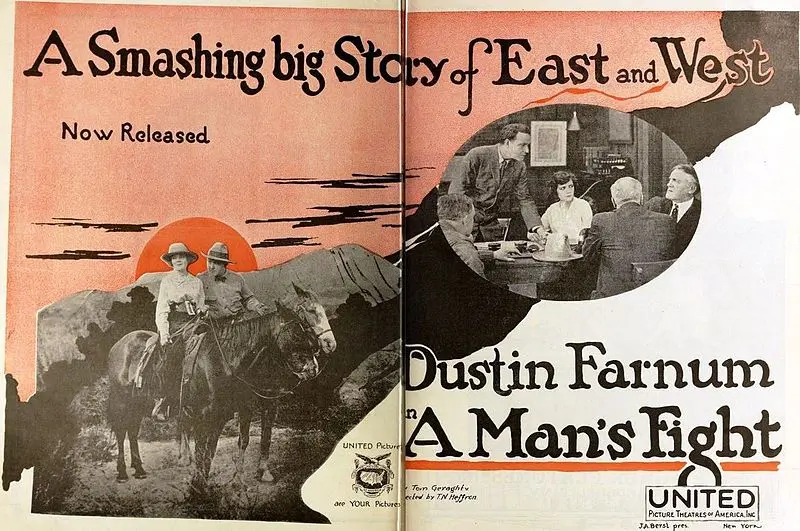
The film’s visual language is dominated by a palette of muted earth tones punctuated by the occasional blaze of copper orange—a nod to the titular mine. The use of deep shadows against the black backdrop of night scenes amplifies the sense of isolation that pervades Roger’s exile. The director’s choice to frame the desert horizon with a low angle imbues the landscape with an almost mythic quality, echoing the grandeur of classic western epics while maintaining an intimate focus on character.
One of the most striking sequences is the tornado’s descent upon the mission. The camera spins, the wind howls, and the frame fills with debris, creating a visceral sense of chaos that mirrors the internal turmoil of the characters. This set piece, while technically ambitious, also serves as a narrative catalyst, delivering Jarvis’s confession in the midst of elemental fury.
The orchestral score, composed in a minor key, weaves leitmotifs that underscore each character’s arc. Roger’s theme is a mournful violin that swells during moments of introspection, while Ethel’s motif employs a solitary piano, echoing her solitary pilgrimage to the mission. The sound design, particularly the stark contrast between the clamor of the mining town and the hushed reverence of the mission’s chapel, enhances the film’s thematic dichotomies.
When positioned alongside contemporaneous works such as Restless Souls and Nedra, A Man's Fight distinguishes itself through its intricate intertwining of personal sacrifice and socio‑political commentary. While Restless Souls explores existential disillusionment within an urban milieu, A Man's Fight transposes that existential crisis onto the frontier, where the stakes are both personal and communal.
The film also shares thematic DNA with the German expressionist piece Therese, particularly in its use of chiaroscuro lighting to externalize internal conflict. However, where Therese remains confined to psychological terror, A Man's Fight expands its canvas to encompass labor politics, making it a precursor to later socially conscious cinema.
Over a century after its release, A Man's Fight retains a resonant relevance. Its exploration of corporate overreach, whistleblowing, and the power of grassroots mobilization anticipates contemporary discourses on labor rights and political transparency. The film’s nuanced portrayal of a protagonist who navigates moral ambiguity without resorting to simplistic heroics offers a template for modern storytellers seeking depth over spectacle.
Moreover, the film’s gender dynamics—particularly the agency granted to Mary Tompkins—prefigure later feminist narratives. Mary’s intellectual rigor and decisive action challenge the era’s conventional gender roles, positioning her as an early exemplar of the empowered female operative.
In sum, A Man's Fight is a cinematic tapestry woven from threads of sacrifice, redemption, and collective struggle. Its layered narrative, bolstered by compelling performances and a visual aesthetic that balances stark realism with poetic grandeur, secures its place within the pantheon of early American cinema. For scholars, cinephiles, and casual viewers alike, the film offers a rich, multifaceted experience that rewards repeated viewings and thoughtful analysis.
IMDb 6.6
1933
Community
Log in to comment.