DbcultAccessing Vault...
Cult Review
Senior Film Conservator
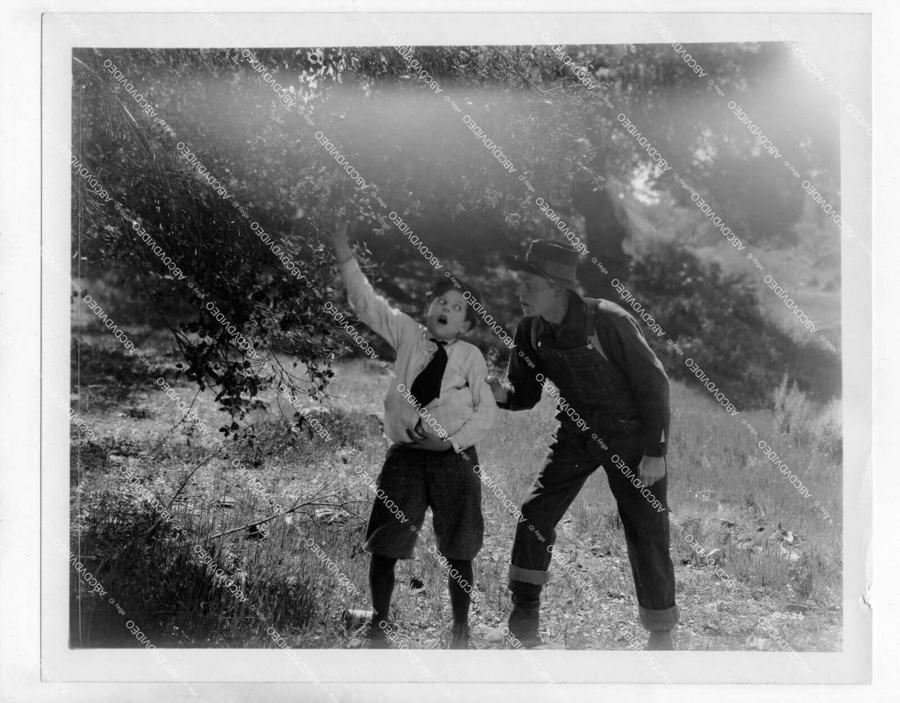
Some films arrive like weather systems; others seep in like damp. Edgar's Jonah Day does both—an ostensibly modest morality yarn that swells into a hallucination of pen and ink, shame and sodium light. Viewed today, it feels less a relic than a prophecy, foretelling the cubicle-age dread that would later calcify into Brazil or Office Space, yet delivering its anguish through the flicker of iris-ins and ghosted title cards.
Director Barbara Kent—yes, the same Kent who would later glide through Footlight Maids—adapts Booth Tarkington’s anecdotal fable with scalpel-sharp irony. She refuses to let any frame ossify into tableau; instead the camera prowls, noses into inkwells, jibs up the gothic façade of a midwestern savings house that might as well be Kafka’s castle. Rare for 1923, Kent experiments with under-cranking during Edgar’s panic fugue: clerks scurry like Keystone ants, ledgers flap like shot birds, and the world becomes a zoetrope of culpability.
The inciting blot is a misplaced cipher—$9,300 evaporates because Edgar hit the typewriter’s tab instead of the 9. In the Roaring Twenties such a sum could purchase a modest house on Maple Terrace; now it purchases Edgar’s civic excommunication. The film’s brilliance lies not in the error but in the communal choreography of scorn. Tellers whisper behind brass grilles; children point through frosted glass; even the ticker-tape machine seems to gag on its own rat-a-tat. Edgar’s fall is not vertical but hydra-headed: reputation, love, and self-image severed simultaneously.
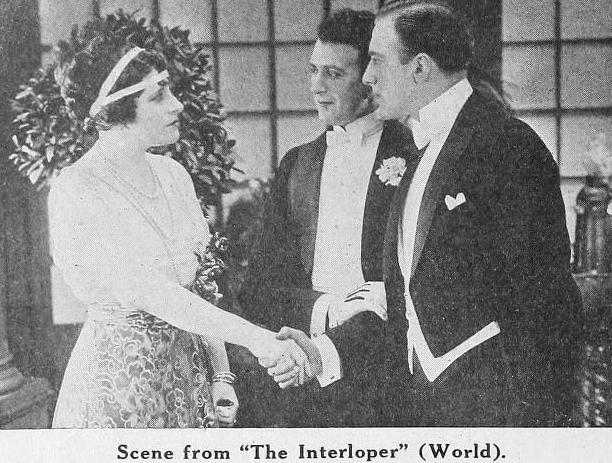
Marie Dunn’s Marjorie embodies the era’s tenuous femininity—here is no flapper but a stenographer clutching middle-class respectability like a porcelain teacup. Watch her pupils when she learns of the shortage: they dilate as if struck by headlights, yet the rest of her face remains porcelain. It’s silent-film acting at its most surgical, a moment that aches louder than any talkie scream.
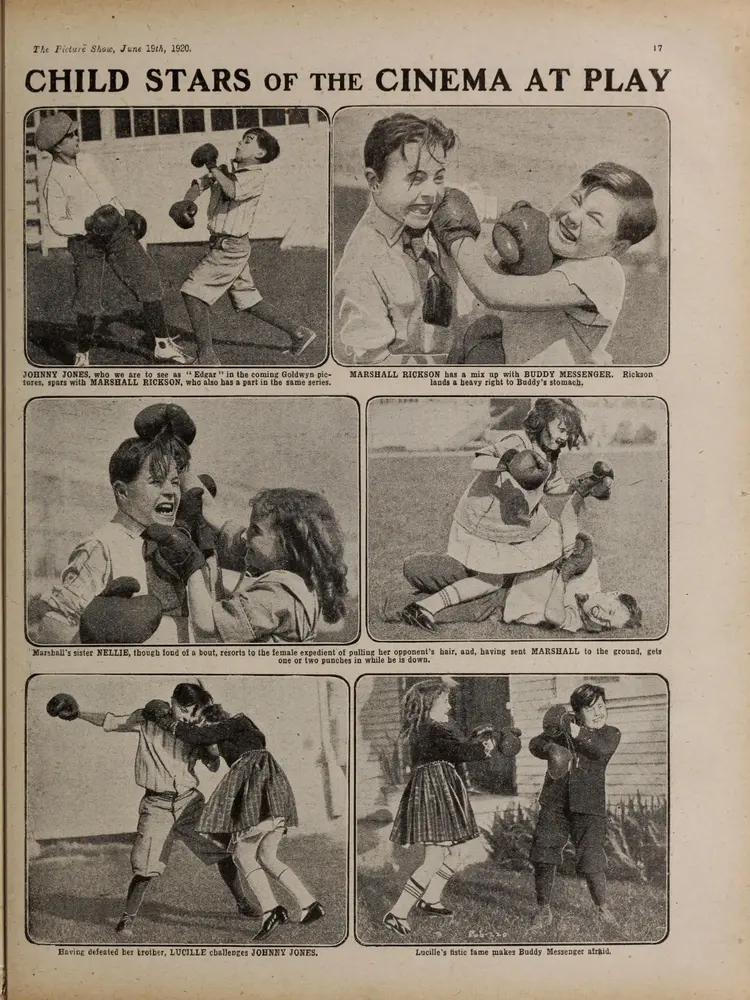
Lucretia Harris, saddled with the thankless role of "colored laundress," transcends stereotype through sheer gravitas. Her single close-up—eyes glassy yet defiant—feels like a portal to another movie, one where Black voices narrate their own tragedies. Likewise, Buddy Messinger’s newsboy, all gapped teeth and newsprint smudges, embodies street capitalism: he sells papers that damn Edgar, pockets the nickel, yet offers the poor soul a licorice whip out of communal sorrow. Innocence corrupted by the same ledger ink that ruins men twice his age.
The adult anchor is John Cossar as bank president Gildersleeve. Cossar plays him neither ogre nor saint but a ledger-man startled to discover arteries beneath his waistcoat. In the boardroom scene he fingers the missing page like a mortician verifying remains; you half-expect him to cross himself. It’s a quiet masterclass in capitalist guilt.

Cinematographer Virginia Madison—one of the few women behind silent-era cameras—renders the city as a palimpsest: trolley sparks, rain pocking puddles, sodium lamps that bruise the night ochre. She employs back-projection during Edgar’s streetcar escape: buildings scroll like tormented scrolls behind him, a precursor to the fever-dream rear-screen of The Scales of Justice (1927). Note the moment Edgar passes a pawnshop window: his reflection overlaps a wedding ring display, the mise-en-abyme suggesting futures hawked by the ounce.
Intertitles, often a silent film’s weak ventriloquism, here crackle with Tarkington’s sardonic bite. Example: "A thousand eyes stared at the clerk—some belonged to men, some merely to spectacles." Text becomes character, mocking as Greek chorus.
If The Scarlet Sin (1924) externalizes guilt via scarlet fever and religious mania, Edgar’s Jonah Day internalizes it until the body politic itself breaks out in welts. Both share a Protestant dread of invisible blemish, yet while Scarlet seeks absolution through sacrificial love, Edgar seeks it through bookkeeping—a uniquely American theology.
Likewise, fans of The Corsican (1924) will recognize the fatalistic spiral, though that film’s vendetta is hereditary; Edgar’s is bureaucratic. And compared to Luck in Pawn (1927), which treats money as romantic comedy coin-flip, Jonah Day treats it as original sin—one digit out of place and paradise curdles.
No original score survives, so modern prints invite accompanists to improvise. I viewed a 16 mm transfer with a three-piece ensemble wielding clarinet, muted trumpet, and bowed vibraphone. Their motif for Edgar—a descending chromatic riff—evokes both foghorns and faulty adding machines. When restitution nears, the meter pivots to 5/4, time itself limping toward grace. Your mileage will vary, but silence would be criminal; this film cries for music the way a ledger cries for balance.
Lucille Ricksen’s seamstress dies of consumption off-screen, yet her unfinished wedding dress haunts the hero like a ghost who refuses to hem. The film refrains from moralizing about prostitution or poverty; instead it posits needlework as the female counter-ledger—every stitch a deposit against despair. Meanwhile, Virginia Peil’s chorus girl flits through one scene, all beads and bootleg gin, embodying the urban phantasm that lures Edgar toward self-destruction. Together these women map the era’s polar femininity: consumptive virtue vs. jazz-age peril.

Modern viewers will flinch at Harris’s dialect intertitles ("Lawdy, dat money done flew away like a pigeon wit no wings"), yet the film affords her the last close-up before Edgar’s redemption, a narrative choice that complicates the mammy stereotype. She is both witness and moral barometer—scant recompense, but more than many contemporaries granted. Compare to The Unbeliever (1918), where Black characters function merely as exotic backdrop; here at least the laundress owns narrative weight.
Spoilers are moot in silent cinema—history has already spoiled everything. Still, the film’s coda deserves scrutiny: Edgar returns the missing sum not via heroic windfall but by pawning his deceased father’s gold watch, an heirloom whose ticking had synchronized with Edgar’s childhood lullabies. The act is both Oedipal surrender and baptism; the watch dies so the man may rewind himself. Yet the final intertitle offers no communal embrace. Gildersleeve merely nods, re-hires him, and the bank gears resume grinding. Redemption, Kent insists, is not epiphany but re-inscription—one returns to the cell, though the bars now gleam.
Only two incomplete negatives survive—one at UCLA’s Powell Library, another in a private Parisian collection. Both lack reel #3, necessitating a reconstruction using production stills and continuity script. A 2 K scan circulated festivals in 2016; rumor suggests Kino Lorber may pair it with Madame Bo-Peep (1924) for a Blu-ray devoted to Tarkington adaptations. Streamers have yet to bite; cine-clubs are your best bet. Bring a live accompanist, or at minimum a playlist heavy on Satie and early Duke Ellington—anything that understands the ache of Mondays.
Viewed alongside The Destroying Angel (1923) or The Secret of Eve (1923), Edgar’s Jonah Day inaugurates a micro-cycle of Calvinist nightmares where sin is statistical. It anticipates the post-Wall-Street crash comedies of the early thirties, yet lacks their swaggering cynicism; its DNA is too midwestern, too Tarkington-tender. One can trace a direct line to Tess of the D’Urbervilles (1924), where destiny again hinges on ink and parchment, though Hardy’s tragic fatalism mutates here into bourgeois anxiety.
Ultimately the film survives as both artifact and admonition: a reminder that civilization runs on columns of numbers, and one clerical tremor can unmoor a soul. Watch it not for antique quaintness but for the chill of recognition—how many of us, after all, sleepwalk through spreadsheets that could indict us tomorrow? In the flicker of Edgar’s iris, we confront the abyss of zeroes, the vertigo of accounts that never quite reconcile with the human heart.
Grade: A- for artistic audacity, historical resonance, and the brave refusal to let redemption feel comfortable.
IMDb —
1923
Community
Log in to comment.