DbcultAccessing Vault...
5.2/10
Senior Film Conservator
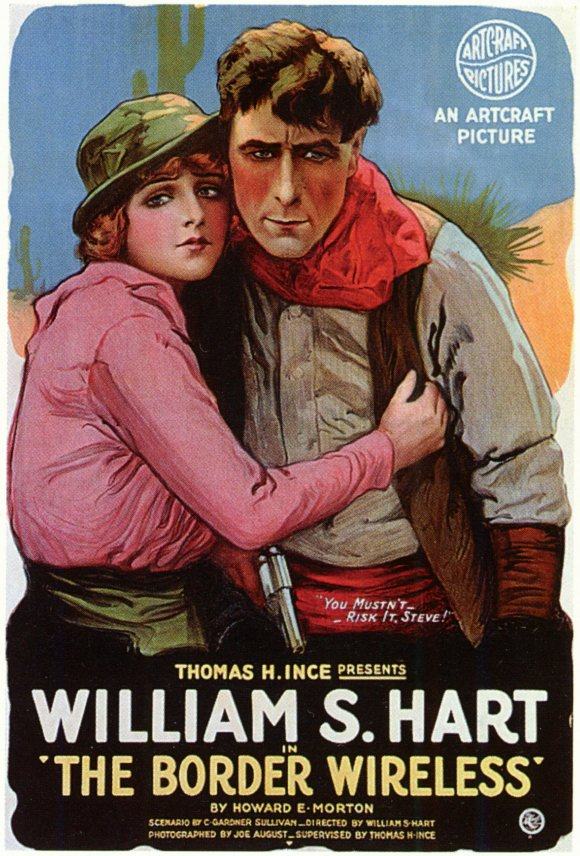
A definitive 5.2/10 rating for a film that redefined the boundaries of cult cinema. The Border Wireless remains a cornerstone of transgressive art.
Ah, the silent era. A time when storytelling relied on kinetic energy, raw emotion, and the profound expressiveness of its stars. Among the titans of this cinematic epoch, William S. Hart stands as an immutable icon, a figure whose very presence on screen exuded a stoic gravitas, a moral complexity that transcended the often-simplistic narratives of his contemporaries. His 1918 offering, The Border Wireless, is far more than a mere western; it's a fascinating confluence of frontier drama, wartime espionage, and a deeply personal quest for redemption, all set against the sun-baked, treacherous backdrop of the U.S.-Mexico border during the tumultuous years of the First World War. This film, crafted with the distinct Hart touch, plunges viewers into a world where loyalty is tested, secrets are deadly, and the vast, untamed landscape mirrors the moral wilderness within its protagonists.
At its core, The Border Wireless unfurls a narrative that feels remarkably prescient for its time, weaving a tale of international intrigue into the familiar fabric of the Western genre. We meet Steve Ransom, portrayed with characteristic intensity by Hart himself, a cowhand whose rugged exterior belies a troubled past—a man marked by the shadow of American justice. His existence along the desolate borderlands is one of quiet solitude, until he inadvertently stumbles upon a sinister conspiracy. German agents, operating with chilling efficiency, have established a clandestine network, using the remote vastness of the border to relay crucial radio messages into Mexico, and from there, directly to the enemy forces across the Atlantic. The sheer audacity of this plot, coupled with the then-novelty of wireless communication as a weapon, imbues the film with a palpable sense of urgency and modernity.
William S. Hart's performance as Steve Ransom is, predictably, the gravitational center of The Border Wireless. Hart had, by this point in his illustrious career, perfected the archetype of the "good-bad man"—a figure often an outlaw or a loner, but possessed of an unwavering moral compass and a deep-seated sense of justice. Ransom is no exception. He is a fugitive, yes, but not a villain. His past transgression, though never explicitly detailed, hangs over him like a perpetual desert haze, fueling his isolation and shaping his interactions. Hart communicates this internal struggle with an economy of gesture and a profound depth of expression that was his hallmark. His eyes, often narrowed against the harsh glare of the sun or the weight of his conscience, convey volumes without a single intertitle. When he discovers the German spy ring, his initial motivation isn't pure patriotism, but rather a nascent sense of responsibility, intertwined with a desire to perhaps atone for his own past. This layering of motives prevents Ransom from becoming a one-dimensional hero, elevating him to a more complex, psychologically rich character.
The choice to cast Hart in such a role was masterful. His established persona lent immediate credibility to Ransom's dual nature. Audiences knew Hart, respected his ability to portray conflicted masculinity, and trusted that his characters, despite their flaws, would ultimately strive for what was right. This inherent trust was crucial for a story that asks its audience to root for a fugitive. It's this nuanced portrayal that distinguishes Hart from many of his peers. While other Western stars might have played straightforward heroes, Hart consistently delved into the moral grey areas, a quality that makes his films, including this one, resonate even today. One might draw a thematic parallel to films like The Lash, where characters grapple with the consequences of their actions and the long shadow of past choices, though Hart’s stoicism often carried an even heavier weight of self-imposed solitude.
The espionage plot itself is surprisingly intricate for a film of its era. The German spies, led by characters like Erich von Ritzau and Bert Sprotte, are not cartoonish villains but rather calculating, dangerous adversaries. Their discovery of Ransom's fugitive status adds a potent layer of personal peril to the national threat. They attempt to leverage this information, believing they can either blackmail him into silence or discredit him entirely. This psychological warfare elevates the stakes beyond mere shootouts, transforming the conflict into a battle of wits and wills. The "wireless" aspect of the title is more than just a plot device; it symbolizes the encroaching modernity and the new forms of warfare that were defining the global conflict. The vast, seemingly empty spaces of the border become a stage for this invisible war, where signals traverse the air, carrying messages of life and death.
The writers, Howard E. Morton and C. Gardner Sullivan, skillfully construct a narrative that maintains tension throughout. Their ability to integrate the personal drama of Ransom with the broader geopolitical conflict is commendable. The threat to General Pershing, a real-life figure of immense national importance, grounds the fictional plot in a tangible reality, intensifying the sense of danger. This blend of individual struggle and national crisis is a hallmark of effective storytelling, ensuring that the audience is invested not just in Ransom's fate, but in the larger implications of the spies' success. The way the plot unfolds, with Ransom slowly piecing together the puzzle and then having to contend with his own vulnerability, keeps the viewer engaged, eager to see how this solitary figure will manage to outwit such a formidable and resourceful enemy.
While Hart commands the screen, the supporting cast in The Border Wireless provides crucial depth and texture to the narrative. Wanda Hawley, as the film's leading lady, brings a necessary feminine presence to the rugged landscape. Her character, often caught between the machinations of the spies and Ransom's efforts, adds an element of vulnerability and, at times, a source of moral support or complication for our hero. Marcia Manon, another key female presence, further enriches the emotional landscape, preventing the film from becoming solely a masculine saga of guns and spies. These female roles, while perhaps not as fully developed as modern audiences might expect, are integral to the plot's unfolding, often serving as catalysts or moral anchors.
The German agents, portrayed by actors like Erich von Ritzau, Charles Arling, and Bert Sprotte, are effectively menacing. They embody the perceived threat of the enemy during wartime, delivering performances that are both sinister and intelligent. Jim Mason, too, contributes to the ensemble, rounding out the cast of characters who populate this dangerous world. The collective effort of these performers ensures that the stakes feel real and the conflicts are well-articulated, even within the constraints of silent film acting. Their interactions with Hart, whether confrontational or subtly manipulative, highlight the constant tension and the ever-present danger that Ransom faces. The casting director clearly understood the need for strong character actors to complement Hart’s powerful screen presence, creating a believable and engaging dramatic environment.
Visually, The Border Wireless leverages its setting to tremendous effect. The vast, stark beauty of the borderlands—its deserts, mountains, and remote outposts—becomes a character in itself. Cinematography in silent films often relied on sweeping vistas and carefully composed shots to convey mood and scale, and this film is no exception. The sense of isolation and the sheer difficulty of traversing such terrain amplify the challenge faced by Ransom. The visual language of the film often mirrors the internal state of its hero: expansive yet confining, beautiful yet dangerous. The action sequences, though perhaps less frenetic than modern blockbusters, are staged with a clarity and purpose that ensures maximum impact. Hart, a master horseman, makes full use of the Western tropes, incorporating thrilling chases and tense standoffs that feel authentic and earned.
The pacing, a crucial element in silent cinema, is expertly managed. There are moments of quiet contemplation, allowing the audience to absorb the gravity of Ransom's situation, punctuated by bursts of intense action and suspense. The use of intertitles, while a necessity, is judicious, allowing the visual storytelling to take precedence. This balance prevents the film from feeling either rushed or plodding, drawing the viewer deeper into its unfolding drama. The art of conveying complex emotions and plot points without spoken dialogue is a testament to the skill of both the actors and the filmmakers, and The Border Wireless stands as a strong example of this craft. Its visual storytelling could be compared to the stark realism seen in films like A Man and His Mate, where the harshness of the environment is almost a character itself, shaping the destiny of those who inhabit it.
Beyond its thrilling plot, The Border Wireless explores several potent themes. Redemption is paramount. Ransom, a fugitive, finds a path to absolution not through passive acceptance of his fate, but through active engagement in a cause greater than himself. His fight against the German spies is not just about saving General Pershing; it's about reclaiming his own honor and proving his worth, both to himself and, implicitly, to the nation he once wronged. This theme resonates deeply, suggesting that true redemption often comes through selfless action in the face of grave danger.
Patriotism, naturally, is another central pillar, especially given the film's release during World War I. The film taps into the widespread anti-German sentiment of the era, portraying the spies as insidious threats to American security. However, it avoids simplistic jingoism by focusing on Ransom's personal journey, grounding the nationalistic fervor in an individual's moral awakening. It suggests that patriotism isn't just about flag-waving, but about defending one's community and values, even if one is an outsider. This nuanced approach makes the patriotic message more impactful and less preachy.
The concept of justice is also intricately explored. Ransom is a fugitive from the law, yet he acts as an agent of justice against a greater evil. This raises questions about the nature of legality versus morality, and whether one can find true justice outside the confines of established law. The lawless border itself becomes a metaphor for this moral frontier, a place where conventional rules are bent or broken, and where individuals must rely on their own internal code. This exploration of justice, often found in Hart’s films, can be seen as a precursor to more complex legal dramas, echoing the kind of moral quandaries found in tales like Forbidden Paths, where characters navigate societal expectations and personal integrity.
Released in 1918, The Border Wireless arrived at a critical juncture in American history, as the nation was fully embroiled in the Great War. The film served not only as entertainment but also as a reflection of public anxieties and patriotic fervor. The portrayal of German spies exploiting the border was a potent image, tapping into real fears of sabotage and infiltration. Such narratives played a role in shaping public opinion and rallying support for the war effort, much like informational films such as Kitchener's Great Army in the Battle of the Somme galvanized support for the Allied cause, albeit in a different documentary style.
Today, The Border Wireless stands as a remarkable example of silent cinema's capacity for complex storytelling and compelling character development. It showcases William S. Hart at the height of his powers, delivering a performance that is both iconic and deeply human. The film's blend of genres—Western, spy thriller, redemption drama—demonstrates the fluidity and innovation of early filmmaking. Its enduring legacy lies not just in its historical significance as a wartime production, but in its timeless exploration of themes that continue to resonate: the struggle between good and evil, the quest for personal honor, and the constant vigilance required to protect one's home. It reminds us that even in an era without spoken dialogue, the power of visual narrative and profound acting can create a cinematic experience that is both thrilling and thought-provoking. For those interested in the evolution of the Western or the spy genre, or simply in the artistry of early cinema, The Border Wireless is an essential viewing experience, a testament to the enduring power of a story well told, even a century later.

IMDb —
1916
Community
Log in to comment.