DbcultAccessing Vault...
Cult Review
Senior Film Conservator
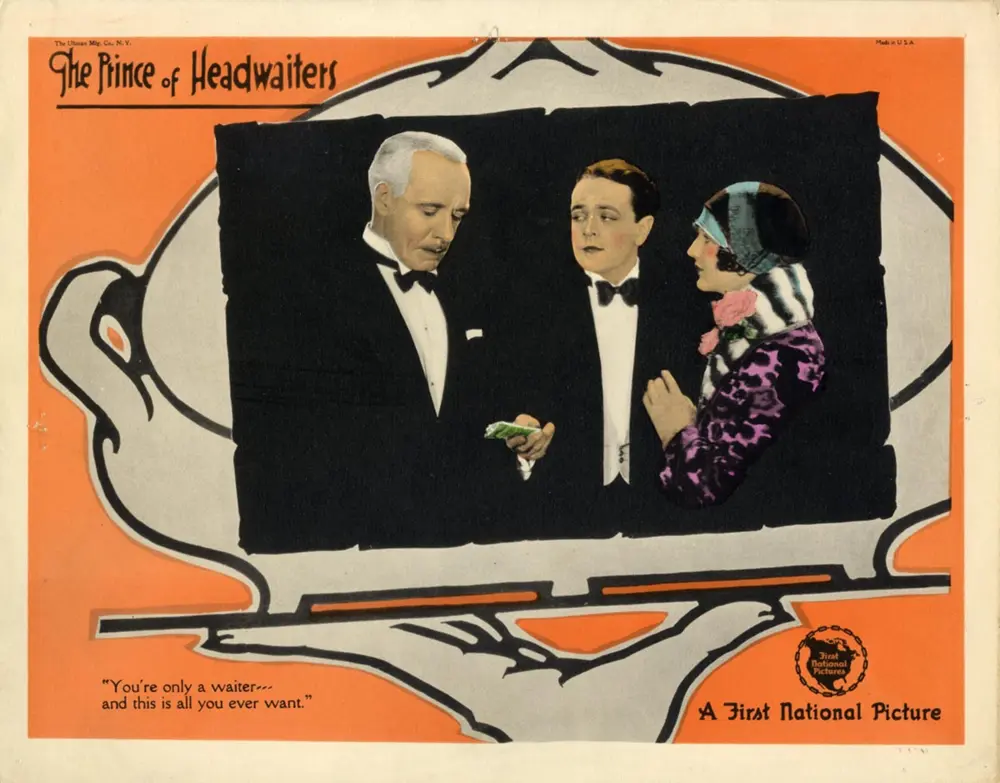
Is The Prince of Headwaiters worth watching today? Short answer: yes, but only if you value the quiet tension of character-driven drama over the bombast of typical silent-era spectacles. This film is a sophisticated piece of social commentary that rewards viewers who can appreciate the nuance of a raised eyebrow or a stiffened spine.
This film is for the cinephile who enjoys exploring the rigid class structures of the early 20th century and fans of Lewis Stone’s stoic screen presence. It is NOT for those who find the deliberate, methodical pacing of late-1920s melodrama to be an endurance test or for those seeking a lighthearted romantic comedy.
The Prince of Headwaiters remains relevant because it accurately captures the invisibility of the working class within the playgrounds of the rich. Unlike many films of its era that focused on slapstick or grand adventure, this film focuses on the internal life of a man who is legally and socially erased. It provides a window into the psychological toll of being a 'perfect servant' while harboring a private, burning paternal instinct.
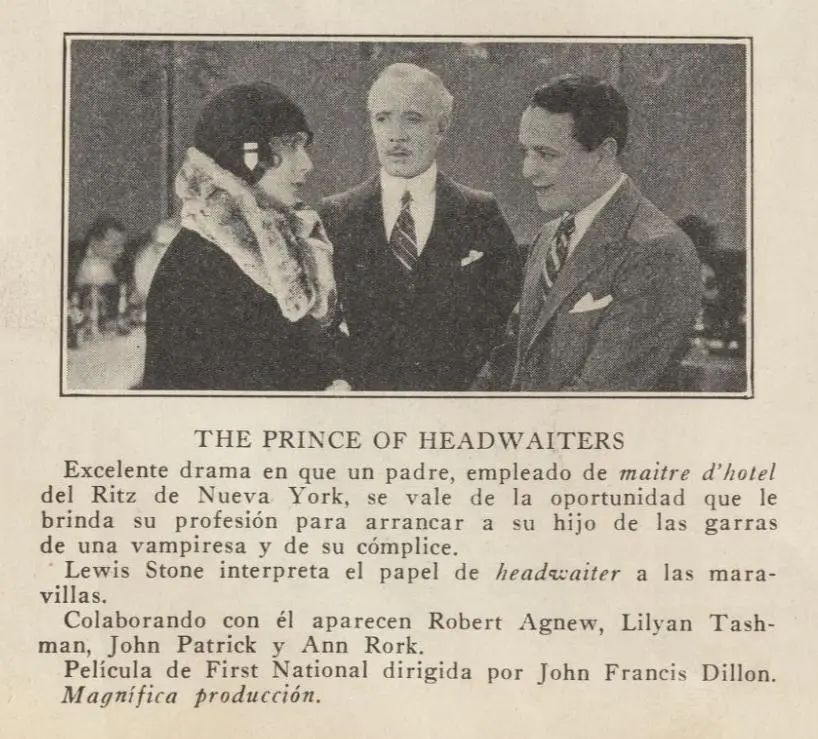
1) This film works because it utilizes the setting of the Ritz Hotel not just as a backdrop, but as a character that enforces the protagonist's isolation and professional mask.
2) This film fails because the character of Mae Morin is written with a broad, villainous brush that lacks the psychological depth given to the male lead.
3) You should watch it if you are interested in how silent cinema navigated the complexities of fatherhood and social mobility before the Hays Code simplified morality.
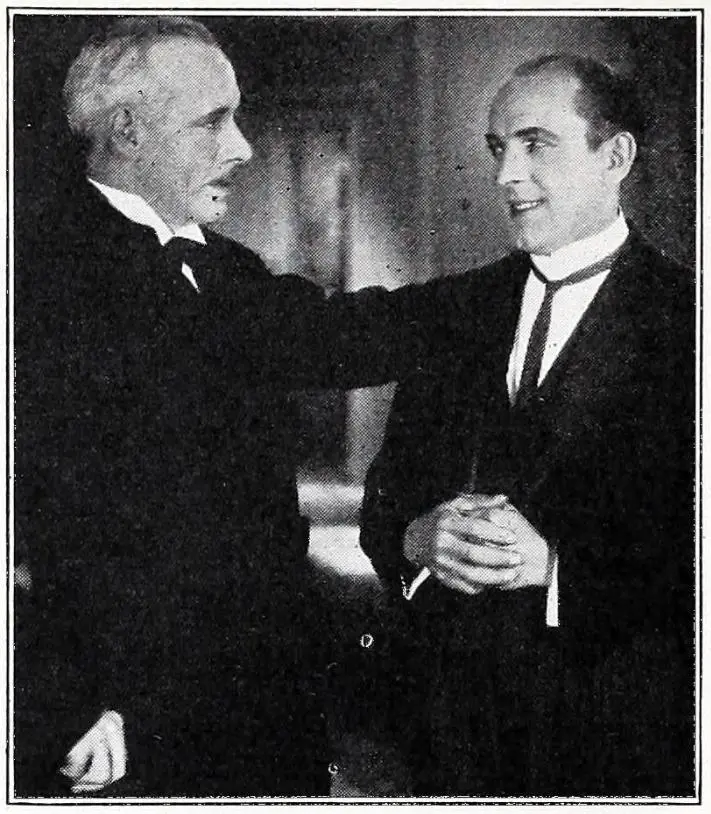
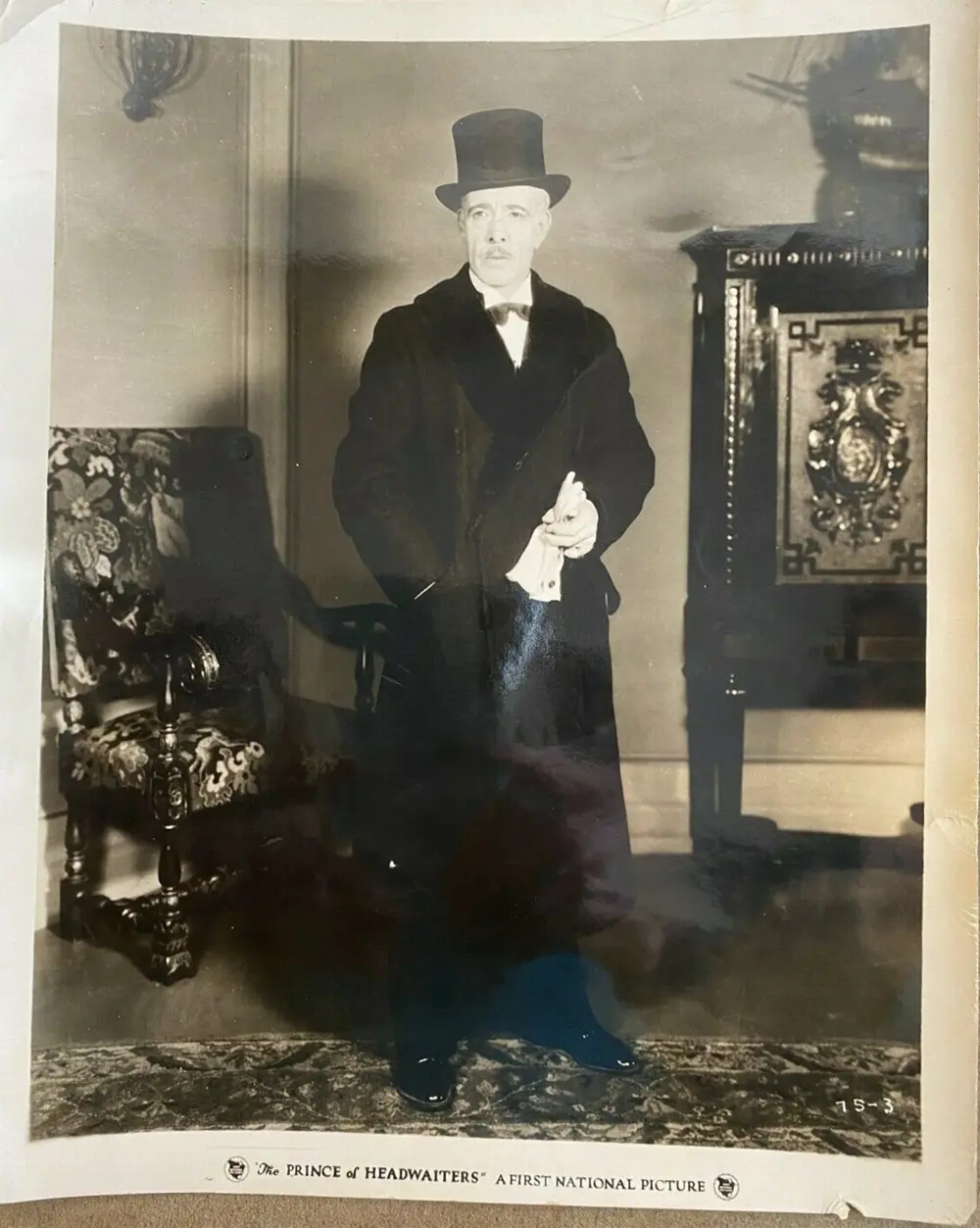
The Prince of Headwaiters is a fascinating study in the performance of class. Pierre, played with a haunting restraint by Lewis Stone, is a man who has mastered the art of being present without being noticed. His life at the Ritz is one of measured movements and anticipated needs. This is not the exaggerated service found in Bican Efendi vekilharç; this is the high-stakes theater of the European elite.
The narrative pivot occurs when Pierre realizes his son is in the building. The scene where he first serves his own child, unable to reveal his identity while pouring wine, is a masterclass in silent acting. Stone’s face is a battleground between the professional requirement of neutrality and the overwhelming surge of a father’s love. It is a moment of profound tension that doesn't require a single title card to explain.
The film explores the idea that Pierre’s expertise in 'service' is actually his greatest weapon. He knows the secrets of the people he serves. He knows who is cheating, who is broke, and who is desperate. When Mae Morin begins her blackmail plot, Pierre doesn't use violence; he uses the social currency he has accumulated over decades of silent observation. It’s a refreshing take on the hero archetype.
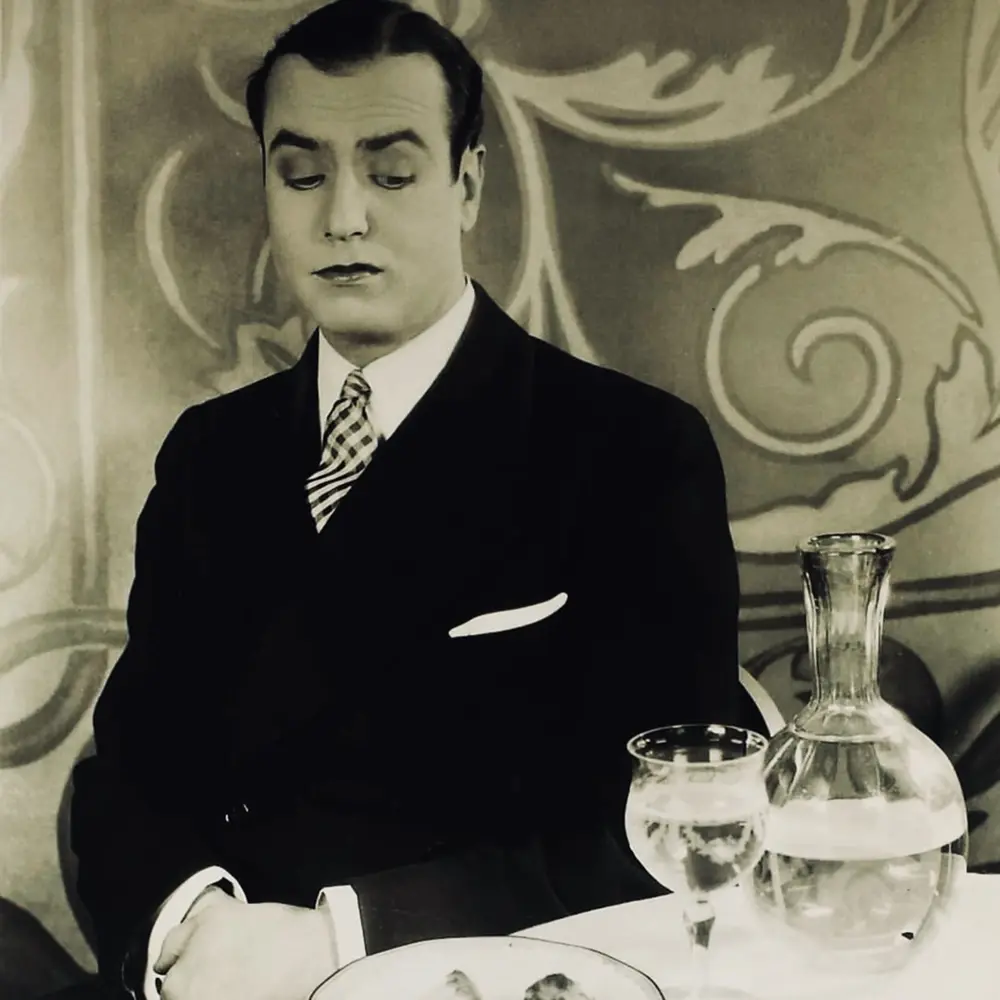
Lewis Stone is often remembered for his later roles as the patriarchal Judge Hardy, but here, he is in his prime as a leading man of gravity. His performance is the anchor of the film. While other actors of the time were still leaning into the grand gestures of the stage, Stone understands the power of the close-up. He uses his eyes to convey a lifetime of regret and a sudden, sharp purpose.
Compare his performance here to the more traditional dramatic tropes found in Ingeborg Holm. While both films deal with the loss of a child due to social circumstances, Stone’s Pierre is proactive in a way that feels modern. He isn't a victim of fate; he is a man fighting back against a system that tried to bury him. His stillness is his strength. It works. But it’s flawed by the surrounding cast.
The supporting cast, unfortunately, doesn't always meet Stone’s level of subtlety. Lilyan Tashman as Mae Morin is deliciously wicked, but she borders on the operatic. She represents the 'vamp' archetype that was popular in the 1920s, but her performance feels like it belongs in a different, louder movie. Her scenes with Pierre are effective because of the contrast, but they occasionally pull the viewer out of the grounded reality the Ritz setting works so hard to establish.
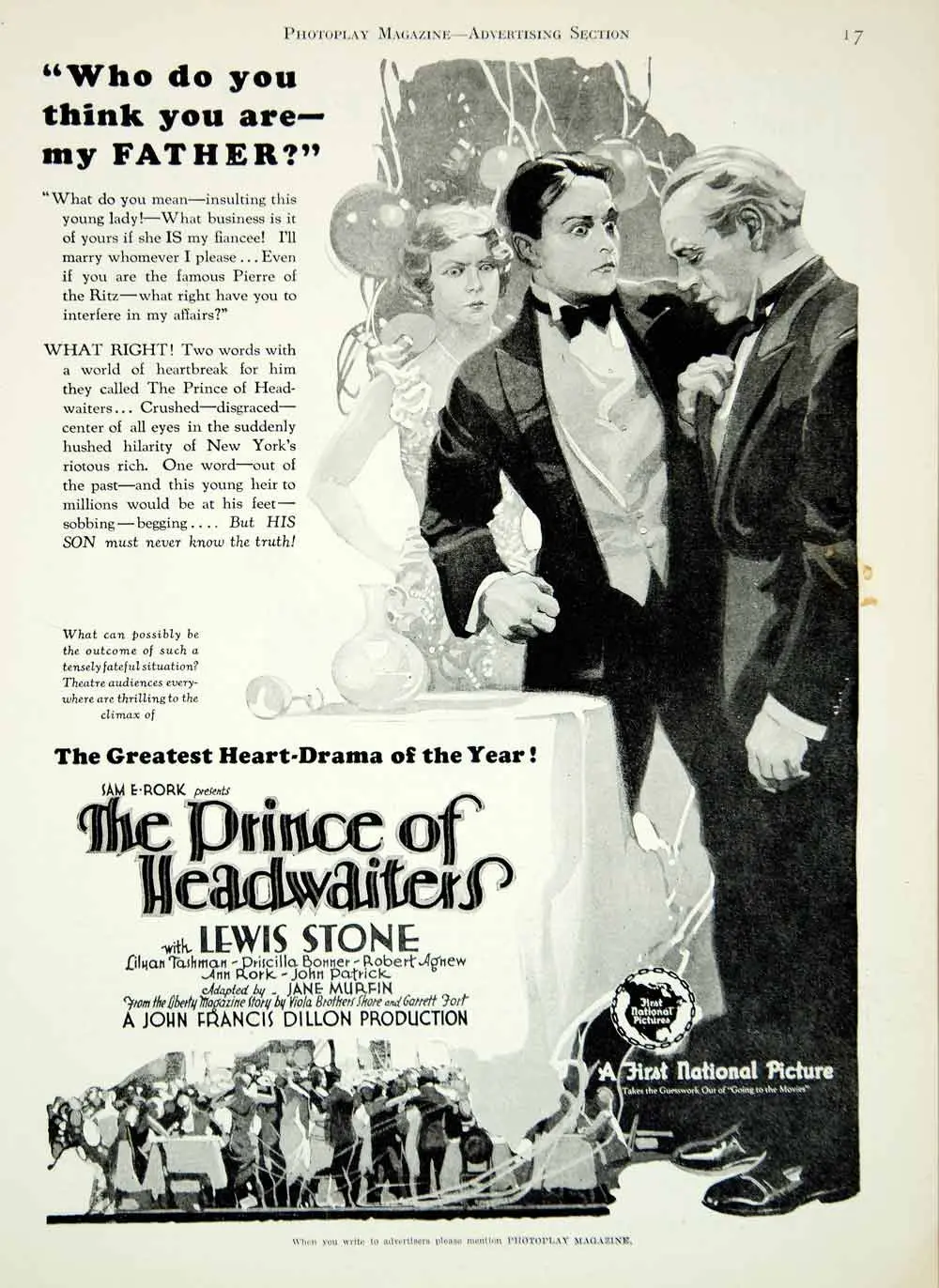
The direction by E.H. Griffith (though often credited to the studio system's collaborative nature of the time) is remarkably focused. The cameras linger on the silver platters, the white gloves, and the reflections in the polished marble. These aren't just 'visually stunning' choices; they are thematic choices. The Ritz is a hall of mirrors where everyone is performing a role.
The pacing of the film is deliberate. It takes its time establishing the routine of the hotel before the inciting incident. This slow build is essential. It makes the disruption of Pierre's life feel more significant. When he finally breaks his professional composure, it feels like a tectonic shift because the film spent forty minutes showing us how unbreakable that composure was meant to be.
One of the most unconventional observations I can make about this film is that it treats the Ritz as a prison. While the patrons see it as a palace of luxury, the cinematography frames the service areas and the dining room as a series of cages. Pierre is the most prestigious prisoner, but he is a prisoner nonetheless. This adds a layer of desperation to his attempt to save his son from a similar fate of being 'owned' by the whims of the wealthy.
The subplot involving Mae Morin and the blackmail of Pierre's son is the most 'Hollywood' element of the film. It feels slightly tacked on to provide a traditional climax. The real drama is the reconciliation (or lack thereof) between the father and son, but the 1927 audience required a clear antagonist. Mae Morin serves that purpose, but her motivations are paper-thin.
Despite this, the resolution of the blackmail plot is handled with more wit than I expected. Pierre uses his position to orchestrate a social trap that is far more satisfying than a physical confrontation. He defeats the villain by out-classing her, which is the ultimate victory for a man who has been looked down upon his entire life. It is a punchy, satisfying conclusion that avoids the melodramatic pitfalls of films like The Bolted Door.
Pros:
Cons:
If you are looking for a film that explores the human condition through the lens of social standing, then yes, it is absolutely worth your time. It is a sophisticated piece of work that stands up better than many of its contemporaries like Paradise Garden or The Marriage Speculation. It offers a unique perspective on the 'father-son' dynamic that was often ignored in favor of 'mother-daughter' tragedies in that era.
The Prince of Headwaiters is a quiet triumph. It is a film that values dignity over drama and character over spectacle. While the blackmail plot is a bit of a relic of its time, the central performance by Lewis Stone and the sharp critique of the class system remain potent. It is a reminder that the most interesting stories often happen in the corners of the room, among the people who are paid to be invisible. It is a solid, engaging, and emotionally resonant piece of cinema that deserves a spot in the conversation about the best of the late silent era. It is not perfect. It is dated in its gender politics. But it is undeniably effective.
IMDb 7.2
1928
Community
Log in to comment.