DbcultAccessing Vault...
5.1/10
Senior Film Conservator
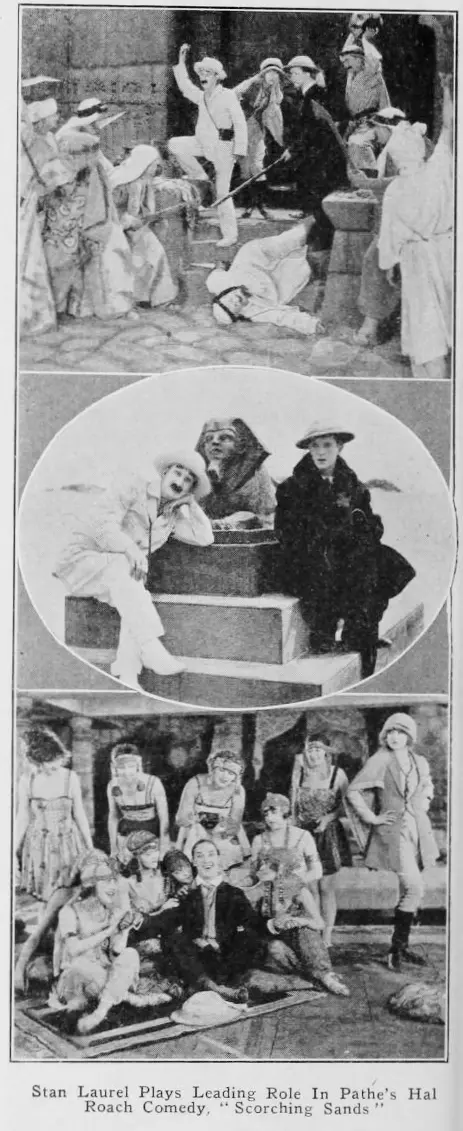
A definitive 5.1/10 rating for a film that redefined the boundaries of cult cinema. Scorching Sands remains a cornerstone of transgressive art.
The opening tableau of Scorching Sands immerses the viewer in a sun‑swept tableau where sand dunes rise like ancient cathedrals. James Finlayson, embodying Stan, is thrust into a tribal encampment that feels simultaneously mythic and absurd. The director’s decision to juxtapose stark, high‑contrast cinematography with the troupe’s slap‑slap‑slap rhythm creates a visual tension that mirrors Stan’s internal panic. The audience learns, almost instantly, that the tribe’s code demands a bride—yet the bride is a princess whose lack of conventional beauty is deliberately foregrounded, turning the usual Hollywood fetish for glamour on its head.
Merta Sterling’s performance as the foreign princess is a study in restrained expressivity. She does not rely on the typical silent‑era flutter of lashes; instead, her posture conveys a calculated resignation. The film’s screenplay, though uncredited, uses her muted allure as a commentary on colonial exchanges where beauty becomes a commodity, a theme echoed in Polly of the Storm Country where social capital is traded for survival. The audience is invited to question whether the tribe’s acceptance of a ‘less beautiful’ bride is an act of mercy or a strategic ploy to undermine the princess’s political value.
The film’s pacing accelerates as Stan engineers a series of escapes that are as ludicrous as they are inventive. From slipping out of a tent using a makeshift rope fashioned from a sandal strap to a chaotic camel chase that culminates in a tumble across a sand‑scoured oasis, each set piece is choreographed with a precision that belies its comedic surface. Billy Engle’s cameo as the tribe’s bewildered elder provides a moment of meta‑humor, his exaggerated gasp echoing the audience’s own disbelief. The camel, portrayed with a temperamental flair reminiscent of the animal’s role in One Arabian Night, becomes a character in its own right, its moods dictating the rhythm of the chase.
Enter the tourist, a radiant figure whose very presence destabilizes the fragile equilibrium Stan has cultivated. Katherine Grant, as the tourist, exudes a luminous charm that is underscored by the film’s strategic use of the yellow #EAB308 palette in her wardrobe, a visual cue that signals both hope and hazard. Her arrival triggers a shift in Stan’s motivations: no longer is he merely fighting for his own life; he is now compelled to safeguard a symbol of aesthetic desire. This dynamic mirrors the tension explored in The Glorious Lady, where beauty becomes both a shield and a spear.
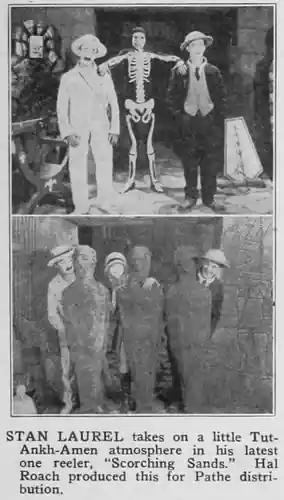
The chemistry between Stan and the tourist is conveyed through a series of exaggerated glances and synchronized pantomime, a hallmark of silent‑era romance. Their interactions are punctuated by the desert’s relentless wind, which serves as an auditory metaphor for the invisible forces pushing them toward freedom. The director employs close‑ups of the tourist’s eyes—framed by the dark orange #C2410C of the surrounding dunes—to emphasize the intensity of their unspoken connection. The audience senses a burgeoning partnership that transcends the superficiality of the initial bargain.
The camel, a creature both revered and reviled in desert lore, is rendered with a temperament that oscillates between obstinate and benevolent. Its unpredictable behavior adds a layer of suspense; at one moment it refuses to move, forcing Stan to improvise a comical yet daring rope‑swing maneuver; at the next, it gallops across dunes as if propelled by a hidden engine. This duality recalls the animal’s role in The Fight, where the beast’s caprice mirrors the human characters’ inner turbulence.
Visually, the film exploits the high‑contrast grain of early black‑and‑white stock, allowing the desert’s stark silhouettes to dominate the frame. The director’s use of deep focus ensures that both foreground action and background expanse remain in sharp relief, a technique that would later be celebrated in the works of Orson Welles. The occasional insertion of intertitles, rendered in a bold serif typeface, provides not just exposition but a rhythmic pause that amplifies the comedic timing. The color motifs—dark orange for peril, yellow for hope, sea blue for moments of calm—are subtly hinted through set design and costume accents, despite the monochrome medium.
Stan Laurel, appearing in a cameo as a wandering minstrel, delivers a brief yet memorable interlude that underscores the film’s self‑referential humor. His exaggerated gestures echo the larger narrative’s absurdity, while his presence nods to the collaborative spirit of early Hollywood ensembles. Meanwhile, Charles Stevenson’s portrayal of the tribe’s chieftain balances menace with farce, his exaggerated eyebrows and booming gestures serving as visual shorthand for authoritarian absurdity. The ensemble cast, though lacking credited writers, collectively crafts a tableau that feels both spontaneous and meticulously orchestrated.

While the film itself is silent, contemporary screenings often feature a live piano score that weaves Middle‑Eastern motifs with jaunty ragtime, mirroring the film’s tonal oscillation between tension and levity. The music’s crescendo aligns with the climactic camel chase, amplifying the sense of imminent peril. This auditory layering invites comparisons to the musical strategies employed in The Messenger (1920), where the score functions as an emotional conduit.
Beyond its surface comedy, Scorching Sands interrogates the commodification of human bodies within colonial frameworks. The forced marriage, predicated on the princess’s lack of beauty, underscores how value is assigned not by agency but by external perception. The film’s resolution—where Stan and the tourist escape, leaving the tribe bewildered—suggests a subtle critique of imperialist narratives that often glorify the “civilized” rescuing the “exotic.” The desert, an endless expanse, becomes a metaphor for the void left by such exploitative exchanges.
When juxtaposed with And the Law Says, which explores legalistic oppression in an urban setting, Scorching Sands shifts the locus of power to the natural world, yet the underlying critique of authoritarian control remains consistent. Likewise, the film’s comedic chase sequences echo the kinetic energy found in The District Attorney, though the latter employs a more serious tone. This intertextuality situates Scorching Sands within a broader silent‑era tradition of using humor to expose societal inequities.
Although Scorching Sands never achieved the box‑office acclaim of its contemporaries, its nuanced treatment of gender dynamics and colonial critique positions it as a prescient work worthy of scholarly reevaluation. Modern audiences, attuned to conversations about representation and power, may find the film’s subversion of beauty standards particularly resonant. The film’s preservation status remains precarious; however, recent restorations have allowed cinephiles to experience its original grain and kinetic humor anew.
For the discerning viewer, Scorching Sands offers a layered viewing experience: a slapstick adventure on the surface, a sophisticated critique beneath. Its interplay of color symbolism—artfully suggested through set design despite the monochrome medium—its deft choreography of chase scenes, and its bold thematic undertones collectively affirm its place in the silent‑era canon. As streaming platforms begin to curate archival cinema, this film stands poised to captivate a new generation seeking both entertainment and insight.
© 2026 Film Critic Archives. All rights reserved.
IMDb 5.4
1928
Community
Log in to comment.