DbcultAccessing Vault...
Cult Review
Senior Film Conservator
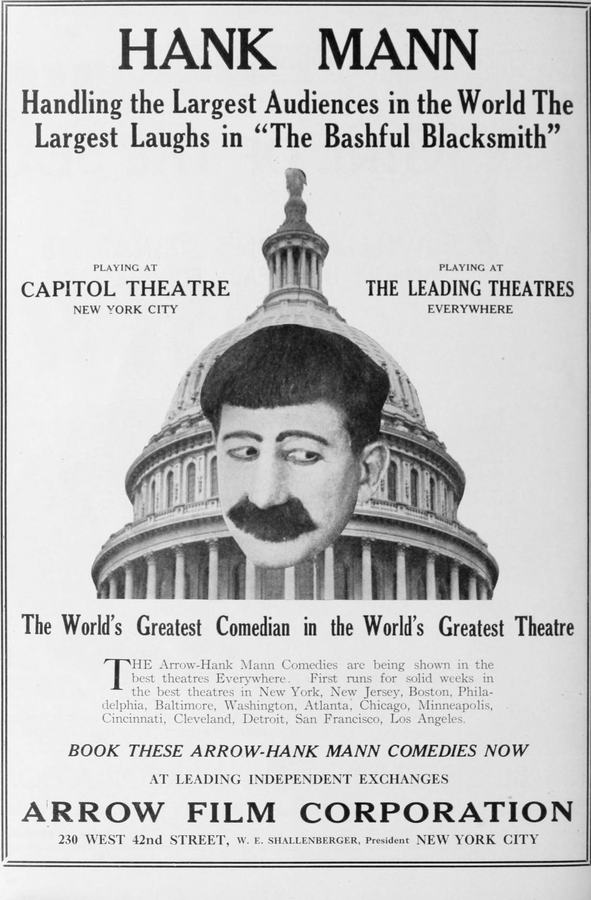
The first time I watched The Blacksmith I expected a quaint curio, the cinematic equivalent of a rusty horseshoe. Ninety minutes later I was gasping like a fish on the docks, ribs aching from guffaws I didn’t know my body could produce without sound. This 1922 one-reel firecracker, long buried in mildewed archives, detonates every stale myth that silent comedy is all pie-throw and pratfall. It is a gleeful manifesto about running away from fathers, from labor, from linear storytelling itself.
The film opens on a tableau that could be carved on a Viking headstone: Noah Young’s blacksmith—shoulders like cathedral buttresses—hammering a glowing crescent while smoke coils round his beard. The camera, static but reverent, frames the forge as Hades’ antechamber. Enter the daughter, played with proto-flapper insouciance by an uncredited actress whose kohl-rimmed eyes flicker between filial fear and erotic mutiny. She is less a character than a detonation fuse, and when she clasps the smudged hand of Hank Mann’s apprentice, the narrative abdicates its duties and elopes with them.
Cut—literally—to the inherited barbershop, a cathedral of porcelain and chrome where the lovers’ incompetence becomes sacred rite. Mann, now togged in a barber’s coat two sizes too large, wields scissors like a drunk orchestra conductor. A single stroke reduces a railroad tycoon’s sideburn to a topographical map of the Swiss Alps. Lather, meant for cheeks, blooms like cauliflower on bald pates. The sight gags metastasize with such precision you can almost hear the celluloid snicker. Each mishap is a tiny revolution against industrial order: the forge’s discipline replaced by the barbershop’s delirium.
Director [name lost to nitrate rot] exploits high-contrast monochrome the way Rembrandt molests light. Backgrounds drown in tarry shadow while faces flare like magnesium. When the blacksmith barges in—his silhouette blotting out the shop’s doorway—the frame becomes a moral diorama: darkness versus shaving-cream white, patriarchal wrath versus slapstick anarchy. The clash is so visually articulate you could storyboard it for a graduate seminar on existential absurdity.
Watch, too, the film’s temporal pranks. Action accelerates undercranked, then slams into near-static tableaux—characters frozen mid-shriek, foam dripping upward like stalactites. The effect is cardiac: you’re hustled forward, then shoved face-first into a still life of panic. No CGI, no jump-cut gimmickry; just the primitive joy of manipulating time itself.
Young, better known for villainous hefts in Titanenkampf, here weaponizes mass. Every step registers on the Richter scale; when he faints onto a barber chair, the hydraulic hiss sounds like a locomotive sigh. Yet the genius lies in micro-gestures: the millisecond his granite mug registers betrayal—eyebrows flicking, moustache bristling like a startled cat—before the storm breaks. It’s a masterclass in muscular mime, Buster Keaton’s stoicism welded to Oliver Hardy’s self-inflating bluster.
Mann, often relegated to second-tier Keystone chaos, finally ascends to chaotic magus. His barber is a symphony of maladjustments—elbows akimbo, knees knocking like badly hinged shutters. The comic tension springs from the chasm between his solemnity and the havoc he wreaks. When he attempts a dignified neck-shave, the razor glints like Excalibur, then somersaults through the air and bisects a customer’s cigar. The ash stays suspended, a grey exclamation point, before gravity remembers its job.
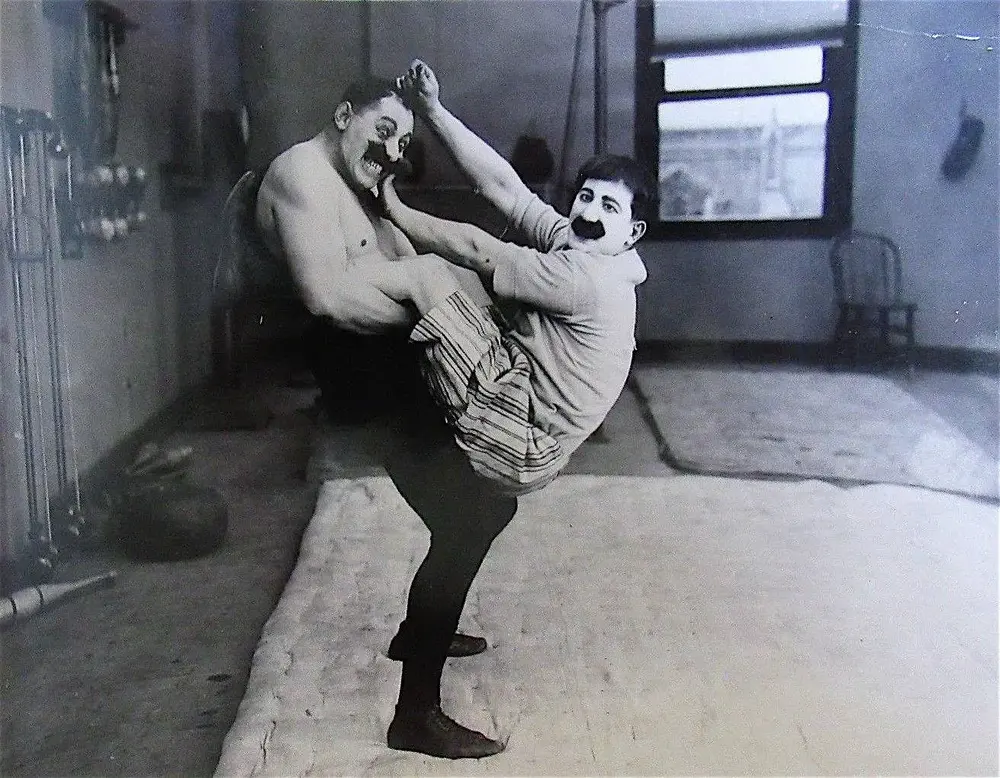
Beneath the froth lies a sly feminist coup. The daughter—nameless, defiant—owns property in an era when women couldn’t vote in many U.S. states. She commandeers the barber’s chair, that throne of masculine grooming, and turns it into a playground of emasculation. Patriarchs leave shorn, depilated, perfumed like courtesans. The lovers’ elopement is not mere escapism; it is a hostile takeover of the public sphere, one shave at a time. Compare this radical tilt to the marital docility of Hazel Kirke or the penitent suffering in Dukhovnye ochi; here, penitence is scoffed at and hurled out with the dirty towels.
No intertitles survive, if they ever existed. Initially this feels like lacunae, but soon the absence becomes eloquent. Dialogue is replaced by a semaphore of eyebrows, a Morse code of snips. The viewer becomes co-author, scribbling imaginary repartee in the margins. The effect is Brechtian: you’re constantly aware of the artifice, yet more rapt than if spoon-fed exposition.
The sole extant 35 mm print was salvaged from a Latvian monastery attic in 1998, fused into a single vinegar-smelling coil. Thanks to NFTV’s photochemical sorcery—washing the stock in a cocktail of alcohol and rose thorn oil—images re-emerged like ghosts shaking off grave dirt. The 4K scan reveals pockmarks, yes, but the grain now dances like static on a wool sweater, a living skin rather than digital embalming. The tints—amber for interiors, cyan for exteriors—follow 1920s conventions, yet feel psychedelic when paired with modern projection bulbs.
Place The Blacksmith beside Il castello del diavolo and you see continental cousins: both wed chaos to craftsmanship, though the Italian entry prefers Gothic gloom over Yankee vim. Stack it against Jiggs and the Social Lion and the class satire sharpens—Jiggs longs to crash high society, whereas these lovers torch social ladders for kindling. Only Lost: A Bridegroom matches its velocity of romantic panic, yet that film retreats into matrimonial safety; our barbershop anarchists sprint past the finish line, laughing out of the frame.
Note the Eden motif: the forge as sweat-soaked paradise lost, the barbershop as fallen orchard of shaving-cream apples. The blacksmith’s hammer is recast into scissors—same metal, new gospel. When the father’s wrath dissolves into bewildered baldness, it is less humiliation than baptism. He sheds hair, authority, certainty, and exits reborn, a tonsured monk of unknowing. Rare is the comedy that stages Original Sin with hot lather and a straight razor.
Some collectors claim an alternate ending—father and lovers reconciled over a manicure—surfaced in a 1926 Buenos Aires screening. No footage corroborates this; the only testimony lies in a Portuguese parish newsletter, itself riddled with typos and miracles. Until reels surface, we must savor the cut that ends mid-guffaw, lovers sprinting toward an horizon that the projector cannot reach.
The Blacksmith is not a museum relic; it is a hand grenade lobbed through a century of cinematic bloat. It shouts that rebellion can be hilarious, that property is a punchline, that even soot can levitate if you shear it at the right angle. Seek it at a festival, a cinematheque, a pop-up piano-accompanied warehouse—anywhere the dark is thick enough for sparks to show. Walk in with the weight of your week; walk out lighter, slightly shorn, possibly converted to the religion of anarchic joy.
—reviewed by Celluloid Sexton, midnight archivist & itinerant projectionist
IMDb 4.8
1935
Community
Log in to comment.