DbcultAccessing Vault...
Cult Review
Senior Film Conservator
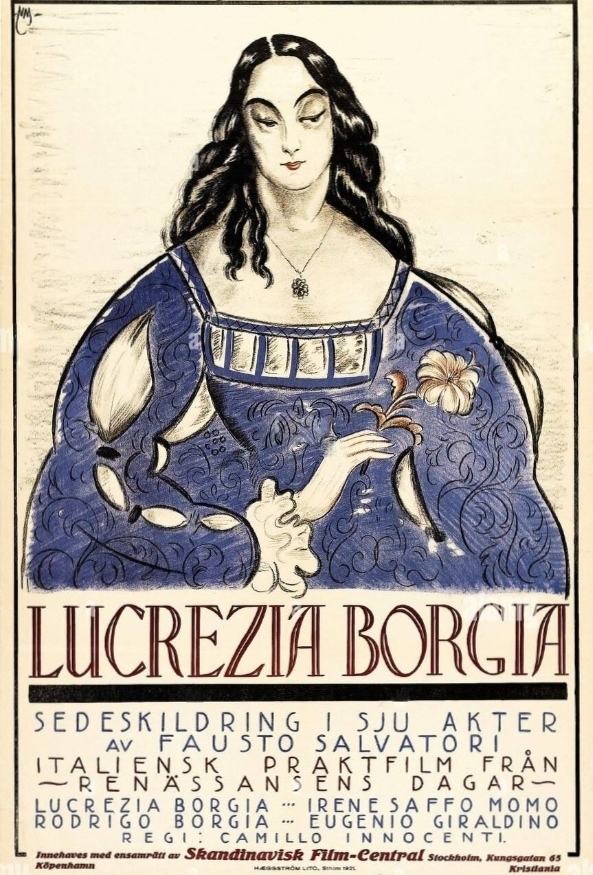
When we peer through the sepia-toned lens of the 1920 production of I Borgia, we are not merely observing a historical recreation; we are witnessing the birth of the political thriller in its most primal, silent form. Directed during a period of immense transition for the Italian film industry, this work captures the zeitgeist of a nation grappling with its own historical ghosts while simultaneously pushing the boundaries of visual storytelling. The film avoids the pitfalls of mere hagiography, opting instead for a gritty, almost claustrophobic exploration of power, nepotism, and the inevitable decay of dynasties built on blood.
The opening sequences, detailing the election of Rodrigo Borgia to the office of Pope Alexander VI, are handled with a liturgical gravity that sets the stakes for everything that follows. There is a palpable sense of dread beneath the golden vestments. Unlike the more romanticized depictions of the era found in Love and the Woman, where emotion often supersedes the political, I Borgia leans heavily into the cold machinery of the Vatican. Rodrigo’s ascension is portrayed not as a spiritual triumph, but as a hostile takeover. The cinematography utilizes deep shadows and high-contrast lighting to emphasize the isolation of the Holy Father, a man who has traded his soul for a tiara.
Fausto Salvatori’s writing shines in these early moments, establishing a world where every whisper in a corridor carries the weight of a death warrant. The dialogue cards are sparse but impactful, mirroring the economical storytelling of the time. We see the ripples of Rodrigo’s power move outward, affecting not just the clergy but the very fabric of Roman society. This is a world of stone and silence, where the architecture itself seems to be eavesdropping on the conspirators.
The heart of the film’s malice lies in the portrayal of Cesare Borgia by Carlo Troisi. Troisi brings a serpentine grace to the role, a performance that stands in stark contrast to the more rugged heroism seen in contemporary films like The Corsican. While the protagonist of that film seeks a noble vengeance, Cesare’s motivations are purely entropic. He views Alfonso of Aragon not as a rival, but as an inconvenience—a smudge on the Borgia crest that must be erased. The relentless pursuit of Alfonso is choreographed with the precision of a hunt. Cesare doesn't just want Alfonso dead; he wants him neutralized in a way that preserves the family’s political standing.
The film excels in depicting the psychological toll of this pursuit. Alfonso, played with a fragile dignity by Americo De Giorgio, is a man constantly looking over his shoulder. His weakness is not a character flaw but a byproduct of his environment. He is a gazelle in a den of lions. The juxtaposition of his domestic scenes with Lucrezia against the shadowy meetings of Cesare’s lieutenants creates a rhythmic tension that is rare for 1920. It evokes a similar sense of impending doom found in The Flash of Fate, where the characters are mere pawns in a larger, darker game of destiny.
Lucrezia Borgia is often a misunderstood figure in history, but here she is rendered as a tragic intermediary. She is the bridge between the visceral violence of her brother and the doomed innocence of her husband. Her character arc is defined by her absence; it is while she is away at banquets and affairs of state that the most heinous acts are committed. This narrative choice underscores her lack of agency, a theme that resonates with the gothic entrapment seen in Jane Eyre. Lucrezia is a prisoner of her own name, her every social move monitored and manipulated by her kin.
The banquet scene, where Alfonso is finally struck down, is a masterclass in silent-era editing. The film cuts between the opulence of the feast—the wine, the laughter, the shimmering fabrics—and the cold, damp alleyways where the assassination takes place. The sea-blue tinting of the night scenes provides a chilling contrast to the warm, yellow glow of the banquet hall. This visual dissonance highlights the disconnect between the public face of the Borgias and the private reality of their reign. When Lucrezia returns to find her world shattered, the performance of the actress (likely Bianca Renieri or Irene-Saffo Momo in the ensemble) is one of restrained agony, avoiding the histrionics common to the era in favor of a more internal, haunting grief.
What sets I Borgia apart from other historical dramas of its time is its concluding act. Most films of this period would end with the death of the hero or the quiet mourning of the survivor. Instead, this film erupts. The discovery of Cesare’s involvement in Alfonso’s murder serves as the catalyst for a total societal breakdown. The people of Rome, long portrayed as background noise, suddenly become the protagonists. This shift is jarring and effective. It mirrors the real-world anxieties of 1920s Europe, a continent still reeling from the populist upheavals of the post-war period.
The mob is not depicted as a mindless beast, but as an instrument of divine or historical justice. The scenes of the revolt are surprisingly modern in their staging. We see the storming of the palace, the breaking of doors, and the frantic flight of the Borgia loyalists. Cesare’s end is not a noble duel, but a messy, ignominious death at the hands of the very people he disdained. This thematic turn toward the power of the masses is far more radical than the individualistic struggles in Peer Gynt or the moral dilemmas of The Cambric Mask. It suggests that while individuals may plot and murder, the tide of history is ultimately controlled by the collective.
Technically, the film is a marvel of its era. The use of set design to reflect character psychology is profound. The Vatican sets feel heavy and oppressive, while the Aragon quarters feel vulnerable and exposed. The lighting, though primitive by modern standards, is used with intention. The recurring use of sea blue and dark orange tints creates a dualistic world of cold calculation and burning passion. This is not the bright, optimistic world of Anything Once; this is a world of shadows.
The ensemble cast, featuring stalwarts like Leone Papa and Eugenio Gilardoni, provides a solid foundation for the central drama. Each actor understands the weight of the history they are portraying. There is a sense of ensemble cohesion that is often missing from star-driven vehicles of the silent period. The direction ensures that the pacing never flags, maintaining a steady build-up of tension that pays off in the final, chaotic reel. Even when compared to international works like Jan Vermeulen, der Müller aus Flandern, this film stands out for its sheer narrative density and political cynicism.
In the final analysis, I Borgia is a haunting meditation on the transience of power. It reminds us that no matter how high one climbs, the ground remains beneath, waiting for the fall. It is a film that demands to be seen not just as a historical curiosity, but as a vital piece of cinematic art that speaks to the eternal struggle between the individual and the state, between the family and the people. Its influence can be felt in every political drama that followed, making it an essential entry in the canon of silent cinema.
IMDb —
1921
Community
Log in to comment.