DbcultAccessing Vault...
Cult Review
Senior Film Conservator
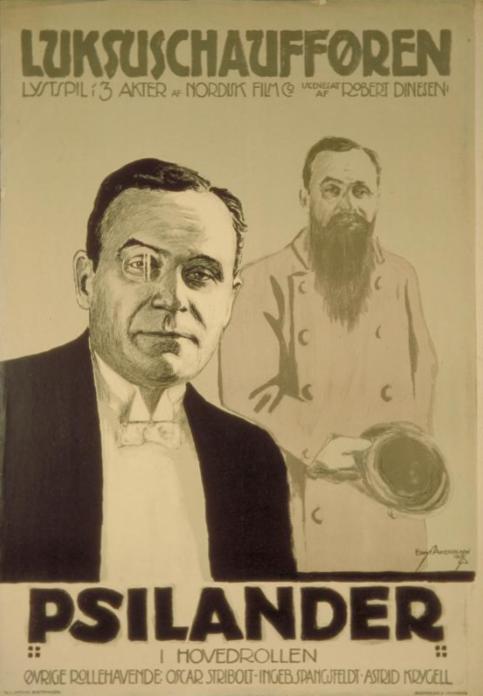
Ah, the silent era! A time when emotions were writ large across faces, when societal anxieties were often distilled into poignant melodramas, and when the very language of cinema was being forged in the crucible of innovation. Stepping back into this fascinating period, we encounter A.W. Sandberg and Lau Lauritzen’s ‘Luksuschaufføren’ – a film that, despite the passage of a century, still resonates with a profound understanding of human longing and the unyielding rigidity of class structures. This isn't just a historical curiosity; it’s a vibrant, living artifact of storytelling, pulsating with the dramatic energy characteristic of its time, yet possessing a timeless quality that allows its themes to echo even today.
The film plunges us headfirst into the opulent, yet emotionally sterile, world of early 20th-century Copenhagen’s upper crust. Here, Valdemar (played with an exquisite blend of stoicism and simmering passion by the incomparable Valdemar Psilander), a chauffeur by trade, exists on the periphery of wealth. His hands, accustomed to the elegant leather of steering wheels, navigate not just the city’s thoroughfares but also the treacherous social currents that separate him from Elinore Møller (Astrid Krygell), the very embodiment of aristocratic grace and beauty. Psilander, a titan of Danish silent cinema, commands the screen with a gravitas that transcends the spoken word. His eyes, often downcast in deference yet capable of flashing with fierce conviction, convey a universe of unspoken desire and quiet dignity. It’s a performance that reminds one of the subtle power of non-verbal communication, a masterclass in conveying depth through gesture and gaze.
Astrid Krygell, as Elinore, provides a compelling foil to Psilander’s restrained intensity. Her portrayal of a woman caught between filial duty and burgeoning affection is nuanced, avoiding the pitfalls of a one-dimensional damsel. There’s a spirited independence in her character that hints at the changing roles of women, even within the confines of a patriarchal society. The chemistry between Psilander and Krygell is palpable, a delicate dance of stolen glances and tender gestures that speaks volumes without a single intertitle. Their romance is the beating heart of the film, a fragile entity constantly threatened by the societal juggernaut of disapproval. The Møller family, particularly Elinore’s stern industrialist father, embody the entrenched snobbery of the era, their disdain for Valdemar’s humble origins a constant, chilling presence.
And then, there’s Baron Frederik (Erik Holberg), the quintessential antagonist – suave, manipulative, and utterly devoid of genuine affection. Holberg imbues Frederik with a sinister charm, making him a truly formidable obstacle to our protagonists’ happiness. His machinations are not merely born of jealousy, but of a cold, calculating avarice that seeks to consolidate power and wealth. The film masterfully builds suspense around his insidious plot to frame Valdemar for a series of thefts. This narrative device, while common in early melodramas, is executed with a precision that keeps the audience riveted. The tension escalates with each stolen item, each piece of circumstantial evidence meticulously planted, until Valdemar finds himself ensnared in a web of deceit that threatens to unravel his entire existence.
The direction by A.W. Sandberg, in collaboration with Lau Lauritzen on the screenplay, demonstrates a sophisticated understanding of cinematic language for its time. The use of close-ups to emphasize emotional states, the clever staging of dramatic confrontations, and the evocative cinematography that captures both the grandeur of the Møller estate and the grittier realities of Valdemar’s world, all contribute to a rich visual tapestry. There's a particular sequence, where Valdemar, falsely accused, is observed by Detective Jensen (Oscar Stribolt), that showcases the power of visual storytelling. The detective, initially convinced of Valdemar’s guilt, slowly begins to question his assumptions, not through dialogue, but through the subtle shifts in Psilander's demeanor and the careful framing of his reactions. This kind of nuanced direction is a testament to the filmmakers' artistry.
The character of Detective Jensen, portrayed by Oscar Stribolt, is another delightful layer in this intricate plot. Stribolt, often known for his comedic roles, here delivers a performance that balances the earnestness of a lawman with a growing sense of moral conflict. He’s not a mere plot device but a character with an internal journey, slowly peeling back the layers of deception to uncover the truth. His initial misjudgment and subsequent dedication to justice provide a crucial anchor for the audience, representing the hope that fairness can prevail even against the machinations of the powerful. This human element in the investigation elevates the film beyond a simple good-versus-evil narrative, grounding it in a more realistic portrayal of the justice system.
Perhaps the most compelling unsung hero of ‘Luksuschaufføren’ is Ingeborg Spangsfeldt as Mrs. Sørensen, the Møller family’s housekeeper. Her quiet presence and watchful eyes suggest a deeper understanding of the household’s secrets than initially apparent. Spangsfeldt’s performance is a masterclass in subtlety, conveying a lifetime of observation and unspoken loyalty. She becomes Elinore’s confidante and an unexpected catalyst in unraveling Baron Frederik’s villainy. Her character serves as a poignant reminder that those in the shadows often hold the keys to the most profound truths, and that class distinctions, while powerful, cannot always suppress the human spirit of empathy and justice. Her arc, though secondary, is vital to the narrative’s resolution, adding a layer of depth to the film’s exploration of societal roles.
Comparing ‘Luksuschaufføren’ to other films of its era reveals both its unique strengths and its participation in broader cinematic trends. One might draw parallels to the dramatic intensity found in films like ‘The Shielding Shadow’, particularly in its exploration of mystery and hidden dangers lurking beneath a veneer of respectability. However, ‘Luksuschaufføren’ distinguishes itself through its specific focus on class conflict and the moral fortitude of its working-class hero. While ‘Dorian’s Divorce’ might explore the complexities of marital strife within high society, ‘Luksuschaufføren’ elevates the stakes by pitting genuine affection against the immovable force of social hierarchy, a conflict that feels far more existential than mere domestic discord.
The film’s exploration of justice, or the lack thereof, in the face of wealth and influence also brings to mind the thematic concerns of films such as ‘The Man Who Stood Still’, which often grappled with individuals fighting against overwhelming systemic forces. Yet, ‘Luksuschaufføren’ maintains a more optimistic, albeit hard-won, outlook. It posits that truth, however buried, can eventually surface, and that individual courage can indeed challenge entrenched power. This subtle optimism, woven into the fabric of a potentially bleak narrative, is one of its most endearing qualities, preventing it from descending into pure cynicism. The sense of impending doom, similar to the atmospheric dread in ‘Satana’, is masterfully built, only to be ultimately dispelled by human resilience.
The screenplay, credited to A.W. Sandberg and Lau Lauritzen, is remarkably tight, eschewing unnecessary subplots in favor of a focused, impactful narrative. Every character, every development, serves to propel the central conflict forward. This economy of storytelling, a hallmark of effective silent cinema, ensures that the audience remains fully invested in Valdemar and Elinore’s plight. The pacing is deliberate, allowing moments of quiet reflection to breathe, yet capable of accelerating into thrilling dramatic crescendos. It's a testament to the writers' skill that they manage to craft such a compelling and emotionally rich story within the constraints of the silent medium, where visual clarity and expressive performances are paramount.
One cannot discuss ‘Luksuschaufføren’ without circling back to Valdemar Psilander. His star power was immense, and watching this film, it’s easy to understand why. He possessed an innate ability to project both strength and vulnerability, making his characters deeply empathetic. Here, he embodies the silent heroism of the everyman, a figure who, despite his modest origins, possesses a moral compass stronger than any nobleman. His performance elevates the film from a simple melodrama to a poignant commentary on human worth, irrespective of social standing. His scenes with Astrid Krygell are particularly captivating, charged with a tender intensity that feels remarkably modern. The way he communicates profound sorrow or resolute determination with just a flicker of his eyes or a subtle shift in posture is truly captivating.
The film’s resolution, while providing a sense of justice for Valdemar, subtly acknowledges that societal barriers are not easily dismantled. It doesn't offer a saccharine, entirely unrealistic 'happily ever after,' but rather a hard-won peace, leaving the audience to ponder the enduring challenges faced by those who dare to cross established social lines. This nuanced ending prevents the film from feeling overly simplistic, giving it a more mature and thoughtful resonance. It is a powerful reminder that even when individual villains are vanquished, the larger structures of injustice often remain, a theme that echoes in the struggles depicted in films like ‘The Perils of Divorce’, where societal norms often dictate personal fates.
In conclusion, ‘Luksuschaufføren’ is far more than a period piece; it’s a compelling cinematic experience that speaks to universal themes of love, class, justice, and resilience. Its masterful direction, stellar performances—particularly from Valdemar Psilander and Astrid Krygell—and its tightly woven plot make it a standout example of early Danish cinema. It reminds us that the power of storytelling, even without the benefit of sound, can transcend time and cultural divides, leaving an indelible mark on the viewer. For those interested in the evolution of film, the artistry of silent actors, or simply a gripping drama, this film is an absolute revelation, a testament to the enduring power of classic cinema. It’s a film that deserves to be rediscovered and celebrated, not just for its historical significance, but for its sheer emotional impact and narrative brilliance. The way it handles its moral dilemmas and character arcs is a blueprint for effective storytelling, proving that the silent era was anything but silent in its dramatic resonance. Its exploration of social injustice resonates with the same fervor as the more overtly political dramas of the time, such as ‘Heroes of the Cross’, albeit through a more personal, intimate lens. The film’s enduring charm lies in its ability to connect with the audience on a deeply human level, proving that true artistry is indeed timeless. It is a film that demands your attention, rewards your patience, and leaves you with a profound appreciation for the craft of early filmmakers. The dramatic arc, the emotional stakes, and the ultimate triumph of justice, however tempered, make ‘Luksuschaufføren’ a truly unforgettable cinematic journey.
IMDb 6.6
1935
Community
Log in to comment.