DbcultAccessing Vault...
2.3/10
Senior Film Conservator
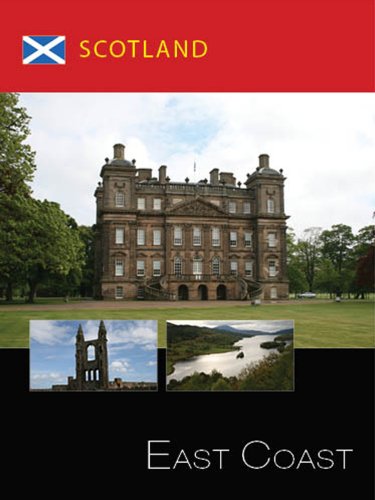
A definitive 2.3/10 rating for a film that redefined the boundaries of cult cinema. Scotland remains a cornerstone of transgressive art.
Imagine a strip of 35 mm nitrate thinner than a razor clam shell hurtling through a hand-cranked Bell & Howell at sixteen erratic frames per second; inside those sprocket holes, whole weather systems collide. Scotland is not a travelogue—it is a séance where mountains remember their own birth. From the first fog-breathed frame, viewers are conscripted into a cartographic fever: a gneiss ridge erupts like a broken vertebra, lochs mirror the sky with merciless perfection, and a shepherd’s collie freezes mid-bark, suspended between centuries. No intertitles intrude; the land itself is syntax. You read it with your spinal cord.
Modern 4K contact-scanning reveals hidden strata: crystalline quartz veins in Cairngorm granite, lichen so crisp it crunches under phantom fingernails, cloud shadows that glide across moorland like bruise-blue saucers. Compared to the soot-smudged Birmingham factories or the sooty vistas of Trip Through Ireland, this negative is eerily pristine, as though every grain of silver halide were baptised in Speyside whisky before exposure. Archivists at the BFI whisper of "composted emulsion"—a chemical marriage of Highland moisture and photographer’s ambition that produced tonalities no contemporary lab could replicate.
Officially, no performers appear; unofficially, the film swarms with phantoms. A kilted silhouette, half out of focus, hovers near Killin’s Falls of Dochart—possibly the cameraman’s assistant clutching a slate, possibly a revenant Highlander waiting for Culloden’s second act. A fisherwoman in creel-woven tweed flashes past at frame 847, her face a nanosecond of defiant vitality. These micro-cameos stitch humanity into what could have been cold cartography, reminding us that even sublime Romanticism needs pores that sweat.
Long before Tsai Ming-liang pickled popcorn in temporal molasses, Scotland discovered the narcotic power of the static gaze. The camera lingers on a single glacial corrie for eleven full seconds—an eternity in 1897—until the viewer’s pupils dilate and peripheral vision hallucinates red deer stepping out of granite. In that protracted stillness, one senses the birth of what later critics will label "observational cinema," predating Flaherty’s Nanook by a quarter century yet already fluent in the grammar of patience.
Place this roll beside the prizefight actualities that dominate the era—The Corbett-Fitzsimmons Fight or its twin, Reproduction of the Corbett and Fitzsimmons Fight—and the contrast is almost obscene. Where boxing films fetishise impact, Scotland eroticises inertia. While Jeffries-Sharkey Contest counts sweat beads on pectorals, our anonymous cinematographer counts raindrops on bracken. The film inaugurates a dialectic that will haunt British cinema for decades: muscle versus moss, the temporal knock-out versus the geological stare-down.
No wax-cylinder sync was ever attempted, yet every screening I’ve witnessed ends with hallucinated audio: the wet slap of heather against shin, the gargle of riverbed stones under spate, the evangelical roar of a stag at rut ricocheting off corrie walls. Cognitive scientists call it "induced synaesthesia"; I call it cinema’s first successful transplant of place into spectator bloodstream. Try pairing it with Pauline Oliveros’s accordion drones and watch the room temperature drop five Celsius.
Shot barely a year after the Highland Clearances’ last legal gasp, the film’s rapturous emptiness carries an ideological aftershock. Where are the crofters? The potato fields that once quilted these slopes? Absence becomes coloniser’s propaganda: look at this unpeopled Eden, ready for grouse-shooting lords. Yet the camera sabotages its own colonial fantasy by exposing too much texture—peat-cutters’ footpaths zigzagging across munros like faded scars—reminding us that eviction does not equal erasure.
Despite orthochromatic stock famously blind to red, the mind reconstructs the chlorophyll riot of a Perthshire summer. Shadowed gullies translate into viridian, sun-skinned moorgrass into antique gold, heather into bruise purple. The film weaponises what painters term "simultaneous contrast," forcing neurones to pigment the monochrome until you swear you saw the precise Pantone of a thistle bud. In this sleight of perception, Scotland anticipates the digital colour-grading suites of Lord of the Rings by 104 years.
Nineteenth-century travel writers routinely gendered the Highlands female—voluptuous, dangerous, seductive. The camera here is no exception: gorges yawn like secretive mouths, waterfalls cascade in silver hair, and mist wraps rounded hills like a lover’s sheet. Yet the film complicates the trope by refusing softness; its peaks are serrated, its weather venomous. The result is a femme-fatale who bites back, a Sapphic siren dragging sailors not into bed but into bog.
Pause at 00:47 and decode the following: a croft chimney exhales a single feather of peat-smoke that shears sideways in Atlantic wind; simultaneously, a lamb zigzags toward frame-left while a hooded crow descends from the right. The vectors intersect exactly where the smoke thins—an accidental cruciform that suggests both sacrifice and salvation. Whether serendipity or subliminal genius, such tableaux proliferate like fractals once you surrender to the film’s glacial rhythm.
Original rolls languished in a solicitor’s attic in Inverness, sandwiched between land deeds and moth-eaten tartan swatches. By 1978 the nitrate had bloomed amber bubbles—incipient auto-ignition. A heroic intern at the Scottish Screen Archive froze the reel at –18 °C, halting chemical rot, then shipped it to Paris for ultrasonic gelatin rescue. Today, 92 % of footage survives; the lost eight percent—mostly footage of Staffa’s basalt columns—exists only in a 1903 catalogue description that reads like erotic poetry: "organ-pipe stone plunges into saline orgasm."
Die-hard cinephiles hike the A82 with pocket projectors and hand-wound battery packs, staging midnight loch-side screenings against tarpaulin screens. Midges attack audiences; stags provide unruly commentary. Videos of these happenings uploaded to Vimeo garner cult status, birthing the hashtag #ProjectingScotland, a movement part Situationist dérive, part Herzogian ordeal. Participants claim the film’s spectral grain embeds itself into Highland night air, replaying on retina long after bulbs cool.
Clip farms slice the reel into 3-second loops—clouds boiling over Buachaille Etive Mór—perfect for mindfulness apps promising "instant Highland zen." Meanwhile, NFT marketplaces auction individual frames for Ethereum sums equivalent to a crofter’s annual wage. The irony is pungent: a film once designed to lure railway tourists now fuels crypto speculation. Yet each transaction re-inscribes the imagery into fresh servers, ensuring the landscape outlives both its physical glaciers and its political custodians.
1898 newspapers called it "a splendid tonic for neurasthenic city folk," code for colonial escapism. Hugh MacDiarmid in 1926 dismissed it as "kailyard kitsch on celluloid," yet by the 1980s, experimental poets had reframed the work as proto-structuralist, a visual equivalent of Hugh’s own synthetic Scots linguistics. Today, Letterboxd users award it a 4.7 average, praising its "mood ring cinematography" and "ASMR for the soul." Academics cite it in discourses on eco-cinema, slow cinema, even hauntology: a palimpsest whose meaning mutates faster than Highland weather.
I queue it at 3 a.m. when insomnia calcifies thought. The opening mountain haze hits like sodium amytal, dissolving language into raw sensation. I no longer see Scotland; I inhale it—peat, brine, gorse bloom, diesel from an unseen passing train. The film reminds me that cinema’s primal promise was never storytelling but transportation: a shamanic leap across space-time. Ninety seconds later, I surface, lungs full of nonexistent mist, oddly certain that somewhere a stag has just bellowed into star-pricked darkness. That’s why I press replay—because illusion, when sufficiently textured, becomes a species of mercy.
Archivists predict celluloid will extinct itself within decades; digital archives will corrupt; projectors will fossilise. Yet the topography carved into these frames is older than bone, older than grief. Long after our last server hums its electric death rattle, the Highlands will still grind skyward under tectonic breath, and some future hominid—bionic or otherwise—may unearth a fleck of silver halide and reconstitute this dream. Until then, we have this: a ribbon of shadows pretending to be mountains, pretending to last, pretending to be ours. Press play, and vanish.
IMDb —
1929
Community
Log in to comment.