DbcultAccessing Vault...
Cult Review
Senior Film Conservator
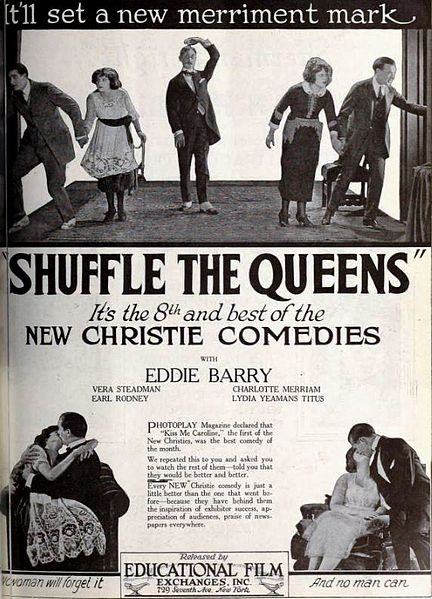
Charlotte Merriam’s eyes—round, wet, forever half-a-second from laughter—carry the whole contraption on their trembling lashes. She enters frame left in a sailor-collar dress, clutching a handbag stamped with yesterday’s optimism, and the camera tilts up as if surprised by such candor. One glance, and you sense the picture’s governing tension: the gulf between pocket change and the price of tenderness. Christie and Darling’s screenplay, lean as a racetrack greyhound, wastes no sympathy on Clarence’s cowardice; instead it weaponizes that dread of disinheritance, letting every fib ricochet through boarding-house corridors and dance-floor spotlights.
There is a moment—halfway in—when the film’s tint warms from slate-blue to honey-amber, as Clarence and Mazie tiptoe across a hotel corridor lined with identical doors. Intertitles evaporate; only the orchestra’s syncopated heartbeat remains. The silence swells until you can almost hear celluloid breathe. In this vacuum of chatter, anticipation becomes tactile. It’s a masterclass in visual economy, rivaling the geometric precision of He Did and He Didn’t yet swapping that film’s macabre sting for champagne froth.
Comparative glances toward Amalia or Old Dutch reveal how deftly Shuffle the Queens sidesteps melodramatic ballast. Where Amalia drowns in operatic sorrow, here pratfalls pirouette into social satire: each stumble exposes the absurdity of class codes that equate romance with solvency. Likewise, against The Unknown Quantity’s philosophical gloom, Christie’s picture opts for speed, gags clicking like typewriter keys in a newsroom sprint.
Lydia Yeamans Titus, playing Penelope with a voiceless grandeur that nonetheless booms through arched brows, weaponizes her petite frame. Watch her plant a gloved forefinger on the hero’s lapel: the gesture is both benediction and threat. Silent cinema seldom granted older women such agency without caricature; Titus threads vinegar with vulnerability, so when she finally tears the allowance contract, the act feels epochal, akin to toppling a monarchy.
Neal Burns’ Clarence, meanwhile, embodies the era’s callow everyman: slick hair parted like a moral ledger, smile always ten seconds ahead of remorse. Burns modulates panic in gradients—from bead-of-sweax to full-body flop—without the rubber-face excess that mars many comedies of the period. You glimpse a forebear of C. Aubrey Smith’s later befuddled patriarchs, yet Burns keeps the performance airborne, a kite dancing against downdraft.
The film’s architecture deserves dissection. Sets alternate between cramped interiors, where shadows pool like unpaid bills, and open-air carnival spaces blooming with bunting. Note the symmetry in the boarding-house hallway: every doorway a proscenium, every coat rack a potential hiding spot for incrim lingerie. Spatial economy breeds farce; the tighter the corridor, the richer the collision.
Editing rhythms anticipate Frank Capra’s later screwball momentum. A dissolve from spinning dance-floor to spinning wedding ring bridges intoxication and obligation in one swirl. Match-cuts splice daydream with reality: Clarence imagines Penelope’s wrathful face superimposed over roulette numbers—an iris-in traps him like a specimen under glass. Such flourishes, modest yet audacious, prefigure the subjective overlays of Der violette Tod and the kinetic montage of Feuerteufel.
Earle Rodney’s bumbling attorney supplies legal gobbledygook that fuels the third act. His tongue-twister intertitles—"matrimonial subterfuge contravenes pecuniary continuance"—mock the verbosity of contract law while foreshadowing Clarence’s linguistic entrapment. The gag lands because Rodney’s puffed-up torso contrasts with his sheepish blink; authority deflates in real time.
Vera Steadman’s cameo as a gum-chewing chorus girl lasts barely ninety seconds, yet her insouciant wink—directly at the camera—punctures the fourth wall, reminding viewers that social masks are themselves performances. It’s a whisper of Brecht in a film otherwise devoted to immersive escapism.
Comparative note on gender: whereas A Sister of Six externalizes female solidarity through frontier grit, Shuffle the Queens locates its rebellion within domestic bartering. Mazie’s ultimatum—"Tell her, or I’ll tell her myself"—transforms the passive secretary into catalytic agent, recalling the proactive heroines of Wanted: A Mother but without maternal sacrificial tropes.
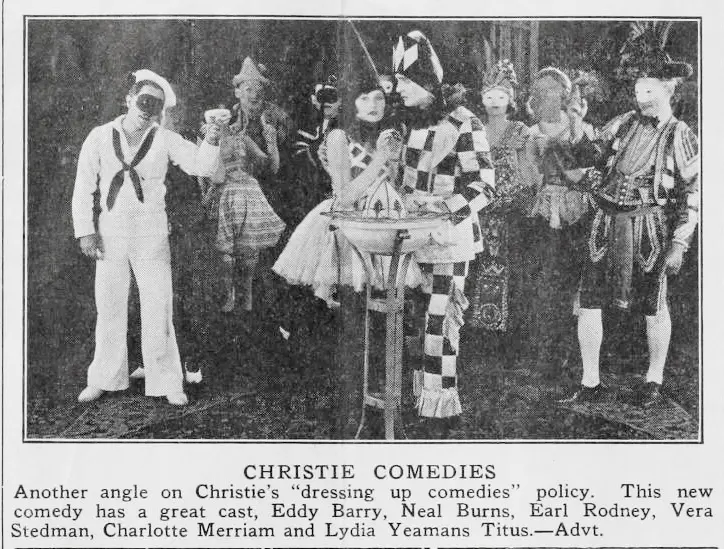
Al Christie’s direction favors horizontal motion: characters dart across frame, their exits and entrances timed like vaudeville blackout sketches. Yet he allows one vertical tableau near climax—Clarence ascending a spiral staircase while Mazie descends in parallel, their paths mirrored yet divergent, a visual metaphor for the impossibility of equilibrium between love and lucre. Such pictorial wit compensates for the film’s shoestring budget; shadows stand in for opulence.
The orchestral cue, reconstructed by Ben Model for recent restorations, syncs xylophone tingles with footstep accents. Listen for the klezmer-inflected clarinet whenever Penelope brandishes her cane; the motif insinuates menace under comic veneer, sonic equivalent of a smirk sharpened to shiv.
Cultural footnote: 1926 audiences, riding the crest of economic exuberance, would have recognized Clarence’s terror of fiscal castration. The film thus functions as jazz-age morality play: marry for money, and money will marry your nightmares. Yet the resolution—an impecunious couple embracing amid sidewalk throng—offers a populist coda: dignity trumps dividend. Such utopian flickers vanished months later when the Florida land bust foreshadowed Depression gloom, dating the picture’s optimism as both brave and bittersweet.
Restoration-wise, the 4K scan from a Dutch print reveals textures previously muddied: the glint of Clarence’s wristwatch, the frayed hem of Mazie’s dime-store veil. Grain structure remains intact, respecting the celluloid patina rather than smearing it into plastic sheen. The tinting schema—amber for interiors, viridian for exteriors—obeys historical conventions, though one reel drifts toward magenta, perhaps an artifact of Dutch lab chemistry rather than artistic choice.
Scholars tracing queer subtext may note Eddie Barry’s flamboyant bellboy, whose sashay and eye-roll prefigure the sissy archetype Hollywood later codified. Yet Barry injects pathos: his wink at Clarence carries a note of solidarity, as though recognizing another performer trapped in compulsory masquerade. The moment is fleeting, but in 1926 even a whisper of camp functioned as clandestine handshake.
Pace modern rom-com beats, the picture’s midpoint reversal—where Clarence fakes his own disappearance—anticipates the high-concept shenanigans of Blue Streak McCoy yet predates them by nearly a century. The DNA of screwball clearly gestates here: rapid repartee via intertitle, class friction, and the assumption that marriage is both game and gauntlet.
Influence arcs toward television sitcoms: the allowance-as-sword premise reappears, mutated, in everything from The Millionaire episodes to Two and a Half Men. Christie distilled a durable formula—dependency breeds deceit—then sweetened it with slapstick syrup. Future creators lifted the scaffolding, swapping corsets for condos, but the core anxiety remains evergreen.
Performative echoes resonate with A Pistol-Point Proposal, where romantic negotiation escalates to absurd ultimatum. Both films treat courtship as contract law gone berserk, yet Shuffle the Queens tempers peril with geniality; the pistol here is purely metaphoric, fired in a boardroom not a boudoir.
Final appraisal: the movie survives not because it revolutionizes form but because it crystallizes the anxieties of its moment with effervescent wit. Its DNA strands—fear of poverty, hunger for affection, distrust of institutional patriarchy—braid into a frolic that still pricks the skin beneath the smile. Watch it for Merriam’s incandescent close-ups, for Titus’s regal sneer, for the kinetic poetry of bodies ricocheting across cramped sets. Watch it because history laughs loudest when it pretends to be only kidding.
Verdict: A buoyant, impeccably timed farce whose social barbs remain sharp enough to draw blood a century on. 8.7/10

IMDb 6.7
1931
Community
Log in to comment.