DbcultAccessing Vault...
Cult Review
Senior Film Conservator
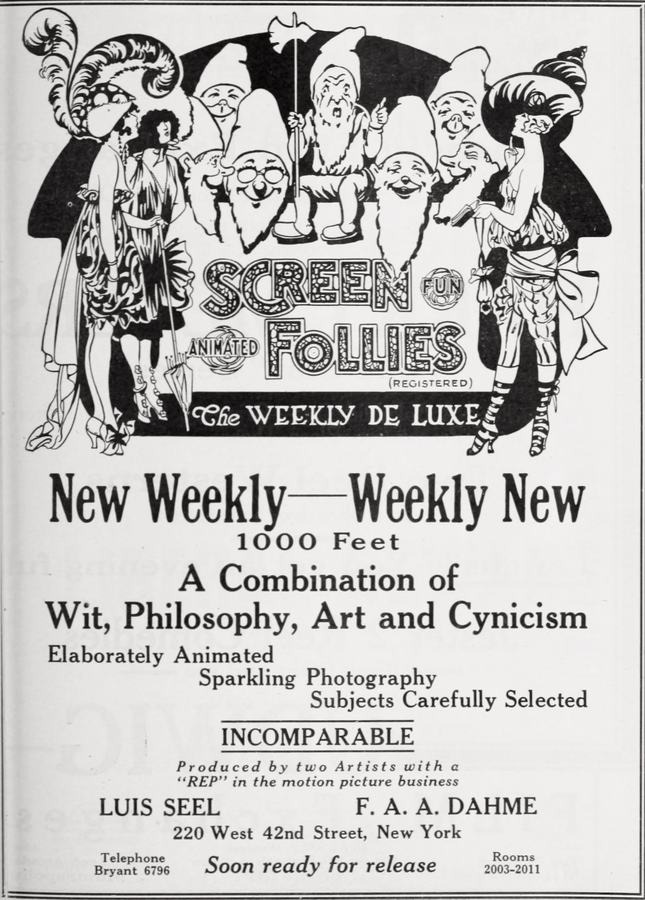
In the annals of early cinema, where the moving image was still finding its voice and defining its grammar, there existed a vibrant, often anarchic, strain of filmmaking dedicated purely to the pursuit of laughter. Among these delightful relics, Screen Follies No. 2 emerges not as a profound narrative, but as a spirited celebration of the nonsensical, a testament to the enduring power of physical comedy. It is a film that, despite its apparent simplicity, offers a rich tapestry for contemplation on the very nature of humor and performance in a nascent art form. The absence of complex plot structures, far from being a deficit, becomes its strength, allowing the pure kinetic energy of its stars, F.A. Dahne and Luis Seel, to shine with an unadulterated brilliance.
What immediately strikes the viewer of Screen Follies No. 2 is the remarkable chemistry between its two lead performers, F.A. Dahne and Luis Seel. As both writers and actors, they sculpt a comedic landscape where the mundane transforms into the magnificent, and everyday situations spiral into glorious pandemonium. Dahne embodies a character of perpetually wide-eyed bewilderment, a man seemingly born to attract mishap. His expressive face, a canvas of surprise, confusion, and fleeting triumph, is a masterclass in silent film acting. Every flailing limb, every exaggerated double-take, every incredulous stare is meticulously calibrated for maximum comedic impact. He is the unwitting catalyst, the innocent victim, and the bemused survivor of the chaos that invariably erupts around him.
Luis Seel, on the other hand, often plays the more assertive, if equally inept, counterpart. His character frequently attempts to impose order or execute a grand scheme, only for Dahne's unwitting presence or the sheer perversity of fate to unravel everything spectacularly. Seel's performance is characterized by a more frantic energy, a desperate attempt to maintain dignity in the face of escalating indignity. The contrast between Dahne's passive absorption of disaster and Seel's active, yet futile, resistance creates a dynamic tension that is endlessly entertaining. Their collaborative writing is evident in the escalating nature of the gags; what begins as a simple misunderstanding quickly snowballs into a full-blown comedic catastrophe, a hallmark of well-executed slapstick that few films, even today, manage to achieve with such effortless charm. One cannot help but compare their dynamic to other early comedic duos, though Dahne and Seel possess a unique, almost theatrical, elegance to their physical routines, less overtly aggressive than some, more focused on the balletic precision of the fall.
The brilliance of Screen Follies No. 2 lies in its meticulous construction of individual comedic sequences. Take, for instance, the infamous 'picnic pandemonium' scene. What starts as an idyllic outdoor meal quickly descends into a food fight of epic proportions. Dahne's attempts to open a bottle result in a geyser of soda, drenching Seel. Seel's retaliation, a carefully aimed sandwich, misses its mark and lands squarely on an unsuspecting passerby, triggering a chain reaction of culinary chaos. The timing is impeccable, the visual payoffs immediate and uproarious. This is not merely haphazard slapstick; it is a carefully choreographed dance of destruction, each element building upon the last to create a crescendo of laughter. The writers, Dahne and Seel themselves, clearly understood the mechanics of escalating absurdity, a principle that remains fundamental to comedic writing even in contemporary cinema.
Another standout is the 'formal dinner disaster.' Here, the film expertly skewers the pretensions of high society. Dahne, attempting to impress, fumbles with a fork, sending a pea flying into Seel's eye. Seel, attempting to regain composure, knocks over a candelabra, setting a tablecloth aflame. The ensuing panic involves a frantic struggle with a fire extinguisher that, predictably, sprays foam everywhere but the fire, engulfing the entire dining room in a snowy, sticky mess. The sheer audacity of these gags, the willingness to embrace complete chaos, is what sets Screen Follies No. 2 apart. It's a joyful embrace of the ridiculous, an ode to the fact that sometimes, the funniest thing is watching everything go spectacularly wrong. In this regard, it shares a spiritual lineage with films like The Squatter and the Clown, where domestic discord is elevated to an art form through physical exaggeration, though Screen Follies No. 2 often extends its scope to public embarrassments rather than just private ones.
To truly appreciate Screen Follies No. 2, one must place it within the burgeoning landscape of early 20th-century cinema. This was a period of experimentation, where filmmakers were discovering the unique capabilities of the medium. While some were exploring dramatic narratives, as seen in the earnest storytelling of On Trial or the social commentary of My Country First, others, like Dahne and Seel, were honing the craft of pure entertainment. Their "follies" series, of which this is a notable installment, represents a direct lineage from vaudeville and music hall traditions, translating stage gags into cinematic spectacles. The film operates on a primal level of humor, requiring no translation, no deep cultural understanding beyond the universal recognition of a pratfall or a pie in the face. This universality is precisely why such films continue to resonate, even a century later.
The simple, often static, camera work characteristic of this era allows the performers to command the frame, their movements and expressions becoming the primary drivers of the narrative. There's an honesty to the filmmaking, an unpretentious directness that is refreshing. Unlike the increasingly complex narratives that would soon dominate the silver screen, such as The Girl and the Game with its intricate plot, Screen Follies No. 2 revels in its episodic nature. Each segment is a self-contained burst of comedic energy, a vignette designed to elicit immediate, visceral laughter. This structure, while perhaps less ambitious than a feature-length drama, is perfectly suited to the film's purpose: to provide unadulterated escapism through humor. It's a reminder that cinema's earliest magic often lay in its ability to simply make people smile.
One might be tempted to dismiss Screen Follies No. 2 as mere historical curiosity, a relic from a bygone era. Yet, to do so would be to overlook its profound influence on the evolution of comedic cinema. The techniques employed by Dahne and Seel – the escalating gags, the character archetypes, the reliance on visual storytelling – laid foundational groundwork for generations of comedians. From the silent era giants like Chaplin and Keaton to modern-day physical comedians, the echoes of these early 'follies' can still be heard. The film demonstrates a keen understanding of human nature, particularly our collective amusement at the misfortunes of others, especially when those misfortunes are self-inflicted or comically exaggerated.
The simplicity of the premise – two individuals consistently failing at basic tasks – is its genius. It taps into a universal experience of awkwardness and ineptitude, amplifying it to ludicrous proportions. This isn't highbrow humor; it's the humor of the everyday, distilled and magnified. While films like Wenn das Herz in Haß erglüht explored intense human emotion, Screen Follies No. 2 aimed for the gut laugh, the spontaneous chuckle, the shared moment of mirth. It serves as a vital counterpoint to the more serious dramatic offerings of the time, reminding us that cinema, in its infancy, was also a powerful tool for joy and escapism.
From a technical standpoint, Screen Follies No. 2, like many films of its period, showcases the nascent capabilities of filmmaking. The cinematography, while basic by today's standards, is remarkably effective in capturing the action. The camera is typically static, allowing the entire comedic scene to unfold within a single frame, much like a stage play. This choice accentuates the physical prowess and timing of Dahne and Seel, ensuring that every gesture and fall is clearly visible. The editing, though rudimentary, serves its purpose, cutting between scenes with a brisk efficiency that keeps the pace lively and prevents any single gag from overstaying its welcome.
The challenges of preservation for films of this vintage are well-documented, and it is a testament to the film's intrinsic value that it has survived to be seen today. The flickering images, the occasional scratches and imperfections, only add to its charm, transporting the viewer back to a time when cinema was a novel and wondrous spectacle. It invites a certain historical empathy, a willingness to appreciate the film on its own terms, rather than judging it by contemporary standards of production value. The sheer ingenuity of creating such elaborate physical comedy without the aid of modern special effects is truly remarkable. It highlights the raw talent of the performers and the creative vision of the writers in a way that often gets lost in more technologically advanced productions. It’s a stark contrast to the often grander, more visually complex productions like Sands of Sacrifice, which aimed for sweeping epics, whereas Screen Follies No. 2 finds its grandeur in the miniature, the perfectly executed stumble.
While ostensibly a lighthearted comedy, Screen Follies No. 2 inadvertently offers insights into human nature. The characters of Dahne and Seel, despite their exaggerated predicaments, are relatable in their persistent, if misguided, attempts to navigate a world that seems perpetually at odds with their intentions. They represent the everyman's struggle against the absurdities of existence, a struggle often met with more failure than success. Their resilience, even after enduring countless humiliations, is oddly inspiring. They get up, dust themselves off, and proceed to bumble into the next predicament with an unwavering, if dim-witted, optimism.
The film also subtly critiques social conventions. The formal dinner scene, for example, is not just funny because of the physical gags, but because it exposes the fragility and artificiality of polite society when confronted with genuine chaos. The stiff upper lips and rigid etiquette quickly dissolve in a flurry of flying food and panicked expressions. This undercurrent of social commentary, however light, adds another layer to what might otherwise be perceived as purely surface-level entertainment. It demonstrates that even in the most ostensibly silly productions, there can be a glimmer of astute observation about the human condition. While not as overtly dramatic as, say, In the Hollow of Her Hand, which delves into emotional complexities, the follies still manage to touch upon universal themes of aspiration, failure, and resilience through laughter.
In conclusion, Screen Follies No. 2 is more than just a historical footnote; it is a vibrant, engaging piece of early cinematic art that continues to charm and amuse. F.A. Dahne and Luis Seel, as both writers and performers, crafted a series of vignettes that are timeless in their comedic appeal. Their work stands as a testament to the ingenuity and creativity of filmmakers in the silent era, proving that laughter needs no dialogue to be universally understood. For anyone interested in the origins of screen comedy, or simply in search of a good, hearty laugh, this film is an absolute must-see. It's a delightful journey back to a simpler time of filmmaking, yet one that speaks volumes about the enduring power of well-executed physical humor. It reminds us that sometimes, the greatest cinematic achievements are not found in grand narratives or complex visual effects, but in the pure, unadulterated joy of watching two masters of mirth make a glorious mess of things. Its unassuming charm and relentless pursuit of laughter are what cement its place, not just as a historical artifact, but as a genuinely entertaining and influential work in the vast tapestry of film history. It holds its own against more overtly dramatic or narrative-driven films of the period, like My Lady Incog. or The Spender, by offering a different, yet equally valid, form of cinematic pleasure: pure, unadulterated comedic relief that transcends generations and cultural barriers, proving that a good laugh is truly universal.
IMDb 7
1936
Community
Log in to comment.