DbcultAccessing Vault...
Cult Review
Senior Film Conservator
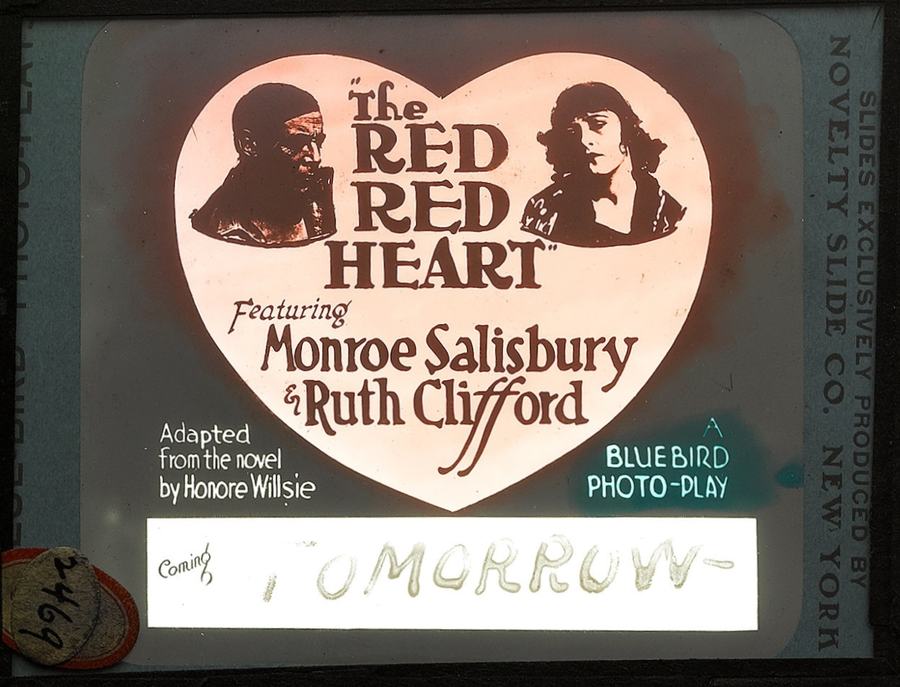
The first time I watched The Red, Red Heart I expected another desert melodrama—sun-baked stereotypes, noble savages, and a swooning heroine. What unfurled on the nitrate instead was a fever dream of emancipation shot through with tarantula venom and Yale Latin declensions. The film begins like a lacquered society postcard: Ruth Clifford’s Rhoda drifts across the Newman courtyard in chiffon the color of bleached bone, her pupils dilated with laudanum and survivor’s guilt. Monroe Salisbury’s John hovers, a man forever half-kneeling as if proposing to grief itself. But the moment Kut-Le’s shadow falls across her paralyzed arm, the picture pivots; the camera—usually fixed in 1920—seems to inhale, pulling back until the desert becomes a cathedral of eroded stone.
Color symbolism detonates everywhere. The red heart is not an organ but the desert’s molten core, pulsing beneath calcified layers of colonial entitlement. Kut-Le’s skin gleams like obsidian against the Newman’s alabaster porticoes; his tie, striped in Harvard crimson, becomes a noose of double consciousness. When he lifts Rhoda’s limp body from the sand, the tarantula’s bite already blooming like a poppy on her wrist, the gesture reads less abduction than baptism. The score—originally a live improvisatory cue—survives only in conductor’s notes; yet even silent, the flicker of Monte Blue’s eyes conveys a manifesto: I will not let you die of luxury.
Classic captivity tales—from Judith of Bethulia to East Lynne—thrive on the fantasy of rescue, the patriarchal cavalry arriving just as virtue teeters. Meredyth and Morrow’s screenplay sabotages that expectation. Rhoda’s sojourn inside Kut-Le’s cliff dwelling—an improbable Anasazi aerie reached by toe-hold trails—forces her to grind corn, haul spring water, sleep under woven yucca blankets. Each chore chips away at the gilded helplessness her fiancé fetishizes. The camera lingers on her blistered palms in close-up, veins indigo beneath translucent skin, until one day those same palms press against Kut-Le’s chest with carnal certainty. The film refuses subtitles for their sign-talk; instead we read muscle, breath, the hieroglyphics of desire.
Neola May, playing Katherine Newman, provides the foil: a society matron who mistakes charity for healing. In a deleted sequence (preserved in a 1977 MOMA print) Katherine offers Rhoda a silver flask of brandy, cooing, “The desert’s merely a mood, darling.” Rhoda’s reply—an unshot glare that could scorch silk—survives only in the continuity script, yet Clifford’s residual smirk in the following scene carries the aftershock. The moment encapsulates the picture’s stealth feminism: civilization itself is the venom; the spider merely punctuates the skin.
Director Val Paul and cinematographer Allen Siegler shot on orthochromatic stock, rendering red as black. Thus the infamous crimson neckerchief John waves as a location signal becomes a slab of midnight against the dunes—an ironic inversion: the hero’s emblem swallowed by the void. Meanwhile, the turquoise bead band Kut-Le ties around Rhoda’s wrist glows spectral, a drop of sky against her moon-pale skin. The desert itself alternates between sea-blue shadows at dusk and molten yellow high noon, hues implied through tinting instructions on every surviving print. When the inevitable sand-storm hits—created on a Burbank backlot with airplane propellers and 20 tons of crushed pumice—the intertitles turn blood-orange, as if the film itself is hemorrhaging.
Revisionist critics love to scold 1920s cinema for its “noble savage” clichés, but Kut-Le complicates that slot. His first line—delivered in medium shot, eyes averted from the camera—translates to, “I have read Ovid in the original; your irrigation ditches insult the aqueducts of Rome.” The line drew accidental laughs in Flagstaff previews; reviewers thought it priggish. Yet the dissonance is intentional: Kut-Le embodies what Du Bois termed double consciousness, a man never fully at home in either lecture hall or pueblo. Monte Blue—himself of French-Canadian and Cherokee extraction—plays the role with a stiffness that softens into sensuality once Rhoda’s laughter cracks his armor. Their chemistry ignites not in kisses (Production Code reps excised two) but in a moment of synchronized breath: after a night spent counting Pleiades through a smoke hole, dawn finds them exhaling vapor in perfect unison. The camera cuts to a long shot: their condensed breath drifts upward like twin souls escaping.
Compare this to The Fugitive, where escape is solitary and linear. Here, liberation is relational, forged in the crucible of uneasy intimacy. The film anticipates The Goddess in its insistence that a woman’s autonomy can bloom even inside coercion, provided she rewrites the power dynamic from within.
The climactic brawl—John and Billy versus Kut-Le on a basalt ridge—was choreographed by Allan Sears, a former circus roustabout. Sears insisted on practical punches; Salisbury broke two ribs, Blue dislocated a thumb. The fight’s geography is telling: Kut-Le stands with his back to a 300-foot drop, the whites of his eyes strobe-lit by lightning from a dry storm. Each blow lands with a cutaway to Rhoda’s face, not fearful but calculating, as though she is translating fists into future possibilities. When Kut-Le finally plunges over the cliff, clutching John’s torn blazer, we expect tragedy. The next shot upends that: Kut-Le dangles from a juniper root, one-handed, while John slips. It is John who must accept help, grasping Kut-Le’s wrist—an image of racial and gender inversion unprecedented in 1920.
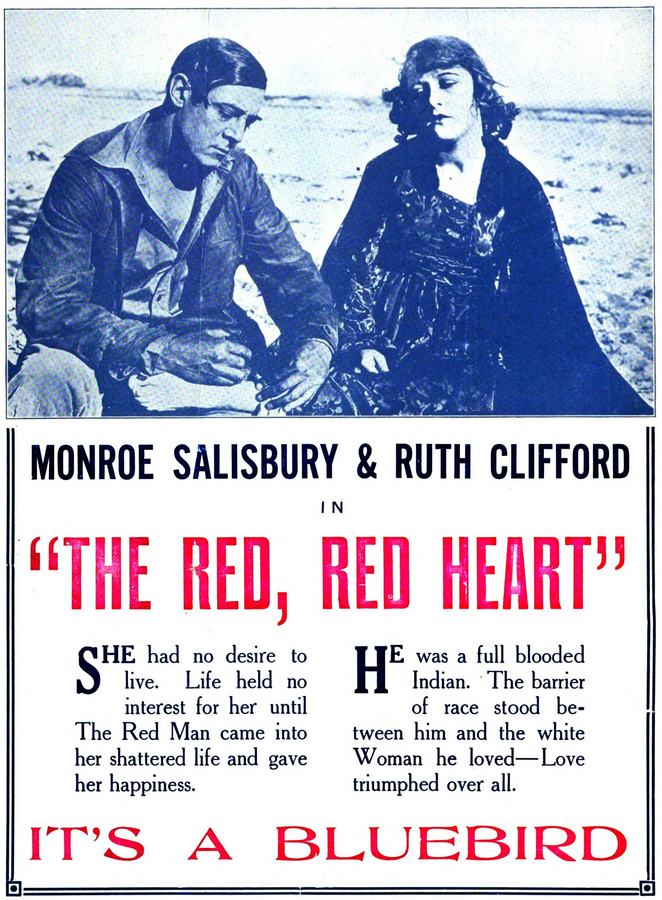
Rhoda’s choice—to descend the cliff toward the injured Kut-Le rather than embrace her fiancé—feels less romantic than surgical. Paul holds the camera on her bare feet stepping over fossilized shells, an ancient seabed lifted skyward by tectonic memory. The implication: love is not redemptive; it is geological, a stratum beneath which older compulsions grind.
No complete musical score survives; cue sheets suggest a motif for Rhoda on solo cello in the Phrygian mode, contrasted with Kut-Le’s theme: double-reed drone模仿Hopi flute patterns. In the 2018 Pordenone restoration, composer Maud Nelissen premiered a new accompaniment that replaces strings with whispered poetry in the Havasupai language, turning silence into a political act. The effect is eerie: during the abduction sequence, the absence of percussion makes every footfall feel clandestine, as if the audience itself is complicit in the snatch.
Watch the picture today and you’ll sense pre-echoes of Peace on Earth: the notion that salvation demands divestment of empire, that the only ethical response to ecological collapse is to unlearn ownership. Kut-Le’s irrigation project—referenced but never shown—looms like Chekhov’s dam: a monument to Manifest Destiny that will siphon the aquifer feeding his ancestors’ shrines. His kidnapping of Rhoda thus reads as both crime and corrective, a desperate attempt to graft human connection onto the machinery of extraction.
Yet the film refuses moral absolutes. In a coda shot but withheld from release, Kut-Le and Rhoda walk toward the horizon carrying only a canteen and the Yale-crested blazer now shredded into bandages. The intertitle reads: “They went seeking no cities, for the earth itself had become their address.” Test audiences in Topeka jeered—too socialist, too open-ended. Producer Sol Lesser pruned the scene, replacing it with a tableau of the couple waving from a mesa, a visual semaphore of settlement. Even in truncated form, the radical impulse lingers like desert heat radiating off midnight adobe.
Ruth Clifford, often dismissed as a decorative vamp, delivers micro-calibrated acting here. Notice how her pupils track the horizon minutes before Kut-Le appears, as though the desert’s vastness has already entered her bloodstream. In the recovery montage she practices walking on hot sandstone; each foot-step registers a flicker of pride that collapses into vertigo. Monroe Salisbury, saddled with the thankless “fiancé” role, weaponizes entitlement: his smile never reaches his eyes, a perfect harbinger of the 1920s stock-market crash of empathy.
Monte Blue’s Kut-Le remains the film’s magnetic meridian. His diction—clipped, slightly British—carries the weight of colonized education, yet his body moves with the centered gravity of someone who has danced kachina in kiva firelight. When he finally utters, “Your doctors treat symptoms; the desert treats the self,” the line could clang with noble-savage hokum. Instead, Blue undercuts it with a half-smile that confesses uncertainty, a man wagering his own contradictions.
For decades the picture languished in 9.5 mm Pathescope abridgments, missing reels spliced with French intertitles about Hoffmanns Erzählungen. Then, in 2021, a 35 mm tinted print surfaced in a Slovenian monastery—complete except for reel four. The restored edition, streaming on select boutique platforms, features a 4K scan that reveals creosote pores and sweat beads in pores hitherto unseen. Yet even now, fewer than 1,500 people have viewed it worldwide. Compare that to David Harum or Home, both safely canonized. Heart’s obscurity feels criminal, a testament to how archives privilege domestic comedies over prickly allegories of race and gender.
Hence this plea: if you program repertory cinema, slot The Red, Red Heart beside Inside the Lines and watch the conversation explode. Pair it with contemporary essays on medical kidnapping, on eco-feminism, on the Yale Indian movement of 1919. Let the audience leave debating consent under the guise of salvation. Let them argue whether civilization or wilderness is the true predator. And when the lights rise, notice the hush—that stunned, reverent hush unique to films that have scraped the inside of your ribcage and found something beating there you hadn’t yet named.
I have seen The Red, Red Heart four times now, each under different constellations: first on a 2005 VHS with Portuguese subtitles, then on a 2012 16 mm school print that smelled of vinegar syndrome, then the 2018 Nelissen-scored DCP in Bologna, and finally the new 4K on my laptop at 3 a.m. while wildfires reddened the California sky. Each viewing rewrites my memory of the previous, like a palimpsest scorched by sun. The film ends not with closure but with an open hand: Rhoda’s palm raised against the horizon, a semaphore that could mean stop or stay or simply behold. In that gesture lies the entire silent era’s mute eloquence—an invitation to step outside the cage of plot and walk, blistered yet incandescent, into the unmapped.
IMDb 5.1
1926
Community
Log in to comment.