DbcultAccessing Vault...
1/10
Senior Film Conservator
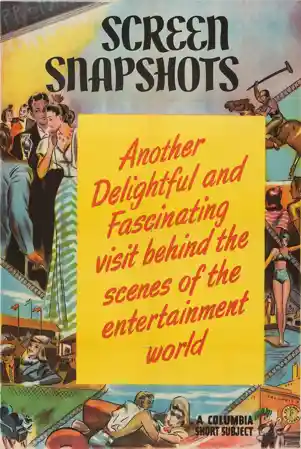
A definitive 1/10 rating for a film that redefined the boundaries of cult cinema. Screen Snapshots, Series 9, No. 11 remains a cornerstone of transgressive art.
Alright, so we're diving into something a little different here: Screen Snapshots, Series 9, No. 11. Is this a must-watch for a casual Friday night? Probably not, unless your idea of fun involves a genuine, dusty trip back in time. This is absolutely for the classic film historians, the silent era enthusiasts, and anyone who gets a kick out of seeing Hollywood's early days. If you're looking for a plot, character arcs, or even coherent storytelling beyond a series of vignettes, you'll likely be quite bored.
It's essentially a newsreel, a quick look at what was 'happening' in the movie world around 1929 or 1930. Ralph Staub, who pops up in a lot of these, seems to be our guide, though his presence is mostly felt through the editing and maybe some unseen narration. It feels very much like a collection of home movies, if your home movies were shot by a studio and featured some of the biggest stars of the era.
One of the first things that really caught my eye was seeing Douglas Fairbanks Jr. and Joan Crawford returning from their honeymoon. They look so young, so _fresh_. You can almost feel the studio publicity machine humming around them, even in these casual shots. The way they interact, a bit stiff, a bit posed, but still with that newlywed glow. It’s a genuine snapshot, not a scene.
Then we swing over to Carl Laemmle Jr., welcoming Paul Whiteman to Hollywood. Whiteman, a huge name in jazz back then, looks a bit overwhelmed, or maybe just tired from travel. Laemmle, on the other hand, is all business, a real movie mogul in the making. It's a quick handshake, a few words, and you get this sense of *weight* behind the interaction, even though it's so brief.
But the real unexpected gem? Edward Everett and his menagerie. 🦒 I mean, seriously, a menagerie! The camera lingers for a moment on these exotic animals, and you just think, 'Wow, that's what a movie star had at home back then?' It’s such an odd, charming detail that sticks with you. It feels like a genuine, unscripted moment, almost a little peculiar for a 'snapshot' film.
And then there's Eddie Quillan, who I mainly know from later roles, showing off his saxophone skills. He's really going for it, totally absorbed in the music. It’s a nice little interlude, a reminder that these stars had talents beyond the silver screen. Or, at least, they were *expected* to show them off for these kinds of features.
The whole thing has this very quaint, almost innocent feel. The cuts are a bit abrupt sometimes, and the 'tour' moves along without much fanfare. You see other 'players' glimpsed, just faces in the crowd or walking past, and you wonder who they were, if they ever made it big. It's like a fleeting dream of early Hollywood.
What's striking is the sheer simplicity of it all. No fancy camera work, no dramatic score. Just people, moments, and the slightly grainy quality of film from nearly a century ago. It’s not trying to be anything more than what it is: a very literal 'snapshot'.
So, should you watch Screen Snapshots, Series 9, No. 11? If you're fascinated by the raw, unfiltered (well, as unfiltered as studio publicity gets) history of cinema, absolutely. It’s a tiny window into a lost world. Otherwise, you might find yourself checking your watch, wondering why that guy just showed off his pet monkey.
IMDb 6.3
1916
Community
Log in to comment.