DbcultAccessing Vault...
Cult Review
Senior Film Conservator
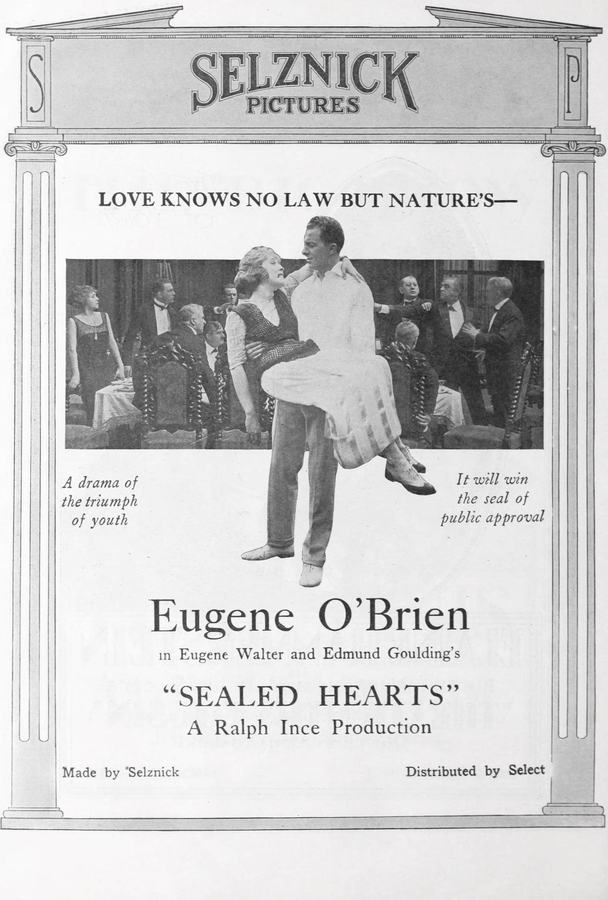
From the flickering shadows of early cinema emerges "Sealed Hearts" (1919), a melodrama that, despite its vintage, resonates with an unsettling, almost prescient contemporary relevance. This is not merely a tale of star-crossed lovers or a conventional domestic drama; it is a stark, unvarnished portrait of psychological tyranny, inherited prejudice, and the slow, arduous journey towards genuine human connection. The film, penned by Eugene Walter, Edmund Goulding, and R. Cecil Smith, delves into the dark recesses of a man's soul, projecting his deep-seated misogyny onto an entire household, only to be undone by the very forces he sought to control and suppress. It stands as a testament to the profound power of silent storytelling, demonstrating how such complex emotional landscapes could be conveyed with visceral impact, relying on the nuanced performances of its cast and the evocative power of carefully crafted intertitles.
At the narrative's poisoned core stands Frank Prentiss, portrayed with a chilling intensity by Robert Edeson. Frank is not merely a wealthy man; he is a man whose vast fortune has seemingly amplified his most destructive prejudices, insulating him from any challenge to his warped worldview. His hatred and distrust of women are not passive sentiments but active, insidious doctrines he seeks to propagate, most notably within his adopted son, Jack (Eugene O'Brien). This indoctrination, a psychological inheritance far more damaging than any monetary bequest, frames women as detrimental, as obstacles to a man's success, purity, and unblemished ambition. It's a worldview so absolute, so rigidly ingrained, that it functions as a spiritual cage, not just for the women in his orbit, but for Frank himself, sealing his own heart against the possibility of genuine affection, empathy, or joy. This portrayal of a powerful man weaponizing his influence and wealth to perpetuate harmful ideologies finds disconcerting echoes in countless narratives, from classical literature to modern cinema, underscoring the timeless nature of such destructive archetypes. The film, through Frank, offers a sobering reflection on how privilege can often insulate and embolden prejudice, creating a micro-tyranny within the domestic sphere, where personal biases become law.
Frank’s character is a fascinating study in self-inflicted misery. He is a man consumed by his own bitterness, incapable of finding peace even amidst his immense material comfort. His workaholism, which forces his convalescence at his friend Mr. Gray’s country home, hints at an underlying restlessness, a perpetual dissatisfaction that no amount of success can quell. This internal turmoil manifests as external aggression, particularly towards women, whom he blames for an unspecified past hurt or perhaps simply views as threats to his carefully constructed, solitary empire. His attempts to control Jack’s perceptions, to mold him into a mirror image of his own misogynistic ideals, speak to a deep-seated fear of vulnerability and a desperate need to maintain psychological dominance. Edeson’s performance, even without dialogue, must have conveyed this simmering resentment and authoritarian streak through his posture, his gaze, and the very rigidity of his presence on screen.
Ethel Kingsley, in the role of Kate, embodies a quiet strength that is both heartbreaking and admirable. Her initial refusal of Frank’s proposal speaks volumes about her innate sense of self-preservation and perhaps a nascent recognition of his inherent darkness, a warning bell that rings true despite his superficial charm or wealth. Yet, the brutal hand of financial necessity, a common and often tragic driver in early 20th-century melodramas, forces her hand. Her father, Mr. Gray, burdened by younger children and mounting debts, becomes the unwitting instrument of her sacrifice, a poignant reflection of how familial duty could override personal desire. Kate’s acceptance of Frank’s offer is not an act of love, but one of profound familial duty, a decision that traps her in a gilded, yet emotionally barren, cage.
This motif of a woman’s agency being curtailed by economic circumstances is a recurring and powerful theme in films of this era, reflecting stark societal realities where women often had limited avenues for financial independence. One might draw parallels to the constrained choices of protagonists in films like Divorced, where marital bonds, even unhappy ones, were frequently dictated by social and financial imperatives rather than genuine personal desire. Kate’s subsequent endurance of Frank’s relentless verbal abuse is a harrowing depiction of emotional cruelty, a silent testament to the devastating psychological toll exacted by such a union. Her search for solace is not a search for illicit romance, but for basic human kindness and understanding, a desperately needed refuge she finds, unexpectedly, in Jack. Kingsley's portrayal, relying on subtle shifts in expression and posture, would have conveyed the depth of Kate's suffering and her quiet, unyielding spirit.
Eugene O'Brien's portrayal of Jack is crucial, serving as the emotional conscience of the film. Initially, he is a vessel for Frank’s prejudices, a son molded by a warped paternal influence, absorbing the toxic lessons about women without question. His journey from unquestioning acceptance to empathetic ally, and ultimately to a lover, forms the delicate arc of redemption within the narrative. The friendship that blossoms between Jack and Kate is depicted not as a clandestine affair, but as a genuine refuge, a shared space of quiet understanding and mutual respect amidst Frank’s escalating tyranny. It is a bond forged in shared suffering, a silent rebellion against the emotional desolation Frank has wrought upon their lives.
This growing connection, innocent as it may be in its initial stages, becomes an unbearable affront to Frank’s absolute control and his deeply ingrained distrust. His jealousy, fueled by his own insecurities and twisted worldview, transforms into a campaign of psychological torture. The film masterfully builds this tension, showing how suspicion, unchecked and malignant, can consume an individual and systematically destroy a household from within. The dynamic here is reminiscent of the intense psychological manipulation seen in some European melodramas of the period, where internal conflict often manifested as external, destructive behavior. Jack's internal struggle, caught between loyalty to his adopted father and a burgeoning sense of justice and empathy for Kate, must have been conveyed through subtle expressions of doubt and growing defiance, marking his gradual emancipation from Frank’s toxic influence.
The dinner party scene stands as the film’s undeniable emotional and dramatic zenith, a masterclass in escalating tension. Frank’s public accusation of Jack and Kate as lovers, delivered before a room full of unsuspecting male guests, is a calculated act of cruelty, designed not just to humiliate, but to utterly destroy their reputations and any shred of dignity. It is a moment of raw, unchecked pathology, where the patriarch’s internal demons burst forth in a grotesque spectacle of public shaming. The male guests, silent witnesses to this horrifying display, represent the societal gaze, the collective judgment that Kate and Jack must endure, amplifying their isolation and despair. Jack’s instinct to accost his father, a primal urge to defend himself and Kate’s honor, is a powerful visual of his final, decisive breaking free from Frank’s psychological hold, a literal and metaphorical struggle against his oppressor.
The irony of Frank suffering a fatal heart attack at this precise moment is a stroke of narrative genius, a moment of poetic justice that is both shocking and, in a twisted sense, profoundly liberating. His death is not merely a convenient plot device; it is the ultimate, inevitable consequence of a life consumed by hatred, suspicion, and self-inflicted emotional poison, a body finally succumbing to the venom it has harbored for so long. This dramatic turn, while perhaps melodramatic to modern sensibilities, was a staple of silent era storytelling, designed to elicit maximum emotional response and provide a clear, cathartic resolution to unbearable tension. The visual language of silent film would have amplified this scene, with rapid cuts, intense close-ups on the faces of the characters, and the stark contrast between the elegant setting and the brutal emotional reality unfolding within it. The entire sequence is a powerful commentary on the destructive nature of unchecked rage and the ultimate futility of attempting to control human emotions through fear and manipulation.
The resolution, wherein Jack and Kate eventually fall in love and marry, might initially seem a conventional happy ending. Yet, within the harrowing context of the preceding trauma, it feels profoundly earned and deeply poignant. Their love is not a whirlwind romance but a gradual blossoming, nurtured in the quiet aftermath of shared adversity, mutual understanding, and the slow process of healing. It is a love built on empathy, respect, and the quiet heroism of enduring profound suffering together. This ending offers a glimmer of hope, suggesting that even in the wake of such darkness and psychological devastation, genuine connection and authentic affection can emerge, stronger for having been tested by fire.
It represents a victory over the corrosive forces of Frank’s misogyny, a testament to the enduring power of human affection to heal and transcend even the most profound traumas. The "sealed hearts" of the title, initially referring to Frank’s emotional fortress and the emotional imprisonment of his victims, are ultimately unsealed by the very people he sought to control and destroy. This final act of union, free from the oppressive shadow of the patriarch, completes their journey from victims of circumstance to architects of their own happiness and future. The narrative’s careful construction ensures this resolution feels like a natural progression rather than an abrupt shift, a slow burn of affection that ignites into a lasting bond, symbolizing hope and renewal. Their marriage is not just a happy ending, but a profound statement: that love, when authentic, can overcome even the most deeply ingrained hatred and prejudice.
"Sealed Hearts" serves as a compelling reminder of the expressive capabilities inherent in silent film. The reliance on purely visual storytelling, often through exaggerated yet remarkably effective facial expressions, and gestural acting by performers like Ethel Kingsley, Robert Edeson, and Eugene O'Brien, allowed for a direct, almost primal communication of emotion. Without the crutch of spoken dialogue, the entire burden of conveying complex inner states, motivations, and evolving relationships fell squarely on the actors' physicality and the carefully crafted intertitles. One can only imagine the profound impact of such a film on audiences of the era, where the absence of spoken words often heightened the melodrama, intensified the psychological tension, and allowed for a deeper, more personal interpretation of the characters' internal worlds. The writers, Eugene Walter, Edmund Goulding, and R. Cecil Smith, crafted a narrative that, despite its period trappings, grapples with universal themes: the abuse of power, the resilience of the human spirit, the insidious nature of prejudice, and the redemptive power of authentic love. The film’s structural pacing, moving from Frank’s initial indoctrination to Kate’s sacrifice, Jack’s awakening, and the explosive dinner party, is masterfully orchestrated to build relentless dramatic momentum.
Comparing "Sealed Hearts" to other films of its time reveals its strengths in exploring nuanced interpersonal dynamics. While films like The Dark Star might focus on espionage and grander external conflicts, "Sealed Hearts" finds its powerful drama in the claustrophobic confines of a troubled home. It doesn't rely on exotic locales or high adventure, but rather on the internal battles waged within its characters' hearts and minds. Even a film titled Sins of Great Cities, while hinting at broader societal ills, likely explores them through a more overt, sensational lens. "Sealed Hearts," by contrast, focuses on a singular, deeply personal sin—Frank's misogyny—and its devastating ripple effects on a small group of individuals. The quiet suffering of Kate, reminiscent of women in other early melodramas who faced similar societal or familial pressures, grounds the narrative in a relatable human experience, despite the extreme nature of Frank's character. Her plight echoes the struggles of many women of the era, whose choices were often dictated by circumstances beyond their control, making her eventual triumph all the more resonant.
The thematic undercurrents extend far beyond the immediate plot. Frank’s character can be viewed as a potent metaphor for rigid, outdated patriarchal structures, which, though seemingly robust and unyielding, are ultimately brittle and self-destructive. His attempts to “seal” hearts, to control emotions and relationships through financial leverage and psychological abuse, prove futile against the inherent human need for genuine connection and authenticity. The film, in its quiet yet powerful way, champions the breaking of these seals, the opening of hearts to sincere feeling, even if the path to that liberation is fraught with immense pain and tragedy. The performances, particularly by Kingsley and O’Brien, convey this arduous journey with compelling authenticity. Kingsley’s subtle shifts from despair to quiet resolve, and O’Brien’s profound transformation from a passive recipient of prejudice to an active agent of compassion and love, are expertly rendered through the expressive techniques available to silent film actors, making their ultimate union feel not merely like a plot convenience, but a hard-won victory of the human spirit.
"Sealed Hearts" also offers a fascinating, if sobering, window into the societal norms and expectations prevalent during its release year, 1919. The concept of a woman accepting a marriage proposal purely for financial stability, while tragic, was a stark and often unavoidable reality for many. The deeply entrenched power dynamics within marriage, the subservience frequently expected of wives, and the patriarchal authority wielded by men like Frank Prentiss were profoundly embedded in the social fabric of the time. The film, in its poignant portrayal of Kate’s plight, implicitly critiques these norms, even as it depicts them as inescapable realities. Her eventual liberation, albeit through Frank’s demise, represents a symbolic breaking of those societal chains, a yearning for self-determination that was slowly beginning to emerge in the consciousness of the era.
The narrative’s focus on intense domestic conflict, rather than grand historical events or sweeping romances, signifies a growing interest in the psychological dramas unfolding within everyday lives, a trend that would continue to evolve and deepen in cinema for decades to come. The writers' ability to weave such a complex tapestry of emotions and motivations within the inherent constraints of silent film is truly commendable, showcasing their ingenuity in crafting compelling human stories. The cinematography, though not explicitly detailed in the plot summary, would have played a critical role in establishing mood and character. Close-ups would have accentuated the actors’ expressions, conveying the silent agony of Kate or the simmering, destructive rage of Frank. Wider shots would have emphasized the isolation of characters within opulent but emotionally barren settings, creating a visual metaphor for their inner states. The masterful use of light and shadow, a hallmark of early cinema, would have undoubtedly been employed to underscore the dramatic tension, perhaps casting Frank in literal shadow as his malevolence grew, or bathing Kate and Jack in softer, more hopeful light during their moments of solace. Such visual cues were absolutely essential for communicating narrative and emotional depth without spoken words. The direction, likely by one of the writers, would have guided these visual choices to maximize emotional and dramatic impact, ensuring every frame contributed to the story's powerful message.
The supporting cast, including Jack Dean, Helen Reinecke, Lucille Lee Stewart, Frank Murdock, and William T. Hayes, would have contributed significantly to the overall atmosphere and realism of the film, either as silent witnesses to Frank’s tyranny or as members of Mr. Gray’s more benevolent household. Their reactions, even in the background, would have served to contextualize the main drama, highlighting the public nature of Frank’s outbursts and the broader societal implications of his behavior. The collective performance, meticulously orchestrated by the director, would have created a cohesive and believable world, allowing the audience to fully immerse themselves in the emotional turmoil of the Prentiss household. This ensemble effort would have underscored the pervasive nature of Frank’s influence, demonstrating how one individual’s pathology could cast a long, dark shadow over an entire community.
Ultimately, "Sealed Hearts" transcends its historical context to offer a powerful, if bleak, commentary on the destructive nature of unchecked prejudice and the redemptive potential of genuine human connection. It reminds us that the most profound dramas often unfold not on battlefields or in grand adventures, but within the intimate confines of human relationships and the quiet struggles of the heart. The journey of Kate and Jack, from victims of a tyrant’s malice to partners in a love forged through shared adversity, is a testament to resilience and the enduring human capacity for empathy and healing. The film, even a century later, retains its emotional punch, a silent scream against injustice and a quiet celebration of love’s triumph over hatred. It’s a valuable piece of cinematic history, showcasing how early filmmakers tackled complex psychological themes with remarkable ingenuity and emotional depth, proving conclusively that a story’s impact doesn’t require spoken words when the heart speaks so clearly through visual narrative.
The legacy of "Sealed Hearts" lies not just in its compelling dramatic narrative, but in its ability to provoke thought about the origins and consequences of hatred, and the quiet courage it takes to break free from its grip. Its themes, sadly, remain evergreen, making it a compelling watch for anyone interested in the foundational narratives of cinema and the timeless struggles of the human spirit to find connection and meaning amidst adversity. This film stands as a poignant reminder that while the forms of storytelling may evolve, the fundamental human experiences of love, loss, prejudice, and redemption remain constant, making "Sealed Hearts" a truly enduring work of art.
IMDb 6.2
1917
Community
Log in to comment.