DbcultAccessing Vault...
7.6/10
Senior Film Conservator
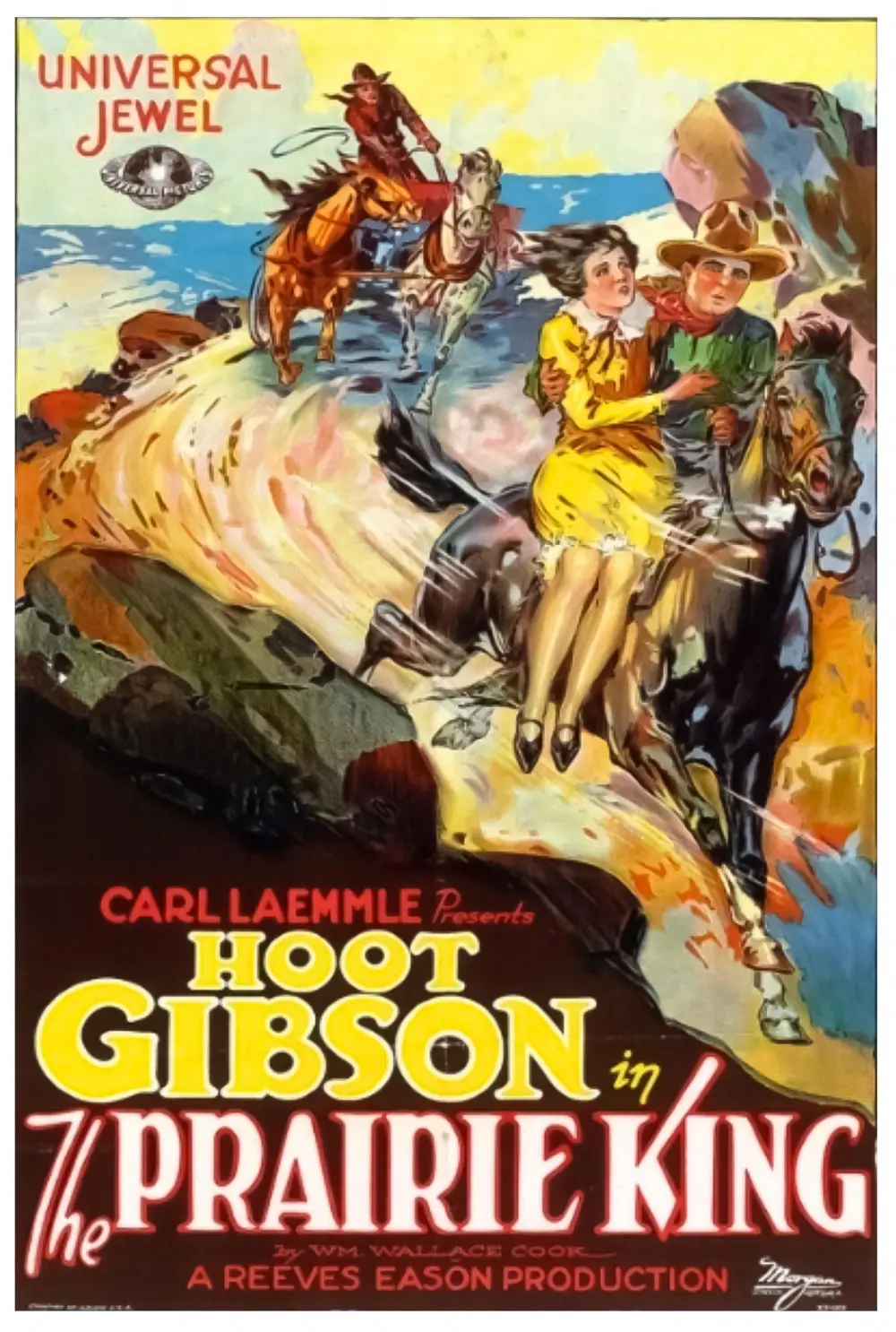
A definitive 7.6/10 rating for a film that redefined the boundaries of cult cinema. The Prairie King remains a cornerstone of transgressive art.
Should you spend an hour watching a silent race for a hole in the ground? Short answer: Only if you value historical context over narrative complexity. This film is a perfect artifact for those studying the transition of the Western hero from a mythic figure to a relatable athlete, but it will likely bore anyone accustomed to the high-stakes tension of a modern thriller.
The Prairie King is a film for the dedicated cinephile who finds beauty in the grain of 1920s celluloid and the specific kinetic energy of early stunt work. It is absolutely not for the casual viewer who requires a dense plot or character development that goes deeper than a costume change. It is a movie of movement, not of thought.
1) This film works because Hoot Gibson’s naturalistic charisma prevents the thin plot from evaporating into the ether before the second act.
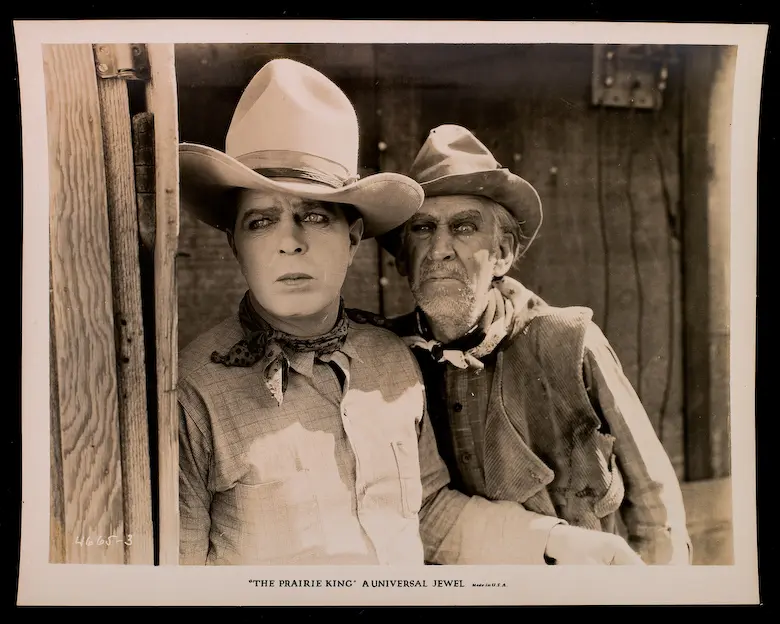
2) This film fails because the central antagonist, Dan Murdock, is a mustache-twirling cliché with zero motivation beyond the structural necessity of having a 'bad guy.'
3) You should watch it if you want to see how silent cinema handled high-speed action without the benefit of modern editing techniques or safety standards.
The Prairie King operates on a premise that is surprisingly modern: the idea that ownership isn't about who works the land, but who has the right paperwork. While many Westerns of this era, such as Fighting Bill, focused on direct physical confrontation, this film pivots on a legal technicality. The realization that Abner Ferrige never filed his claim turns the movie from a slow-burn siege into a motorized—or rather, horse-powered—sprint.
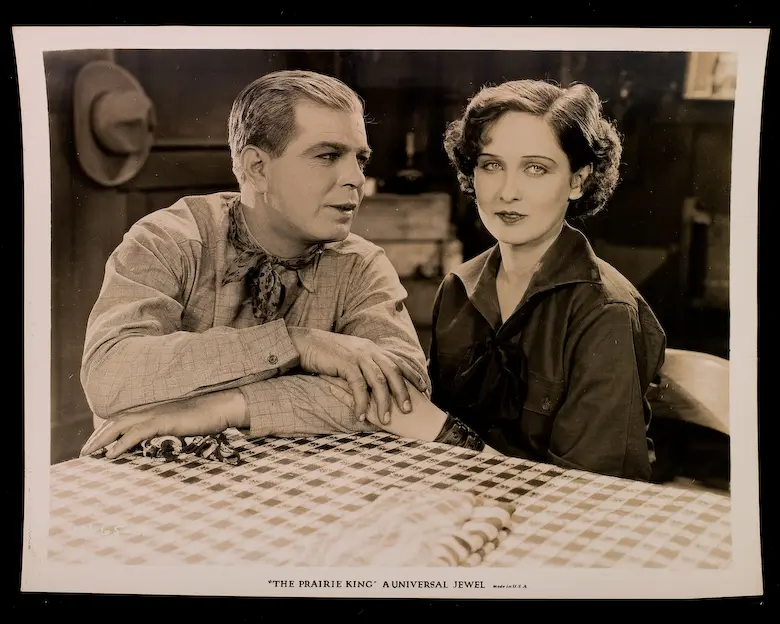
This shift in stakes is the film's strongest narrative choice. For the first thirty minutes, we watch Andy Barden (Hoot Gibson) and Edna Jordan (Barbara Worth) bicker and negotiate with the villainous Murdock. It feels static. It feels like a dozen other films you’ve seen. But the moment the lawyer arrives to announce the claim is 'open,' the energy shifts. The film stops trying to be a drama and starts being a chase.
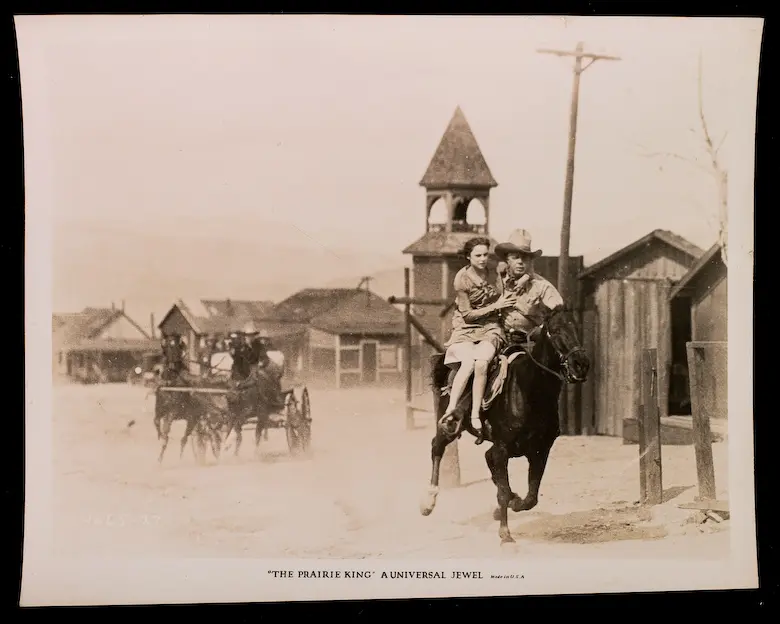
The race to the claims office is a masterclass in 1927 pacing. You see the dust kicking up behind the horses, the genuine peril of the riders, and the rhythmic cutting that defined the late silent era. It lacks the psychological weight of something like The Moment Before, but it replaces that weight with pure, unadulterated speed.
Hoot Gibson was always the 'other' Western star. He wasn't the stoic, stone-faced William S. Hart, and he wasn't the flamboyant showman Tom Mix. Gibson was a cowboy you could imagine having a drink with. In The Prairie King, his performance is remarkably restrained. He uses his eyes and his physical posture to convey a sense of weary competence.
In one specific scene, when Barden realizes he has been outmaneuvered by Murdock’s men, Gibson doesn't erupt in a fit of theatrical rage. Instead, he simply adjusts his hat and looks at the horizon. It’s a small, humanizing moment that makes the character feel real. This grounded approach is what separates this film from more melodramatic entries like The Splendid Sinner.
Barbara Worth as Edna Jordan is, unfortunately, given less to do. While she starts as a claimant with agency, she eventually falls into the role of the prize to be won. It’s a common flaw of the era, though her initial scenes of taking possession of the mine show a spark of the 'New Woman' archetype that was beginning to permeate 1920s cinema, much like the characters in Glass Houses.
There is a grit to the cinematography here that modern digital Westerns can never replicate. When you see a horse trip or a rider slide down a shale slope, you are seeing real physics acting on real bodies. The wide shots of the prairie are not just backgrounds; they are obstacles. The landscape is a character that actively tries to slow our protagonists down.
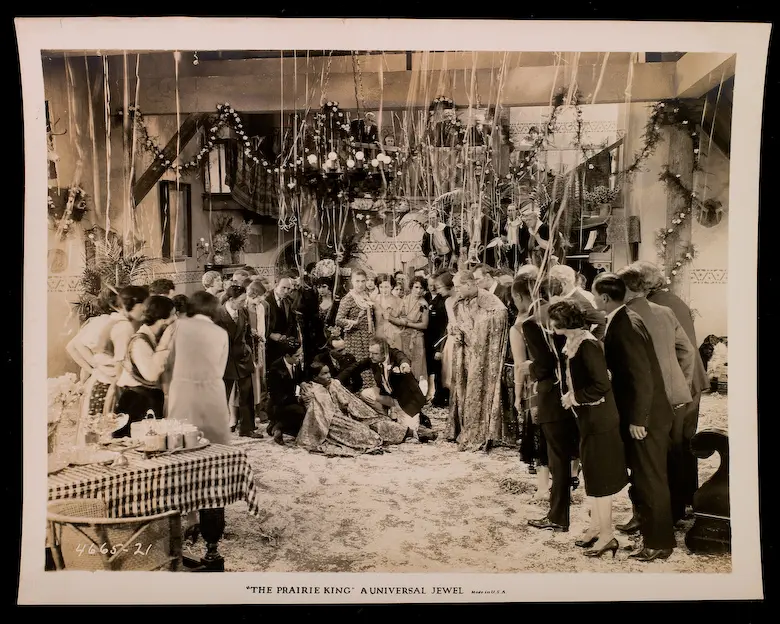
The lighting is primitive but effective. Most of the film is shot in the harsh, high-noon sun of the California desert, which creates deep, obsidian shadows under the brims of the actors' hats. This high-contrast look emphasizes the moral binary of the story. There is no grey area here—only the blinding light of the hero and the dark shadows of the claim-jumpers.
Compare this to the more polished, indoor aesthetics of My Official Wife, and you see the divide in 1920s production. The Prairie King is a 'dirt' movie. It smells of leather and sweat, and the camera work by the uncredited crew captures that tactile reality with surprising clarity.
If you are looking for a deep thematic exploration of the American soul, look elsewhere. However, if you want to understand the DNA of the action movie, The Prairie King is an essential watch. It demonstrates how to build tension through a simple objective: get from Point A to Point B before the bad guy does. It is the ancestor of Mad Max: Fury Road, stripped of the engines and the post-apocalyptic paint.
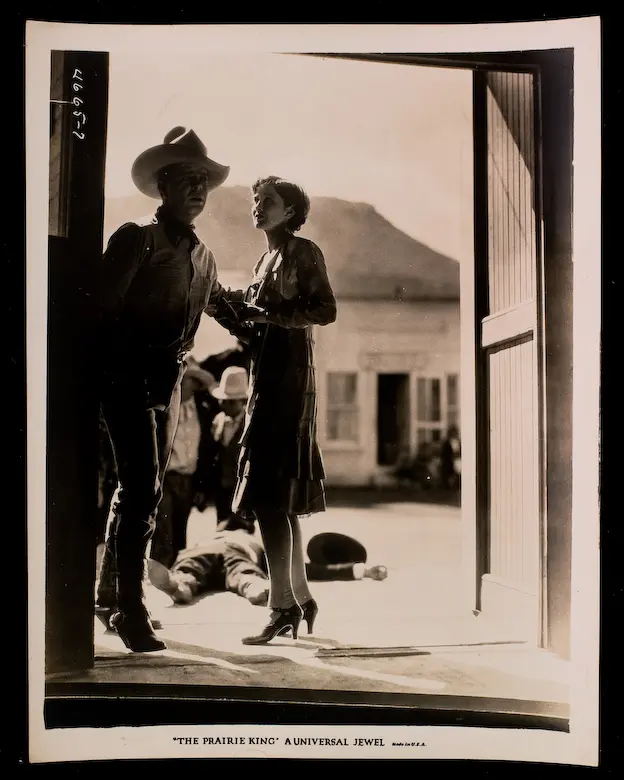
The film is also a fascinating look at the 'B-Western' before it became a serialized, low-budget joke in the 1930s and 40s. Here, there is still a sense of craftsmanship. The stunts are dangerous, the locations are expansive, and the stakes feel genuine, even if the plot is thin. It is a better-constructed film than Lone Hand Wilson, which suffers from far more repetitive staging.
The location shooting is spectacular, offering a raw look at the American West before suburban sprawl. Hoot Gibson’s performance is charming and lacks the over-the-top gesticulation common in silent drama. The film's internal logic regarding land claims adds a unique, albeit dry, layer of tension.
The villains are entirely one-dimensional. The musical scores available on modern prints often fail to match the frantic energy of the final race. Some of the physical comedy beats feel forced and tonally inconsistent with the life-or-death stakes of the mine ownership.
The Prairie King is a sturdy, if uninspired, piece of silent entertainment. It doesn't reinvent the wheel, but it spins it with enough vigor to keep you watching until the end. It’s a film that understands its limitations and plays to its strengths: horses, hats, and high-speed chases. It works. But it’s flawed. If you’ve already exhausted the classics of the era like Homer Comes Home, this is a worthy next step into the dusty archives of the 1920s.
IMDb 4.8
1932
Community
Log in to comment.