DbcultAccessing Vault...
Cult Review
Senior Film Conservator
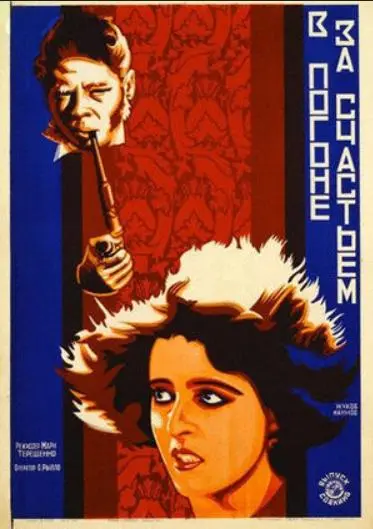
Short answer: yes, but with significant caveats that demand a particular kind of viewer. This is not a film for passive consumption; it asks for engagement, patience, and a willingness to confront a bleak, unvarnished portrayal of human struggle.
It's a challenging watch, certainly, but one that rewards those interested in historical realism, character-driven narratives of endurance, and the often-overlooked corners of cinematic history. This film is for audiences who appreciate slow-burn dramas, historical context, and stark character studies. It is decidedly NOT for viewers seeking rapid pacing, lighthearted entertainment, or clear-cut resolutions.
Direct Answers:
This film works because: It presents an unflinching, raw depiction of a serf's desperate fight for agency, grounded by Leonid Barbe's compelling central performance and a pervasive sense of historical authenticity.
This film fails because: Its deliberate, almost languid pacing and bleak tone can alienate modern audiences accustomed to more immediate dramatic gratification and a less ambiguous narrative arc.
You should watch it if: You are fascinated by the human spirit's resilience against systemic oppression and appreciate cinema that prioritizes thematic depth and atmospheric immersion over conventional plot mechanics.
"Searching for Fate" is less a film about finding a destination and more about the relentless, often futile, journey itself. Konstantin Polonnik and Mikhail Kotsiubinsky's screenplay, adapted from rich literary roots, plunges us into the brutal existence of Ostap Mandryka, a serf whose spirit rebels against the chains of his station. His 'arrogant anger' isn't simply petulance; it's the smoldering ember of dignity in a world designed to extinguish it. This early establishment of Ostap's character is crucial, setting the stage for a narrative less about escape and more about the internal and external battles of a man refusing to be broken.
The film's strength lies in its refusal to romanticize Ostap's plight. His flight across the Bulgarian border is not an act of heroism but one of pure, desperate survival. The injury he sustains isn't a dramatic flourish; it's a visceral reminder of the constant, physical toll of his rebellion. Director Leonid Barbe, who also carries the weight of the lead role, understands that the power of this story isn't in grand gestures, but in the quiet, agonizing moments of endurance. The film forces us to walk alongside Ostap, feeling the dust, the hunger, the gnawing fear of a man with everything to lose and little to gain.
What struck me most was the film's audacious choice to depict Ostap's return to Russia not as a failure, but as an inevitable, almost tragic, completion of a cycle. It's a defiant act in reverse, a recognition that the ties of land and identity, however oppressive, can be stronger than the allure of an uncertain freedom. This isn't the triumphant return of a prodigal son, but the weary homecoming of a man who has seen the world beyond his cage, only to find that the cage, for all its brutality, is still home. It’s a profoundly unsettling conclusion, and one that resonates long after the credits roll.
Leonid Barbe's dual role as director and lead actor is nothing short of a Herculean effort, and it pays off handsomely. As Ostap Mandryka, Barbe delivers a performance of quiet intensity, conveying volumes with his weathered gaze and stoic posture. There's a raw authenticity to his portrayal that transcends mere acting; he embodies the weariness, the simmering defiance, and the profound isolation of a man living on the fringes. He doesn't need grand monologues to convey his character's inner turmoil; a simple, lingering shot of his face after a particularly brutal encounter tells us everything we need to know.
The supporting cast, including Vladimir Lisovskiy and Leonid Chembarskiy, contribute to the film's pervasive sense of realism. They are not merely background figures but fellow travelers in a landscape of hardship. While individual performances might not always leap out with flashy theatrics, the ensemble works together to build a believable world. Dmitriy Kapka, in particular, manages to imbue his character with a surprising depth, a quiet counterpoint to Ostap's more overt struggle, showcasing the varied ways individuals cope with their circumstances. There's a particular scene, albeit brief, where Kapka's character shares a meager meal with Ostap, and the unspoken camaraderie in that moment is more powerful than any dialogue could be.
Barbe's direction is austere, mirroring the harsh realities of the narrative. The cinematography, while not overtly 'beautiful' in a conventional sense, is incredibly effective in establishing the film's tone. Wide shots of desolate landscapes underscore Ostap's isolation, while tight close-ups on his face emphasize his internal struggle. The use of natural light, or the lack thereof, creates a palpable sense of the time period and the constant battle against the elements. One could argue that the visual style occasionally borders on the monotonous, but this very monotony serves to reinforce the grinding, repetitive nature of Ostap's existence.
The pacing of "Searching for Fate" is deliberately slow, a choice that will undoubtedly test the patience of some viewers. This isn't a flaw, but a stylistic decision that allows the audience to fully inhabit Ostap's arduous journey. Every step, every moment of rest, feels earned. It allows for a deeper appreciation of the small victories and the crushing defeats. For instance, the extended sequence depicting Ostap's recovery from his injury, devoid of dramatic musical cues, forces the viewer to confront the sheer tedium and pain of healing in an unforgiving world, rather than rushing to the next plot point.
The film grapples with profound themes: the nature of freedom, the definition of home, and the unyielding human desire for self-determination. Ostap's journey isn't just a physical one; it's a philosophical exploration of what it means to be truly free when your very existence is circumscribed by historical and social forces. Is freedom merely the absence of chains, or is it something deeper, something internal? The film suggests it's both, and neither, simultaneously.
His return to Russia, rather than being a defeat, can be seen as a complex statement on identity. Perhaps freedom without belonging is its own kind of prison. This is a bold, unconventional take, especially for a story seemingly about escape. It’s a narrative choice that forces the audience to question their own preconceived notions of triumph and failure, moving beyond simplistic binaries. This challenging perspective is one of the film's most enduring and debatable qualities; some will find it profoundly insightful, while others may see it as an unsatisfying surrender.
The tone is relentlessly grim. There are few moments of levity, few rays of hope. This is a film that asks you to sit with discomfort, to truly understand the weight of Ostap's world. While this commitment to realism is admirable, it can also be a barrier to entry. The slow pacing, while thematically justified, means that the film demands patience and a willingness to simply observe without constant narrative propulsion. It feels less like a traditional narrative and more like a historical document brought to life, an immersive experience rather than a story with clear acts.
Comparing it to a contemporary piece like The Fable of the Romantic Mouse would be utterly absurd, highlighting the vast spectrum of early cinema. "Searching for Fate" exists in a different universe, one where the romanticism is stripped away, leaving only the stark bones of existence. Even compared to other dramas of its era, like A Question of Right, its bleakness stands out. This isn't a film that offers easy answers or comfort; it offers a mirror to a harsh reality.
"Searching for Fate" is not an easy film to recommend universally, but it is an undeniably important one. It's a stark, compelling piece of cinema that offers a window into a specific historical moment through the eyes of a deeply complex character. It works. But it’s flawed. Its brilliance lies in its uncompromising vision and its refusal to pander to audience expectations. For those willing to invest the time and emotional energy, it offers a profoundly resonant experience, a testament to the enduring human spirit in the face of relentless adversity.
This film stands as a powerful, if challenging, example of early 20th-century storytelling that continues to provoke thought. It's a reminder that true cinematic value isn't always found in blockbusters or feel-good narratives, but often in the quiet, persistent voice of a story that refuses to be forgotten. If you're ready for a journey that prioritizes authenticity and thematic depth over conventional entertainment, then "Searching for Fate" is a compelling, if arduous, path worth treading.
IMDb 5.7
1924
Community
Log in to comment.