DbcultAccessing Vault...
Cult Review
Senior Film Conservator
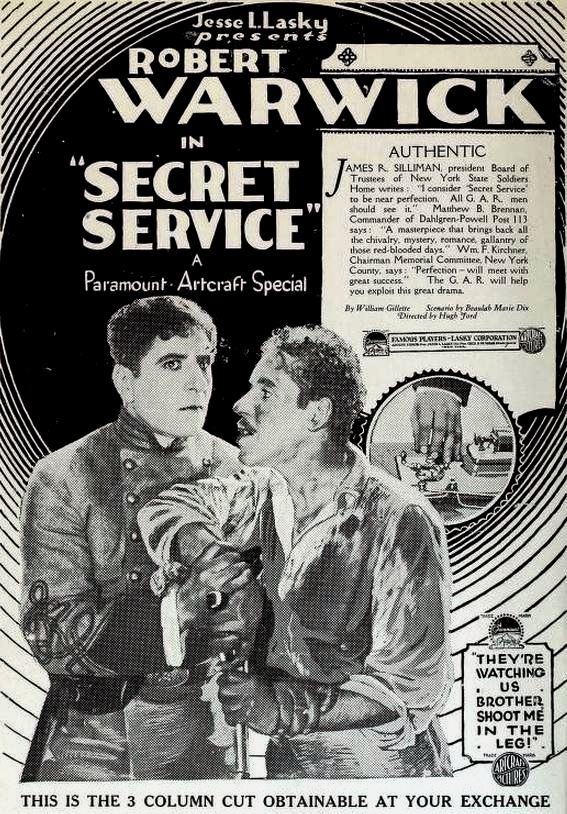
Stepping back into the cinematic annals of 1919, one encounters a fascinating artifact of early American filmmaking: Hugh Ford's Secret Service. This isn't merely a historical curiosity; it's a vibrant, emotionally charged drama that, even through the lens of a century, manages to resonate with timeless themes of duty, love, and the brutal moral compromises demanded by conflict. Based on William Gillette's wildly popular 1895 play, the film plunges us headfirst into the tumultuous heart of the American Civil War, a period ripe with personal anguish and national division, providing a fertile ground for stories of espionage and forbidden romance. It's a testament to the enduring power of its narrative that, despite the technical limitations of its era, it crafts a compelling exploration of human frailty under extreme duress.
The narrative pivot of Secret Service centers on Lewis Dumont, portrayed with a compelling mix of stoicism and burgeoning inner turmoil by Robert Cain. Dumont is a Northern officer, tasked with an unenviable and profoundly dangerous mission: to infiltrate the Confederate lines and, through cunning and deception, lure Southern forces away from a strategic point targeted for a crucial Union offensive. This is espionage in its purest, most ruthless form, demanding a complete suppression of one's true identity and an unwavering commitment to the cause. Cain's portrayal, relying on the nuanced physicality and expressive facial work characteristic of silent cinema, conveys the immense pressure weighing upon a man living a lie, every gesture and glance a carefully calibrated performance.
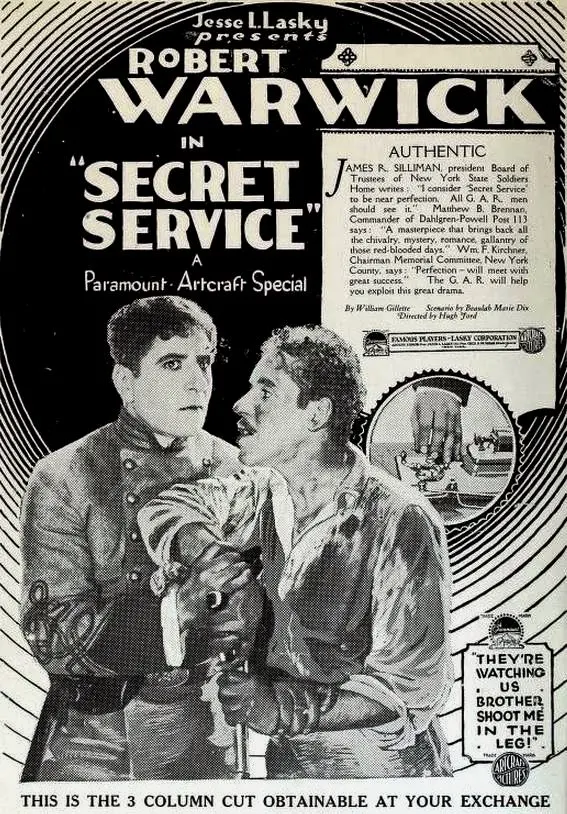
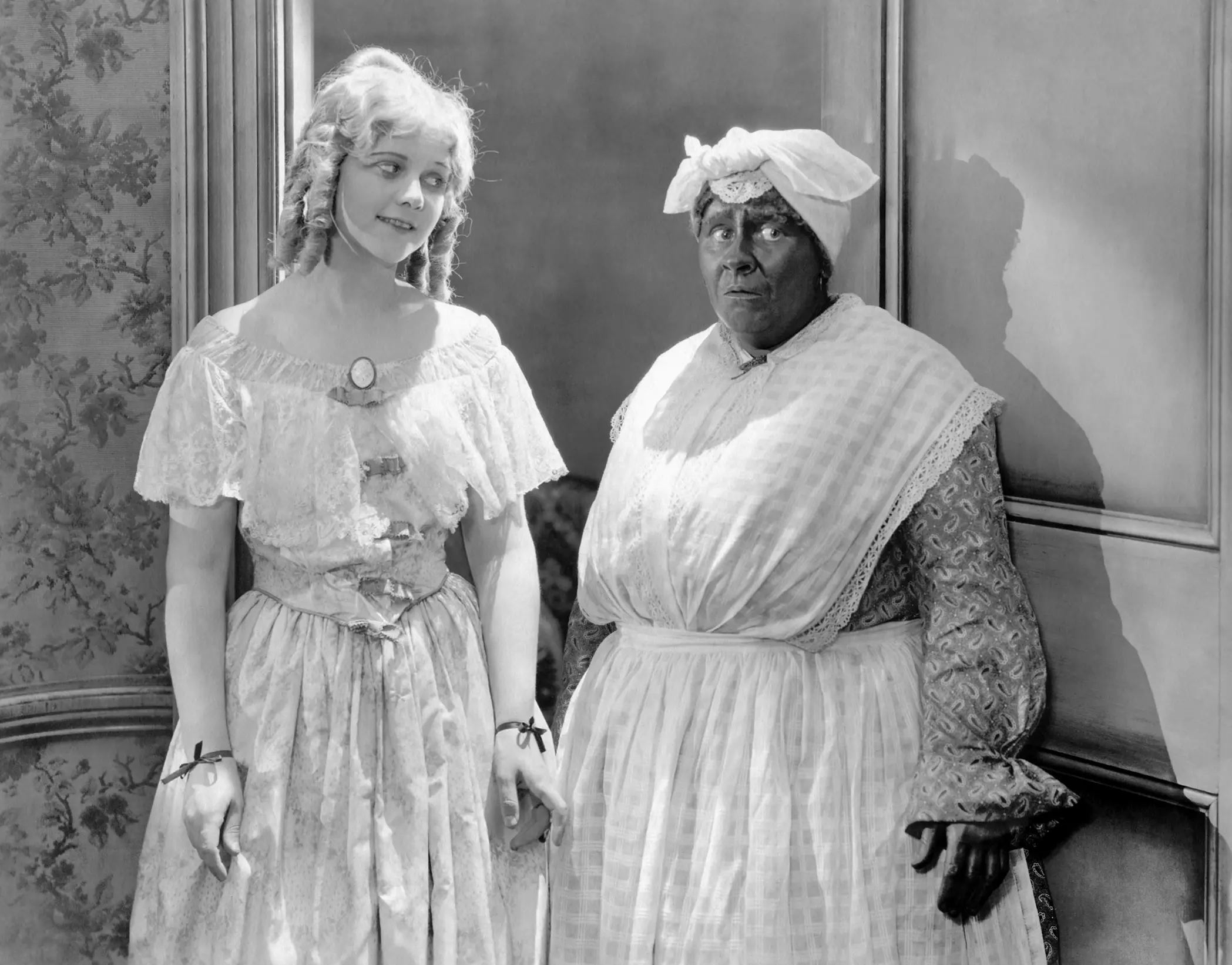
However, the meticulously constructed edifice of Dumont's deception begins to fracture under the most potent of human forces: love. He encounters and subsequently falls for a Southern girl, exquisitely rendered by Shirley Mason, whose innocence and genuine charm become an unexpected anchor in his world of calculated deceit. Mason's performance, though from an era of broader gestures, manages to imbue her character with a delicate vulnerability and a spirited resilience that makes her an irresistible counterpoint to Dumont's hardened exterior. This burgeoning romance isn't merely a subplot; it becomes the very crucible in which Dumont's character is forged and tested. The film brilliantly escalates the emotional stakes when this very woman, the object of his affection, inadvertently becomes a crucial, unwitting pawn in his strategic machinations. The moral tightrope Dumont must walk, balancing his devotion to his country with the burgeoning tenderness of his heart, forms the dramatic core of the film, elevating it beyond a mere spy thriller to a profound psychological study.
The screenplay, crafted by Beulah Marie Dix from William Gillette's original stage triumph, demonstrates a keen understanding of dramatic tension and character development. Dix, a prolific writer of the era, navigates the complexities of Gillette's intricate plot with admirable clarity, translating the theatricality of the stage into the nascent visual language of film. The pacing is deliberate, allowing moments of quiet introspection to punctuate the more overt suspense, a hallmark of effective silent film storytelling. While modern audiences might find the narrative conventions of the early 20th century somewhat different from contemporary thrillers, the fundamental human dilemma remains universally resonant. The agonizing choice between personal happiness and patriotic sacrifice is a theme that transcends temporal boundaries, making the film's central conflict as potent today as it was a century ago.
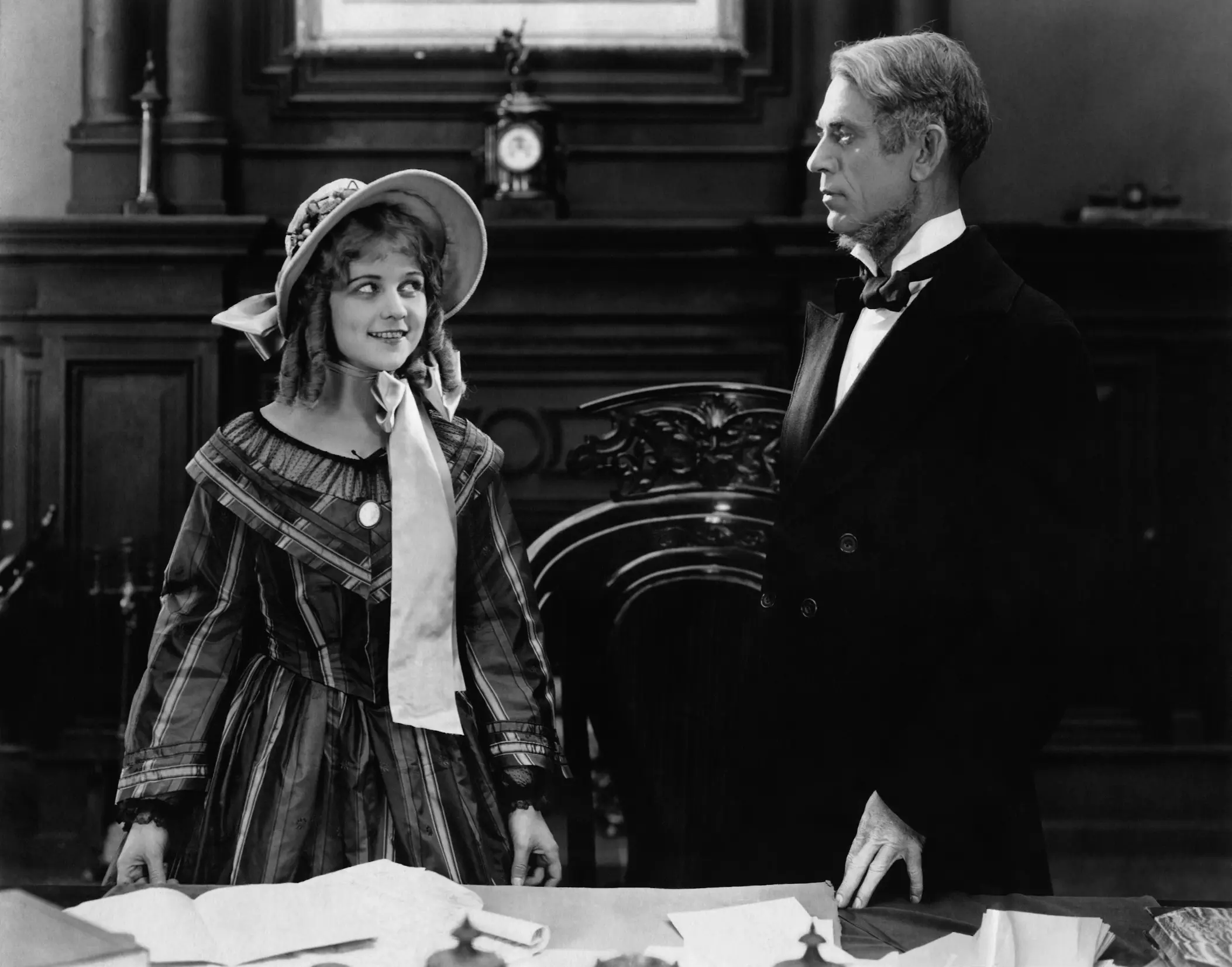
Director Hugh Ford, a stalwart of the Paramount-Artcraft studios during this period, orchestrates the unfolding drama with a steady hand. His direction, while perhaps lacking the overt stylistic flourishes of a D.W. Griffith, is nonetheless effective in its clarity and emotional directness. Ford understands the power of the close-up to convey internal states, and he judiciously employs it to highlight Cain's conflicted expressions and Mason's innocent vulnerability. The staging of scenes, particularly those involving military strategy or moments of heightened suspense, is meticulously executed, ensuring that the audience is always aware of the precariousness of Dumont's position. While the film doesn't boast groundbreaking cinematography for its time, it uses the available technology to tell its story with admirable economy and emotional impact, showcasing a craftsmanship that might be overlooked by those unfamiliar with the subtleties of silent film aesthetics.
The supporting cast, a veritable who's who of character actors from the silent era, lends considerable weight to the proceedings. Robert Warwick, as the stern but honorable Confederate officer, provides a compelling foil to Dumont, embodying the very principles Dumont is striving to undermine. Edythe Chapman, Irving Cummings, Raymond Hatton, and Theodore Roberts, among others, each contribute to the rich tapestry of the film's world, creating a believable and immersive environment for the central drama to unfold. Their collective performances, often relying on exaggerated but effective pantomime, paint a vivid picture of a society grappling with the profound disruptions of war, where loyalty is paramount and suspicion lurks in every shadow. The ensemble work here is crucial; it grounds the more melodramatic elements of the plot in a sense of lived reality, even for a period piece.
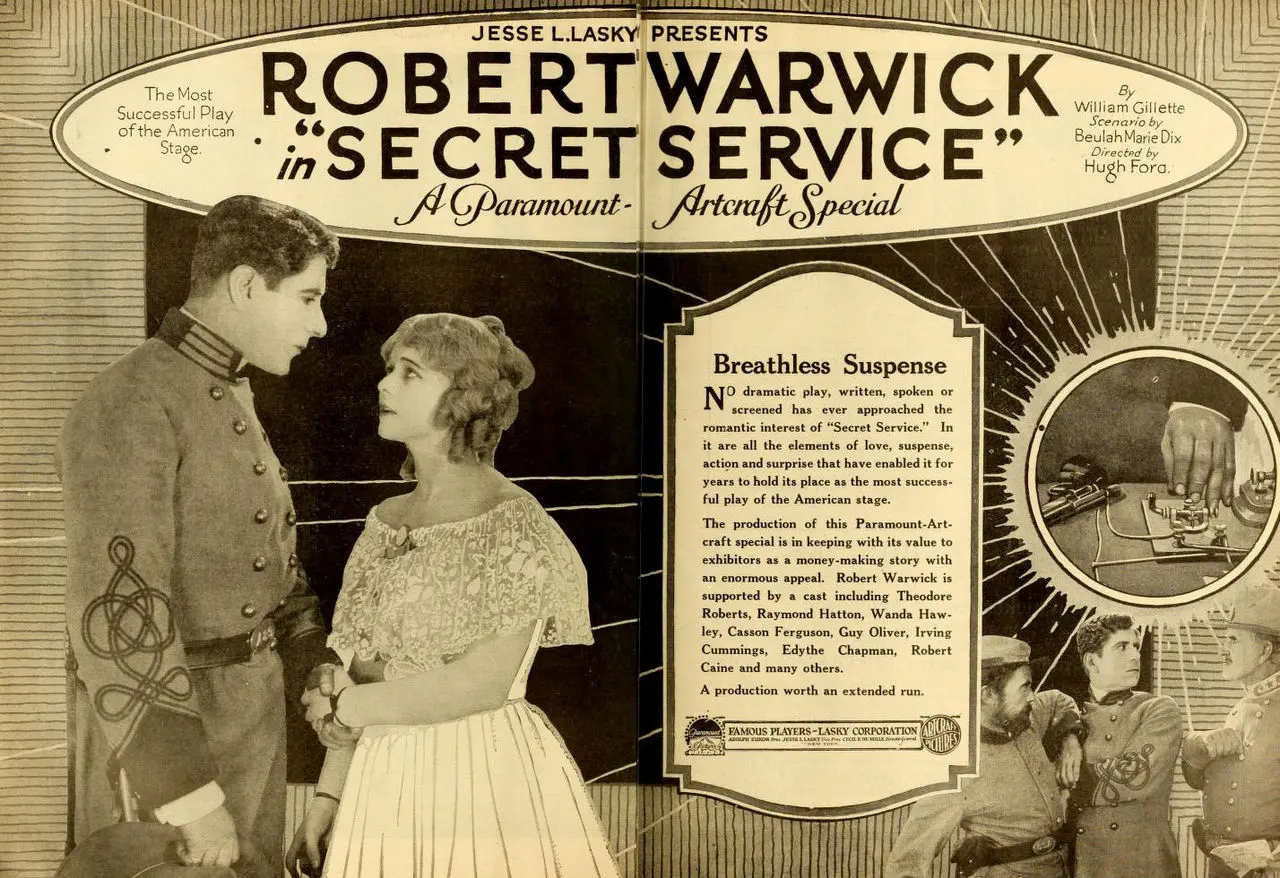
In the broader tapestry of early cinema focusing on espionage, Secret Service occupies a significant niche. It predates many of the more overt spy thrillers of later decades, yet it lays crucial groundwork for the genre, focusing less on gadgetry and more on the psychological toll of deception. One might draw thematic parallels to films like A Spy for a Day, another early example of the genre, though Secret Service delves far deeper into the moral quagmire faced by its protagonist. The internal struggle of Dumont, forced to betray trust and manipulate affection for a greater cause, echoes the profound ethical dilemmas explored in films such as The Torture of Silence, where characters grapple with agonizing secrets and their devastating personal repercussions. This film's strength lies not just in its plot mechanics, but in its unwavering gaze into the human soul under pressure.
The portrayal of the Civil War itself, while primarily a backdrop for personal drama, is handled with a certain gravitas. It avoids simplistic heroics, instead focusing on the human cost and the divisive nature of the conflict. The film subtly hints at the shared humanity that existed even across enemy lines, making Dumont's predicament all the more poignant. This nuanced approach to a highly sensitive historical period distinguishes Secret Service from some of its more jingoistic contemporaries. Indeed, the very essence of the plot — a Northern man falling for a Southern woman — is a powerful metaphor for the yearning for reconciliation amidst the chaos of war, a theme that would resonate deeply with audiences still recovering from the wounds of that conflict decades later.
As a piece of cinematic history, Secret Service offers invaluable insights into the storytelling techniques and audience expectations of the late silent era. It demonstrates how filmmakers, even without spoken dialogue or elaborate special effects, could weave intricate narratives rich in emotional depth and psychological complexity. The film's reliance on visual cues, intertitles, and the powerful expressions of its actors underscores the unique artistry of silent cinema, an art form that often demanded a more active and imaginative engagement from its viewers. The sustained tension, particularly in scenes where Dumont's cover is almost blown, is a testament to the effective directorial choices and the compelling performances.
The enduring legacy of Secret Service lies in its ability to tap into universal anxieties about identity, loyalty, and the price of love in a world consumed by conflict. It's a reminder that even in the earliest days of cinema, storytellers were grappling with profound moral questions, using the burgeoning medium to explore the intricate dance between personal desire and societal demand. The film doesn't offer easy answers; instead, it invites the audience to ponder the agonizing choices faced by its protagonist, leaving a lingering impression of the profound sacrifices inherent in war and espionage. It stands as a compelling example of how early cinema, often dismissed as simplistic, could achieve remarkable emotional sophistication and narrative depth. For enthusiasts of historical dramas, silent films, or simply well-told stories about human resilience and moral quandaries, Secret Service remains a vital and surprisingly potent viewing experience, a true gem unearthed from the archives of a bygone cinematic era. Its exploration of moral ambiguity and the devastating consequences of war on individual lives ensures its continued relevance, providing a rich counterpoint to more overtly action-oriented spy narratives. The film’s nuanced portrayal of its characters, particularly Dumont’s internal battle, elevates it beyond simple melodrama, positioning it as an early, insightful commentary on the human condition caught in the gears of historical upheaval. It challenges us to consider the true cost of 'service' when it demands the betrayal of one's own heart, a question as pertinent now as it was during the Civil War itself. The delicate balance achieved between thrilling espionage and poignant romance ensures its place as a significant, if often overlooked, work of early American cinema.
Indeed, one could argue that its understated approach to spectacle, focusing instead on character psychology and the intricate dance of deception, gives it a timeless quality. Unlike some contemporaries that might have leaned into grand battle scenes, Secret Service understands that the most profound conflicts often unfold within the confines of the human heart and mind. The tension is palpable not from explosions, but from the threat of exposure, the fear of a misspoken word, or a glance that betrays too much. This makes it a fascinating precursor to later, more sophisticated spy thrillers that would continue to mine the depths of such moral complexities. The film’s ability to evoke such strong emotions and intellectual engagement with its limited toolkit is a testament to the power of pure storytelling and the talent of its creators. It's a compelling argument for revisiting the silent era, not just for historical appreciation, but for genuine dramatic impact. The final scenes, without revealing too much, drive home the inescapable consequences of Dumont's choices, leaving the audience with a profound sense of the human sacrifices made in the name of duty, and the indelible marks left by a love caught tragically in the crossfire of war. This subtle yet powerful conclusion cements Secret Service not just as a historical document, but as a deeply affecting piece of cinematic art.
IMDb —
1917
Community
Log in to comment.