DbcultAccessing Vault...
6/10
Senior Film Conservator
A definitive 6/10 rating for a film that redefined the boundaries of cult cinema. The Pied Piper remains a cornerstone of transgressive art.
The Ontological Friction of the Inkwell
Walter Lantz’s The Pied Piper is not merely a relic of early animation; it is a profound, albeit chaotic, meditation on the sovereignty of the artist over his medium. In an era where the boundaries of the frame were still being negotiated, Lantz dared to step into the celluloid himself, blurring the line between the demiurge and the puppet. The premise—an artist plagued by mice—is deceptively simple, yet it functions as a masterclass in tension. The mice are not just pests; they are disruptions to the flow of genius, representational of the external world’s constant encroachment upon the sanctity of the studio. Unlike the more structured narratives found in The Man Who Played God, where power is wielded with a heavy hand of morality, Lantz’s power is transactional. He threatens his characters with eviction—a very real and terrifying prospect for a 1930s audience—turning the act of creation into a labor of survival.
The visual language here is frantic, characterized by a kinetic energy that rivals the most explosive sequences in Toonerville's Fire Brigade. Each frame is saturated with a sense of impending doom, as the ink-born protagonists realize their very existence is contingent upon their utility. This is the dark side of the animator's desk: the realization that the hand that gives life can just as easily withhold the shelter of the page. The lexical diversity of the animation itself—the way the characters morph and stretch—reflects a mercurial reality where the laws of physics are secondary to the whims of the illustrator.
The Rodent as a Symbol of Creative Stasis
The mice in this short are a fascinating collective. They lack individual identity, acting instead as a singular, undulating force of entropy. They consume the artist's resources, chew through his focus, and mock his authority. In many ways, they represent the same pervasive social anxieties found in Paradise Lost, where the fall from grace is precipitated by a loss of control over one's environment. While the artist attempts to maintain a veneer of professional decorum, the mice strip it away, forcing him into a desperate alliance with his own drawings.
There is a tactile quality to the frustration portrayed. Lantz doesn't just show us a man annoyed by mice; he shows us a man whose entire ontological framework is being dismantled by the tiny, clicking feet of the unwanted. The comparison to the starkness of Sands of the Desert is apt here—just as the desert is an unforgiving, indifferent expanse, the studio becomes a wasteland of unfinished ideas and nibbled edges. The artist's desperation leads him to an act of extreme leverage, a move that highlights the precarious nature of the animated form. He isn't just a boss; he is a landlord of the soul, and the rent is paid in rodent corpses.
Sonic Exorcism: The Rhythmic Resolution
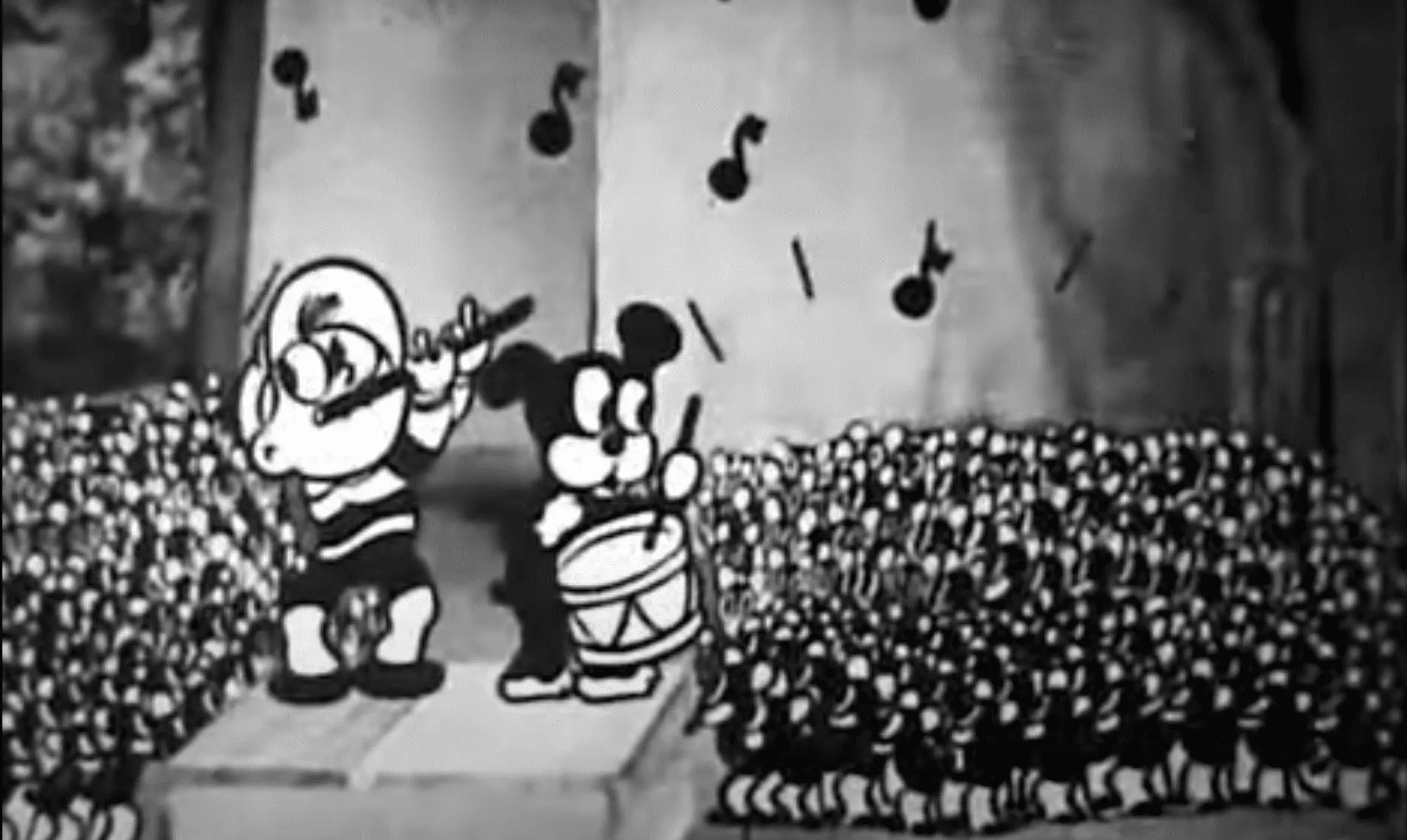
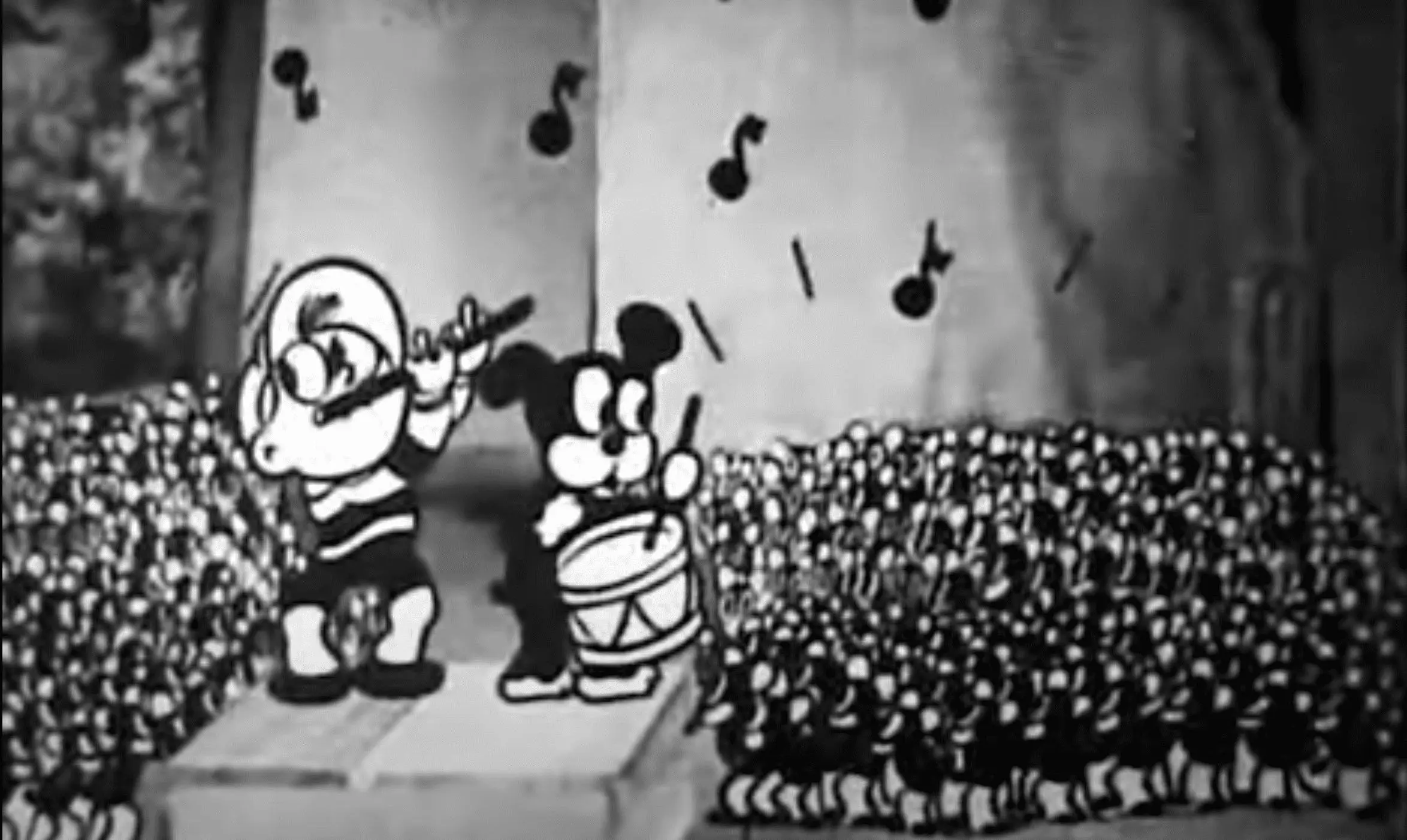
The pivot to the Pied Piper motif is where the film transcends its slapstick roots and enters the realm of the mythic. When all physical attempts to eradicate the mice fail—the traps, the chases, the brute force—the characters turn to the ethereal power of music. This shift from the physical to the auditory is a stroke of brilliance. Music becomes the ultimate solvent, a force that the chaotic mice cannot resist. It’s a sequence that feels as meticulously choreographed as a silent ballet, evoking the same sense of fated movement found in Lulù (1923), where characters are swept away by forces beyond their comprehension.
The use of sound in The Pied Piper is not merely atmospheric; it is narrative. The rhythm dictates the movement of the mouse horde, turning their destructive energy into a synchronized parade. This transformation of chaos into order through art is perhaps the film's most potent message. The artist, through his characters, uses the very tools of his trade—timing, melody, and structure—to reclaim his space. It is a triumphant moment for the creative spirit, though it leaves one wondering about the morality of the "eviction" threat that started it all. Is art only possible under the threat of extinction? This question lingers, much like the haunting atmosphere of The Devil's Garden.
Technical Audacity and the Lantz Legacy
Technically, the short is a marvel of its time. The integration of live-action elements (the artist's hand and person) with the animated world required a precision that is often overlooked in the digital age. This hybridity creates a liminal space where the viewer is constantly reminded of the artifice of the medium. It’s a technique that demands a high degree of lexical diversity in visual storytelling, as the animator must speak two languages simultaneously: the language of the real and the language of the ink. We see echoes of this struggle for identity in Lucille Love: The Girl of Mystery, where the protagonist is constantly navigating shifting realities and hidden agendas.
The character designs are quintessential Lantz—rubbery, expressive, and possessing a certain frantic charm. They don't just walk; they bounce with a purpose. Their fear of eviction is palpable, adding a layer of social commentary that was quite common in the depression-era cinema. Unlike the more stoic characters in Egyenlöség, these characters are defined by their vulnerability. They are at the mercy of the pen, and their frantic efforts to save themselves are both comedic and deeply moving. The film manages to balance this high-stakes emotional core with the levity of a musical number, a feat that few modern shorts can replicate with such panache.
The Intersection of Folklore and Modernity
By invoking the Pied Piper legend, Lantz taps into a primal narrative of debt and consequence. However, in this version, the piper isn't a mysterious stranger; it is a collaborative effort between the creator and the created. This democratization of the myth is a fascinating departure. It suggests that the solution to the artist's problem lies within the art itself. The mice are led away not to their death, but to a different plane of existence, much like the thematic departures in La montagne infidèle, where the environment itself dictates the terms of survival.
There is also a subtle nod to the performative nature of survival. The characters must "perform" the piper role to earn their keep. This mirrors the real-world pressures of the animation industry, where characters were only as valuable as their last successful short. The threat of being "shelved" or "erased" was a constant shadow over the Golden Age of animation. Lantz makes this subtext the text, creating a work that is as much about the industry as it is about a guy with a mouse problem. The rhythmic pacing of the final act is a masterclass in tension and release, providing a catharsis that is rarely found in such a short runtime.
A Final Aesthetic Appraisal
In the grand tapestry of 1930s cinema, The Pied Piper stands out for its self-awareness. It doesn't try to hide its seams; it celebrates them. The artist's desk is the stage, and the inkwell is the source of all life and conflict. This level of meta-commentary is something we see in more dramatic forms in films like The Sin of Martha Queed or The Bashful Lover, where the characters' internal worlds are projected onto their external circumstances. Lantz, however, uses the medium of animation to make this projection literal.
The film concludes not with a whimper, but with a symphony. The mice are gone, the characters are safe (for now), and the artist can return to his work. But the equilibrium has shifted. We have seen the fragility of the creative process and the harshness of the creator's hand. It’s a work that remains strikingly relevant today, in an age where the relationship between creators and their digital avatars is more complex than ever. Whether you view it as a simple cartoon or a complex allegory for artistic labor, The Pied Piper is an essential piece of animation history that deserves to be analyzed with the same rigor as a feature-length masterpiece like Lena Rivers or the athletic precision of Play Ball with Babe Ruth.
Ultimately, Lantz’s work here is a reminder that all art is a form of pest control—an attempt to clear the mind of the scurrying noises of the mundane so that something beautiful, or at least something rhythmic, can take its place. It is a visceral, funny, and deeply cynical look at the life of the mind, wrapped in the colorful, rubbery skin of a classic cartoon.

IMDb 7.4
1933
Community
Log in to comment.