DbcultAccessing Vault...
Cult Review
Senior Film Conservator
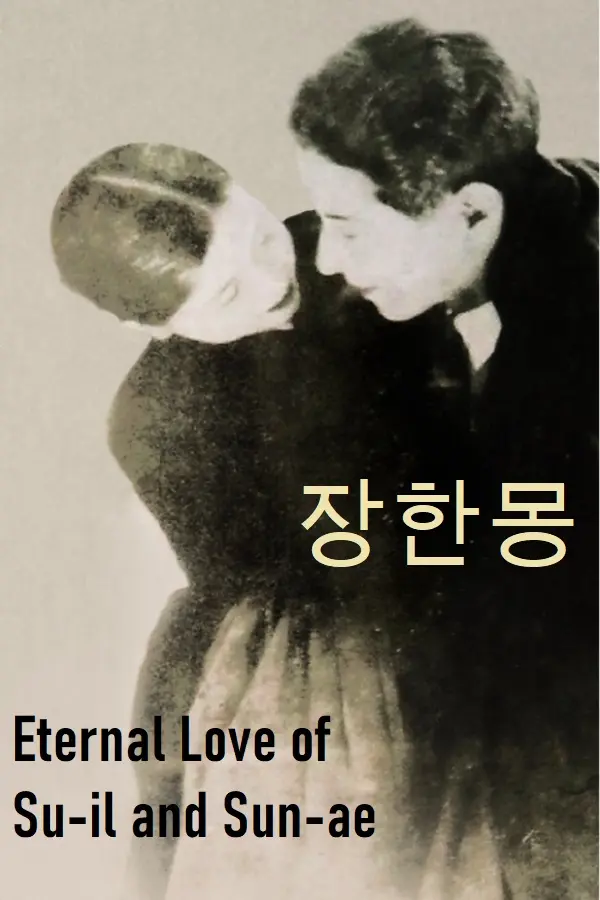
Should you seek out this nearly century-old relic of Korean cinema today? Short answer: yes, but only if you view it as a historical artifact rather than a modern entertainment piece.
This film is specifically for film historians, students of East Asian culture, and those who appreciate the raw, unpolished origins of melodrama. It is definitely NOT for viewers who require high-definition pacing or subtle, nuanced character arcs.
1) This film works because it taps into a primal, universal anxiety: the fear that your worth as a human being is entirely dependent on your bank account.
2) This film fails because its emotional beats are played with the subtlety of a sledgehammer, often sacrificing internal logic for the sake of a grand, weeping gesture.
3) You should watch it if you want to witness the birth of the 'Han' sentiment in Korean storytelling—that unique blend of collective grief and resentment that still permeates modern K-dramas.
Eternal Love of Su-il and Sun-ae is not just a romance; it is a transaction. Based on the widely popular Japanese novel Konjiki Yasha (The Gold Demon), the story was a cultural phenomenon across Asia because it spoke to the trauma of modernization. In the film, Sun-ae is not a villain, though Su-il treats her as one. She is a commodity traded between a poor student and a wealthy landowner.
The direction by Gi-tak Jeong captures the suffocating nature of this social trap. In the famous scene on the beach—a moment that would be recreated in countless adaptations—Su-il kicks Sun-ae as she begs for forgiveness. It is a brutal, jarring moment that feels far more violent than the stagey fights found in contemporary films like The Battling Orioles. This isn't just a lover’s spat; it’s the physical manifestation of a man’s pride being crushed by the weight of gold.
Money wins. It always does. This is the cynical undercurrent that makes the film feel surprisingly modern. While Western films of the era, such as The Girl from Nowhere, often focused on individual redemption, this film suggests that society itself is the antagonist. Su-il’s descent into usury is portrayed not as a choice, but as a survival mechanism in a world that has already discarded him.
Jeong-suk Kim as Sun-ae delivers a performance that is heavily reliant on the theatrical traditions of the time. Her grief is loud, even in a silent film. Every gesture is wide, every sob involves the whole body. To a modern eye, it might seem overacted, but within the context of 1920s cinema, it was essential. Without dialogue, the body had to scream.
Gi-tak Jeong, who also stars as Su-il, provides a fascinating contrast. His transformation from a hopeful student to a cold-hearted debt collector is visible in his posture. By the time he inherits the usurer’s wealth, he carries himself with a rigid, almost mechanical coldness. He looks less like a hero and more like the villains found in The Last Card.
The cinematography is functional rather than expressive. There are no avant-garde flourishes here. Instead, the camera acts as a witness to the slow-motion car crash of these lives. It stays too long on the crying, but that was the era's requirement. The audience didn't just want to see grief; they wanted to bathe in it. It was a communal exorcism of the frustrations of colonial life.
Question: Does Eternal Love of Su-il and Sun-ae offer anything to a 21st-century audience beyond historical curiosity?
Answer: Yes, it offers a window into how the themes of class warfare and the 'evil of money' have been baked into the DNA of Korean cinema from the very beginning. If you can stomach the slow pacing and the dated acting style, the core conflict remains incredibly relevant in an age of rising inequality.
The film lacks the visual poetry of something like The Dragon Painter, but it makes up for it with raw emotional honesty. It doesn't pretend that love can conquer all. In fact, it argues the opposite: that love is the first thing to be sacrificed when the rent is due. That is a brave, if depressing, stance for a film made in 1926.
It is impossible to discuss this film without acknowledging the role of the Byeonsa—the live narrator who would have performed alongside the screening. Modern viewers are seeing only half the art form. The Byeonsa would have provided the voices, the social commentary, and the emotional cues that the silent frames couldn't carry alone. Without this, the film can feel hollow, like a script without its lead actor.
The pacing is arguably the film's biggest hurdle. It lingers on moments of domestic despair that would be cut to thirty seconds in a contemporary edit. However, this slowness serves a purpose. It forces the viewer to sit with the characters' misery. You are meant to feel the exhaustion of their poverty. It is a grueling experience, much like the characters' lives.
Comparing this to other films of the time, like The Foolish Virgin, you see a much more cynical take on morality. There is no easy path back to grace here. Su-il’s wealth doesn't bring him peace; it only gives him the power to inflict the same pain on others that was inflicted on him. It’s a cycle of abuse that feels strikingly honest.
Eternal Love of Su-il and Sun-ae is a difficult, often frustrating watch that nonetheless demands respect. It is a film that refuses to offer easy comfort. While it shares some DNA with the moralizing dramas of the West, like Paddy the Next Best Thing, it is far more interested in the wreckage left behind by societal shifts. It is a tragedy of the wallet as much as the heart.
The usurer is actually the most honest character in the film. He doesn't pretend the world is built on anything other than interest rates. Everyone else is just lying to themselves. This cynical observation is what keeps the film from being a mere period piece. It works. But it’s flawed. It is a bitter pill of a movie, but one that is essential for understanding the roots of Korean visual storytelling. Don't expect to leave the theater—or your laptop—feeling happy. Expect to feel the cold, hard weight of the Gold Demon.
IMDb 6.4
1937
Community
Log in to comment.