DbcultAccessing Vault...
6.2/10
Senior Film Conservator
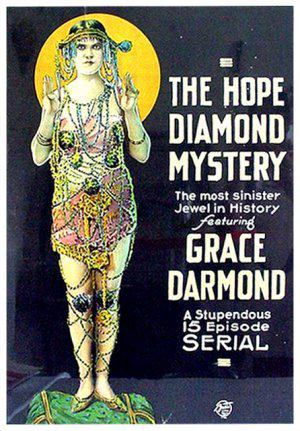
A definitive 6.2/10 rating for a film that redefined the boundaries of cult cinema. The Hope Diamond Mystery remains a cornerstone of transgressive art.
There are films that merely tell a story, and then there are those that attempt to grapple with legend, with history, and with the very fabric of human desire and downfall. 'The Hope Diamond Mystery,' a cinematic endeavor from 1921, boldly positions itself in the latter category. It's not just a silent film; it's a fascinating artifact, a dramatic retelling of a real-life saga that captivated an era, centered around an object of unparalleled beauty and notorious ill-repute: the Hope Diamond itself. This isn't just a tale spun from imagination; it's a narrative deeply rooted in the sensationalized lives of Lord Francis Hope and the captivating stage sensation, May Yohe, who also served as one of the film's writers, lending an almost autobiographical, if perhaps embellished, authenticity to the proceedings. The very notion of a cursed jewel, a glittering harbinger of ruin, provides a compelling hook, drawing us into a world where opulence and despair walk hand-in-hand.
The film plunges us into the aristocratic world of Lord Francis Hope, portrayed with a suitable blend of inherited gravitas and simmering vulnerability by George Chesebro. He is a man born into immense privilege, yet simultaneously burdened by it, particularly by the ancestral weight of the Hope Diamond. This isn't merely a piece of jewelry; it's a character in its own right, a silent observer and, as the legend suggests, an active participant in the tragic destinies of its owners. The narrative picks up pace with Lord Hope's fateful encounter with May Yohe, a dazzling showgirl whose charisma and independent spirit promise a vibrant counterpoint to his staid existence. May Yohe, playing herself (or a dramatic interpretation thereof), brings a captivating energy to the screen, embodying the allure that could sway a peer of the realm. Their romance, a whirlwind of passion across societal divides, forms the emotional core of the film, a fragile edifice built on infatuation and the intoxicating promise of shared dreams.
However, the titular 'mystery' isn't a whodunit in the conventional sense. Instead, it’s a psychological unraveling, a slow-burn tragedy fueled by Lord Hope's fatal flaw: an insatiable addiction to gambling. The diamond's curse, often invoked in hushed tones, manifests here not as a supernatural hex, but as the insidious erosion of personal responsibility and fortune. Lord Hope's descent into the gambling dens, his reckless wagering of the family's immense wealth, is depicted with a visceral intensity that transcends the limitations of silent cinema. The film meticulously charts the agonizing process of a man losing everything – his assets, his reputation, and ultimately, the love of his life. May Yohe's eventual departure isn't a sudden, melodramatic act, but the inevitable consequence of a relationship hollowed out by addiction and financial ruin, a poignant testament to the limits of even the most fervent affection when confronted with self-destruction.
The ensemble cast, under the direction of George Chesebro and the guiding hand of writers May Yohe, John B. Clymer, and Charles W. Goddard, delivers performances characteristic of the era, yet with notable nuances. George Chesebro's portrayal of Lord Francis Hope manages to convey a man caught in a self-made trap, his initial charm giving way to a desperate, haunted demeanor. May Yohe, in a remarkable meta-performance, brings an undeniable magnetism to her role. Her presence on screen is electric, allowing the audience to understand the powerful allure she held over Lord Hope. This self-referential casting adds an intriguing layer of authenticity, blurring the lines between the actress and the historical figure, a device that must have resonated profoundly with contemporary audiences familiar with her public image.
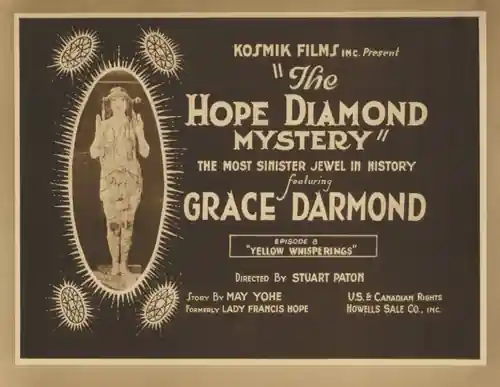
It's also worth noting the appearance of a nascent talent in the form of Boris Karloff. While his role might be minor in this early stage of his career, his presence is a fascinating historical footnote for any cinephile. One can almost detect the nascent intensity that would later define his iconic performances. Other cast members like Harry Carter, Carmen Phillips, Grace Darmond, and Ethel Shannon contribute to the rich tapestry of supporting characters, each playing their part in the unfolding drama, whether as confidantes, rivals, or agents of Lord Hope's undoing. The cumulative effect is a world populated by individuals whose lives become entangled in the diamond's orbit, even if indirectly. This intricate web of characters amplifies the sense that the diamond's influence extends far beyond its physical presence, touching every facet of the protagonist's existence.
As a silent film, 'The Hope Diamond Mystery' relies heavily on visual storytelling, exaggerated expressions, and intertitles to convey its narrative and emotional beats. The cinematography, while perhaps not groundbreaking by modern standards, effectively captures the grandeur of aristocratic estates and the seedy underbelly of gambling dens, creating a stark contrast that underscores Lord Hope's journey. The costumes and set designs are meticulously crafted, transporting the viewer to an era of lavish excess and rigid social structures. The dramatic tension is built not through dialogue, but through the escalating stakes of Lord Hope's gambling, the increasing desperation in his eyes, and the growing despair etched on May Yohe's face. This reliance on visual cues necessitates a heightened sense of theatricality from the actors, a challenge they largely meet with compelling conviction.
The film deftly explores themes that remain perennially relevant. The corrupting influence of wealth, the destructive power of addiction, the ephemeral nature of fame, and the societal pressures that can crush individuals are all laid bare. The 'curse' of the Hope Diamond, rather than being a fantastical element, becomes a powerful metaphor for the self-destructive tendencies inherent in human nature. It suggests that perhaps the greatest curses are those we inflict upon ourselves through poor choices and unchecked desires. This psychological depth elevates the film beyond a mere historical curiosity, imbuing it with a timeless resonance. It’s a stark reminder that even the most glittering possessions can bring ruin if not handled with wisdom and restraint.
In many ways, 'The Hope Diamond Mystery' can be seen as a precursor to later melodramas that explore the perils of unchecked ambition and the fragility of social standing. One might draw parallels to films like A Million Bid, where vast sums of money dictate destinies, or even Wives of Men, which delves into the complexities of marital strife under duress. However, 'The Hope Diamond Mystery' distinguishes itself by grounding its sensationalism in a well-known historical narrative, leveraging public fascination with the actual gem and its alleged misfortunes. The film doesn't just present a story; it performs an exegesis of a cultural myth, attempting to rationalize the supernatural with human fallibility. The diamond itself serves as a MacGuffin, a catalyst for tragedy rather than its direct cause, a subtle but crucial distinction that elevates the narrative beyond simple superstition.
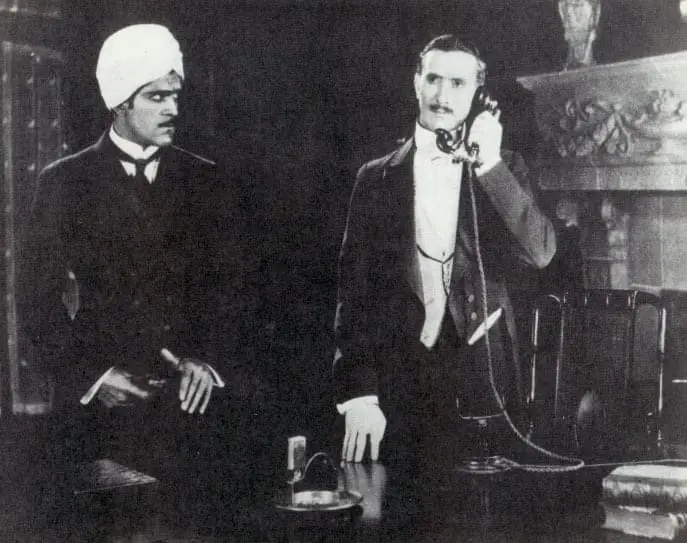
The depiction of May Yohe's character is particularly compelling. She is not merely a damsel in distress or a femme fatale; she is a woman of agency, albeit one caught in the gravitational pull of a man’s undoing. Her decision to leave Lord Hope is presented not as a heartless abandonment, but as a necessary act of self-preservation, a recognition that some battles cannot be won, and some loves are ultimately consumed by external forces. This nuanced portrayal adds a layer of depth to what could have been a simplistic morality play. It reflects a growing complexity in female characters, moving beyond the archetypes seen in earlier serials like The Perils of Pauline, where women were often subjects of peril rather than agents of their own destiny.
While 'The Hope Diamond Mystery' is undeniably a product of its time, bearing the stylistic hallmarks of early 20th-century cinema, its exploration of universal themes ensures its continued relevance. The fascination with curses, with the allure of forbidden wealth, and with the tragic unraveling of human lives remains potent. The film serves as a historical document, offering a glimpse into how contemporary society viewed and sensationalized the lives of the rich and famous, particularly when intertwined with objects of immense historical and monetary value. It's a reminder that the public's appetite for scandal and misfortune, especially when it involves prominent figures and legendary artifacts, is hardly a modern phenomenon.
The fact that May Yohe herself contributed to the screenplay and starred in the film adds an almost voyeuristic quality, a sense of peering into a dramatic re-enactment overseen by one of its primary subjects. This unique perspective lends an authenticity that a purely fictionalized account might lack, even if artistic liberties were undoubtedly taken for dramatic effect. It’s a testament to her resilience and perhaps a desire to reclaim her narrative from the public gaze and the tabloids that often distorted it. Her involvement transforms the film from a mere adaptation into a personal statement, a public reckoning with her own history and the man she once loved.
In conclusion, 'The Hope Diamond Mystery' is more than just a silent film about a cursed jewel; it's a poignant character study, a historical drama, and a compelling exploration of human frailty. It serves as a stark reminder that true curses often reside not in glittering stones, but in the unchecked desires and destructive choices of individuals. While it may not possess the kinetic energy of a modern thriller or the intricate plotting of contemporary dramas, its power lies in its ability to evoke a sense of inevitable tragedy, a slow, agonizing descent brought about by human weakness. For those interested in the genesis of cinematic storytelling, the allure of historical legends, or the early careers of figures like Boris Karloff, this film offers a rich, if somber, viewing experience. It invites us to ponder whether fate is predetermined by a sparkling object, or if we are, in fact, the architects of our own misfortunes, regardless of the treasures we possess.
Its legacy, though perhaps overshadowed by more famous silent epics, endures as a fascinating example of early cinema grappling with complex, real-world narratives. It's a testament to the enduring power of a good story, especially one imbued with the mystique of a legendary gem and the drama of human folly. The film, much like the diamond itself, continues to hold a certain captivating, almost melancholic, gleam for those willing to look beneath its surface.
IMDb —
1919
Community
Log in to comment.