DbcultAccessing Vault...
Cult Review
Senior Film Conservator
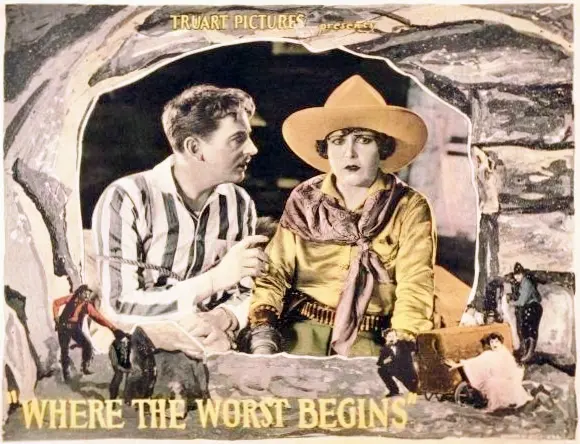
Is Where the Worst Begins worth a watch today? Short answer: yes, but only if you are a student of silent-era subversion or a fan of the 'Queen of Thrills,' Ruth Roland. This film is for viewers who enjoy seeing the traditional Western tropes dismantled by a morally ambiguous female lead; it is NOT for those who require a logical emotional progression or a hero with a clean conscience.
The film occupies a strange space in the 1925 cinematic landscape. It isn't quite a comedy, yet it lacks the gravitas of a traditional drama like The Third Degree. It is a work of narrative whiplash that asks the audience to root for a protagonist who is, by any modern standard, a criminal. Yet, in that friction lies its primary value.
This film works because it refuses to make Jane Brower a passive victim of her environment, giving her a jagged, selfish agency that was rare for the era.
This film fails because the romantic pivot in the final act feels unearned and psychologically nonsensical given the preceding kidnapping plot.
You should watch it if you want to see a Western that prioritizes personal ambition over the 'code of the West' and features a strong, if problematic, performance by Ruth Roland.
The most striking element of Where the Worst Begins is the characterization of Jane Brower. In most films of this period, such as Two Moons, the ranch girl is a symbol of purity. Jane, however, is a predator. She looks at the Van Dorn rail car with a cold, calculating eye. The scene where she first observes the luxury of the East is filmed with a stark contrast between the dusty, wide-open spaces and the claustrophobic, ornate interior of the train.
Ruth Roland plays Jane with a restless energy. She doesn't just want to leave; she needs to leave. This desperation justifies her turn to kidnapping. It’s a brutally simple motivation. She doesn't have a heart of gold; she has a heart of grit. This makes the middle of the film particularly fascinating as she negotiates with August Van Dorn (played with a stiff, patriarchal authority by Alec B. Francis).
However, the film takes a turn into the absurd when the 'real' bandits show up. This is a classic narrative safety net. By introducing worse criminals, the film attempts to scrub Jane’s hands clean. It’s a cheap trick. One moment she is a kidnapper, and the next, she is the victim of a kidnapping. The shift is jarring. It works. But it’s flawed.
The direction by the uncredited hand (often attributed to the studio's house style) maintains a brisk pace that prevents the viewer from thinking too hard about the plot holes. The cinematography, particularly during the desert rescue, utilizes the harsh natural light to create a sense of peril. Compared to the more polished look of Big Dan, this film feels raw and unpolished, which suits its messy moral core.
The standout sequence involves the bandit hideout. The staging here is surprisingly effective. When Donald (Matt Moore) rescues Jane, the film leans into the action-adventure roots of Ruth Roland’s career. Roland was known for her stunts, and while this film is more of a domestic drama-turned-thriller, her physical presence is undeniable. She moves with a capability that makes the eventual 'damsel' turn feel like a theatrical performance rather than a character trait.
The editing in the final chase is tight. We see the intercutting between the senior Van Dorn’s worry and the frantic escape in the wilderness. It builds a tension that the script doesn't quite know how to resolve without a wedding ring. The tone shifts from a crime caper to a romance so fast it might give you vertigo.
Matt Moore as Donald Van Dorn is the weakest link in the chain. His character seems to suffer from a severe case of cinematic Stockholm Syndrome. After being targeted for a ransom plot, his immediate reaction to Jane is one of romantic devotion. It’s a debatable choice. Is he supposed to be charmed by her audacity? Or is he simply a plot device to get Jane to New York?
Alec B. Francis brings a much-needed groundedness to the role of the father. His performance provides the only real weight to the kidnapping stakes. When he is on screen, the film feels like a serious drama. When the bandits appear, it feels like a Saturday morning serial. This lack of tonal consistency is the film's biggest hurdle. It’s similar to the unevenness found in Stop That Wedding, where the stakes never quite align with the characters' reactions.
Pros:
- Unique subversion of the Western heroine.
- Strong physical acting from the lead.
- Fast-paced narrative that never lingers too long on its own absurdity.
- Interesting visual contrast between Eastern wealth and Western grit.
Cons:
- Nonsensical romantic arc.
- Secondary characters are largely one-dimensional archetypes.
- The moral redemption of the protagonist feels forced and unearned.
The film’s cinematography deserves a closer look. The use of the railroad car as a symbol of the 'East' is handled with more nuance than the script itself. The car is a cage of velvet and mahogany, representing the very thing Jane craves. In contrast, the ranch is filmed with wide, sweeping shots that emphasize her isolation. This visual storytelling does more to explain Jane’s criminal turn than any of the title cards.
One surprising observation: the film treats the kidnapping almost as a business transaction. There is very little 'evil' intent behind Jane's actions. She treats Donald like a commodity. This coldness is what makes the character so modern. She isn't driven by passion or revenge; she is driven by a desire for upward mobility. It’s a very American story, even if it’s wrapped in a 1920s melodrama.
"Jane Brower is the anti-heroine the 1920s didn't know it needed, turning a ransom note into a wedding invitation with a cold, calculated efficiency that puts modern thrillers to shame."
Where the Worst Begins is a fascinating artifact. It isn't a masterpiece, and it certainly isn't a coherent moral tale. However, it is a bold experiment in genre-blending. By taking the 'Queen of Thrills' and placing her in a role that requires her to be both the villain and the hero, the film creates a friction that remains engaging nearly a century later. The ending is a cop-out, but the journey to get there is filled with enough grit and dust to satisfy any silent film enthusiast. It works. But it’s flawed. The bottom line: watch it for Roland, stay for the bizarre moral gymnastics, and ignore the logic of the heart.
IMDb 6.1
1927
Community
Log in to comment.