DbcultAccessing Vault...
5.7/10
Senior Film Conservator
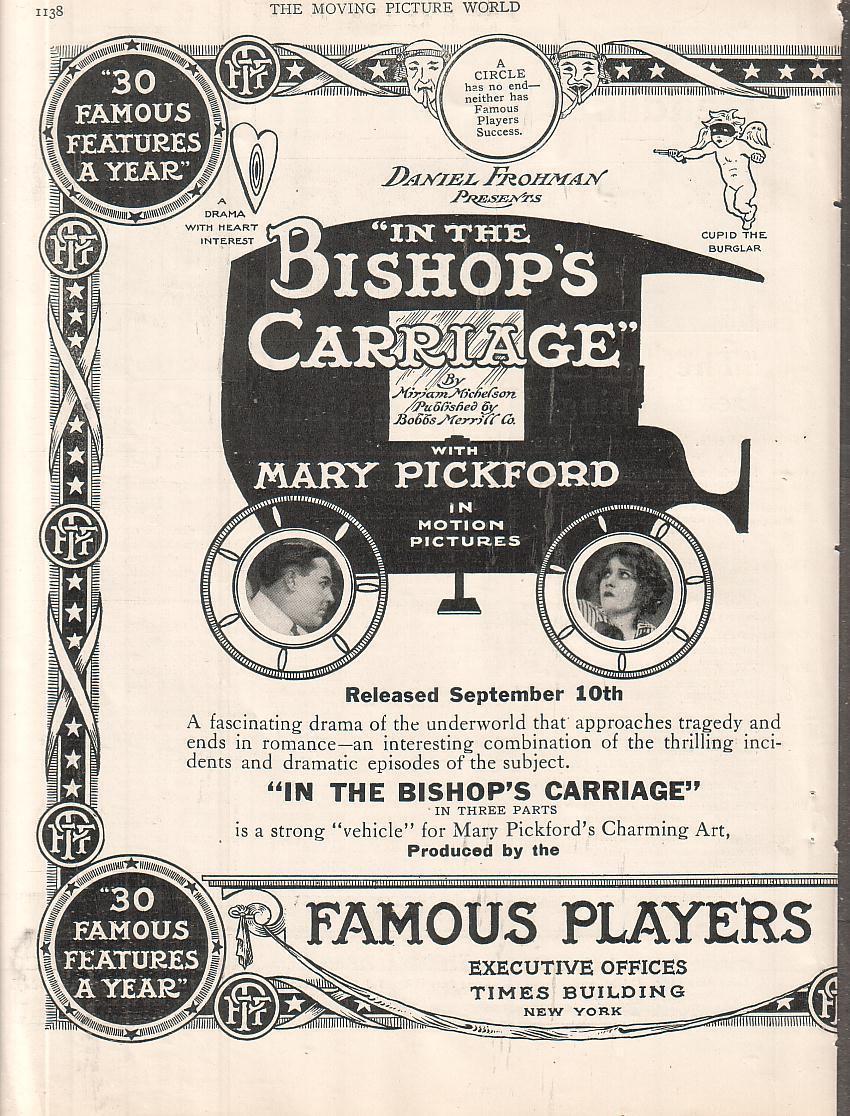
A definitive 5.7/10 rating for a film that redefined the boundaries of cult cinema. In the Bishop's Carriage remains a cornerstone of transgressive art.
Imagine a world where footlights outshine streetlights, where the roar of an audience can drown out the clang of a prison gate. That world is In the Bishop's Carriage, a 1913 one-reel marvel that distills the entire Victorian melodramatic spectrum into seventeen shadow-drunk minutes. Director Edwin S. Porter and scenarist Miriam Michelson confect a fable of moral alchemy: base criminal metal transmuted into theatrical gold, with Mary Pickford’s elfin visage as the crucible.
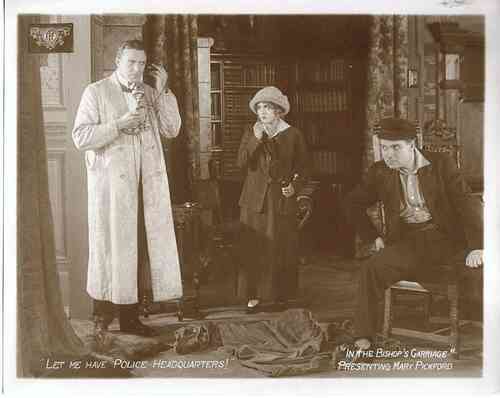
We open on a winter twilight that feels scraped from Dickens’ marrow. Snowflakes swirl like shredded indictments around a nameless metropolis. Nance Olden (Pickford) skitters through the frame, a wraith in a threadworm coat, eyes glittering with larcenous intelligence. She lifts a bishop’s ruby-pin with balletic stealth only to discover, mid-filch, that the prelate (Wall) has been watching her in a pocket-mirror the entire time. Instead of summoning a bobby, he invites her—yes, invites her—into his carriage. Thus begins the most improbable probationary ride in silent cinema: a rolling purgatory upholstered in morocco leather where guilt and grace trade conversational jabs.
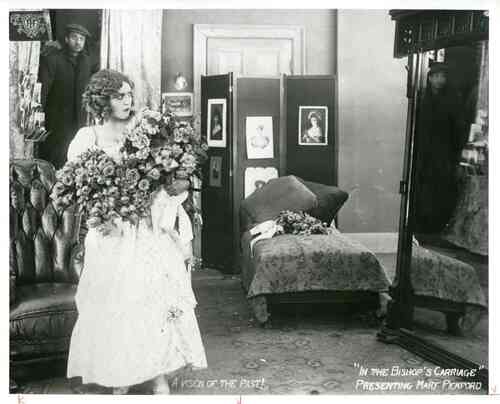
The narrative engine is deliciously simple: each mile traveled equals one station of the cross for Nance. At stop one she returns the jewel; at stop two she confesses a litany of petty thefts that scrolls across the screen like an intertitle litany of venial sins; at stop three she accepts the bishop’s offer of shelter in a theatrical boarding house crammed with garrulous actors who speak entirely in grand gestures—perfect training for a girl who has hitherto communicated only through sleight-of-hand. A swift montage (jump-cuts of corset fittings, line-readings, curtain calls) catapults Nance from seamstress to leading lady. The carriage, meanwhile, keeps rolling, reappearing outside every venue like a guardian angel that refuses to tip its halo.
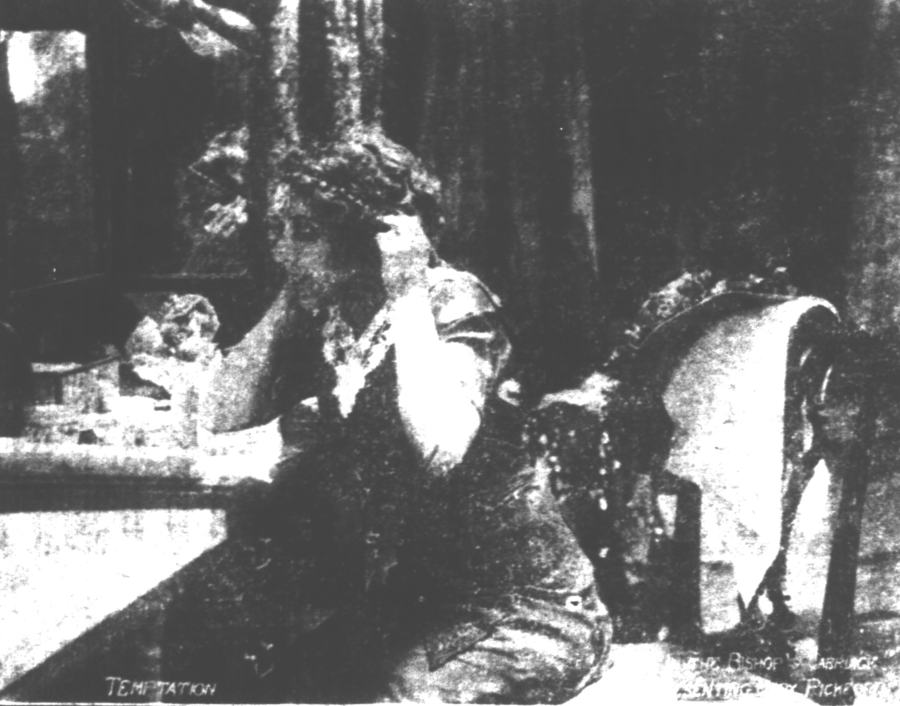
Pickford was twenty-one but could still pass for fourteen, a genetic sleight-of-age that lets her embody both street urchin and ingénue without a false whisker. Watch her hands: in close-up they flutter like distressed sparrows during the pickpocket sequence, fingertips brushing against fabric with the delicacy of a harpist plucking wrong notes. Contrast that with her curtain-call bow—spine erect, arms floating outward in a sunburst of self-forgiveness. The transition is not heralded by grand declarations but by micro-shifts: pupils dilating, shoulders un-hunching, a breath that seems to inflate the entire frame.
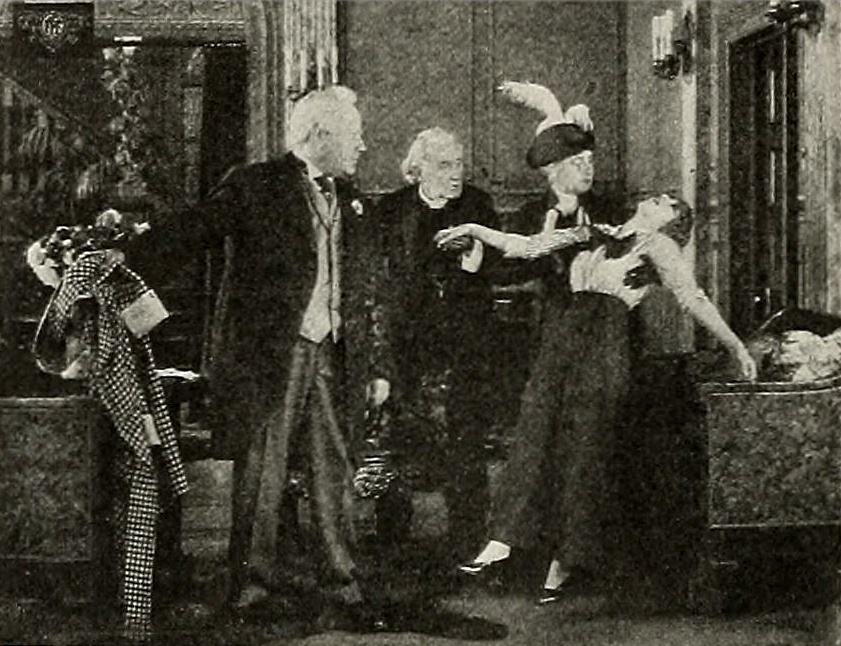
David Wall’s bishop is less a character than a mobile ethical weather system. His performance strategy is restraint incarnate: he underacts so severely that a simple blink feels like papal dispensation. When he clasps Nance’s shoulder after her stage debut, the gesture carries the weight of every parable in which the prodigal returns. Grace Henderson, as the theatre-mad benefactress who bankrolls Nance’s costumes, supplies comic effervescence; her eye-roll when the girl mispronounces “melodrama” deserves its own comedic intertitle. House Peters’ detective—introduced halfway through—provides the external threat, a human Sword of Damocles dangling over the final reel.
Shot on Eastman’s new 3-perf stock, the print survives with a silver-nitrate shimmer that makes every gas lamp bloom like a dandelion. Porter blocks interiors like stage tableaux but cuts exteriors with proto-gritty urgency. Note the match-cut between Nance’s prison-daydream face and the footlight glare that blinds her during opening night: two circles of light, one of captivity, one of liberation, fused by editorial sleight-of-hand. The carriage itself becomes a kinetic McGuffin, photographed from three angles—frontal (judgmental), profile (documentary), rear-window (existential)—so that its mere re-entry triggers Pavlovian tension.
Color tinting alternates between cobalt for night scenes and amber for theatre interiors, a rudimentary but effective emotional semaphore. The tinting is so saturated that when the final shot fades to neutral gray, the absence of hue feels almost spiritual—a visual sigh that neutrality, not extremity, might be the truest color of absolution.
Modern viewers, jaded by the compulsory rom-com clinch, may brace for a clerical love affair. The film teases the possibility—Wall’s gaze lingers a half-second too long when Pickford removes her stage rouge—but Michelson’s script pivots instead toward agape rather than eros. The bishop’s affection is genealogical, not conjugal; he sees in Nance the daughter stolen from him by typhus years earlier. This twist rescues the tale from both clerical scandal and patriarchal cliché, positioning redemption as a civic rather than carnal transaction.
Compare this to The Redemption of White Hawk, where indigenous conversion is framed through colonial possession. Here, the power dynamic reverses: the condemned girl ultimately chooses virtue, wresting moral authorship from her ecclesiastical patron. The carriage ride is thus a negotiation, not an abduction; consent is continuously re-enacted with every clop of the horse’s hooves.
Released the same year as What Happened to Mary, this film forms part of Pickford’s “plucky orphan” cycle, yet it’s tonally closer to European moralities like Les Misérables in miniature. The American audience, still reeling from the 1908 financial panic, craved narratives that promised social mobility through ethical re-invention. In the Bishop’s Carriage delivers that fantasy in spades: a girl literally rides from rags to respectability in the span of a single reel, no trust fund required.
Meanwhile, the fight-film cycle (The Corbett-Fitzsimmons Fight, Jeffries-Sharkey Contest) was packing nickelodeons with masculine kineticism; Porter counters with a different kind of spectacle—interior struggle externalized through gesture. The result is a gendered inversion: while men pummel each other for sport, a woman wrestles her past for a future.
Though originally accompanied by house pianists improvising hymns and music-hall ditties, the surviving Kino restoration suggests a leitmotif structure. The bishop’s theme, reportedly a slowed-down “Now the Day Is Over,” recurs whenever the carriage re-enters the narrative, its lullaby contour undercutting the tension of recapture. Nance’s stage triumphs are paired with a spritely galop, evoking the can-can of respectability. Contemporary exhibitors could swap cues, but the emotional palette remains: minor-key penitence ceding to major-key self-possession.
Protestant viewers might read the film as a textbook case of sola gratia: the bishop’s unearned kindness jump-starts Nance’s transformation. Catholic audiences, however, could argue for a works-based dialectic—each restitution she performs (returning stolen pearls, financing a fellow orphan’s apprenticeship) is a meritorious act that gradually rewrites her soul’s ledger. The genius of the picture is that it refuses to adjudicate. The final intertitle—“She was saved not by the bishop, nor by the stage, but by the carriage that refused to stop rolling toward tomorrow”—posits motion itself as sacrament, a theological third way that anticipates existential cinema decades later.
Early film historians often dismiss Pickford’s virginal personas as cloying, yet Nance Olden subverts the damsel archetype. She engineers her own makeover, negotiates her own contract, and—crucially—chooses when to disclose her criminal past to her leading man. The camera, usually a patriarchal instrument, here becomes complicit in her self-fashioning: it lingers on her determined jawline more than her curls. In an era when women could not yet vote, the film imagines civic rehabilitation as a woman’s prerogative, predating the suffrage montage of A Militant Suffragette by two years.
The template—fallen woman rescued by moral patron—would echo through Anna Karenina adaptations and reach apotheosis in Traffic in Souls. Yet few descendants retain the delicate equipoise between penance and empowerment. Modern directors who revisit the premise (think Loach’s social realism or Nolan’s Gothic noir) could learn from Porter’s restraint: never let the message outshout the medium, never let sermon supplant suspense.
As of 2024, the restored 2K scan streams on Criterion Channel and screens sporadically at MoMA’s silent Tuesdays. The Library of Congress holds a 35 mm negative should you crave that vinegar-sweet celluloid perfume. Run-time is a brisk seventeen minutes—perfect lunch-break length, yet the aftertaste lingers like incense.
Verdict: In the Bishop’s Carriage is a pocket-sized epic that smuggles heavyweight themes—penitence, patriarchy, performance—inside a featherweight reel. It’s the rare film where the vehicle is both setting and metaphor, where redemption rides shotgun with risk, and where Mary Pickford proves that the most luminous special effect is the human face deciding to forgive itself. Climb aboard; you’ll exit lighter than you entered, as if someone just lifted the wallet of your cynicism—and returned it stuffed with grace.
IMDb —
1925
Community
Log in to comment.