DbcultAccessing Vault...
Cult Review
Senior Film Conservator
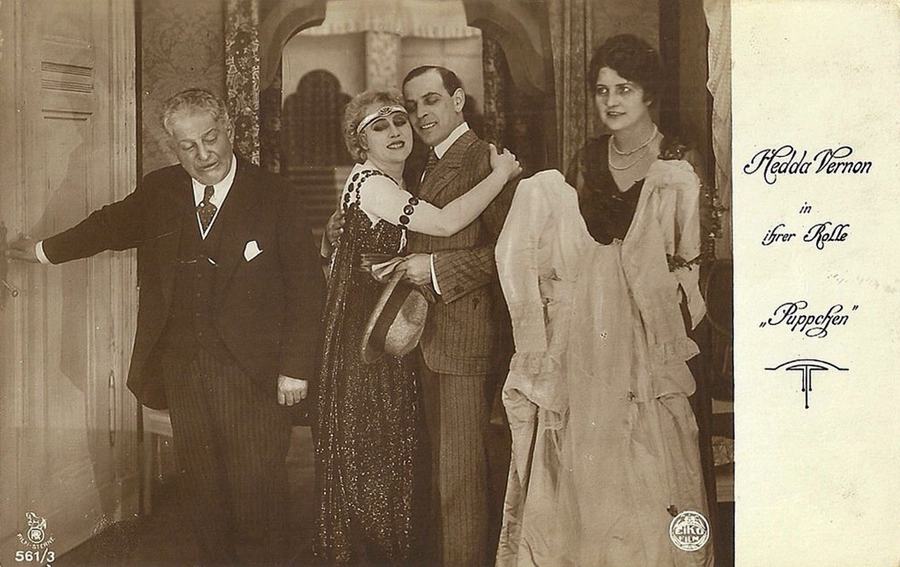
Stepping back into the flickering shadows of early cinema, one often encounters narratives that, despite their age, resonate with a startling contemporary relevance. Such is the case with Puppchen, a 1916 German silent film that, through its seemingly simple premise, delves into profound questions of identity, societal roles, and the often-blurry line between humanity and objectification. Directed with a keen eye for both dramatic tension and subtle emotional nuance, this cinematic artifact offers more than just a glimpse into the past; it provides a mirror reflecting persistent human anxieties.
At its core, Puppchen introduces us to Fritzi, portrayed with an exquisite blend of vulnerability and audacious spirit by the incomparable Hedda Vernon. Fritzi is a young woman navigating the labyrinthine corridors of an upscale fashion atelier, a world defined by its rigid aesthetics and unforgiving demands. The air in such establishments, then as now, is thick with the scent of ambition, economic precarity, and the unspoken pressure to maintain an impeccable façade. It is within this rarefied, yet highly pressurized, environment that Fritzi experiences a moment of sheer catastrophe: an accidental collision that sends an expensive, irreplaceable mannequin crashing to the polished floor, its elegant form shattering into fragments. The implications are immediate and dire; the cost of the damage far exceeds her meager means, threatening her livelihood and her very future.
In a flash of desperate inspiration, a solution both absurd and brilliant germinates in Fritzi's mind: she will become the mannequin. This isn't merely a disguise; it's a complete, unsettling transformation, a conscious effort to shed her human agency and inhabit the inert, idealized form of the very object she destroyed. The film, penned by Artur Landsberger, masterfully sets the stage for this dramatic pivot, building a tension that is palpable even through the silent medium. The narrative, while seemingly straightforward, is a brilliant exploration of how circumstances can push individuals to extraordinary, often surreal, lengths. This act of substitution immediately elevates Puppchen beyond a simple melodrama, imbuing it with a psychological depth that invites critical introspection.
Hedda Vernon's portrayal of Fritzi as the living mannequin is nothing short of mesmerizing. Her ability to convey the internal struggle of a character forced into such an unusual role, without the aid of spoken dialogue, is a testament to her profound talent. She embodies the stillness, the vacant gaze, and the rigid posture of a mannequin, yet subtly allows glimpses of the human beneath. A tremble in the lip, a fleeting shadow across the eyes, a minute shift in breath – these are the tools Vernon employs to communicate Fritzi's inner turmoil, her fear of exposure, and the sheer audacity of her deception. The genius lies in her restraint; she doesn't overact, but rather underplays, creating an eerie verisimilitude that makes the audience question their own perceptions. Her performance is a masterclass in silent film acting, a delicate balance between artifice and raw emotion. Comparisons could be drawn to the expressive, yet often constrained, performances seen in films like Shoes, where character emotions are conveyed through subtle gestures and powerful mise-en-scène, highlighting the plight of women in challenging social circumstances.
The supporting cast, including Ferry Sikla, Emmy Wyda, and Hans Salten, contribute effectively to the film's atmosphere, each playing their part in the intricate dance of social commentary and dramatic tension. Sikla, often known for his more robust roles, here provides a foil that underscores Fritzi's vulnerability, while Wyda and Salten embody the societal figures who are either oblivious to or complicit in the objectification that surrounds Fritzi. Their reactions to the 'mannequin'—ranging from casual admiration to intense scrutiny—serve to amplify the precariousness of Fritzi's masquerade and the underlying themes of the narrative.
Puppchen is, at its heart, a trenchant critique of the objectification of women, particularly within industries that trade on appearance and idealized forms. Fritzi's transformation into a mannequin is not just a plot device; it's a powerful metaphor. She literally becomes an object, a silent, beautiful form upon which others project their desires and aesthetic judgments. This act strips her of her voice, her agency, and her individuality, leaving her as a blank canvas for societal expectations. The film subtly questions the dehumanizing aspects of such an existence, even as it highlights the ingenuity born of desperation.
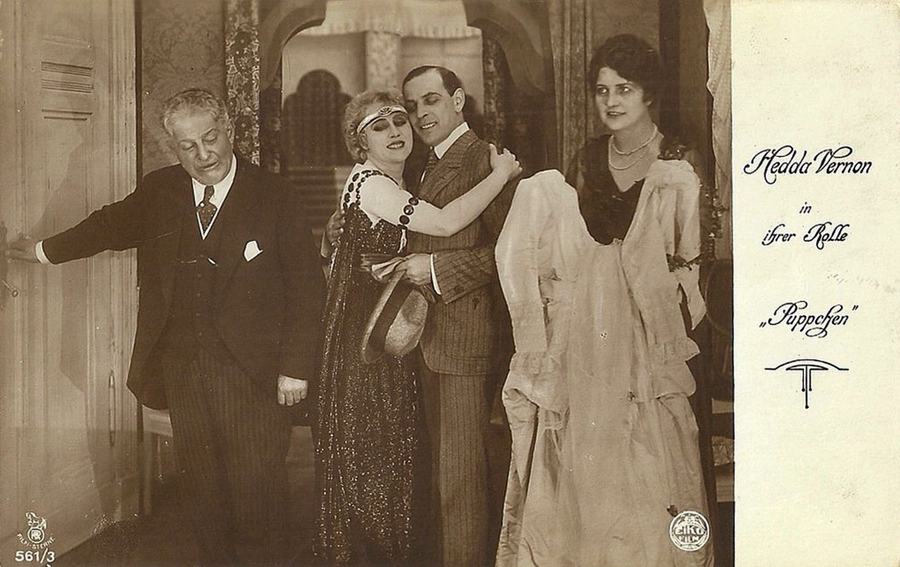
The dichotomy between Fritzi's inner human experience and her external, inanimate presentation creates a fascinating tension. The audience is privy to her thoughts, her fears, her every suppressed breath, while the characters within the film remain blissfully unaware. This narrative technique fosters a deep empathy for Fritzi, drawing us into her plight and making us complicit in her secret. It's a clever way to engage with the audience, making them active participants in the moral and ethical dilemmas presented. The film, in this regard, shares a kinship with other cinematic explorations of identity and masquerade, where a character assumes a different persona, such as in The Sphinx, though with Puppchen, the transformation is more literal and less about deceit for nefarious purposes, but rather for survival.
The visual language of Puppchen is remarkably sophisticated for its era. The cinematography, while constrained by the technology of the time, effectively utilizes framing and composition to emphasize Fritzi's isolation and the artificiality of her surroundings. The elegant fashion house itself becomes a character, a gilded cage that both imprisons and showcases Fritzi. The costumes are not merely attire; they are integral to the narrative, highlighting the glamour and superficiality of the world Fritzi inhabits, and the very reason for her predicament. The contrast between the elaborate gowns and Fritzi's stark, almost ghostly, stillness as a mannequin is visually striking.
The film's pacing, typical of early silent features, allows for lingering shots that invite contemplation, giving the audience time to absorb the emotional weight of each scene. There's a deliberate rhythm to the unfolding drama, a slow burn that builds towards inevitable revelation. While films like Cassidy might lean into more overt action, Puppchen finds its power in the quiet tension, the unspoken fears, and the subtle shifts in perspective. The direction ensures that every glance, every gesture, carries significant meaning, a hallmark of compelling silent cinema.
More than a century after its release, Puppchen remains a compelling watch, not just for cinephiles and historians, but for anyone interested in the evolution of storytelling and the enduring power of human drama. Its exploration of identity, authenticity, and the pressures of societal expectation feels remarkably prescient in an age dominated by curated online personas and the constant negotiation between one's true self and one's presented image. The film offers a fascinating counterpoint to more overtly dramatic narratives of the era, such as The Stain in the Blood or Exile, by focusing on an internal, psychological struggle rather than external conflict.
The brilliance of Artur Landsberger's script lies in its ability to take a fantastical premise and ground it in relatable human emotion. The fear of destitution, the desire for acceptance, and the desperate measures taken to survive are universal themes that transcend time and cultural barriers. Hedda Vernon's performance elevates this script, transforming Fritzi from a mere character into an emblem of resilience and quiet defiance. Her ability to hold the audience's gaze, to convey a universe of meaning through subtle facial expressions and body language, is a testament to the power of silent acting.
Ultimately, Puppchen is more than just a historical curiosity; it is a vibrant, thought-provoking piece of cinema that continues to provoke discussion and admiration. It reminds us that even in the absence of spoken words, a film can communicate profound truths about the human condition, about the masks we wear, and the lengths we go to preserve our dignity in a world that often seeks to reduce us to mere objects. Its legacy is secure as a pioneering work that masterfully blends melodrama with incisive social commentary, leaving an indelible mark on the tapestry of early cinematic art. The film, much like its protagonist, stands as a silent testament to the ingenuity and enduring spirit found even in the most challenging of circumstances, a truly captivating experience for any discerning viewer interested in the roots of cinematic storytelling. It is a work that, through its unique narrative and exceptional performances, invites us to look beyond the surface, to question what we see, and to appreciate the complex interplay between illusion and reality that defines our existence.
IMDb 6
1918
Community
Log in to comment.